

My Boiler is Broken! 🥶 How to Request Repairs in Korea Like a Pro
Phase 1: Empathy (The Cold Open)
Hello! I am your Daily Hangul Editor, your local culture navigator and veteran tutor in Seoul.
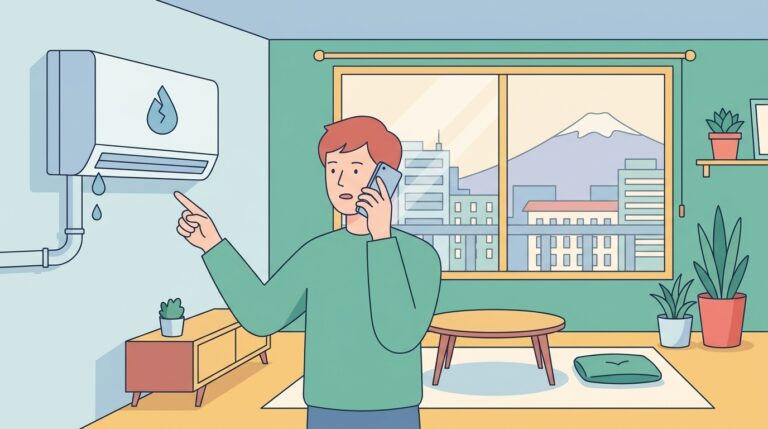
Imagine this: It’s mid-January. You’re watching a K-Drama in your cozy Seoul apartment (or an Airbnb), and suddenly, the floor turns ice-cold. You turn on the faucet—no hot water. Your breath starts fogging up in the living room. You realize your boiler is broken. In a K-Drama, the handsome male lead might magically appear with a toolbox, but in reality? You need to call your landlord, right now.
But wait… how do you say “it’s broken” without sounding like a robot? What if they start asking technical questions in rapid-fire Korean?
Don’t panic! Whether you are living in a long-term rental or just staying at an Airbnb for the weekend, knowing how to request repairs (하자 보수) is a crucial survival skill. It saves you time, money, and most importantly, keeps you warm! This guide is built from the exact panic-moments my foreign students have faced. Let’s dive in!
Phase 2: Core Expressions Deep Dive
Here are the top 3 expressions you need to survive a broken-item crisis.
1. 고장 났어요 (It’s broken)
- Pronunciation: gojang nasseoyo [go-jang-nas-seo-yo]
- Sound-alike guide: ‘gojang’ sounds a bit like “go jump,” and ‘nasseoyo’ sounds like “nas-so-yo.”
- Meaning: Literally “A breakdown happened.” Real nuance: “It’s broken / It’s out of order.”
- K-Culture Moment: You’ll hear this in office dramas when the printer jams again, or when a character dramatically drops their phone and sighs, “아, 고장 났어…” (Ah, it broke…).
- Editor’s Insight: Notice how it’s in the past tense (nasseoyo). In Korean, when something is currently broken, we say “it broke” because the event of breaking has already happened.
- Situation Spectrum:
- Friends (Casual): 고장 났어 ✅
- Landlord/Staff (Formal): 고장 났어요 ✅
- Strict Boss (Very Formal): 고장 났습니다 ⚠️ (A bit stiff, but okay)
- 🤔 Think About It: In English, we say “It is broken” (adjective/state). In Korean, we say “A breakdown occurred” (action/event). How does your native language describe a broken object?
2. 물이 / 불이 안 들어와요 (The water/power isn’t coming on)
- Pronunciation: muri / buri an deureowayo
- Sound-alike guide: ‘muri’ sounds like “moo-ree”, ‘buri’ sounds like “boo-ree”, ‘an’ like “on” (but shorter).
- Meaning: Literally “Water / fire (light) is not coming in.” Real nuance: “The water/electricity isn’t working.”
- K-Culture Moment: In K-Dramas featuring rooftop apartments (옥탑방), the struggling protagonist often hits a rusty pipe and complains that the water isn’t coming out.
- Editor’s Insight: Koreans don’t just say “The water is broken.” We specify what isn’t happening. For electronics or lights, we use 불 (fire/light) or 전기 (electricity). For water, we use 물 (water).
- Situation Spectrum:
- Friends (Casual): 물 안 나와 ✅
- Landlord/Staff (Formal): 물이 안 나와요 / 안 들어와요 ✅
- Strict Boss (Very Formal): 🚫 (Not usually said to a boss unless you work in plumbing!)
- 🤔 Think About It: Using the verb “come in” (들어오다) or “come out” (나오다) shows a perspective of flow. It feels much more descriptive than just saying “broken,” right?
3. 언제쯤 고쳐 주실 수 있나요? (Around when can you fix it?)
- Pronunciation: eonjejjeum gochyeo jusil su innayo?
- Sound-alike guide: ‘eonje’ (un-jeh) + ‘jjeum’ (jj-um) = Around when.
- Meaning: Literally “Around when are you able to give the favor of fixing it?” Real nuance: “When can you get this fixed?”
- K-Culture Moment: The polite but desperate text message sent to the landlord at 10 PM.
- Editor’s Insight: The magic word here is 주시다 (to give/do a favor). By adding it, you soften the request. You aren’t demanding “Fix it!”; you are asking “Could you do me the favor of fixing it?”
- Situation Spectrum:
- Friends (Casual): 언제 고쳐 줄 거야? ✅
- Landlord/Staff (Formal): 언제 고쳐 주실 수 있나요? ✅
- Strict Boss (Very Formal): 🚫
- 🤔 Think About It: Why do Koreans use words related to “giving a favor” (주다) so often when asking for a service they pay for? It reflects a culture that values mutual respect and softening direct demands.
Phase 3: Textbook vs. Real Korean
[Situation 1: Reporting an issue to the landlord]
* 📖 Textbook Korean: 에어컨이 작동하지 않습니다. (The air conditioner does not operate.)
* 🗣️ Real Korean: 에어컨이 안 돼요. (The AC doesn’t work.)
* 💡 Why is it different?: “안 돼요” (Doesn’t work / Can’t do) is the ultimate magic phrase in Korea. It’s shorter, efficient, and used for everything from a broken TV to a declined credit card.
[Situation 2: Asking for a repairman]
* 📖 Textbook Korean: 수리 기사님을 불러 주시겠습니까? (Would you please summon a repair technician?)
* 🗣️ Real Korean: 기사님 좀 불러주세요. (Please call the technician [softened].)
* 💡 Why is it different?: The word “좀” (a little) is sprinkled into real Korean sentences to magically soften a command into a polite request.
(Bottom Note: As an A2 learner, using “안 돼요” and adding “좀” will immediately make you sound like you’ve lived in Seoul for months!)
Phase 4: Cultural Context — K-Culture Deep Dive
4-1. Non-verbal Cue: The Power of the “Error Code Photo”
In Korea, the 빨리빨리 (Ppal-li ppal-li / Hurry, hurry) culture applies to repairs too. But to get fast service, you must do your part. Never just say “It’s broken.” ALWAYS take a photo or a short video of the broken item, especially the digital screen showing an Error Code (에러 코드), and text it to the landlord or repair center. This saves them a trip and gets the right parts delivered immediately!
4-2. K-Drama Connection: The Rooftop Romance vs. Reality
Have you ever seen a K-Drama where the main character lives in a Oktapbang (옥탑방 – Rooftop room) or a Banjiha (반지하 – Semi-basement)? It looks incredibly romantic with city lights in the background. But in reality? These places are notorious for extreme temperatures and plumbing issues! Water pipes freeze in winter (동파), and ACs leak in summer. If you live in one, knowing how to request a repair is literally your survival tool. The romance fades fast when your Ondol (floor heating) breaks at -10°C!
Phase 5: Real-Life Roleplay Scenario
Setting: Friday night, 8 PM. It’s freezing outside. You just got out of the shower and realized the floor is ice-cold and there is a blinking red light on your wall-mounted boiler controller. You quickly grab your phone to text your landlord.
Characters:
– YOU: A foreign resident who just learned how to use Korean repair phrases.
– Landlord (집주인 – Jip-ju-in): A 60-something Korean man who is usually friendly but prefers quick, direct communication.
Dialogue:
YOU: 사장님, 안녕하세요. (Sajangnim, annyeonghaseyo.)
[Translation: Hello, landlord.]
(🎭 Stage Direction: You attach a photo of the blinking red light on the boiler)
집주인: 네, 안녕하세요. 무슨 일 있어요? (Ne, annyeonghaseyo. Museun il isseoyo?)
[Translation: Yes, hello. Is something wrong?]
YOU: 보일러가 고장 났어요. 따뜻한 물이 안 나와요. (Boilleoga gojang nasseoyo. Ttatteushan muri an nawayo.)
[Translation: The boiler is broken. Warm water isn’t coming out.]
집주인: 아이고, 날씨가 추운데. 에러 번호가 몇 번이에요? (Aigo, nalssiga chuunde. Ereo beonhoga myeot beonieyo?)
[Translation: Oh my, and the weather is cold. What is the error number?]
YOU: 화면에 ‘Er 03’이라고 나와요. (Hwamyeone ‘Er 03’irago nawayo.)
[Translation: It says ‘Er 03’ on the screen.]
집주인: 알겠어요. 제가 내일 아침에 기사님 부를게요. (Algesseoyo. Jega naeil achime gisanim bureulgeyo.)
[Translation: Understood. I will call the technician tomorrow morning.]
🔀 Your Turn! How do you reply to the landlord?
– A) “안 돼요! 지금 당장 오세요!” (No! Come right now!)
– B) “네, 알겠습니다. 내일 언제쯤 오실 수 있나요?” (Yes, understood. Around when can he come tomorrow?)
– C) “대박! 너무 추워요 ㅠㅠ” (Daebak! It’s too cold T.T)✅ Best Choice: B — Reason: It acknowledges his action politely while practically asking for the schedule.
⚠️ Choice A Analysis: Too aggressive! While it is cold, repairmen usually don’t work late at night unless it’s a massive emergency.
⚠️ Choice C Analysis: Too casual for a landlord. Save “Daebak” for your friends!
YOU: 네, 알겠습니다. 내일 언제쯤 오실 수 있나요? (Ne, algetseumnida. Naeil eonjejjeum osil su innayo?)
[Translation: Yes, understood. Around when can he come tomorrow?]
집주인: 오전 10시쯤 갈 거예요. (Ojeon yeolsijjeum gal geoeyo.)
[Translation: He will go around 10 AM.]
YOU: 네, 감사합니다! (Ne, gamsahamnida!)
[Translation: Yes, thank you!]
Phase 6: 10-Second Shadowing Drill
Read these out loud! Pay attention to the pauses / and the emotion tags.
- 🥺 (Desperately) 사장님! / 보일러가 / 고장 났어요!
(Sajangnim! / boilleoga / gojang nasseoyo!) - 🥶 (Shivering) 따뜻한 물이 / 안 나와요…
(Ttatteushan muri / an nawayo…) - 🙏 (Politely asking) 언제쯤 / 고쳐 주실 수 / 있나요?
(Eonjejjeum / gochyeo jusil su / innayo?)
Phase 7: K-Culture Mini Dictionary
1. 집주인 (jip-ju-in)
* English: Landlord
* Context: Literally “House Master.” In Korea, it’s polite to call them 사장님 (Sajangnim – Boss) or 주인 아주머니/아저씨 (Owner lady/man) directly, rather than saying “jip-ju-in” to their face.
2. 보일러 (bo-il-leo)
* English: Boiler / Floor Heating System
* Context: Korean homes use Ondol, where hot water runs through pipes under the floor. The “boiler” controls both floor heating and hot shower water.
3. 원룸 (won-rum)
* English: Studio Apartment
* Context: Literally “One Room.” The most common housing type for college students and single expats. If something breaks here, the landlord usually pays for it, unless you broke it on purpose!
4. 수리 기사님 (su-ri gi-sa-nim)
* English: Repair Technician
* Context: The heroes of Korean households. Adding “님” (nim) at the end is a must to show respect for their profession.
Phase 8: Traveler Survival Kit
Even if you aren’t renting an apartment, you will need these phrases at hotels or Airbnbs!
🆘 Survival Phrases for Travelers
– 🇰🇷 “와이파이가 안 돼요.” (Waipaiga an dwaeyo.)
– 🗣️ Meaning: The Wi-Fi doesn’t work.
– 🇰🇷 “에어컨에서 물이 떨어져요.” (Eeokeoneseo muri tteoreojyeoyo.)
– 🗣️ Meaning: Water is dripping from the AC.
– 🇰🇷 “방이 너무 추워요/더워요.” (Bangi neomu chuwoyo/deowoyo.)
– 🗣️ Meaning: The room is too cold/hot.
– 📍 Where to use: Hotel front desk, Airbnb host messages.
– 💡 Pro Tip: Don’t touch the wall control panel (월패드) if you don’t know what it does! Send a photo to your Airbnb host first using the app.📌 Editor’s Travel Note
– Useful Apps: Papago (for translating error messages on screens using the camera feature).
– Response Speed: Korean Airbnb hosts are incredibly fast. If you message them, expect a reply within 5 minutes. Don’t be afraid to ask for help!
Phase 9: Critical Thinking — “One Step Deeper”
🧠 Think Deeper: Media vs. Reality
Korean dramas often show characters resolving housing issues through dramatic arguments or sudden romantic interventions. However, the reality of Korean real estate is heavily based on documenting everything and efficient communication. When you say “고장 났어요” (It’s broken), it isn’t an emotional complaint; it’s the start of a logical process. The tenant reports, provides photo evidence, and the landlord fixes. Understanding this pragmatic approach helps you see beyond the drama tropes and appreciate the highly efficient, systematic nature of everyday Korean society.💬 Your Turn: Have you ever experienced a “broken appliance” disaster while traveling? How did you communicate? Share in the comments!
Phase 10: FAQ & Avoiding Misunderstandings
Q: “Can I tell the repair guy to hurry up?”
A: Gently, yes. But instead of saying “빨리빨리” (Hurry up – sounds rude), say “최대한 빨리 부탁드립니다” (Please do it as fast as possible – polite and professional).
Q: “Who pays for the repair?”
A: In Korean rentals, the landlord pays for major systemic issues (boiler, built-in AC, pipes). The tenant pays for consumables (lightbulbs) or things they broke carelessly.
❌ Common Mistake #1: Saying “내가 고쳤어요” (I fixed it) when you want them to fix it.
✅ Do This: Say “고쳐 주세요” (Please fix it for me). “내가” means “I”, so you are taking credit for a repair that hasn’t happened yet!❌ Common Mistake #2: Touching the boiler valves yourself.
✅ Do This: Only touch the digital screen. Touching pipes can cause a flood in a Korean apartment!
Phase 11: Summary & Action Items
- One-Liner Summary: Remember to take a photo of the problem and use the magic phrase “고장 났어요” (It’s broken) to get help fast!
-
Action Mission 3 Steps:
- 🥉 Bronze (Solo): Look around your room. Point to an object and practice saying “[Object] + 안 돼요” (It doesn’t work).
- 🥈 Silver (Online): Change your phone’s translation app to Korean and try speaking “The boiler is broken” to see if it catches your pronunciation.
- 🥇 Gold (Real Life): Next time you stay in a Korean hotel/Airbnb, ask the host “와이파이 어떻게 해요?” (How do I use the Wi-Fi?) just to practice initiating technical help!
- K-Culture Mission: Watch any modern K-Drama on Netflix. Can you spot a scene where a character is staring at a broken item (phone, car, boiler) and sighing? Listen closely to see if they say “고장 났어!”
Phase 12: Quiz — Interactive Challenge
1. Situational Judgment:
Your Airbnb’s electronic door lock (도어락) isn’t opening. You text the host. Which is the most natural message?
* A) 문이 안 돼요. (The door doesn’t work.)
* B) 제가 문을 고장 냈어요. (I broke the door.)
* C) 문 수리해 주십시오. (Please repair the door [Ultra formal].)
* Answer: A! It’s natural, direct, and covers any technical issue without taking unnecessary blame.
2. True or False — K-Culture Edition:
* “If your rented apartment’s boiler breaks from old age, you have to pay to fix it.”
* Answer: FALSE. In Korea, the landlord (집주인) is generally responsible for fundamental structural repairs like boilers and main plumbing.
3. Fill in the Blank:
You want to ask the technician when they are coming.
“______ 오실 수 있나요?” (eon-je-jjeum)
* Answer: 언제쯤 (Around when)
Great job! Now you are fully prepared to stay warm and comfortable in Korea. See you in the next Daily Hangul lesson! 😊
Frequently Asked Questions (FAQ)
Q: What does "고장 났어요 (It's broken)" mean in Korean and how do you pronounce it?
A: In Korean, "고장 났어요 (It's broken)" is pronounced [gojang nasseoyo [go-jang-nas-seo-yo] and means: Literally "A breakdown happened." Real nuance: "It's broken / It's out of order."
Q: What does "물이 / 불이 안 들어와요 (The water/power isn't coming on)" mean in Korean and how do you pronounce it?
A: In Korean, "물이 / 불이 안 들어와요 (The water/power isn't coming on)" is pronounced [muri / buri an deureowayo] and means: Literally "Water / fire (light) is not coming in." Real nuance: "The water/electricity isn't working."
Q: What does "언제쯤 고쳐 주실 수 있나요? (Around when can you fix it?)" mean in Korean and how do you pronounce it?
A: In Korean, "언제쯤 고쳐 주실 수 있나요? (Around when can you fix it?)" is pronounced [eonjejjeum gochyeo jusil su innayo?] and means: Literally "Around when are you able to give the favor of fixing it?" Real nuance: "When can you get this fixed?"







