

Phase 1: Empathy (Welcome to the K-Glamping Vibe!)
Hello there! I’m your Daily Hangul Editor, your veteran Korean tutor and local culture navigator.
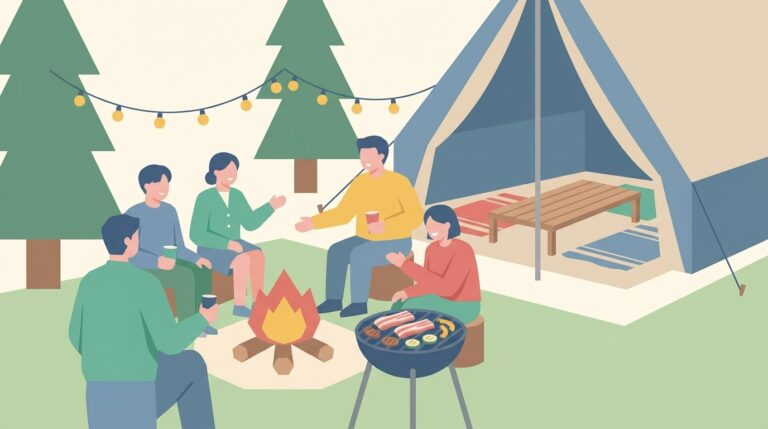
Close your eyes for a second. Imagine you’re at a luxury glamping site in Gapyeong, just outside of Seoul. Fairy lights are strung across the trees, a campfire is crackling in the background, and the air is filled with that unmistakable, mouth-watering scent of sizzling pork belly (Samgyeopsal) over white-hot charcoal. It feels exactly like a scene from In the Soop or Hospital Playlist.
Your Korean friends or coworkers are gathered around the grill. Suddenly, everyone is looking at the meat, then at the tongs. Who grabs them? In Korea, a BBQ party isn’t just about eating; it’s a subtle dance of etiquette, nunchi (social awareness), and bonding.
If you only know how to say “맛있어요” (It’s delicious), you’ll definitely survive. But if you drop the expressions we’re about to cover? You’ll instantly go from ‘foreign guest’ to ‘absolute insider.’ This guide is built from the real experiences of my C1 learners who wanted to not just participate, but truly shine at Korean social gatherings.
Phase 2: Core Expressions Deep Dive
Let’s master the “Holy Trinity” of Korean BBQ expressions.
1. 집게는 제가 잡을게요. (jibge-neun jega jabeulgeyo)
- Pronunciation: [jib-ge-neun / je-ga / ja-bul-kke-yo]
- Meaning: (Literal) I will hold the tongs. / (Real Nuance) I’ll be the designated griller today.
- K-Culture Moment: At any Korean BBQ or glamping trip, grilling is seen as an act of service. When a junior or a considerate friend steps up and boldly claims the tongs, the atmosphere instantly warms up. It shows you’re a team player.
- Editor’s Insight: This phrase sounds so much more natural and proactive than the textbook “제가 고기를 굽겠습니다” (I will grill the meat). It has a casual, confident ring to it.
- Situation Spectrum:
- Friends (Casual): ✅ (Say: “집게 내가 잡는다!”)
- Coworkers (Semi-formal): ✅
- Boss/Elders (Formal): ✅ (Perfectly polite!)
- 🤔 Think About It: Why does Korea have such a strong culture of “taking charge” of the grill? Is cooking a shared responsibility in your culture, or usually left to the host?
2. 불향이 장난 아니네요. (bulhyang-i jangnan anineyo)
- Pronunciation: [bul-hyang-i / jang-nan / a-ni-ne-yo] (Tip: For the ‘hyang’, exhale slightly like you’re smelling a nice candle!)
- Meaning: (Literal) The fire scent is no joke. / (Real Nuance) The smoky flavor is absolutely unreal!
- K-Culture Moment: The griller hands you the first piece of meat. You taste it. Instead of just “맛있어요”, you hit them with this. The griller’s pride will skyrocket.
- Editor’s Insight: “장난 아니다” (It’s no joke) is the ultimate C1 native-level compliment. We use negative phrasing to emphasize extreme positivity.
- Situation Spectrum:
- Friends (Casual): ✅ (Say: “와, 불향 장난 아니다!”)
- Coworkers (Semi-formal): ✅
- Boss/Elders (Formal): ⚠️ (Slightly too casual for a strict CEO, but okay for a friendly manager.)
- 🤔 Think About It: Does your native language also use negative phrases (like “sick,” “insane,” or “no joke”) to describe something incredibly good?
3. 고기 부심 (gogi busim)
- Pronunciation: [go-gi / bu-sim] (The ‘u’ sounds like the ‘oo’ in ‘book’)
- Meaning: (Literal) Meat pride. / (Real Nuance) Having immense pride and confidence in one’s meat-grilling skills.
- K-Culture Moment: You’ll often see K-Pop idols arguing on reality shows over who gets to grill because they both have “gogi busim.” It’s a humorous way to declare yourself the grill master.
- Editor’s Insight: “~부심” comes from 자부심 (pride/self-esteem) and can be attached to anything (e.g., 맵부심 = pride in eating spicy food). Using this slang proves you truly understand modern Korean.
- Situation Spectrum:
- Friends (Casual): ✅
- Coworkers (Semi-formal): ✅ (Great icebreaker)
- Boss/Elders (Formal): 🚫 (Too slangy for formal events)
- 🤔 Think About It: Why do Koreans attach ‘pride’ to specific everyday skills like eating spicy food or grilling meat?
Phase 3: Textbook vs Real Korean
Here is how you upgrade from the textbook to the glamping site.
[Situation 1: Describing the perfect meat texture]
* 📖 Textbook: 고기가 아주 잘 익었습니다. (The meat is cooked very well.)
* 🗣️ Real Korean: 겉바속촉 제대로네요! (geot-ba-sok-chok jedaeroneyo!)
* 💡 Why the difference?: “겉바속촉” is an acronym for 겉은 바삭, 속은 촉촉 (Crispy on the outside, moist on the inside). Koreans love linguistic efficiency, creating four-syllable abbreviations for complex textures!
[Situation 2: When it’s time to drink]
* 📖 Textbook: 우리 건배합시다. (Let’s make a toast.)
* 🗣️ Real Korean: 분위기도 좋은데 짠 할까요? (bunwigi-do joeunde jjan halkkayo?)
* 💡 Why the difference?: “짠” (Jjan) mimics the sound of glasses clinking. Tying the toast to the “atmosphere” (분위기) reflects the Korean love for romanticizing the mood (Gamseong).
Bottom Note: At a C1 level, weaving in words like
제대로네요(It’s proper/legit) and짠softens your tone and makes you sound remarkably fluent and socially adept.
Phase 4: Cultural Context — K-Culture Deep Dive
4-1. Non-Verbal Cues: The Art of Ssam and Pours
Words are only 50% of the game. At a glamping BBQ, your hands speak too. When you pour Soju or beer for a senior, always use two hands (or lightly support your right elbow with your left hand). Also, the ultimate act of Korean affection? Making a Ssam (lettuce wrap) and feeding it directly to your friend or partner. (Just make sure your hands are clean, and don’t make it too big!)
4-2. The K-Reality Show Connection: “Bulmeong”
If you’ve watched BTS’s In the Soop or Gamsung Camping, you’ve seen the climax of every glamping trip: 불멍 (Bulmeong). It literally means “spacing out (멍 때리다) while looking at the fire (불).” After the intense, fast-paced BBQ and drinking games, Koreans retreat to the campfire. This is when the deep, heartfelt conversations happen. The transition from the noisy “짠!” to the quiet “불멍” is the emotional core of Korean camping culture.
Phase 5: Real-Life Roleplay Scenarios
Scenario A: The Coworker Glamping Trip
- Setting: Friday, 8 PM. A luxurious glamping site in Gapyeong. The charcoal is glowing hot.
- Characters:
- YOU: An expat who’s been working in Seoul for 2 years.
- Min-su (32): Your friendly Korean coworker who loves to joke around.
- Manager Park (45): Your supportive but slightly formal boss.
Manager Park: 아, 공기 참 좋네요. 슬슬 고기 구울까요? (Ah, the air is so nice. Shall we slowly start grilling the meat?)
YOU: 네! 제가 오늘 마트에서 제일 좋은 삼겹살로 사 왔어요. (Yes! I bought the best pork belly from the mart today.)
Min-su: 와, 두께 장난 아니다. 이거 누가 구워요? (Wow, the thickness is no joke. Who is grilling this?)
YOU: 집게는 제가 잡을게요! (I’ll take the tongs!)
Manager Park: 에이, 아니에요. OO씨는 우리 팀 외국인 손님이잖아요. 오늘은 제가 굽겠습니다. (Oh, no. You are our team’s foreign guest. I will grill today.)
🔀 Your Turn! How should you respond?
* A) “아, 감사합니다! 잘 먹겠습니다!” (Ah, thank you! I will eat well!)
* B) “과장님, 저 한국 고기 부심 있습니다! 제 실력 보여드릴게요.” (Manager, I have Korean meat pride! Let me show you my skills.)
* C) “진짜요? 대박! 개꿀!” (Really? Awesome! Sweet!)✅ Best Choice: B — Why? In Korea, it’s polite to refuse an offer once or twice (the “push-and-pull” or mildang of manners). By playfully mentioning your gogi busim, you insist on helping while keeping the mood bright and showing off your high-level cultural knowledge!
⚠️ Choice C Analysis: “개꿀” (Sweet/Jackpot) is extreme slang. Using it with Manager Park might make him drop the tongs in shock!
YOU: (Takes the tongs with a smile) 과장님, 저 한국 고기 부심 있습니다! 제 실력 한번 보여드릴게요.
Min-su: 오, 고기 부심을 알아요? 알겠어요, 믿고 맡깁니다. (Oh, you know ‘meat pride’? Alright, we trust you with it.)
(🎭 Stage Direction: You grill the meat perfectly, cutting it into bite-sized pieces.)
YOU: 어때요? 겉바속촉 제대로죠? (How is it? It’s perfectly crispy on the outside and soft inside, right?)
Manager Park: 와… 불향이 장난 아니네요. 다 같이 짠 할까요? (Wow… the smoky flavor is unreal. Shall we all make a toast?)
Scenario B: Bonus — Hanaro Mart Survival
Before glamping, you must visit the local mart (usually Hanaro Mart).
YOU: 사장님, 글램핑 가서 바베큐 할 건데 구이용으로 넉넉히 주세요. (Boss, we are going glamping and having a BBQ, please give us plenty of meat for grilling.)
Butcher: 숯불에 구울 거면 삼겹살이랑 목살 섞어 가는 게 최고지! (If you’re grilling on charcoal, mixing pork belly and pork neck is the best!)
YOU: 아, 그럼 두 개 섞어서 두 근(1.2kg) 주세요! (Ah, then please mix the two and give me 1.2kg!)
Phase 6: 10-Second Shadowing Drill
Master the melody of Korean! Pay attention to the pauses (/) and the emotion tags.
- 😤 Confident: 과장님 / 집게는 / 제가 잡을게요!
(Gwajangnim / jibgeneun / jega jabeulgeyo!) - 😲 Amazed: 와 / 불향이 / 장난 아니네요!
(Wa / bulhyang-i / jangnan anineyo!) - 😊 Relaxed: 분위기에 / 완전 취하네요~
(Bunwigi-e / wanjeon chwihaneyo~)
(Tip: Prolong the ‘~’ slightly at the end for a relaxed, natural camping vibe!)
Phase 7: K-Culture Mini Dictionary
1. 불멍 (Bulmeong)
* Romanization: bulmeong (The ‘으’ sounds like the disgusted sound you make when stepping in gum + ng)
* English: Staring blankly at a fire.
* Context: A must-do healing activity during Korean camping. It’s a time for quiet reflection or deep talks.
2. 눈치 (Nunchi)
* Romanization: nunchi
* English: Social situational awareness.
* Context: Knowing when to flip the meat, when to pour a drink, or when someone wants to stop drinking without them having to say it out loud.
3. 쌈 (Ssam)
* Romanization: ssam
* English: A lettuce or sesame leaf wrap filled with meat, garlic, and ssamjang.
* Context: The quintessential Korean BBQ bite. Wrapping one for someone else is a sign of affection.
4. 회식 (Hoesik)
* Romanization: hoesik
* English: Company dinner/gathering.
* Context: A glamping trip with coworkers is essentially a 24-hour hoesik. Knowing your BBQ etiquette here can genuinely boost your office relationships!
Phase 8: Traveler Survival Kit
Even if you aren’t with Korean friends, you might rent a BBQ grill at a glamping site yourself. Here are the survival phrases you need for the site manager!
🆘 Survival Phrases TOP 3
* 🇰🇷 “사장님, 숯 좀 추가해 주세요.” (Sajangnim, sut jom chugahe juseyo.)
* 🗣️ English: Boss, please add some more charcoal.
* 🇰🇷 “불판 좀 갈아주실 수 있나요?” (Bulpan jom garajusil su innayo?)
* 🗣️ English: Could you change the grill mesh, please?
* 🇰🇷 “호일 좀 얻을 수 있을까요?” (Hoil jom eodeul su isseulkkayo?)
* 🗣️ English: Could I get some aluminum foil? (Great for grilling sweet potatoes or garlic!)📌 Editor’s Travel Note
* Where to shop: “Hanaro Mart” (하나로마트) is the undisputed king of camping groceries in Korea. They have the freshest local meat and pre-washed veggies.
* Trash Disposal: Korean glamping sites are strict about recycling (분리수거). Make sure you know where the plastics, cans, and general waste go before checking out!
Phase 9: Critical Thinking — “One Step Deeper”
🧠 Think Deeper: Food & Identity (The Communal Grill)
In many Western cultures, BBQ means one person standing at the grill, cooking individual portions (like a steak or a burger per person), and serving them on separate plates. In Korea, the grill is literally in the center of the table. Everyone cooks together, reaches in together, and eats from the same communal space. The Korean BBQ table is a fascinating paradox: it has strict hierarchical rules (who pours the drinks, who grabs the tongs), yet it is the ultimate symbol of egalitarianism and “Jeong” (정 – deep connection). Sharing the grill means you are no longer strangers; you are “식구” (family/those who eat together).💬 Your Turn: Does your culture have a dining style that brings everyone to cook and eat from a shared center? Share it in the comments!
Phase 10: FAQ & Mistake Prevention
- Q: Is it okay to make a Ssam for my boss?
- A: Maybe! If it’s a very relaxed glamping trip and you have a great relationship, it’s a cute gesture. But generally, giving ssam is reserved for close friends, romantic partners, or family. It might be a bit too intimate for a strict boss!
- Q: What if I accidentally burn the meat?
- A: Just laugh and say, “아이고, 제가 고기 굽는 건 아직 초보네요!” (Oops, I’m still a beginner at grilling meat!). Someone will happily rescue you.
❌ Common Mistake #1: Flipping the meat constantly!
✅ Do this instead: Koreans have a strong belief that pork belly should only be flipped three times to keep the juices in. Wait until the top starts “sweating” before you flip!❌ Common Mistake #2: Eating before the eldest person.
✅ Do this instead: Even at a casual glamping site, wait for the oldest person or the highest-ranking coworker to lift their chopsticks or take the first bite before you dive in.
Phase 11: Summary & Action Items
- One-Liner Summary: Grab the tongs with confidence using “집게는 제가 잡을게요” and praise the vibe with “불향 장난 아니네요” to become the MVP of any Korean glamping trip.
-
Action Mission 3-Step:
- 🥉 Bronze (Solo): Look in the mirror and confidently declare your “고기 부심” (Meat pride) out loud 3 times.
- 🥈 Silver (Online): Post a picture of your dinner today on social media or a Korean language community and caption it: “분위기에 취하네요~”
- 🥇 Gold (Real-world): The next time you go to a Korean BBQ restaurant, politely tell the waiter or your friends: “오늘은 집게 제가 잡을게요!”
- K-Culture Mission: Watch an episode of a Korean reality show (like In the Soop or Camping Vibes) and spot the exact moment they transition from the loud BBQ party to the quiet “Bulmeong” time!
Phase 12: Interactive Quiz
1. Situational Judgment:
Your Korean friend grills a thick piece of pork belly and gives you the first piece. You chew it, and it’s incredibly crispy on the outside but juicy inside. What is the MOST natural C1 response?
* A) 아주 맛있습니다. 고맙습니다.
* B) 겉바속촉 장난 아니네요!
* C) 불멍이 아주 좋네요.
(Answer: B. “A” is too textbook, and “C” means staring at the fire, which makes no sense here!)
2. True or False — K-Culture Edition:
At a Korean glamping site, it is considered polite and highly encouraged to constantly flip the pork belly every 10 seconds so it doesn’t burn.
(Answer: False! Koreans take their “Gogi Busim” seriously and insist on flipping it as few times as possible to trap the “육즙” – meat juices.)
3. Fill in the Blank:
When you want to volunteer to grill the meat, you say: “[ ]는 제가 잡을게요!”
(Answer: 집게 – Tongs)
Frequently Asked Questions (FAQ)
Q: What does "집게는 제가 잡을게요. (jibge-neun jega jabeulgeyo)" mean in Korean and how do you pronounce it?
A: In Korean, "집게는 제가 잡을게요. (jibge-neun jega jabeulgeyo)" is pronounced [jib-ge-neun / je-ga / ja-bul-kke-yo] and means: (Literal) I will hold the tongs. / (Real Nuance) I'll be the designated griller today.
Q: What does "불향이 장난 아니네요. (bulhyang-i jangnan anineyo)" mean in Korean and how do you pronounce it?
A: In Korean, "불향이 장난 아니네요. (bulhyang-i jangnan anineyo)" is pronounced [bul-hyang-i / jang-nan / a-ni-ne-yo] and means: (Literal) The fire scent is no joke. / (Real Nuance) The smoky flavor is absolutely unreal!
Q: What does "고기 부심 (gogi busim)" mean in Korean and how do you pronounce it?
A: In Korean, "고기 부심 (gogi busim)" is pronounced [go-gi / bu-sim] and means: (Literal) Meat pride. / (Real Nuance) Having immense pride and confidence in one's meat-grilling skills.






