

Phase 1: Empathy (Immersive Open)
Hello! This is your Daily Hangul Editor.
Picture this: It’s 12:30 PM in a bustling Gangnam district. The post-lunch coffee rush is at its peak. You’ve seen this exact scene in dozens of K-Dramas—the sleek executive confidently striding to the counter, ordering an ‘A-a’ (Iced Americano), and walking out with a perfect cup in seconds.
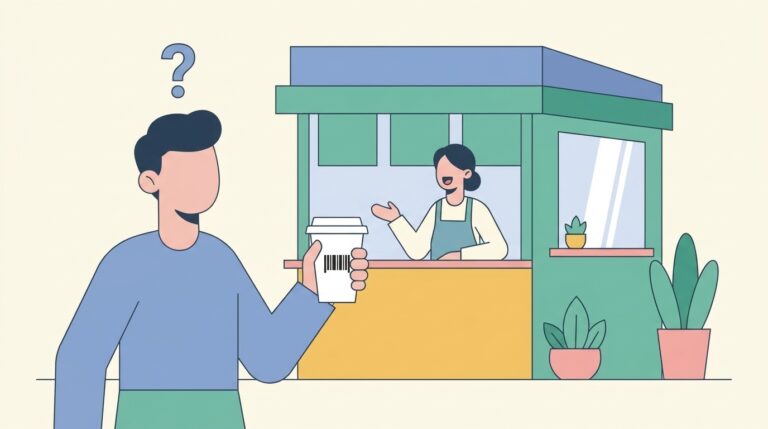
Inspired, you step up to the register. You order your iced latte flawlessly in Korean. But instead of a nod and a receipt, the cashier points to a mysterious sticker with a barcode and asks a rapid-fire question ending in “…괜찮으신가요?” (Is that okay?). Suddenly, the total price is 300 won higher than what’s on the menu. The people behind you in line are shifting their weight. The dreaded nunchi (social pressure) kicks in.
Welcome to the reality of the 일회용 컵 보증금제 (Disposable Cup Deposit System).
Implemented heavily in regions like Jeju and Sejong, and trickling into major cities, this eco-friendly initiative requires a 300-won deposit for disposable cups, which you get back when you return the cup. As a C2 learner, you already know how to order coffee. But navigating the bureaucratic nuances of deposits, apps, and unmanned return machines? That requires a whole new level of fluency. Let’s master the language behind the confusion so you can reclaim your K-Drama protagonist moment.
Phase 2: Deep Dive into Core Expressions
1. 일회용 컵 보증금 300원이 추가되는데 괜찮으신가요?
- Pronunciation: Ilyeoyong keop bojeunggeum sambaegwoni chugadoeneunde gwaenchaneusingayo?
- Sound-alike guide: eel-hway-yong cup bo-jeung-geum sam-baek-won-ee choo-gah-dway-neun-deh gwen-chan-uh-sheen-gah-yo?
- Meaning: Literal: “A 300-won disposable cup deposit is added, is that okay?” / Real nuance: “Just a heads up, I have to charge you an extra 300 won because you’re taking this to go.”
- K-Culture Moment: This is the ultimate “fine print” of Korean customer service. In Korea, surprisingly charging extra without consent is a huge faux pas, so cashiers use the most polite, softened phrasing possible to soften the blow.
- Editor’s Insight: Notice the use of the passive voice
추가되다(to be added) rather than추가하다(to add). The cashier isn’t taking your money; the system is doing it. This passive construction is crucial in advanced Korean service language to avoid sounding aggressive.- Situation Spectrum:
- Casual: 🚫 (Never used among friends)
- Semi-formal: ⚠️ (Too polite for regular office talk)
- Formal/Service: ✅ (Standard service industry phrase)
- 🤔 Think About It: Why does Korean service language heavily rely on the passive voice and asking for permission (“괜찮으신가요?”) even for mandatory government policies? How does this reflect the societal value placed on consumer harmony?
2. 컵 반납은 무인 회수기를 이용해 주세요.
- Pronunciation: Keop bannabeun muin hoesugireul iyonghae juseyo.
- Sound-alike guide: cup ban-nahb-eun moo-een hway-soo-ghee-reul ee-yong-hay joo-say-yo.
- Meaning: Literal: “For cup returns, please use the unmanned recovery machine.” / Real nuance: “Don’t hand the dirty cup to me, scan it at the kiosk over there.”
- K-Culture Moment: South Korea is hyper-automated. From ordering at kiosks to returning trays, the
무인(unmanned/staffless) culture is ubiquitous. You’ll see these massive machines in the corner of cafes that look like reverse vending machines.- Editor’s Insight: The word
회수기(recovery machine) sounds quite bureaucratic. In daily life, native speakers might just say기계(machine), but formal signage and staff will always use무인 회수기.- Situation Spectrum:
- Casual: 🚫
- Semi-formal: ⚠️
- Formal/Service: ✅
- 🤔 Think About It: Does the rise of
무인(unmanned) culture make living in Korea easier for foreigners by reducing speaking anxiety, or harder by requiring complex digital literacy?3. 보증금은 앱으로 환불받으시겠어요?
- Pronunciation: Bojeunggeumeun aepeuro hwanbul-badeusigesseoyo?
- Sound-alike guide: bo-jeung-geum-eun app-eu-ro hwan-bool-bah-deu-shee-gess-uh-yo?
- Meaning: Literal: “Would you like to receive the deposit refund via the app?” / Real nuance: “Open your cafe app and get your barcode ready so I can send you your 300 won.”
- K-Culture Moment: In Korea, cash is practically obsolete. Everything from point accumulation to refunds happens via KakaoTalk or specific franchise apps (like the Starbucks Korea app or the ‘자원순환보증금’ app).
- Editor’s Insight:
환불받다(to receive a refund) is a compound verb you must master. When returning the cup, the deposit isn’t given in physical coins unless you specifically ask (and sometimes, they literally don’t have coins!).- Situation Spectrum:
- Casual: 🚫
- Semi-formal: ⚠️
- Formal/Service: ✅
- 🤔 Think About It: How does this hyper-digital ecosystem affect the elderly or tourists in Korea?
Phase 3: Textbook vs. Real Korean
[Situation 1: Ordering a drink and clarifying you brought your own tumbler]
* 📖 Textbook Korean: 저는 개인 컵을 가지고 왔습니다. 여기에 커피를 담아 주십시오. (I have brought my personal cup. Please put the coffee in here.)
* 🗣️ Real Korean: 텀블러 할인 되나요? 여기 담아주세요. (Does this get a tumbler discount? Please put it in here.)
* 💡 Why the difference?: Koreans value efficiency (빨리빨리). Stating you brought a cup is obvious if you are holding it; asking about the discount (usually 300-400 won) gets straight to the transactional point.
[Situation 2: Trying to return the cup to a busy staff member]
* 📖 Textbook Korean: 보증금을 돌려받고 싶습니다. 이 컵을 반납하겠습니다. (I want to get my deposit back. I will return this cup.)
* 🗣️ Real Korean: (Holding the cup up slightly) 이거 반납이요. 앱 바코드 찍을게요. (Returning this. I’ll scan my app barcode.)
* 💡 Why the difference?: You rarely need full sentences at a cafe counter. Noun-ending phrases like ~반납이요 combined with immediate action (preparing the barcode) show high social awareness and consideration for the line behind you.
Bottom Note: At a C2 level, your goal isn’t just correct grammar; it’s matching the rhythm of the environment. In a busy cafe, brevity equals politeness.
Phase 4: Cultural Context — K-Culture Deep Dive
4-1. Non-Verbal Cues: The Cafe ‘Nunchi’
When the disposable cup deposit system was introduced, it caused massive bottlenecks. The most important non-verbal skill here is Nunchi (눈치)—reading the room.
If you are returning a cup, make sure it is completely empty and rinsed (yes, there is a sink next to the return machines!). Never approach the machine with a half-full cup of melting ice. Furthermore, have your phone screen bright and the app barcode open before you step up to the scanner. Fumbling with your phone while a line of caffeine-deprived office workers glares at your back is a uniquely stressful Korean experience.
4-2. K-Culture Connection: The “Eoljuga” Lifestyle Meets Eco-Policy
Korea’s obsession with Iced Americanos is legendary. There is even a famous slang term, 얼죽아 (Eoljuga – Freezing to death, but still Iced Americano). K-Pop idols are constantly photographed holding plastic cups filled with ice, even in the dead of winter.
However, this cultural love for convenient, on-the-go iced coffee created a massive plastic waste issue. The deposit system is a direct clash between Korea’s 빨리빨리 (convenience/speed) culture and its modern push for environmental sustainability. In K-Dramas, you rarely see characters washing out their plastic cups to scan a barcode for 300 won, but in real life, it’s a daily ritual for millions of office workers.
Phase 5: Real-life Roleplay Scenario
Setting: Friday, 1:00 PM. A busy franchise cafe in Jeju Island. The line is out the door. You are standing with your Korean colleague, Min-su, trying to get your post-lunch coffee. You are holding an empty cup from yesterday.
Characters:
– YOU (Reader): An expat working in Korea, confident but slightly confused by the new return machine.
– Min-su (32): Your Korean coworker. Drinks 3 iced americanos a day. Always in a hurry.
– Staff (20s): Fast, polite, but clearly exhausted by explaining the cup policy 100 times a day.
Dialogue:
Min-su: 대리님, 오늘 커피는 제가 살게요. 늘 드시던 아아 맞으시죠? 🧊
(Daerinim, oneul keopineun jaega salgeyo. Neul deusideon a-a majeushijyo?)
[Translation: Assistant Manager, I’ll buy the coffee today. Your usual iced americano, right?]
YOU: 아, 네! 감사합니다. 아, 잠시만요. 저 어제 마신 컵 반납부터 할게요.
(Ah, ne! Gamsahamnida. Ah, jamsimanyo. Jeo eoje masin keop bannapbuteo halgeyo.)
[Translation: Ah, yes! Thank you. Oh, wait a second. I’m going to return the cup I drank from yesterday first.]
(🎭 Stage Direction: You walk up to the giant kiosk that says ‘무인 회수기’.)
Min-su: 어? 대리님, 그거 앱 설치하셨어요? 바코드 있어야 되는데.
(Eo? Daerinim, geugeo aep seolchihasyeosseoyo? Bakodeu isseoya doeneunde.)
[Translation: Huh? Assistant Manager, did you install the app for that? You need a barcode.]
YOU: 네, ‘자원순환’ 앱 깔았어요. 바코드 스캔… 어? 왜 안 되지?
(Ne, ‘jawonsunhwan’ aep kkarasseoyo. Bakodeu seukaen… eo? Wae an doeji?)
[Translation: Yes, I installed the ‘Resource Circulation’ app. Scanning barcode… huh? Why isn’t it working?]
(🎭 Stage Direction: The machine beeps angrily: 삐-! 손상된 바코드입니다.)
Staff: 손님, 혹시 컵에 붙은 스티커 훼손됐나요? 스티커 찢어지면 기계가 인식을 못 해서요.
(Sonnim, hoksi keope buteun seutikeo hwesondoenna-yo? Seutikeo jjijeojimyeon gigyega insigeul mot haeseoyo.)
[Translation: Customer, is the sticker attached to the cup damaged by any chance? If the sticker is torn, the machine can’t recognize it.]
🔀 Your Turn! How do you respond to the staff?
– A) “아… 네. 그럼 이건 그냥 버려야 하나요?” (Ah… yes. Then do I just have to throw this away?)
– B) “왜 이렇게 불편하게 만들었습니까?” (Why did you make this so inconvenient?)
– C) “스티커가 조금 젖었는데, 카운터에서 직접 환불 안 될까요?”✅ Best Choice: C — “The sticker got a bit wet, could I get a refund directly at the counter?” (seutikeoga jogeum jeojeonneunde, kaunteo-eseo jikjeop hwanbul an doelkkayo?). This is high-level negotiation. It explains the problem logically and asks for an alternative solution respectfully.
⚠️ Choice A Analysis: Safe, but you lose your 300 won!
🚫 Choice B Analysis: Extremely rude. The staff didn’t make the policy; the government did.
Staff: 카운터로 주시면 제가 앱으로 보증금 넣어드릴게요. 앱 바코드 보여주시겠어요?
(Kaunteoro jusimyeon jaega aepeuro bojeunggeum neo-eodeurilgeyo. Aep bakodeu boyeojusigesseoyo?)
[Translation: If you give it to the counter, I’ll put the deposit in your app. Could you show me your app barcode?]
YOU: 네, 여기요. 감사합니다. 아, 그리고 저희 주문도 같이 할게요.
(Ne, yeogiyo. Gamsahamnida. Ah, geurigo jeo-hui jumundo gachi halgeyo.)
[Translation: Yes, here. Thank you. Oh, and we’ll place our order together too.]
Staff: 일회용 컵 보증금 300원씩 두 잔 추가되는데 괜찮으신가요?
(Ilyeoyong keop bojeunggeum sambaegwon-ssik du jan chugadoeneunde gwaenchaneusingayo?)
[Translation: A 300 won disposable cup deposit will be added for each of the two cups, is that okay?]
YOU: 네, 괜찮습니다. 결제해 주세요!
(Ne, gwaenchansseumnida. Gyeoljehae juseyo!)
[Translation: Yes, that’s fine. Please process the payment!]
🎁 Bonus Roleplay: The Tumbler Flex
(If you want to bypass the deposit system entirely…)
YOU: 아이스 아메리카노 한 잔이요. 여기 텀블러에 담아주세요.
(Aiseu amerukano han janiyo. Yeogi teombeulleo-e damajuseyo.)
Staff: 네, 개인 컵 할인 400원 적용해 드릴게요. 뚜껑 열어서 주시겠어요?
(Ne, gaein keop hal-in sabaegwon jeogyonghae deurilgeyo. Ttuggeong yeoreoseo jusigesseoyo?)
YOU: 아, 네! (Handing it over) 영수증은 버려주세요.
(Ah, ne! Yeongsujeung-eun beoryeojuseyo.)
Phase 6: 10-Second Shadowing Drill
Practice this sentence until it rolls off your tongue smoothly. This is your ultimate “polite complaint” survival phrase.
🥺 카운터에서 / 직접 환불 / 안 될까요?
(kaunteo-eseo / jikjeop hwanbul / an doelkkayo?)
“Could I get a refund / directly / at the counter?”
Focus: Raise your intonation slightly at the end of 안 될까요? to sound apologetic and hopeful, not demanding.
Phase 7: K-Culture Mini Dictionary
1. 보증금 (Bojeunggeum)
* Romanization: bojeunggeum
* English: Deposit
* Context: Used everywhere from renting an apartment (jeonse/wolse) to renting a power bank or buying coffee in a disposable cup.
2. 무인 회수기 (Muin hoesugi)
* Romanization: muin hoesugi
* English: Unmanned return machine
* Context: A prime example of Korea’s rapidly aging society shifting toward automation to replace human labor in service industries.
3. 얼죽아 (Eoljuga)
* Romanization: eoljuga
* English: “Even if I freeze to death, Iced Americano”
* Context: A modern proverb representing the Korean resilience (and stubbornness) when it comes to their favorite caffeinated beverage.
4. 빨리빨리 (Ppalli-ppalli)
* Romanization: ppalli-ppalli
* English: Hurry up / Fast-paced culture
* Context: The cultural backdrop that makes the slow process of scanning cup barcodes so ironically frustrating for locals.
Phase 8: Traveler Survival Kit
If you are traveling through Jeju or Sejong (or visiting major eco-conscious franchise cafes in Seoul), you will face this deposit system. Here is your cheat sheet.
🆘 Survival Phrase #1: Bypassing the App
– 🇰🇷 “외국인이라 앱이 없는데, 현금으로 받을 수 있나요?”
– (Oeguginira aebi eomneunde, hyeongeumeuro badeul su innayo?)
– 🗣️ “I’m a foreigner so I don’t have the app. Can I get it in cash?”
– 📍 Used at: The cafe counter when the machine demands a Korean phone number.
– 💡 Pro Tip: Some places can refund the deposit directly onto your T-Money transportation card!🆘 Survival Phrase #2: Avoiding the system altogether
– 🇰🇷 “머그잔으로 주세요.”
– (Meugeujaneuro juseyo.)
– 🗣️ “Please give it to me in a mug.”
– 📍 Used at: Ordering counter.
– 💡 Pro Tip: If you are drinking inside the cafe, always ask for a mug. You avoid the 300 won charge entirely and save the planet.
📌 Editor’s Travel Note:
– App Access: The official return app often requires local identity verification (Korean phone number). Tourists will struggle with this.
– Sticker Rule: DO NOT rip the barcode sticker off your cup. It’s like voiding a warranty. The machine reads the barcode, not the plastic itself.
– Cross-brand Returns: You can usually return a Starbucks cup to a Megacoffee if both stores participate in the system. The barcode is universal within the government system!
Phase 9: Critical Thinking Corner — “One Step Deeper”
🧠 Think Deeper: Language & Power in the Digital Divide
The vocabulary born from this eco-policy—앱 (app), 바코드 (barcode), 무인 회수기 (unmanned machine)—highlights a growing social issue in Korea: the digital divide. While the younger MZ generation seamlessly navigates these loanwords and technologies, elderly Koreans often face immense cognitive dissonance and alienation.
The language of modern Korean convenience is heavily anglicized (kiosk, app, scan). Therefore, mastering C2 Korean isn’t just about learning pure Hanja or traditional grammar; it’s about understanding how English loanwords are wielded as tools of daily survival and social participation. When you see an elderly person struggling to understand 바코드 스캔해 주세요, you are witnessing a language barrier happening entirely within their native tongue.
💬 Your Turn: How does your home country handle eco-friendly policies in daily life? Does the burden fall on the consumer or the corporation? Share in the comments!
Phase 10: FAQ & Avoiding Mistakes
Q: Do I have to wash the cup before returning it?
Yes! Or at least empty it completely. Tossing a cup half-full of liquid into the machine will cause it to malfunction, and you will become the enemy of every barista in the store.
Q: “Can I use 반말 (casual language) to the machine?”
Funny enough, no. You don’t speak to the machine, but if you mutter to yourself out of frustration (e.g., “아씨, 왜 안 돼” – Ah geez, why isn’t it working), make sure it doesn’t sound like you are directing it at the staff.
❌ Common Mistake #1: Crushing the cup to save space.
✅ Do this instead: Keep the cup’s original shape. The machine needs to scan the barcode and measure the cup’s dimensions.❌ Common Mistake #2: Asking “왜 300원 더 비싸요?” (Why is it 300 won more expensive?) aggressively.
✅ Do this instead: Say “아, 보증금 포함된 가격이죠?” (Ah, the deposit is included, right?) to show you understand the system.
Phase 11: Summary & Action Items
One-Liner Summary: Surviving Korea’s cup deposit system requires mastering passive service phrasing and navigating the hyper-digital return process.
Action Mission:
– 🥉 Bronze: Stand in front of a mirror and practice asking: “카운터에서 직접 환불 안 될까요?”
– 🥈 Silver: Leave a comment below using the word 무인 회수기 in a full sentence.
– 🥇 Gold (For those in Korea): Next time you order coffee to-go, proudly say “보증금 포함해서 결제해 주세요!” (Please charge me including the deposit!) before they even ask.
☕ K-Culture Mission:
The next time you watch a K-Drama set in a modern office or cafe, pay close attention to the cups the characters are holding. Do they have the distinct blue barcode stickers? You’ll start noticing this little slice of Korean bureaucratic reality everywhere!
Phase 12: Quiz — Interactive Challenge
1. Situational Judgment:
You return your cup to the kiosk, but the screen says error. The line behind you is getting long. What is the most culturally appropriate (Nunchi) thing to do?
– A) Bang on the machine until it works.
– B) Step aside immediately, let the next person go, and ask the counter staff quietly.
– C) Shout across the cafe: “여기 기계 고장 났어요!”
(Answer: B. Stepping aside maintains the ‘빨리빨리’ flow of the cafe and shows high social consideration.)
2. Fill in the Blank:
직원: 일회용 컵 보증금 300원이 ____________ 괜찮으신가요?
– A) 뺏기는데
– B) 추가되는데
– C) 비싸지는데
(Answer: B. 추가되는데 (is added) is the polite, passive voice standard in service.)
3. True or False: K-Culture Edition
“If you are a tourist without a Korean phone number, it is impossible to get your 300 won deposit back.”
(Answer: False. While the app is standard, you can ask for cash refunds directly at the counter by explaining you are a foreigner without the app.)
Frequently Asked Questions (FAQ)
Q: What does "일회용 컵 보증금 300원이 추가되는데 괜찮으신가요?" mean in Korean and how do you pronounce it?
A: In Korean, "일회용 컵 보증금 300원이 추가되는데 괜찮으신가요?" is pronounced [Ilyeoyong keop bojeunggeum sambaegwoni chugadoeneunde gwaenchaneusingayo?] and means: Literal: "A 300-won disposable cup deposit is added, is that okay?" / Real nuance: "Just a heads up, I have to charge you an extra 300 won because you're taking this to go."
Q: What does "컵 반납은 무인 회수기를 이용해 주세요." mean in Korean and how do you pronounce it?
A: In Korean, "컵 반납은 무인 회수기를 이용해 주세요." is pronounced [Keop bannabeun muin hoesugireul iyonghae juseyo.] and means: Literal: "For cup returns, please use the unmanned recovery machine." / Real nuance: "Don't hand the dirty cup to me, scan it at the kiosk over there."
Q: What does "보증금은 앱으로 환불받으시겠어요?" mean in Korean and how do you pronounce it?
A: In Korean, "보증금은 앱으로 환불받으시겠어요?" is pronounced [Bojeunggeumeun aepeuro hwanbul-badeusigesseoyo?] and means: Literal: "Would you like to receive the deposit refund via the app?" / Real nuance: "Open your cafe app and get your barcode ready so I can send you your 300 won."







