

Phase 1: Empathy & The “Why”
Hello! I’m your Daily Hangul Editor.
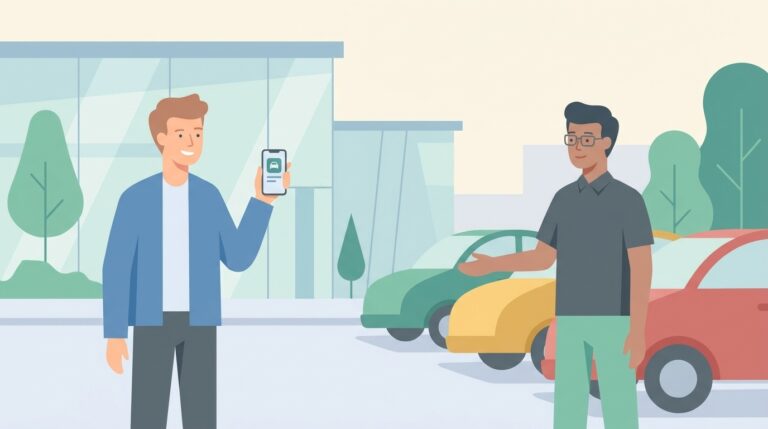
Imagine this: You’ve finally decided it’s time to buy a car in Korea. You’ve had enough of hauling groceries on the subway, and you want to drive down to Busan for the weekend. You open a Korean used car app like SK Encar or K-Car, and suddenly, you are hit with a wall of jargon.
In Korean movies, the used car lot is often portrayed as the wild west—a place where smooth-talking dealers in sharp suits try to sell you a lemon while calling you “Sajang-nim” (Boss). While the industry has become highly modernized and safe today, the fear of becoming a 호갱 (Hogaeng – a gullible customer) is real, even for locals.
At the C1 level, you aren’t just trying to say “I want to buy a car.” You need to negotiate, read between the lines, and protect yourself. If you don’t know the specific lingo of the Korean mobility market, you might end up paying more for a chim-su-cha (flooded car). But don’t worry! I’ve guided dozens of expats through this exact process. Today, we’re going to learn how to navigate the Korean used car market like a seasoned local.
Phase 2: Core Expressions Deep Dive
Let’s look at the absolute must-know expressions to sound like you know what you’re doing.
1. 허위 매물 아니죠?
- Pronunciation: [heo-wi mae-mul a-ni-jo?]
- Sound-alike guide: Huh-we may-mool ah-nee-jo?
- Meaning: Literal: “This isn’t a fake listing, right?” / Real nuance: “I know the tricks, so don’t try to bait-and-switch me.”
- K-Culture Moment: You see an amazing car online for an unbelievably low price. You call the dealer, show up, and suddenly that car “just got sold,” but they have “another one just like it.” This is the classic 허위 매물 (bait-and-switch) tactic. Asking this upfront on the phone establishes dominance.
- Editor’s Insight: This phrase sets a firm boundary. It shows you aren’t a naive foreigner. Say it politely but firmly, almost like you’re confirming a fact.
- Situation Spectrum:
- Talking to a dealer over the phone (Semi-formal): ✅
- Asking a friend about a deal (Casual): ✅
- Formal business negotiations (Formal): ⚠️ (A bit too direct for B2B, but fine for consumer-dealer)
- 🤔 Think About It: Why does Korea have a specific term for “fake listings”? The rapid digitization of commerce in Korea created highly competitive online marketplaces where grabbing the customer’s attention became a fierce, sometimes deceptive, battle.
2. 쿨거래 하시면 얼마까지 알아보고 오셨어요?
- Pronunciation: [kul-geo-rae ha-si-myeon eol-ma-kka-ji a-ra-bo-go o-syeot-seo-yo?]
- Sound-alike guide: Cool-guh-ray ha-shee-myun ul-ma-kka-jee ah-rah-bo-go oh-shyut-suh-yo?
- Meaning: Literal: “If we do a cool transaction, up to how much did you research?” / Real nuance: “If we make this quick and easy, what’s your target price?”
- K-Culture Moment: You are standing in the lot. The dealer assesses you and drops this line. 쿨거래 (Cool transaction) means buying without excessive haggling or complaints. The dealer is asking you to show your cards first.
- Editor’s Insight: This is a psychological game. If they ask “얼마까지 알아보고 오셨어요?” (How much were you expecting to pay?), never give your exact budget. It’s a famous meme in Korea, originating from electronics markets like Yongsan, used to gauge how much of a Hogaeng you are.
- Situation Spectrum:
- Dealer to Customer (Semi-formal): ✅
- Between friends (Casual): 🚫
- 🤔 Think About It: “Cool-geo-rae” reflects the “Palli-palli” (hurry up) culture. Fast, efficient, and emotionless transactions are highly valued in the modern Korean second-hand market (like on the app Karrot/Danggeun).
3. 무사고 차량 맞나요? 보험 이력 좀 보여주세요.
- Pronunciation: [mu-sa-go cha-ryang mat-na-yo? bo-heom i-ryeok jom bo-yeo-ju-se-yo.]
- Sound-alike guide: Moo-sah-go cha-ryang mat-nah-yo? Bo-hum ee-ryuk jom bo-yuh-joo-say-yo.
- Meaning: Literal: “Is this an accident-free vehicle? Please show me the insurance history.”
- K-Culture Moment: You’re sitting in the dealer’s office. They claim the car is flawless. You drop this line, and they suddenly remember a “tiny fender bender.”
- Editor’s Insight: In Korea, “무사고” (Accident-free) can technically mean the core frame wasn’t damaged, even if doors or bumpers were replaced. Always ask for the 보험 이력 (Insurance history via CarHistory) to see the real story.
- Situation Spectrum:
- Dealer negotiations (Semi-formal): ✅
- Inspecting a car (Formal): ✅
- 🤔 Think About It: Information asymmetry is huge in mobility markets. Does your home country have a transparent system for checking a car’s history (like Carfax)? How does it compare to Korea’s reliance on dealer honesty vs. apps?
Phase 3: Textbook vs. Real Korean
Let’s upgrade your vocabulary from textbook robot to street-smart negotiator.
[Situation 1: Asking for a discount]
* 📖 Textbook Korean: 가격을 할인해 주실 수 있습니까? (Could you please discount the price?)
* 🗣️ Real Korean: 사장님, 네고 좀 쳐주세요. / 이유 있는 네고 가능할까요? (Boss, cut me a deal. / Is a reasonable negotiation possible?)
* 💡 Why it’s different: “네고” (Nego, from negotiation) is the standard slang. “이유 있는 네고” (Reasonable negotiation) shows you aren’t just begging for money, but asking for a discount based on a scratch or tire wear you found.
[Situation 2: Asking about the car’s condition]
* 📖 Textbook Korean: 자동차의 상태가 아주 좋습니까? (Is the condition of the car very good?)
* 🗣️ Real Korean: 이거 잔고장 없어요? 풀옵션인가요? (Does this have any chronic minor breakdowns? Is it fully loaded?)
* 💡 Why it’s different: Koreans love “풀옵션” (Full options). Whether renting an apartment or buying a car, having all the built-in perks is a major selling point.
[Situation 3: Explaining why you are there]
* 📖 Textbook Korean: 저는 중고차를 사러 여기에 왔습니다. (I came here to buy a used car.)
* 🗣️ Real Korean: 엔카 보고 연락드렸는데요. 그 번호판 차량 보러 왔어요. (I contacted you after seeing Encar. I’m here to see the car with that license plate.)
* 💡 Why it’s different: Dealers have hundreds of cars. Specifying the platform (Encar/K-Car) and the exact license plate (번호판) proves you did your homework and aren’t just a walk-in ready to be scammed.
Phase 4: Cultural Context — K-Culture Deep Dive
4-1. Non-Verbal Nunchi at the Car Lot
When negotiating in Korea, Nunchi (눈치) is everything. Do not act overly excited, even if it’s your dream car. Maintain a poker face. Cross your arms slightly when inspecting the car. Even if you know nothing about engines, opening the hood and looking thoughtfully at it with a flashlight sends a non-verbal cue: “I am thorough. Don’t mess with me.”
4-2. The “Car-Pali” Trope in K-Media
If you’ve watched Korean crime thrillers or comedies, you’ve likely seen the classic “Used Car Dealer” trope. They usually wear flashy clothes, have slicked-back hair, and use exaggerated friendliness (“Aigoo, brother!”). In Korean slang, dishonest dealers are derogatorily called 차팔이 (Cha-pal-i).
Critical View: While media portrays them as scammers, reality has changed. Major conglomerates have entered the market (like K-Car or Hyundai Certified Used Cars), bringing corporatized, non-negotiable fixed-price systems (정찰제). So, while the street-smart negotiation language is fun and necessary for independent lots, you might just be clicking “Buy Now” on an app in 2024!
Phase 5: Real-Life Roleplay Scenario
Setting: Saturday afternoon at a massive used car complex in Suwon. Hundreds of cars are shining under the sun. You are looking at a sleek white Hyundai Avante.
Characters:
– YOU: An expat who needs a car for commuting. You’ve researched the market prices for weeks.
– Dealer Kim (45): Friendly, fast-talking, holds a clipboard.
Dialogue:
Dealer Kim: 아이고, 손님! 차 볼 줄 아시네. 이 아반떼가 진짜 꿀매물이에요. 🚗
(Aigoo, sonnim! Cha bol jul asine. I abanttega jinjja kkul-maemul-ieyo.)
[Wow, customer! You have an eye for cars. This Avante is a seriously sweet deal.]
YOU: 엔카에서 보고 왔는데, 무사고 차량 맞죠?
(Enka-eseo bogo watneunde, mu-sa-go cha-ryang matjo?)
[I came after seeing it on Encar. It’s an accident-free car, right?]
Dealer Kim: 에이, 당연하죠! 단순 교환만 있는 무사고입니다.
(Ei, dangyeonhajo! Dansun gyohwanman inneun mu-sa-go-imnida.)
[Hey, of course! It’s “accident-free” with just simple replacements.]
(🎭 Stage Direction: Kim subtly kicks the tire to show how sturdy it is.)
YOU: 단순 교환이요? 범퍼 쪽인가요? 보험 이력 좀 볼 수 있을까요?
(Dansun gyohwaniyo? Beompeo jjokingayo? Boheom iryeok jom bol su isseulkkayo?)
[Simple replacements? The bumper? Can I see the insurance history?]
Dealer Kim: 아, 그럼요. 사무실 가서 보여드릴게요. 근데 오늘 계약하시면 제가 블박(블랙박스) 하나 서비스로 달아드릴게!
(Ah, geureomyo. Samusil gaseo boyeodeurilgeyo. Geunde oneul gyeyakhasimyeon jega beul-bak hana seobiseuro daradeurilge!)
[Ah, sure. I’ll show you in the office. But if you sign today, I’ll install a dashcam (black box) as a free service!]
🔀 Your Turn! How do you respond?
– A) “와! 감사합니다. 당장 계약할게요!” (Wow! Thank you. I’ll sign right now!)
– B) “블박은 됐고요, 타이어 마모가 심한데 가격 네고 좀 쳐주세요.”
– C) “저기… 깎아주세요.”✅ Best Choice: B — “I’m good on the dashcam, but the tires are heavily worn. Please cut me a deal on the price.”
Reason: Dealers often offer cheap accessories (like a dashcam) to prevent you from negotiating the actual car price. Pointing out a flaw (tire wear) gives you a logical reason for an 이유 있는 네고 (justified discount).
⚠️ Choice A Analysis: You just became a Hogaeng. Never sign immediately just because of a freebie.
Phase 6: 10-Second Shadowing Drill
Practice your tone! Remember, you want to sound calm, collected, and slightly skeptical.
😤 저기요, / 이거 엔카에서 본 거랑 / 옵션이 다른데요? / 허위 매물인가요?
(Jeogiyo, / igeo enka-eseo bon georang / obsyeoni dareundeyo? / heo-wi mae-mulingayo?)
[Excuse me, / the options are different / from what I saw on Encar. / Is this a fake listing?]
Phase 7: K-Culture Mini Dictionary (Mobility Edition)
1. 호갱 (Hogaeng)
* Romanization: hogaeng
* English: A gullible customer / Sucker
* Context: A portmanteau of 호구 (pushover) and 고객 (customer). The ultimate insult to a consumer in Korea. Your goal in the car market is to avoid being this.
2. 발품 팔다 (Balpum palda)
* Romanization: balpum palda
* English: To do the legwork / Shop around
* Context: Literally “selling footwork.” It means physically visiting multiple lots to compare conditions and prices, rather than just buying online.
3. 풀옵션 (Pul-opsyeon)
* Romanization: pul-opsyeon
* English: Fully loaded / Full options
* Context: A car with every possible upgrade (sunroof, seat warmers/coolers, advanced navigation). Koreans value convenience, so “full option” cars have incredibly high resale value.
4. 꿀매물 (Kkul-maemul)
* Romanization: kkul-maemul
* English: A sweet deal / A rare find
* Context: ‘꿀’ means honey. A car that has low mileage, no accidents, and a great price. But beware—if it looks too much like honey, it might be a trap!
5. 블랙박스 (Beul-laek-bak-seu)
* Romanization: beul-laek-bak-seu
* English: Dashcam
* Context: Essential in Korea. 99% of cars have them. It’s your absolute best defense in a car accident to determine fault ratios (과실 비율).
Phase 8: Traveler Survival Kit (Mobility & Auto)
Even if you aren’t buying a car, you might rent one (like Socar or Lotte Rent-a-Car) or take taxis. Here is your mobility survival kit.
🆘 Survival Expressions for Renting/Riding
– 🇰🇷 “자차 보험 완전 면책으로 해주세요.” (Jacha boheom wanjeon myeonchaegeuro haejuseyo.)
– 🗣️ English: “Please give me the fully comprehensive insurance (Zero deductible).”
– 📍 Where to use: Car rental desks (Jeju Island, Airports).
– 💡 Pro Tip: Never skimp on “Jacha” (Own car insurance). Korean roads can be narrow, and parking spaces are tight.📌 Editor’s Travel Note
– Navigation Apps: Google Maps does NOT work well for driving in Korea due to security laws. You MUST download KakaoNavi, T Map, or Naver Map.
– Hi-Pass (하이패스): Korea’s electronic toll system. If you drive a rental, make sure it has a Hi-pass card equipped so you can zip through the blue lanes at toll gates without stopping for cash.
– Designated Drivers (대리운전): Korea has a massive “Daeri” culture. If you drive to a dinner and drink Soju, you can use an app (Kakao T) to hire a driver who will drive your car back home for you. It’s magical.
Phase 9: Critical Thinking — “One Step Deeper”
🧠 Think Deeper: Media vs. Reality – The Evolution of Trust in Korea
In the past, the Korean used car market was plagued by information asymmetry. Dealers held all the cards, leading to a culture of deep mistrust and the stereotype of the scamming “Cha-pal-i.” However, observe how language and platforms have adapted. Today, apps provide “CarHistory” reports, 3D interior views, and fixed prices. The language has shifted from aggressive street haggling to verifying digital data (“엔카 진단 차량 맞죠?” – This is an Encar-certified vehicle, right?). This reflects a broader shift in Korean society: moving from high-context, relationship-based trust (trusting the dealer’s word) to low-context, system-based trust (trusting the app’s algorithm).
💬 Your Turn: Does buying a used car in your country require aggressive haggling, or is it mostly fixed-price corporatized lots now? Share in the comments!
Phase 10: FAQ & Mistake Prevention
Q: Can I use “사장님 (Boss)” for the car dealer, even if they aren’t the owner?
Yes! In Korea, calling service providers, mechanics, or dealers Sajang-nim is the polite, standard way to address them, even if they are just employees.
Q: Can foreigners easily get car financing (할부) in Korea?
It is notoriously difficult unless you have an F-series visa (Resident/Marriage) or a very solid credit history in Korea with a high-paying job. Most expats buy used cars in cold, hard cash (bank transfer).
❌ Common Mistake #1: Believing a deal is uniquely yours.
✅ Do this instead: Remember the golden rule of the Korean used car market: 싸고 좋은 차는 없다 (There is no such thing as a cheap AND good car). If the price is significantly lower than the market average for that model/year, it is 100% a fake listing or a flooded car.
Phase 11: Summary & Action Items
- One-Liner Summary: To survive the Korean used car market, arm yourself with data, demand the insurance history (보험 이력), and never show you are desperate for a 쿨거래!
-
Action Mission 3 Steps:
- 🥉 Bronze (Solo): Say “사장님, 이유 있는 네고 가능할까요?” out loud 3 times with a confident poker face.
- 🥈 Silver (Online): Go to a Korean expat forum and read a thread about “buying a used car in Korea” to see these terms in the wild.
- 🥇 Gold (Real World): Download a Korean car app like Encar. Search for a car you like, and check if it says “무사고” and “풀옵션”!
- K-Culture Mission: Watch a Korean crime movie or drama (like Taxi Driver or The Outlaws). Keep an eye out for a scene set in a sketchy used car lot or a junkyard. Notice the exaggerated way the dealers speak!
Phase 12: Quiz — Interactive Challenge
1. Situational Judgment: You find an amazing BMW on an app for $3,000. It says “Urgent sale.” You call the dealer, and they say, “Yes, come quickly before it’s gone!” What is likely happening?
– A) It’s your lucky day; you found a 꿀매물 (Kkul-maemul).
– B) The dealer is your new best friend.
– C) It’s a 허위 매물 (Heo-wi mae-mul) bait-and-switch.
2. Fill in the Blank:
Dealer: “If you pay cash today, how much did you research?”
You: “I don’t need free accessories. Instead, please give me a ______________.”
– A) 쿨거래 (Cool transaction)
– B) 이유 있는 네고 (Reasonable negotiation)
– C) 호갱 (Hogaeng)
3. True or False – K-Culture Edition:
In Korea, it is considered rude to check the engine or kick the tires if the dealer has already promised you the car is fine. (T/F)
(Answers: 1: C, 2: B, 3: False – It is absolutely expected that you thoroughly inspect the car; in fact, blindly trusting them makes you a Hogaeng!)
Frequently Asked Questions (FAQ)
Q: What does "허위 매물 아니죠?" mean in Korean and how do you pronounce it?
A: In Korean, "허위 매물 아니죠?" is pronounced [heo-wi mae-mul a-ni-jo?] and means: Literal: "This isn't a fake listing, right?" / Real nuance: "I know the tricks, so don't try to bait-and-switch me."
Q: What does "쿨거래 하시면 얼마까지 알아보고 오셨어요?" mean in Korean and how do you pronounce it?
A: In Korean, "쿨거래 하시면 얼마까지 알아보고 오셨어요?" is pronounced [kul-geo-rae ha-si-myeon eol-ma-kka-ji a-ra-bo-go o-syeot-seo-yo?] and means: Literal: "If we do a cool transaction, up to how much did you research?" / Real nuance: "If we make this quick and easy, what's your target price?"
Q: What does "무사고 차량 맞나요? 보험 이력 좀 보여주세요." mean in Korean and how do you pronounce it?
A: In Korean, "무사고 차량 맞나요? 보험 이력 좀 보여주세요." is pronounced [mu-sa-go cha-ryang mat-na-yo? bo-heom i-ryeok jom bo-yeo-ju-se-yo.] and means: Literal: "Is this an accident-free vehicle? Please show me the insurance history."







