
Skip to content
Daily Hangul

Don’t Panic at a Korean Church! Master Catholic Mass Etiquette & Phrases in 5 Minutes
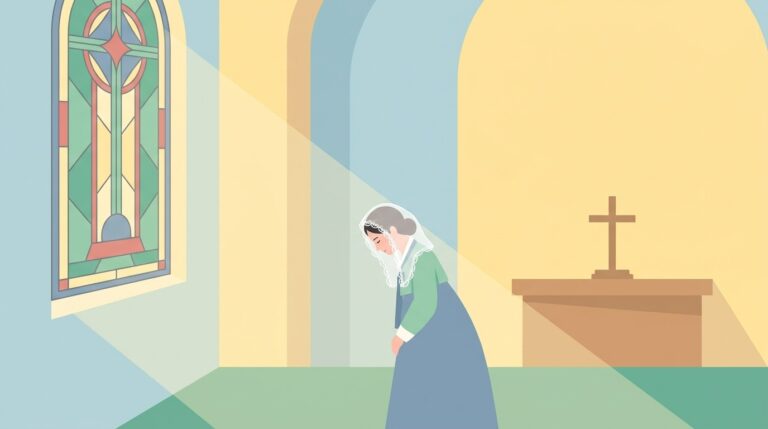
Don't Panic at a Korean Church! Master Catholic Mass Etiquette & Phrases in 5 Minutes - Daily Hangul

Don’t Panic at a Korean Church! Master Catholic Mass Etiquette & Phrases in 5 Minutes\n\nHello! This is your Daily Hangul editor.\n\nHave you ever watched a K-Drama like The Fiery Priest (열혈사제) or Hospital Playlist (슬기로운 의사생활) and noticed the beautiful, solemn scenes set in a Catholic church? Or maybe you were walking through the bustling streets of Myeongdong and suddenly found yourself standing in front of the breathtaking Myeongdong Cathedral.\n\nCatholicism has a deep and unique history in Korea, and attending a Mass here is a fascinating way to experience a blend of Western faith and Korean traditional etiquette. But wait—when everyone suddenly bows to each other and says something you cannot catch, what do you do? If you don’t know the specific Catholic greetings in Korea, you might end up saying Hello (안녕하세요) when everyone else is saying Praised be Jesus.\n\nDon’t worry! This guide is created based on real questions from foreign residents and travelers who wanted to attend Sunday Mass in Seoul but were nervous about the language barrier. Let’s dive into the essential Korean Catholic phrases so you can feel right at home!\n\n—\n\n## Phase 2: Core Expressions Deep Dive\n\n### 1. 찬미 예수님 (Praised be Jesus)\n* Pronunciation: Chanmi Yesunim [Chan-mee Yeh-soo-neem]\n* Meaning: Literal: Praise Jesus. vs Real nuance: Hello (Catholic version).\n* K-Culture Moment: If you meet a priest, a nun, or a fellow believer at the church, this is the ultimate greeting. It instantly shows you belong.\n* Editor’s Insight: Think of it as the secret handshake of Korean Catholics. Instead of the usual 안녕하세요 (Annyeonghaseyo), saying 찬미 예수님 immediately makes people warmly welcome you.\n* Situation Spectrum:\n * Casual friends: ✅\n * Fellow parishioners (Semi-formal): ✅\n * Priests/Elders (Formal): ✅\n* 🤔 Think About It: Why do you think Korean Catholics use a unified religious greeting instead of a standard Korean hello? Does your home parish have a specific greeting before or after Mass?\n\n### 2. 평화를 빕니다 (Peace be with you)\n* Pronunciation: Pyeonghwareul bimnida [Pyung-hwa-reul bim-nee-dah]\n* Meaning: Literal: I wish you peace. vs Real nuance: Peace be with you (The Sign of Peace).\n* K-Culture Moment: Halfway through the Mass, the priest will tell the congregation to share the sign of peace. Suddenly, everyone turns to their neighbors, bows gently, and says this phrase.\n* Editor’s Insight: The word 평화 (pyeonghwa) means peace. Unlike in Western countries where people might shake hands or hug, Koreans usually do a polite bow (인사) while saying this. Do not try to hug a stranger here!\n* Situation Spectrum:\n * Casual friends: ✅\n * Fellow parishioners (Semi-formal): ✅\n * Priests/Elders (Formal): ✅\n* 🤔 Think About It: The combination of a Catholic phrase and a traditional Korean bow is a perfect example of cultural localization. How do people share peace in your culture?\n\n### 3. 미사보 (Mass Veil)\n* Pronunciation: Misabo [Mee-sah-boh]\n* Meaning: Literal: Mass cloth. vs Real nuance: Catholic veil.\n* K-Culture Moment: You will notice almost all Korean Catholic women wearing beautiful white lace veils during Mass. You can often see them buying new ones at the church gift shop.\n* Editor’s Insight: Wearing a misabo is very common and encouraged for baptized women in Korea, much more so than in many Western countries today. It is considered a symbol of humility and reverence.\n* Situation Spectrum: N/A (It is a noun, but highly relevant for your visit!)\n* 🤔 Think About It: What does the popularity of the misabo tell us about the Korean Catholic Church’s preference for tradition and solemnity?\n\n—\n\n## Phase 3: Textbook vs. Real Korean\n\nGreeting Someone at Church\n* 📖 Textbook Korean: 안녕하세요? (Annyeonghaseyo? – Hello?)\n* 🗣️ Real Korean: 찬미 예수님! (Chanmi Yesunim! – Praised be Jesus!)\n* 💡 Why the difference?: While 안녕하세요 is never wrong, using the Catholic greeting builds immediate community bonding and shows respect for the religious setting.\n\nWhen Mass is Over\n* 📖 Textbook Korean: 미사가 끝났습니다. 안녕히 가세요. (Misaga kkeutnatseumnida. Annyeonghi gaseyo. – Mass has ended. Goodbye.)\n* 🗣️ Real Korean: 수고하셨습니다 / 평안한 주일 보내세요. (Sugohasyeotseumnida / Pyeonganhan juil bonaeseyo. – Thank you for your effort / Have a peaceful Sunday.)\n* 💡 Why the difference?: Koreans love acknowledging shared efforts with 수고하셨습니다, even after attending a religious service together, reflecting a strong collective mindset!\n\n> Bottom Note: As a B1 learner, try using 평안한 주일 보내세요 (Have a peaceful Sunday) to fellow parishioners. It sounds very natural and polite!\n\n—\n\n## Phase 4: Cultural Context — K-Culture Deep Dive\n\n### 4-1. Non-verbal Elements: The Bow of Peace\nIn many Western churches, the Sign of Peace involves shaking hands, high-fiving, or even hugging. In Korea? Do not initiate a hug with the person next to you! Korean churchgoers use a polite 15 to 30-degree bow while making gentle eye contact and saying 평화를 빕니다. Nunchi (눈치) is important here: watch how deeply the older person next to you bows, and try to match their level of respect.\n\n### 4-2. K-Culture Connection: K-Drama & Travel\nIf you’ve watched Korean dramas, you might have seen characters retreating to a quiet, stunning brick church to pray during a crisis. Often, this is the famous Myeongdong Cathedral (명동성당), the birthplace of the Korean Catholic community.\n* The K-Travel Reality: Myeongdong Cathedral isn’t just a tourist spot; it is an active, bustling parish. While tourists are taking selfies outside, inside, people are deeply in prayer. If you visit, use your Korean skills to read the signs and respect the solemn atmosphere.\n\n—\n\n## Phase 5: Real-World Roleplay Scenario\n\nSetting: Sunday morning, 10:45 AM. You are sitting in the beautiful wooden pews of Myeongdong Cathedral with your Korean friend, Minsu. The church is completely full. The priest has just finished the consecration, and it is time for the Sign of Peace.\n\nCharacters:\n* YOU: A foreign resident who wants to respectfully participate in the Mass.\n* Minsu (30): Your helpful Korean friend who invited you.\n\nMinsu: (Whispering) 이제 평화의 인사 할 시간이야. 옆 사람한테 인사하면 돼.\n(ije pyeonghwaui insa hal siganiya. yeop saramhante insahamyen dwae.)\n[It’s time for the sign of peace now. You can just greet the person next to you.]\n\nYOU: 아, 네! 알겠어요.\n(ah, ne! algesseoyo.)\n[Ah, okay! I got it.]\n\n(🎭 Stage Direction: The priest says 평화의 인사를 나누십시오 – Let us offer each other the sign of peace. Minsu turns to you and bows slightly.)\n\nMinsu: 평화를 빕니다. 😊\n(pyeonghwareul bimnida.)\n[Peace be with you.]\n\nYOU: 평화를 빕니다.\n(pyeonghwareul bimnida.)\n[Peace be with you.]\n\n(🎭 Stage Direction: Now, you turn to your other side. There is an elderly Korean grandmother (할머니 – halmeoni) wearing a white lace veil. She looks at you with a gentle smile and bows.)\n\nHalmeoni: 평화를 빕니다.\n(pyeonghwareul bimnida.)\n[Peace be with you.]\n\n> 🔀 Your Turn! How should you respond to the grandmother?\n> * A) Give her a warm hug and say 안녕하세요! (Annyeonghaseyo!)\n> * B) Bow politely and say 평화를 빕니다. (Pyeonghwareul bimnida.)\n> * C) Wave your hand and say 수고하셨습니다! (Sugohasyeotseumnida!)\n>\n> ✅ Best Choice: B — Reason: A respectful bow paired with the official Catholic greeting is the perfect response. \n> ⚠️ Choice A Analysis: Hugging an elderly stranger in Korea is a major cultural no-no! It will shock her!\n\n—\n\n## Phase 6: 10-Second Shadowing Drill\n\nLet’s practice the flow and intonation so you sound perfectly natural. Follow the slashes for pausing!\n\n😊 밝고 평화롭게 (Bright and peacefully):\n평화를 / 빕니다! (pyeonghwa-reul / bim-ni-da!)\n\n🙏 정중하게 (Respectfully greeting a priest):\n신부님, / 찬미 예수님! (sin-bu-nim, / chan-mi / ye-su-nim!)\n\n—\n\n## Phase 7: K-Culture Mini Dictionary\n\n1. 눈치\n* Romanization: nunchi\n* English: Social sense / Reading the room\n* Context: The essential Korean skill of assessing the mood. In church, using nunchi means knowing when to stand, sit, or bow by watching others.\n\n2. 미사보\n* Romanization: misabo\n* English: Mass veil\n* Context: A lace veil worn by Catholic women in Korea during Mass. You can easily buy one at the church gift shop (성물방 – seongmulbang).\n\n3. 주보\n* Romanization: jubo\n* English: Church bulletin\n* Context: A paper given at the entrance containing the readings, hymns, and parish news. Essential for following the Mass!\n\n4. 성물방\n* Romanization: seongmulbang\n* English: Holy items shop (Gift shop)\n* Context: A small shop usually located next to the church where you can buy rosaries, statues, and veils. A great place to buy a unique Korean Catholic souvenir.\n\n—\n\n## Phase 8: Traveler’s Survival Kit\n\nIf you are visiting a famous church like Myeongdong Cathedral or Jeondong Catholic Church in Jeonju, here are your must-know survival phrases!\n\n> 🆘 Survival Phrase #1\n> * 🇰🇷 영어 미사 있나요? (yeongeo misaga innayo?)\n> * 🗣️ English Pronunciation Guide: [Young-uh mee-sah in-nah-yo?]\n> * 📍 Where to use: Church office (사무실)\n> * 💡 Pro Tip: Myeongdong Cathedral offers English Mass on Sundays! Check their official website for times.\n\n> 🆘 Survival Phrase #2\n> * 🇰🇷 성물방은 어디에 있어요? (seongmulbangeun eodie isseoyo?)\n> * 🗣️ English Pronunciation Guide: [Sung-mool-bang-eun uh-dee-eh is-suh-yo?]\n> * 📍 Where to use: Asking a local or staff member to find the gift shop.\n\n> 🆘 Survival Phrase #3\n> * 🇰🇷 사진 찍어도 되나요? (sajin jjigeodo doenayo?)\n> * 🗣️ English Pronunciation Guide: [Sah-jin jjee-guh-doh dweh-nah-yo?]\n> * 📍 Where to use: Inside the church.\n> * 💡 Pro Tip: Always ask before snapping photos inside! During Mass, photography is strictly prohibited.\n\n> 📌 Editor’s Travel Note\n> * Useful App: Naver Map (Google Maps doesn’t work well for walking directions in Korea). Search 명동성당 (Myeongdong Cathedral).\n> * Etiquette: Dress modestly. Even in the sweltering Korean summer, avoid sleeveless shirts or very short pants when entering the sanctuary.\n> * Offering: If you want to give a donation (헌금 – heongeum), prepare cash (Korean Won) in advance, as the collection basket is passed around during Mass.\n\n—\n\n## Phase 9: Critical Thinking Corner — One Step Deeper\n\nLanguage & Power: The Hierarchy of Respect in Faith\nIn Korean culture, the language you use reflects your relationship with the listener. This applies heavily in the church, too! Notice how everyone addresses the priest as 신부님 (Sinbunim – Father) with the honorific 님 (nim) attached, and uses the highest level of formal speech (존댓말 – jondaetmal). The Korean Catholic Church has beautifully blended Western faith with Confucian traditions of respecting elders and spiritual leaders. The deep bows and highly formal language show that in Korea, faith isn’t just a personal journey; it operates within a structured, respectful community.\n\n> 💬 Your Turn: Does your language change depending on who you are speaking to in your religious or community gatherings? Share your thoughts in the comments!\n\n—\n\n## Phase 10: FAQ & Avoiding Mistakes\n\nQ: Can I take communion if I am not Catholic?\nA: No. Just like in the rest of the world, receiving the Eucharist (성체 모시기) is strictly for baptized Catholics who have prepared themselves. If you are not Catholic, please remain in your seat and enjoy the peaceful moment.\n\nQ: Do I have to wear a veil (미사보) if I am a woman?\nA: Maybe. It is highly encouraged for baptized Catholic women in Korea, but it is not an absolute rule. If you don’t have one, no one will force you out! However, it is a beautiful local tradition to partake in.\n\nQ: Can I use 평화를 빕니다 outside of the church?\nA: No. It sounds very awkward on the street or in a cafe. Save it exclusively for the Mass or when greeting fellow Catholics in a religious context!\n\n> ❌ Common Mistake #1: Saying 안녕하세요 (Annyeonghaseyo) loudly during the Sign of Peace.\n> ✅ Do this instead: Use a quiet, respectful voice, bow slightly, and say 평화를 빕니다 (Pyeonghwareul bimnida).\n\n> ❌ Common Mistake #2: Wearing a hat or cap inside the church (for men).\n> ✅ Do this instead: It is strict Korean church etiquette for men to remove hats upon entering the building.\n\n—\n\n## Phase 11: Summary & Action Items\n\nOne-Liner Summary: A simple bow and 평화를 빕니다 will instantly make you feel like a part of the respectful Korean Catholic community!\n\nAction Mission 3-Steps:\n* 🥉 Bronze (Solo): Practice saying 찬미 예수님 and 평화를 빕니다 in front of a mirror with a polite bow.\n* 🥈 Silver (Online): Leave a comment below using the phrase 평화를 빕니다!\n* 🥇 Gold (Real World): Visit a Catholic church in Korea (like Myeongdong Cathedral), find the seongmulbang (gift shop), and say 찬미 예수님 to the staff!\n\nK-Culture Mission: \nWatch a clip of the K-Drama The Fiery Priest (열혈사제). Look closely at how the parishioners act during Mass and see if you can spot the misabo (veils)!\n\n—\n\n## Phase 12: Quiz — Interactive Challenge\n\n1. Situational Judgment: You are walking into Myeongdong Cathedral and a friendly usher hands you a church bulletin. What is the BEST way to greet them?\nA) 밥 먹었어요? (Bap meogeosseoyo? – Did you eat?)\nB) 찬미 예수님! (Chanmi Yesunim! – Praised be Jesus!)\nC) 대박! (Daebak! – Awesome!)\n\n2. True or False — K-Culture Edition: During the Sign of Peace in a Korean Catholic Church, it is customary to give the person next to you a big, warm hug.\n\n3. Fill in the Blank: If you want to buy a rosary or a beautiful lace veil, you should ask, ________은 어디에 있어요? (Where is the gift shop?)\n\n(Answers: 1. B, 2. False – Koreans bow instead, 3. 성물방 / seongmulbang)

Prefer to study this lesson in Japanese? 日本語版で読む →
Share Lesson
X / Twitter

コメントを残す

メールアドレスが公開されることはありません。 ※ が付いている欄は必須項目です

SHIBA

Most Read Lessons

Popular · Top 3





