

Hello! This is your Daily Hangul Editor.
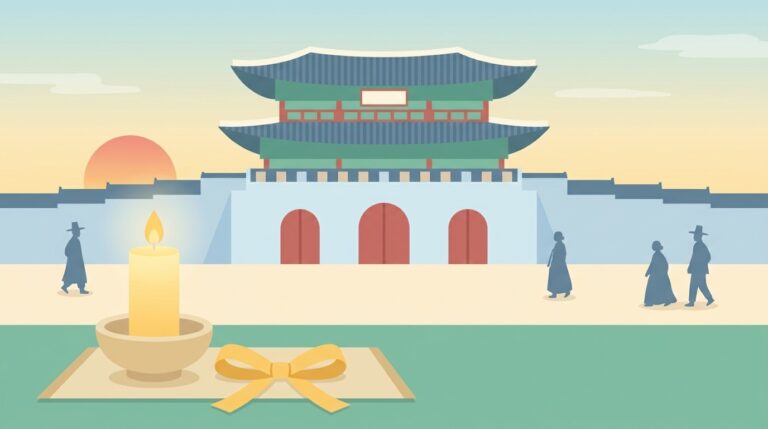
Have you ever watched K-Dramas like Youth of May or Snowdrop and seen intense scenes of students facing off against armed police? Or perhaps, during a trip to Seoul, you’ve witnessed a massive, peaceful candlelight vigil filling up Gwanghwamun Square on a weekend. The subtitles might simply translate these moments as a protest, but the emotional weight behind that word? That is a story deeply rooted in Korea’s modern history, specifically the April 19 Revolution (4.19 혁명).
Understanding this history is the ultimate key to unlocking the Korean psyche. It isn’t just about politics; it is about the collective spirit of the people and their fierce desire for democracy. If you want to move beyond textbook Korean and truly understand what makes the older generation’s eyes well up with pride, you need to know these words. Today, we are taking a C1-level deep dive into the advanced vocabulary and cultural nuances of Korea’s democratic heart.
Phase 2: Deep Dive into Core Expressions
1. 4.19 혁명 (The April 19 Revolution)
- Pronunciation: sa-il-gu hyeong-myeong (sa-eel-goo hyung-myung)
- Meaning: Literal: 4.19 Revolution / Real nuance: The birth of Korea’s modern democratic spirit.
- K-Culture Moment: In historical Korean films, this is the pivotal moment in 1960 when ordinary citizens and students poured into the streets to overthrow a corrupt dictatorship.
- Editor’s Insight: Notice how Koreans name their most significant historical events after dates? March 1st is 3.1 (sam-il), and April 19th is 4.19 (sa-il-gu). When spoken, these numbers carry immense respect and gravity.
- Situation Spectrum:
- Casual: ✅
- Semi-formal: ✅
- Formal: ✅
- 🤔 Think About It: Why do Koreans use exact dates instead of descriptive names for their biggest historical revolutions? How does this reflect the importance of remembering the exact moment history changed?
2. 시위 vs. 집회 (Protest vs. Rally)
- Pronunciation: si-wi (shee-wee) / jip-hoe (jeep-hweh)
- Meaning: 시위 focuses on demonstrating opposition (protest), while 집회 focuses on people gathering for a cause (rally/assembly).
- K-Culture Moment: News anchors use 집회 when describing peaceful weekend gatherings at Gwanghwamun with music and speeches, but will switch to 시위 if the situation involves confronting authorities.
- Editor’s Insight: If you tell a Korean friend you went to a 시위, they might ask if you are safe. If you say you attended a 촛불집회 (candlelight rally), they will view it as a peaceful cultural experience.
- Situation Spectrum:
- Casual: ✅
- Semi-formal: ⚠️ (Can be politically sensitive depending on the context)
- Formal: ⚠️
- 🤔 Think About It: In your country, are protests seen as dangerous disruptions or as a natural part of civic duty? In Korea, it is a complex mix of both, shaped by decades of historical struggle.
3. 민주화 운동 (Democratization Movement)
- Pronunciation: min-ju-hwa un-dong (meen-joo-hwa oon-dong)
- Meaning: The social and political movement to achieve democracy.
- K-Culture Moment: This is the defining background of the hit drama Reply 1988 (specifically surrounding the character Bo-ra). It represents the immense sacrifice of the youth in the 1980s.
- Editor’s Insight: Calling someone a part of the 운동권 (student activist group) carries a heavy weight. It implies they sacrificed their youth, and sometimes their lives, for the country’s freedom.
- Situation Spectrum:
- Casual: ✅
- Semi-formal: ⚠️
- Formal: ⚠️
- 🤔 Think About It: How does popular culture like K-Dramas help younger generations connect with the political struggles of their parents?
Phase 3: Textbook vs. Real Korean
Describing a Massive Gathering
* 📖 Textbook Korean: 시민들이 광장에 모였습니다. (Citizens gathered in the square.)
* 🗣️ Real Korean: 사람들이 광장으로 쏟아져 나왔어요. (People poured out into the square.)
* 💡 Why is it different?: The verb 쏟아지다 (to pour) captures the overwhelming, unstoppable emotional wave of Korean protest culture, far better than the static word for gather.
Talking About Historical Sacrifice
* 📖 Textbook Korean: 우리는 역사를 기억해야 합니다. (We must remember history.)
* 🗣️ Real Korean: 그분들 피땀 눈물 덕분에 지금 우리가 있는 거죠. (We are here now thanks to their blood, sweat, and tears.)
* 💡 Why is it different?: Yes, just like the BTS song! 피땀 눈물 (Blood, sweat, and tears) is a deeply ingrained idiom used to describe ultimate sacrifice and hard work.
Phase 4: Cultural Context — K-Culture Deep Dive
4-1. Non-verbal Elements: The Art of Mungnyeom
When visiting historical sites like the April 19th National Cemetery, silence is golden. You will often see people bowing silently (묵념, mungnyeom) in front of memorials. The posture is strictly respectful: hands clasped neatly in front of you, head bowed, eyes closed.
4-2. K-Culture Connection: Plazas as a Stage
If you want to understand the visceral emotion of Korean democratization, you must understand Plaza Culture (광장문화). In Korea, plazas like Gwanghwamun are not just physical spaces to take photos. They are the symbolic heart of public discourse. In historical media, you will notice the stark contrast between the polite, formal language of the oppressors and the desperate, raw cries of the citizens in the plaza. It highlights how language itself can be a tool of both control and rebellion.
Phase 5: Real-life Roleplay Scenario
Setting: A quiet cafe near Gwanghwamun Square on a Friday evening. Through the window, you see a small group setting up a stage for a peaceful weekend rally. You are having coffee with your Korean colleague, Min-su.
Characters:
* YOU: An expat working in Seoul, highly proficient in Korean (C1 level), curious about modern history.
* Min-su: (35, Male) Your Korean colleague. Thoughtful and deeply proud of his country’s history.
Dialogue:
Min-su: 내일 광화문 쪽에 차 엄청 막힐 거예요. 우회해서 가세요.
(Naeil gwanghwamun jjoge cha eomcheong makhil geoyeyo. Uhoehaeseo gaseyo.)
(English: Traffic around Gwanghwamun will be terrible tomorrow. Take a detour.)
YOU: 아, 내일 무슨 집회 있나요?
(Ah, naeil museun jiphoe innayo?)
(English: Ah, is there some kind of rally tomorrow?)
Min-su: 네, 주말마다 자주 열리잖아요. 한국은 광장문화가 참 발달한 것 같아요.
(Ne, jumalmada jaju yeollijanayo. Hangugeun gwangjangmunhwaga cham baldalhan geot gatayo.)
(English: Yes, they happen often every weekend. I think Korea’s plaza culture is really well-developed.)
YOU: 맞아요. 처음엔 시위하는 모습이 좀 낯설었는데, 4.19 혁명이나 민주화 운동 역사를 알고 나니 다르게 보이더라고요.
(Majayo. Cheoeumen siwihaneun moseubi jom natseolleonneunde, sa-il-gu hyeongmyeongina minjuhwa undong yeoksareul algo nani dareuge boideoragoyo.)
(English: True. At first, seeing protests was a bit unfamiliar, but after learning about the April 19 Revolution and democratization history, I see it differently.)
Min-su: 오, 4.19 혁명도 아세요? 외국인 친구가 그런 역사까지 아니까 정말 감동인데요?
(Oh, sa-il-gu hyeongmyeongdo aseyo? Oegugin chinguga geureon yeoksakkaji anikka jeongmal gamdongindeyo?)
(English: Oh, you know about the April 19 Revolution? It’s really touching that a foreign friend knows such history.)
🔀 Your Turn! How do you respond?
* A) 제가 똑똑해서 역사를 잘 알아요. (I know history well because I’m smart.)
* B) 한국을 사랑하니까 자연스럽게 관심을 가지게 되었어요. (Because I love Korea, I naturally became interested.)
* C) 드라마에서 봤는데 진짜 피 터지게 싸우더라고요! (I saw it in a drama, and they were fighting bloodily!)
✅ Best Choice: B — It shows genuine respect and deep cultural appreciation, activating the Korean concept of Jeong (bond/affection).
⚠️ Choice C Analysis: While factually true in action dramas, using overly graphic slang like 피 터지게 when discussing serious historical events with a colleague might seem a bit insensitive or too casual.
Phase 6: 10-Second Shadowing Drill
😊 Speak with calm sincerity and respect:
지금 우리가 / 누리는 자유는 / 그분들의 희생 / 덕분이에요.
(Jigeum uriga / nurineun jayuneun / geubundeurui huisaeng / deokbunieyo.)
(The freedom we enjoy today / is thanks to / their sacrifice.)
Phase 7: K-Culture Mini Dictionary
1. 촛불집회
* Romanization: chotbul jiphoe
* English: Candlelight vigil/rally
* Context: The iconic modern Korean method of peaceful protest. Instead of violence, citizens hold paper cup candles to show collective willpower.
2. 광장문화
* Romanization: gwangjang munhwa
* English: Plaza culture
* Context: Plazas like Gwanghwamun are not just physical spaces; they are the symbolic heart of public discourse and democracy in Korea.
3. 운동권
* Romanization: undonggwon
* English: Student activists
* Context: Refers to the generation of university students in the 70s and 80s who dedicated their youth to fighting for democratization.
4. 묵념
* Romanization: mungnyeom
* English: Silent tribute
* Context: A moment of silence observed at memorials or national holidays to honor those who sacrificed for the country.
Phase 8: Traveler Survival Kit
For travelers visiting Gwanghwamun, Seoul City Hall, or the April 19th National Cemetery, knowing how to navigate around large crowds is crucial.
🆘 Survival Expression #1
* 🇰🇷 여기 오늘 통제 구간인가요? (yeogi oneul tongje guganingayo?)
* 🗣️ English Pronunciation: yuh-gee oh-neul tong-jeh goo-gan-in-ga-yo?
* 📍 Where to use: Asking police or guides if a road is blocked off due to a rally.
* 💡 Pro Tip: During major weekend rallies, buses will completely reroute. Always check the subway!
🆘 Survival Expression #2
* 🇰🇷 시청역으로 가려면 어떻게 가야 해요? (sicheongyeogeuro garyeomyeon eotteoke gaya haeyo?)
* 🗣️ English Pronunciation: shee-chung-yuhg-eu-ro ga-ryuh-myun uh-dduh-keh ga-ya hae-yo?
* 📍 Where to use: Asking for walking directions to City Hall Station to escape traffic.
🆘 Survival Expression #3
* 🇰🇷 헌화하고 싶은데, 꽃은 어디서 사나요? (heonhwahago sipeunde, kkocheun eodiseo sanayo?)
* 🗣️ English Pronunciation: hun-hwa-ha-go sheep-eun-deh, kkot-eun uh-dee-suh sa-na-yo?
* 📍 Where to use: If you visit a memorial cemetery and want to buy flowers to pay your respects.
📌 Editor’s Travel Note
* Useful Apps: Naver Map or KakaoMap. Global maps do not provide real-time walking directions or live traffic blocks in Korea.
* Subway over Taxis: If there is a rally at Gwanghwamun (usually on Saturdays), DO NOT take a taxi. The subway is your only reliable escape route!
* Safety: Korean political rallies are generally highly organized and peaceful. You do not need to panic; just respectfully walk around them.
Phase 9: Critical Thinking Corner — “A Step Further”
🧠 Think Deeper: Media vs. Reality – The Spirit of Resistance
When foreigners think of Korean culture, they often think of Jeong (deep affection and collective bond). However, Jeong isn’t just about sharing food. It also manifests as collective resistance against injustice. The April 19 Revolution showed that when the Korean people feel their collective dignity is threatened, they unite with terrifying speed and passion. This same energy fuels modern fandom culture, national sports support, and social movements. Democracy in Korea is not just a political system; it is a deeply emotional, collective achievement.
💬 Your Turn: In your culture, how do people usually express their collective voice? Is it through protests, petitions, or something else? Let us know in the comments!
Phase 10: FAQ & Avoiding Misunderstandings
Q: Can I discuss Korean politics or historical events like the 4.19 Revolution with Koreans?
Yes, but tread carefully. Most Koreans will be extremely impressed that you know about their modern history. However, be a listener first. Acknowledge their history with respect, but avoid taking strong sides on modern political issues that stem from these historical events.
❌ Common Mistake #1: Using the word 시위 (protest) in a complaining tone when inconvenienced by traffic.
✅ How to fix it: Remember that for many Koreans, the right to protest is a hard-won freedom. Keep a neutral tone or use 집회 (rally) when referring to peaceful gatherings.
❌ Common Mistake #2: Taking funny selfies with peace signs at memorial sites like the 4.19 Cemetery.
✅ How to fix it: These are sacred grounds. Keep your voice down, walk calmly, and if you take photos, do so respectfully without posing.
Phase 11: Summary & Action Items
One-Liner Summary: The April 19 Revolution is the heartbeat of Korea’s modern democracy, and understanding it gives you profound insight into the passionate, collective spirit of the Korean people.
Action Mission:
* 🥉 Bronze (Solo): Practice saying 4.19 혁명 (sa-il-gu hyeong-myeong) perfectly out loud.
* 🥈 Silver (Online): Search 광화문 촛불집회 on YouTube to see the sheer scale of modern Korean plaza culture.
* 🥇 Gold (Real Life): Visit Gwanghwamun Square or the National Museum of Korean Contemporary History and read the plaques using the vocabulary you learned today!
K-Culture Mission: Watch an episode of a Korean historical drama set in the 1980s (like Reply 1988 or Youth of May) and try to spot the student activists (운동권). Notice how their language changes when they are protesting versus when they are talking to their parents!
Phase 12: Quiz — Interactive Challenge
1. Situational Judgment: You are talking to a respected older Korean gentleman who mentions he was a university student during the democratization movements. What is the most culturally appropriate response?
* A) 와, 진짜 위험했겠네요! 대박! (Wow, must have been dangerous! Awesome!)
* B) 그분들의 헌신 덕분에 지금 한국이 있는 것 같습니다. (I believe Korea exists today because of their dedication.)
* C) 저는 정치에 관심 없어요. (I don’t care about politics.)
2. True or False – K-Culture Edition:
When visiting the 4.19 National Cemetery, it is culturally acceptable to have a loud picnic because it looks like a public park. (T/F)
3. Fill in the Blank:
Koreans often refer to weekend peaceful protests as _________ 집회 (Candlelight rally).
Answers:
1. B (Option A uses 대박 which is too casual for a solemn historical topic. Option C is dismissive.)
2. False (While some areas are park-like, it is a memorial ground. Quiet respect is expected.)
3. 촛불 (Chotbul)







