

Phase 1: Empathy & K-Culture Cold Open
Hello! I’m your Daily Hangul Editor.
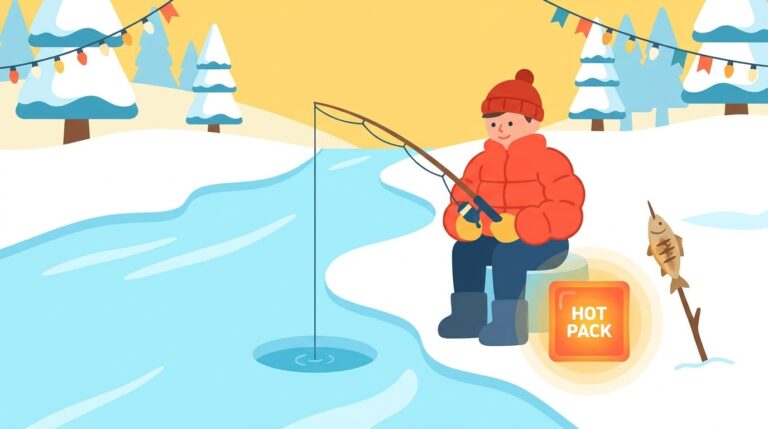
Picture this: You are watching a Korean variety show like ‘2 Days & 1 Night’ (1박 2일). The cast members are standing on a frozen river, shivering in their thick padded jackets, staring intensely at a small hole in the ice. Suddenly, someone screams, ‘I caught it!’ and pulls up a silver fish. Later, they are inside a cozy orange tent, eating hot, freshly grilled fish.
Welcome to the Hwacheon Sancheoneo (Mountain Trout) Ice Festival, one of Korea’s most iconic winter events!
But wait, you are actually there. The wind is biting your cheeks, your hands are freezing, and you finally feel a tug on your fishing rod. What do you say? And more importantly, how do you get that fish cooked? If you don’t know the right expressions, you might just end up holding a frozen fish while shivering in the cold!
Don’t worry. This guide is based on real experiences from foreigners who braved the Korean winter. Let’s learn how to catch, grill, and survive the festival like a true local!
Phase 2: Deep Dive into Core Expressions
1. 한 마리 잡았어요!
- Pronunciation: han mari jabasseoyo! [han ma-ri cha-ba-sso-yo!]
- Meaning: Literal: ‘I caught one animal!’ / Real Nuance: ‘I caught one!’ or ‘I got a fish!’
- K-Culture Moment: In K-variety shows, this is the exact phrase celebrities yell when they pull a fish out of the ice. It immediately gathers a crowd of curious onlookers.
- Editor’s Insight: ‘마리’ (mari) is the counting word for animals in Korean. When you say this with excitement, the Korean grandpas fishing next to you will probably give you a thumbs-up!
- Situation Spectrum:
- Friends (Casual): ✅ (Drop the ‘요’ and say 잡았다! – jabatta!)
- Strangers at the festival (Semi-formal): ✅
- Formal/Elders: ✅
- 🤔 Think About It: In English, we just say ‘I caught it!’ but in Korean, you specify the counter ‘한 마리’ (one animal). Why do you think Korean language emphasizes counters so much?
2. 이거 구워주세요.
- Pronunciation: igeo guwojuseyo. [ee-go goo-wo-joo-se-yo]
- Meaning: Literal: ‘Please grill this for me.’ / Real Nuance: ‘Can you grill my fish?’
- K-Culture Moment: At the festival, you take your caught fish to a giant communal tent called ‘구이터’ (grill center). You hand over your bucket, and the staff tosses your fish into a massive wood-fired grill.
- Editor’s Insight: The ending ‘~주세요’ (~juseyo) means ‘please do this for me.’ It is the ultimate survival word for ordering anything in Korea!
- Situation Spectrum:
- Friends (Casual): 🚫 (Friends don’t usually cook for you at the center!)
- Staff at the Grill Tent (Semi-formal): ✅
- Formal/Elders: ⚠️ (Add ‘감사합니다’ to be polite)
- 🤔 Think About It: You caught the fish, but you ask someone else to cook it in a shared tent. How does this reflect the Korean ‘communal sharing’ culture?
3. 핫팩 있어요?
- Pronunciation: hatpaek isseoyo? [hat-paek ees-so-yo?]
- Meaning: Literal: ‘Hot pack exists?’ / Real Nuance: ‘Do you have hot packs?’
- K-Culture Moment: You will see K-pop idols holding these little heat packets in behind-the-scenes winter concert videos. They are an absolute survival item for Korean winters!
- Editor’s Insight: In Korea, you don’t need a long sentence like ‘Do you sell…?’ Just say the item + ‘있어요?’ (isseoyo?). It works at convenience stores, festival stalls, and pharmacies.
- Situation Spectrum:
- Convenience Store Staff (Semi-formal): ✅
- Friends (Casual): ✅ (Drop ‘요’: 핫팩 있어?)
- Formal/Elders: 🚫
- 🤔 Think About It: The word is ‘Hot pack’ (English), but Koreans pronounce it ‘hat-paek’. Have you noticed how many English words are adapted into everyday Korean?
Phase 3: Textbook vs Real Korean
[At the Ice Fishing Hole]
* 📖 Textbook Korean: 생선을 한 마리 잡았습니다! (I caught one fish! – Too stiff, sounds like a news report)
* 🗣️ Real Korean: 우와, 잡았다! (Wow, I got it! – Casual, natural reaction)
* 💡 Why the difference?: Exclamations in Korean usually drop formal endings in the heat of the moment, even if strangers are around.
[Ordering at the Grill Tent]
* 📖 Textbook Korean: 이 물고기를 요리해 주시겠습니까? (Would you please cook this fish?)
* 🗣️ Real Korean: 이거 구워주세요! (Please grill this!)
* 💡 Why the difference?: Koreans value ‘빨리빨리’ (ppalli-ppalli / hurry up) culture. Keep your requests short and clear, especially in busy places!
[Expressing the Cold]
* 📖 Textbook Korean: 날씨가 매우 춥습니다. (The weather is very cold.)
* 🗣️ Real Korean: 너무 추워요! (It’s so cold!) or 손 시려워요! (My hands are freezing!)
* 💡 Why the difference?: ‘너무’ (too/so) is the most common intensifier in daily speech, completely replacing the formal ‘매우’ (very).
Phase 4: Cultural Context — K-Culture Deep Dive
4-1. Non-verbal Communication
When you catch a fish and take it to the grill tent, you don’t need to politely bow deeply. Because the festival is busy and loud, eye contact, a slight head nod, and a clear voice are enough. Also, when receiving your hot grilled fish, try taking it with two hands. It shows respect to the busy staff!
4-2. K-Travel Connection: The ‘Center’ Culture
In Korea, fishing isn’t just about catching; it’s about eating together immediately. Festivals have designated areas like ‘구이터’ (Grill Center) or ‘회센터’ (Sashimi Center). This is a unique Korean travel experience. You catch the raw ingredient, pay a small processing fee (usually 2,000 to 3,000 KRW), and enjoy it fresh. It’s the exact same system you will find in famous fish markets like Noryangjin in Seoul!
- Pro Tip: If you want it raw, say ‘이거 회로 떠주세요’ (igeo hoero tteojuseyo / Please slice this into sashimi). If you want it cooked, say ‘이거 구워주세요’ (igeo guwojuseyo / Please grill this).
Phase 5: Real-Life Roleplay Scenario
Setting: Saturday morning, 10 AM. Hwacheon Ice Festival. The wind is howling, but the ice is packed with families and tourists. You are sitting on a tiny plastic chair staring at an ice hole with your Korean friend, Min-su.
Characters:
– YOU: An A2 Korean learner, experiencing the freezing Korean winter for the first time.
– Min-su: (28, your Korean friend) Energetic, a bit competitive, and very hungry.
Dialogue:
Min-su: 아, 진짜 너무 추워요! 핫팩 더 있어요?
(a, jinjja neomu chuwoyo! hatpaek deo isseoyo?)
[Ah, it’s seriously so cold! Do you have more hot packs?]
(🎭 Stage Direction: Min-su is aggressively rubbing his hands together)
YOU: 네, 여기 있어요.
(ne, yeogi isseoyo.)
[Yes, here you go.]
Min-su: 고마워요. 근데 우리 언제 잡아요? 배고파요.
(gomawoyo. geunde uri eonje jabayo? baegopayo.)
[Thanks. But when are we going to catch one? I’m hungry.]
YOU: 저도 배고파요. 산천어 구이 먹고 싶어요.
(jeodo baegopayo. sancheoneo gui meokgo sipeoyo.)
[I’m hungry too. I want to eat grilled mountain trout.]
Min-su: 어?! 낚시대 움직여요! 당겨요!!
(eo?! nakksidae umjigyeoyo! danggyeoyo!!)
[Huh?! Your fishing rod is moving! Pull it!!]
🔀 Your Turn! How do you react as you pull up the fish?
– A) 생선입니다! (saengseon-imnida! / It is a fish!)
– B) 우와, 한 마리 잡았어요! (uwa, han mari jabasseoyo! / Wow, I caught one!)
– C) 이거 얼마예요? (igeo eolmayeyo? / How much is this?)✅ Best Choice: B — This is the most natural and joyful reaction!
⚠️ Choice A Analysis: Too formal and robotic. You sound like a biology teacher.
YOU: 우와, 한 마리 잡았어요!
(uwa, han mari jabasseoyo!)
[Wow, I caught one!]
Min-su: 대박! 빨리 구이터로 가요!
(daebak! ppalli guiteoro gayo!)
[Awesome! Let’s go to the grill center quickly!]
(🎭 Stage Direction: You both run to the big orange tent filled with smoke)
YOU: (To the staff) 사장님, 이거 구워주세요.
(sajangnim, igeo guwojuseyo.)
[Boss, please grill this.]
Staff: 네, 15분 기다리세요~
(ne, sibobun gidariseyo~)
[Yes, please wait 15 minutes~]
Phase 6: 10-Second Shadowing Drill
Practice this sentence out loud to master the rhythm and emotion!
😤 Confidently / 사장님! / 이거 / 구워주세요!
(sa-jang-nim! / ee-go / goo-wo-joo-se-yo!)
‘Boss! Please grill this!’
Tip: Say it loud! Festival tents are noisy, so don’t be shy.
Phase 7: K-Culture Mini Dictionary
1. 핫팩
* Romanization: hatpaek
* English: Hot pack (Hand warmer)
* Context: The ultimate Korean winter survival gear. You shake them or stick them to your clothes. You can buy them at any convenience store (CU, GS25).
2. 구이터
* Romanization: guiteo
* English: Grill area/center
* Context: A designated place at festivals or markets where you bring raw ingredients, and staff cook them for you over a large fire.
3. 눈치
* Romanization: nunchi
* English: Situational awareness / Reading the room
* Context: At the ice festival, you need ‘nunchi’ to see which ice holes are producing the most fish. If someone leaves a good spot, you quickly grab it!
4. 대박
* Romanization: daebak
* English: Awesome / Jackpot
* Context: A popular slang word. Use this when your friend catches a huge fish!
Phase 8: Traveler Survival Kit
Going to a Korean winter festival? Save these phrases in your phone!
🆘 Survival Phrases for the Festival
– 🇰🇷 ‘화장실이 어디예요?’ (hwajangsiri eodiyeyo?)
– 🗣️ Guide: [hwa-jang-shil-ee o-di-ye-yo?]
– 📍 Meaning: Where is the restroom?
- 🇰🇷 ‘이거 얼마예요?’ (igeo eolmayeyo?)
- 🗣️ Guide: [ee-go ol-ma-ye-yo?]
- 📍 Meaning: How much is this?
🇰🇷 ‘사진 좀 찍어주세요.’ (sajin jom jjigeojuseyo.)
- 🗣️ Guide: [sa-jin jom jji-go-joo-se-yo.]
- 📍 Meaning: Please take a picture for me. (Essential for Instagram!)
📌 Editor’s Travel Note
– Cash vs Card: Korea is a card-friendly country, but at regional festivals, having some cash (5,000 – 10,000 KRW bills) is very useful for small street food stalls or the grill center fee!
– Navigating: Google Maps doesn’t work well in Korea. Download Naver Map or KakaoMap before heading to Hwacheon.
Phase 9: Critical Thinking Corner — ‘A Step Deeper’
Food & Identity: The Culture of ‘Togetherness’
In many Western cultures, fishing is a solitary, quiet activity. But in Korea, the Hwacheon Ice Festival is loud, crowded, and highly communal. Hundreds of people sit shoulder-to-shoulder on the ice. When you catch a fish, you don’t take it home to eat alone; you go to a giant, shared tent (구이터) and eat shoulder-to-shoulder with strangers, sharing the warmth of the fire. This reflects the deep-rooted Korean concept of ‘Jeong’ (정) — the feeling of community, shared experience, and collective joy over food.
💬 Your Turn: Does your culture have a festival where people gather to catch and eat food together? Or is fishing considered a quiet, personal hobby? Share in the comments!
Phase 10: FAQ & Avoiding Misunderstandings
Q: Can I catch as many fish as I want and take them all?
No! To ensure everyone has fun, the festival usually limits the catch to 3 fish per person. It’s an unwritten rule of fairness.
Q: Can I bargain with the grill center staff?
No. In Korean traditional markets, slight bargaining is okay, but festival fees for grilling (around 2,000 won) are fixed. Just smile and pay!
❌ Common Mistake #1: Saying ‘물고기 주세요’ (Give me a fish) to the grill staff.
✅ Do this instead: Hand them your bucket and say ‘이거 구워주세요’ (Please grill this). They don’t sell the fish; they just cook what you caught!❌ Common Mistake #2: Wearing sneakers to the ice festival.
✅ Do this instead: Wear thick winter boots. The ice is incredibly slippery and freezing. You will see Koreans wearing special strap-on spikes (아이젠 – crampons).
Phase 11: Summary & Action Items
One-Liner Summary: Use ‘한 마리 잡았어요!’ when you catch a fish, and ‘이거 구워주세요’ to get it deliciously cooked!
Action Mission:
– 🥉 Bronze (Solo): Say ‘이거 구워주세요’ three times out loud while looking at a picture of food.
– 🥈 Silver (Online): Post a picture of your favorite fish dish online with the hashtag #구워주세요.
– 🥇 Gold (Real Life): Visit a Korean BBQ restaurant and say ‘구워주세요’ to the staff if you need help with the grill!
K-Culture Mission: Search ‘Hwacheon Ice Festival’ (화천 산천어 축제) on YouTube and see if you can spot the orange ‘구이터’ tents!
Phase 12: Quiz — Interactive Challenge
1. Situational Judgment:
You are freezing at the festival and go to a convenience store. What is the most natural way to ask for a hand warmer?
A) 따뜻한 가방을 요리해 주시겠습니까? (Would you please cook a warm bag?)
B) 핫팩 있어요? (Do you have a hot pack?)
C) 날씨가 매우 춥습니다. (The weather is very cold.)
2. True or False — K-Culture Edition:
At the Korean ice festival, it is normal to take your caught fish to a shared tent to be grilled for a small fee. (True / False)
(Answers: 1: B, 2: True)
Frequently Asked Questions (FAQ)
Q: What does "한 마리 잡았어요!" mean in Korean and how do you pronounce it?
A: In Korean, "한 마리 잡았어요!" is pronounced [han mari jabasseoyo! [han ma-ri cha-ba-sso-yo!] and means: Literal: 'I caught one animal!' / Real Nuance: 'I caught one!' or 'I got a fish!'
Q: What does "이거 구워주세요." mean in Korean and how do you pronounce it?
A: In Korean, "이거 구워주세요." is pronounced [igeo guwojuseyo. [ee-go goo-wo-joo-se-yo] and means: Literal: 'Please grill this for me.' / Real Nuance: 'Can you grill my fish?'
Q: What does "핫팩 있어요?" mean in Korean and how do you pronounce it?
A: In Korean, "핫팩 있어요?" is pronounced [hatpaek isseoyo? [hat-paek ees-so-yo?] and means: Literal: 'Hot pack exists?' / Real Nuance: 'Do you have hot packs?'







