

Hello! I’m your Daily Hangul Editor.
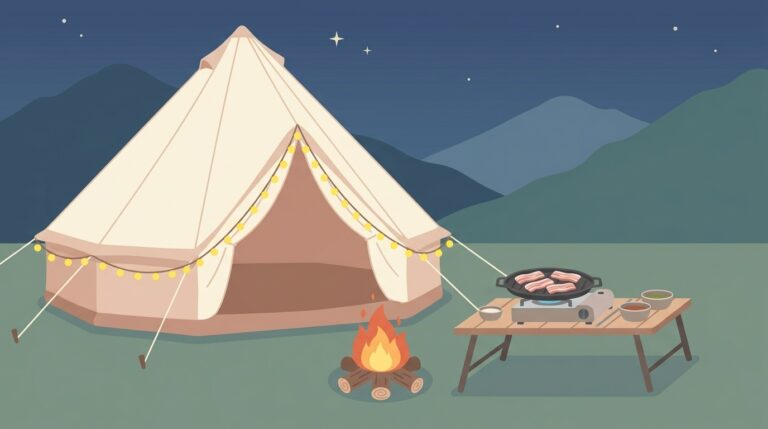
Imagine this: You’re watching a K-Drama or a reality show like In the SOOP. Your favorite idols or actors are sitting in front of a massive, perfectly decorated, fairy-light-draped tent. They are grilling thick cuts of samgyeopsal (pork belly), sipping beer, and laughing into the crisp night air. It looks incredibly romantic and aesthetic.
So, you decide to try it in real life. You suggest “glamping” (글램핑) to your Korean friends for the upcoming long weekend. But suddenly, a debate sparks. Some friends are all for it, while the hardcore camping enthusiasts shake their heads, sighing about “cost-effectiveness” and “real outdoor vibes.”
At the C1 level, simply saying “Glamping is good but expensive” (글램핑은 좋지만 비쌉니다) won’t cut it. You need the cultural nuances, the trendy expressions, and the specific jargon that Koreans actually use when debating the pros and cons of the great outdoors.
Let’s dive into the vocabulary that will make you sound like a true Korean in-ssa (insider) around the campfire!
Phase 2: Core Expressions Deep Dive
Here are the top 3 expressions Koreans use when weighing the pros and cons of glamping.
1. 몸만 가면 돼요 (Pros)
- Pronunciation: momman gamyeon dwaeyo [Mom-man gah-myun dway-yo]
- Meaning: (Literal) You only need to go with your body. / (Real) You just need to bring yourself (it’s fully equipped).
- K-Culture Moment: This is the absolute biggest selling point of glamping in Korea. When convincing a lazy friend who hates packing, you throw out this phrase. It means the tent, the bed, the BBQ grill, and even the cooking utensils are already there.
- Editor’s Insight: The word ‘몸’ (body) emphasizes that zero physical labor or preparation is required. It has a very persuasive, reassuring vibe.
- Situation Spectrum:
- Friends (Casual): ✅ (몸만 가!)
- Colleagues (Semi-formal): ✅ (몸만 가시면 돼요.)
- Boss/Elders (Formal): ⚠️ (Use cautiously, might sound a bit too casual depending on tone.)
- 🤔 Think About It: Korean society highly values ‘편리함’ (convenience). From next-day delivery to fully furnished glamping, why do you think speed and zero-hassle services are so central to the modern Korean lifestyle?
2. 가격이 좀 사악하죠 (Cons)
- Pronunciation: gagyeogi jom saakhajo [Gah-gyuh-gee johm sah-ahk-hah-joh]
- Meaning: (Literal) The price is a bit wicked/evil. / (Real) The price is pretty steep/ridiculous.
- K-Culture Moment: You look up a beautiful glamping site in Gapyeong, but a one-night stay costs more than a 5-star hotel in Seoul. A Korean friend looks at the screen and clicks their tongue, using this exact phrase.
- Editor’s Insight: Using ‘사악하다’ (wicked/evil) for prices is extremely common among young Koreans (Millennials & Gen Z). It adds an emotional, almost dramatic flair to complaining about high costs without sounding aggressively angry.
- Situation Spectrum:
- Friends (Casual): ✅ (가격 진짜 사악하다.)
- Colleagues (Semi-formal): ✅ (성수기라 가격이 사악하네요.)
- Boss/Elders (Formal): 🚫 (Too slangy. Use “비용이 꽤 비싸네요” instead.)
- 🤔 Think About It: Personifying a price as “evil” reflects the frustration of the “Instagram-tax”—where highly aesthetic places overcharge. Does your language have a dramatic adjective specifically used for high prices?
3. 자연을 느끼기엔 2% 부족해요 (Cons)
- Pronunciation: jayeoneul neukkigien i-peuro bujokaeyo [Jah-yun-eul noo-kki-gi-en ee-poo-ro boo-jok-hae-yo]
- Meaning: (Literal) It’s 2% lacking to feel nature. / (Real) It’s missing that authentic, rugged outdoor vibe.
- K-Culture Moment: Hardcore campers (who love ‘차박’ or auto-camping) often look down slightly on glamping, arguing it feels more like a motel shaped like a tent.
- Editor’s Insight: “2% 부족하다” is an iconic Korean idiom born from an old beverage commercial. It means something is almost perfect, but just slightly off or lacking the final touch.
- Situation Spectrum:
- Friends (Casual): ✅
- Colleagues (Semi-formal): ✅
- Boss/Elders (Formal): ✅ (It’s widely accepted across all ages!)
- 🤔 Think About It: Why “2%” and not 1% or 10%? It perfectly captures that frustrating feeling of almost but not quite.
Phase 3: Textbook vs. Real Korean
[Talking About Camping Gear]
* 📖 Textbook: 캠핑 장비가 없어도 됩니다. (You don’t need camping equipment.)
* 🗣️ Real Korean: 장비빨 안 세워도 돼서 편해요. (It’s comfortable because you don’t have to flex your gear.)
* 💡 Why different?: ‘장비빨’ (The power/effect of expensive gear) highlights Korea’s intense hobby culture where having high-end, aesthetic equipment is often a status symbol.
[Describing the Atmosphere]
* 📖 Textbook: 분위기가 아주 좋습니다. (The atmosphere is very good.)
* 🗣️ Real Korean: 완전 감성 미쳤어요! (The aesthetic vibe is crazy!)
* 💡 Why different?: ‘감성’ (sentiment/aesthetic) is the ultimate buzzword for Korean travel. If a place has vintage lamps and fairy lights, it’s “감성 캠핑” (aesthetic camping).
[Talking About the Cold]
* 📖 Textbook: 텐트 안이 춥습니다. (Inside the tent is cold.)
* 🗣️ Real Korean: 밤에는 완전 입 돌아가요. / 바닥 난방은 필수예요. (At night, your mouth will twist [it’s freezing]. / Floor heating is a must.)
* 💡 Why different?: Koreans culturally rely on ‘온돌’ (Ondol/floor heating). Even in tents, premium glamping sites boast heated floors.
Bottom Note: At the C1 level, blending words like ‘장비빨’ and ‘감성’ into your vocabulary immediately upgrades your Korean from “foreigner who studied hard” to “someone who actually lives the culture.”
Phase 4: Cultural Context — K-Culture Deep Dive
4-1. Non-Verbal Elements: The ‘Nunchi’ of Manner Time
If you go glamping in Korea, you must understand 매너타임 (Manner Time). Usually starting around 10 or 11 PM, sites require absolute quiet. Tents have zero soundproofing. If you laugh too loudly or play music, the site owner will tap on your tent, or worse, your neighbors will glare at you with intense nunchi. You must lower your voice to a whisper and turn off the Bluetooth speaker.
4-2. K-Food Connection: The Great Outdoor Feast
In Korea, camping/glamping is essentially an outdoor eating marathon called 먹부림 (Mukburim – food binge).
It usually follows a strict schedule:
1. 3 PM Arrival: Ramyun or Tteokbokki.
2. 6 PM Dinner: Thick Samgyeopsal (pork belly) and Moksal (pork neck) grilled over charcoal.
3. 9 PM: 불멍 (Bulmeong – staring at the fire) while roasting sweet potatoes (군고구마) or marshmallows.
4. Next Morning: Hangover Ramyun.
Critical Point: Why is meat so central? Historically, meat was a luxury. Grilling it outdoors together is the ultimate symbol of community, celebration, and bonding (정 – Jeong) in Korean culture.
Phase 5: Real-Life Roleplay Scenario
Setting: Thursday evening, 8 PM. A trendy cafe in Yeonnam-dong. You and two Korean colleagues are planning a team-building weekend getaway.
Characters:
– YOU: A foreign professional working in Seoul. You want comfort.
– Min-su: (32, Colleague) A hardcore camper. Owns $3,000 worth of gear.
– Ji-yoon: (29, Colleague) Loves taking Instagram photos, hates bugs.
Dialogue:
Min-su: 이번 워크샵, 제가 텐트 다 칠 테니까 진짜 캠핑 어때요? 오지 캠핑! 🏕️
(Ibeon wokeusyap, jaega tenteu da chil tenikka jinjja kaemping eottaeyo? Oji kaemping!)
[For this workshop, I’ll pitch all the tents, so how about real camping? Backcountry camping!]
Ji-yoon: 아, 선배님… 오지는 좀… 씻기도 불편하고. 그냥 글램핑 가요! 감성 숙소로!
(Ah, seonbaenim… ojineun jom… ssitgido bulpyeonhago. Geunyang geullaemping gayo! Gamseong suksoro!)
[Ah, senior… backcountry is a bit… washing up is uncomfortable. Let’s just go glamping! To an aesthetic place!]
Min-su: 에이, 글램핑은 가격만 사악하고 자연을 느끼기엔 2% 부족하다니까요.
(Ei, geullaempingeun gagyeongman saakhago jayeoneul neukkigien i-peuro bujokadanikkayo.)
[Hey, glamping has wicked prices and lacks 2% to truly feel nature.]
Ji-yoon: 그래도 저희는 장비빨 안 세워도 되고, 몸만 가면 되잖아요. 안 그래요, 00(Your Name)씨?
(Geuraedo jeohuineun jangbippal an sewodo doego, momman gamyeon doejanhayo. An geuraeyo, 00-ssi?)
[Still, we don’t need to flex gear, and we can just go with our bodies. Right, (Your Name)?]
🔀 Your Turn! How do you respond?
– A) 맞아요. 글램핑이 좋습니다. (Too robotic/textbook)
– B) 저도 지윤씨 말에 공감해요. 다 세팅되어 있는 게 최고죠! (Natural and agrees smoothly)
– C) 민수씨, 텐트 치다가 저희 다 싸울걸요? 안전하게 글램핑 가시죠! (Witty, humorous, realistic)✅ Best Choice: C! This shows a high-level grasp of Korean humor. Acknowledging that pitching tents often leads to arguments (싸우다) is a very common relatable joke in Korea.
Phase 6: 10-Second Shadowing Drill
Practice this sentence to perfect your natural Korean rhythm!
😤 솔직히 / 글램핑이 / 가격은 좀 사악한데, / 😊 몸만 가면 되니까 / 너무 편해요!
(Soljiki / geullaempingi / gagyeogeun jom saakande, / momman gamyeon doenikka / neomu pyeonhaeyo!)
Tip: Pause slightly at the slashes (/). Emphasize ‘사악한데’ with a slight sigh, and brighten up (😊) when saying ‘너무 편해요!’
Phase 7: K-Culture Mini Dictionary
| Korean Word | Romanization | English | Cultural Context |
|---|---|---|---|
| 불멍 | bulmeong | Spacing out at a fire | A portmanteau of ‘불’ (fire) and ‘멍때리다’ (to space out). The ultimate healing activity in K-camping. |
| 장비빨 | jangbippal | Power of equipment | Refers to relying on expensive, fancy gear rather than skill. Used in gaming, sports, and camping. |
| 매너타임 | maeneotaim | Manner Time | Designated quiet hours (usually 10 PM – 7 AM) at campsites. Essential etiquette. |
| 바가지(요금) | bagaji(yogeum) | Rip-off pricing | Commonly used to complain about the inflated prices of glamping sites during peak summer season. |
Phase 8: Traveler’s Survival Kit
If you book a glamping site in Korea, these phrases are lifesavers.
🆘 Survival Phrases for Glamping
– 🇰🇷 “여기 바닥 난방 들어오나요?” (yeogi badak nanbang deureoonayo?)
– 🗣️ Meaning: Does the floor heating work here?
– 📍 Context: Korean nights in the mountains are cold. Even in summer, you might need Ondol!
- 🇰🇷 “바베큐 숯불은 몇 시에 피워주시나요?” (babekyu sutbureun myeot sie piwojusinayo?)
- 🗣️ Meaning: What time will you light the charcoal for the BBQ?
- 📍 Context: Owners usually light the fire for you. You must request a specific time.
🇰🇷 “일반 쓰레기랑 분리수거는 어디서 해요?” (ilban sseuregirang bunniseugoneun eodiseo haeyo?)
- 🗣️ Meaning: Where do I do the general trash and recycling?
- 📍 Context: Unlike hotels, you must clean up, wash dishes, and separate trash perfectly before checking out.
📌 Editor’s Travel Note:
– Apps to use: ‘캠핏’ (Camfit) or Naver Map to search and book sites.
– Pro Tip: Never buy meat at the glamping site (it’s a rip-off). Stop by a local ‘하나로마트’ (Hanaro Mart) on the way. It’s a rite of passage for Korean MTs (Membership Trainings) and camping trips!
Phase 9: Critical Thinking Corner — “One Step Deeper”
Media vs. Reality: The Instagram Illusion
In K-Dramas like Hospital Playlist or reality shows like Transit Love, glamping looks flawless: pristine white canvas tents, perfectly roasted marshmallows, acoustic guitars, and no mosquitoes. However, the reality of Korean glamping often involves incredibly thin walls where you can hear the neighboring tent snoring, strict “Manner Time” curfews, and aggressive mountain bugs (산모기). The rise of ‘감성 캠핑’ (aesthetic camping) is heavily driven by Instagram culture, prioritizing visual perfection over actual wilderness survival. It reflects a modern desire to “escape” to nature, but only on the condition that urban comforts (Wi-Fi, AC, aesthetics) remain completely intact.
💬 Your Turn: Does your culture have a similar trend of “beautifying” the outdoors for social media? Do people prefer rugged camping or luxury glamping where you live? Let us know in the comments!
Phase 10: FAQ & Avoiding Mistakes
Q: Is it okay to play music on a Bluetooth speaker at night?
No! As soon as the sun goes down, keep the volume low. Once “매너타임” hits (usually 10 PM), turn it off completely. Koreans are very sensitive to noise in shared spaces.
Q: Does ‘Glamping’ mean room service?
Absolutely not. You are essentially renting a furnished tent.
❌ Common Mistake #1: Leaving your trash in the tent and just checking out.
✅ Do This Instead: You must take your trash to the designated ‘분리수거장’ (Recycling Area) and wash all your dishes (설거지) before leaving. If you don’t, you might face a penalty fee!
Phase 11: Summary & Action Items
One-Liner Summary: Glamping in Korea is highly convenient (“몸만 가면 돼요”) but can be pricey (“가격이 사악하죠”) and requires strict adherence to communal etiquette.
Action Mission:
– 🥉 Bronze: Say “솔직히 가격이 좀 사악하죠” in front of a mirror with a dramatic sigh.
– 🥈 Silver: Search “글램핑 추천” (Glamping recommendations) on Instagram and read the Korean captions to spot the word “감성” (aesthetic).
– 🥇 Gold: Next time a Korean friend suggests an expensive cafe or activity, jokingly tell them, “근데 가격이 좀 사악하네요!”
K-Culture Mission: Watch an episode of a Korean reality show featuring camping (like In the SOOP or Going Seventeen) and spot the moment they do “불멍” (staring at the fire)!
Phase 12: Quiz — Interactive Challenge
1. Situational Judgment:
Your Korean friend wants to buy a $500 titanium camping mug just because it looks cool. What is the most natural C1-level response?
A) 그것은 너무 비쌉니다. (That is too expensive.)
B) 와, 진짜 장비빨 제대로 세우시네요! (Wow, you are really flexing your gear!)
C) 몸만 가면 돼요. (Just bring your body.)
2. True or False – K-Culture Edition:
When checking out of a Korean glamping site, you can leave your dirty dishes on the table like you would in a hotel room. (T/F)
(Answers below)
Click to reveal answers
1. B is the correct answer. It perfectly utilizes the slang ‘장비빨’ to tease them playfully. A is grammatically correct but too robotic. C doesn’t fit the context.
2. False. You are expected to wash all dishes and separate all recycling before checking out.
Frequently Asked Questions (FAQ)
Q: What does "몸만 가면 돼요 (Pros)" mean in Korean and how do you pronounce it?
A: In Korean, "몸만 가면 돼요 (Pros)" is pronounced [momman gamyeon dwaeyo [Mom-man gah-myun dway-yo] and means: (Literal) You only need to go with your body. / (Real) You just need to bring yourself (it's fully equipped).
Q: What does "가격이 좀 사악하죠 (Cons)" mean in Korean and how do you pronounce it?
A: In Korean, "가격이 좀 사악하죠 (Cons)" is pronounced [gagyeogi jom saakhajo [Gah-gyuh-gee johm sah-ahk-hah-joh] and means: (Literal) The price is a bit wicked/evil. / (Real) The price is pretty steep/ridiculous.
Q: What does "자연을 느끼기엔 2% 부족해요 (Cons)" mean in Korean and how do you pronounce it?
A: In Korean, "자연을 느끼기엔 2% 부족해요 (Cons)" is pronounced [jayeoneul neukkigien i-peuro bujokaeyo [Jah-yun-eul noo-kki-gi-en ee-poo-ro boo-jok-hae-yo] and means: (Literal) It's 2% lacking to feel nature. / (Real) It's missing that authentic, rugged outdoor vibe.







