

Phase 1: Empathy (Welcome to the Stadium!)
Hello! I’m your lead editor at Daily Hangul.
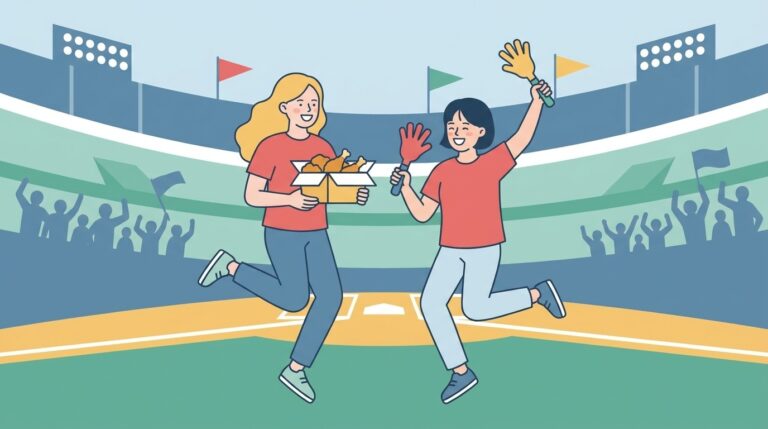
Imagine this: You’re in Seoul, and your Korean friends take you to a baseball game. The stadium is electric. Suddenly, a player steps up to bat, and thousands of fans stand up, banging plastic sticks together, and screaming a word that sounds exactly like… “Fighting!”
You might be thinking, “Wait, are they about to start a brawl? Is there a fight?”
If you’ve watched any K-Drama where the main character is studying for an exam, or seen a K-Pop idol’s behind-the-scenes video before a big concert, you’ve definitely heard this word. But here’s the secret: in Korea, we aren’t telling you to throw a punch. We are giving you the ultimate verbal high-five!
If you don’t know how to cheer in Korean, you might just awkwardly clap while everyone else is passionately screaming. But once you master a few simple expressions, you won’t just be watching the game—you’ll be part of the team.
Let’s dive into the absolute beginner (A1) guide to cheering in Korean. This guide is based on real questions from my students who wanted to sound like a true local at a Seoul stadium!
Phase 2: Core Expressions Deep Dive
1. 파이팅! / 화이팅! (Let’s go! / Cheer up!)
- Pronunciation: [Paiting! / Hwaiting!] + Sounds like the English word ‘Fighting’, but with a softer ‘P’ or ‘H’ sound instead of an ‘F’.
- Meaning: Literal: Fighting. / Real nuance: You’ve got this! Let’s go! Good luck!
- K-Culture Moment: Picture a K-Drama where the female lead is about to go into a terrifying job interview. Her best friend clenches her fists, smiles brightly, and says, “파이팅!” It’s the ultimate phrase of encouragement.
- Editor’s Insight: This is the undisputed king of Korean cheering words. We use it for everything—sports, exams, Mondays, or even before eating a massive bowl of spicy noodles. It’s a burst of positive energy.
- Situation Spectrum:
- Friends (Casual): ✅
- Co-workers (Semi-formal): ✅
- Boss / Elders (Formal): ⚠️ (You can say it, but usually with polite words added: “과장님, 파이팅 하세요!”)
- 🤔 Think About It: Why do you think Koreans adopted an English word for conflict (“fight”) to mean encouragement? How do people say “Good luck” in your culture?
2. 잘한다! (Good job! / You’re doing great!)
- Pronunciation: [Jalhanda!] + ‘Jal’ sounds like ‘Jol’ in Jolly, ‘han’ like Han Solo, ‘da’ like ‘da’ in dad.
- Meaning: Literal: You do well! / Real nuance: That’s it! Great job! Keep it up!
- K-Culture Moment: You are watching the Olympics in a Korean fried chicken pub (Chimaek place). A Korean archer hits the bullseye. The whole pub erupts: “우와! 잘한다!!”
- Editor’s Insight: Use this while the action is happening. If someone is running fast, playing a game well, or even singing well at Karaoke (Noraebang), shout “잘한다!” to boost their confidence.
- Situation Spectrum:
- Friends (Casual): ✅
- Co-workers (Semi-formal): ⚠️ (Only if they are close or younger)
- Boss / Elders (Formal): 🚫 (Praising an elder this way sounds rude, like a teacher praising a student.)
- 🤔 Think About It: In Korean, praising someone’s skill directly is a common way to cheer them on. Do you prefer hearing “Good luck” before an event, or “You’re doing great” during it?
3. 할 수 있어! (You can do it!)
- Pronunciation: [Hal su isseo!] + ‘Hal’ (like Hal in Halloween), ‘su’ (like sue), ‘isseo’ (like ee-saw).
- Meaning: Literal: Can do! / Real nuance: I believe in you, you can do this!
- K-Culture Moment: A reality show where K-Pop trainees are exhausted and crying because they can’t master a dance routine. The leader hugs them and whispers, “할 수 있어. 우리 할 수 있어.” (You can do it. We can do it.)
- Editor’s Insight: This phrase is very emotional and supportive. It’s not just for sports; it’s for life’s hard moments. It gives comfort and courage.
- Situation Spectrum:
- Friends (Casual): ✅
- Co-workers (Semi-formal): ⚠️
- Boss / Elders (Formal): 🚫 (Use “할 수 있으십니다” instead, but it’s rarely used to superiors.)
- 🤔 Think About It: Notice how the subject “You” is completely omitted here. Koreans often drop the “I” or “You” because the context makes it obvious. Does your language always require a subject?
Phase 3: Textbook vs. Real Korean
[Cheering for a friend before a big game]
* 📖 Textbook Korean: 열심히 하세요. (Please work hard.)
* 🗣️ Real Korean: 파이팅! 가자! (Hwaiting! Let’s go!)
* 💡 Why the difference?: “Please work hard” sounds like a strict teacher giving an order. “파이팅” is a shared burst of energy!
[When your team scores a goal]
* 📖 Textbook Korean: 아주 잘했습니다. (You did very well.)
* 🗣️ Real Korean: 나이스! / 대박! / 찢었다! (Nice! / Awesome! / You tore it up!)
* 💡 Why the difference?: In the heat of the moment, younger Koreans use English loan words (“나이스”) or trendy slang (“찢었다” – literally “tore it”, meaning “killed it”) to express extreme excitement.
Bottom Note: Since you are at the
A1 (Absolute Beginner)level, stick to “파이팅!” and “대박!” (Daebak – Awesome). They are incredibly natural, easy to pronounce, and locals will love hearing you use them!
Phase 4: Cultural Context — K-Culture Deep Dive
4-1. Non-Verbal Cheering (Body Language)
When you say “파이팅!”, it is almost legally required in Korea to clench your fist and pump it slightly in the air. Doing it with dead arms by your side looks like you’re being sarcastic! Give it some energy! Also, Nunchi (reading the room) is key: if the opposing team scores, stay quiet. Don’t cheer when everyone else is groaning.
4-2. The Madness of K-Baseball Culture
If you love K-Culture, you must experience a Korean baseball game. It is less like a quiet sporting event and more like an outdoor K-Pop concert.
Every single player has their own customized “Cheer Song” (응원가). When a player steps up, the cheer master (a guy with a microphone on a stage) and the cheerleaders lead the entire stadium in a synchronized song and dance. Fans hit long plastic balloons (막대풍선) together to the beat.
Critical Viewpoint: While K-Dramas often show people quietly enjoying a romantic date at a baseball stadium, reality is much louder! You won’t be able to hear your date over the sound of 20,000 people screaming “파이팅!”
Phase 5: Real-Life Roleplay Scenario
Setting: It is Friday night, 8:00 PM at a busy fried chicken pub (치킨집) in Hongdae. Big screens are showing the Korea vs. Japan soccer match. The tables are packed with crispy chicken and cold beer (Chimaek). You are with your Korean friend, Minho.
Characters:
– YOU: A foreign visitor who loves Korean food and wants to enjoy the sports culture.
– Minho (28): Your energetic Korean friend who is slightly too obsessed with soccer.
Minho: 아, 오늘 진짜 이겨야 돼! 🇰🇷
(A, oneul jinjja igyeoya dwae!)
[Ah, we really have to win today!]
YOU: 맞아요! 한국 팀… (Majayo! Hanguk tim…)
[That’s right! Korean team…]
(🎭 Stage Direction: You clench your fist and pump it in the air!)
YOU: 파이팅! (Paiting!)
[Let’s go!]
Minho: 오~ 파이팅! 야, 맥주 마시자. 짠!
(O~ Paiting! Ya, maekju masija. Jjan!)
[Oh~ Hwaiting! Hey, let’s drink beer. Cheers!]
(🎭 Stage Direction: 30 minutes later. The Korean striker steals the ball and is running toward the goal. Minho stands up from his chair, screaming.)
Minho: 뛰어! 뛰어!! 가자!!!
(Ttwi-eo! Ttwi-eo!! Gaja!!!)
[Run! Run!! Let’s go!!!]
🔀 Your Turn! How do you react to the intense moment?
– A) “아주 훌륭합니다!” (Aju hullyunghamnida! – Very excellent!)
– B) “오케이! 잘한다!” (Okei! Jalhanda! – Okay! Doing great!)
– C) “수고하셨습니다!” (Sugohasyeotseumnida! – Thank you for your hard work!)✅ Best Choice: B — Why? “잘한다!” is the perfect spontaneous cheer when someone is performing well in the moment.
⚠️ Choice C Analysis: “수고하셨습니다” is used after the game is completely over to thank someone for their effort. Yelling it while the player is running to the goal sounds like you want them to quit and go home!
Phase 6: 10-Second Shadowing Drill
Let’s practice! Speak out loud in front of your screen. Pay attention to the slashes for pauses and the emojis for the vibe!
😤 주먹 꽉 쥐고! / 한국 팀 / 파이팅!
(jumeok kkwak jwigo! / hanguk tim / pa-i-ting!)
Clench your fist! / Korean team / Let’s go!
😊 우와~ / 진짜 / 잘한다!
(u-wa~ / jinjja / jal-han-da!)
Wow~ / Really / doing great!
Phase 7: K-Culture Mini Dictionary
| Korean | Romanization | English | Cultural Context |
|---|---|---|---|
| 치맥 | chimaek | Chicken & Beer | The ultimate sports-watching food combo in Korea. |
| 응원가 | ungeonga | Cheer song | Customized songs sung by fans at baseball/soccer games. |
| 직관 | jikgwan | Watching live | Slang for attending a game/concert in person (직접 관람). |
| 대박 | daebak | Awesome/Jackpot | An exclamation used when something amazing happens (like a home run). |
| 국가대표 | gukgadaepyo | National team | Often shortened to ‘국대’ (Guk-dae). Koreans are very proud of them! |
Phase 8: Traveler’s Survival Kit
Heading to a stadium or a pub in Korea to watch a game? Here are your must-know phrases!
🆘 Survival Phrase #1: Buying Tickets
– 🇰🇷 “티켓 두 장 주세요.” (tikes du jang juseyo.)
– 🗣️ Pronunciation: [Tee-ket doo jahng joo-se-yo]
– 📍 Where to use: Stadium ticket booths.
– 💡 Pro Tip: Many popular games sell out online, so check apps like ‘Interpark Ticket’ beforehand!🆘 Survival Phrase #2: Getting to your seat
– 🇰🇷 “여기 어디예요?” (yeogi eodiyeyo?)
– 🗣️ Pronunciation: [Yeo-gi uh-di-ye-yo?]
– 📍 Where to use: Showing your ticket to staff when you are lost in the massive stadium.🆘 Survival Phrase #3: The essentials
– 🇰🇷 “화장실 어디예요?” (hwajangsil eodiyeyo?)
– 🗣️ Pronunciation: [Hwa-jang-shil uh-di-ye-yo?]
– 📍 Where to use: Everywhere. Trust me, after 2 beers, you will need this.
📌 Editor’s Travel Note:
– Food Freedom: Did you know you can bring outside food into Korean baseball stadiums? You can literally order pizza or fried chicken through a delivery app (like Baemin) to the stadium gates!
– Trash: Koreans are extremely strict about recycling. After the game, watch how locals separate their cups, chopsticks, and leftover food into different bins.
Phase 9: Critical Thinking Corner — “One Step Deeper”
Food & Identity: The Collective “We” (우리)
Have you noticed how Koreans often say “Our team” (우리 팀) or “Our country” (우리나라) instead of “My team”? Sports cheering in Korea is a deeply communal activity. It is rarely about sitting quietly and analyzing the game; it is about merging your identity with the crowd. When everyone eats chicken from the same box (Chimaek) and chants the same song in perfect unison, the boundary between strangers disappears. This reflects the traditional Korean concept of Jeong (정) — a deep, collective emotional bond.
🧠 Think Deeper:
The power of shared food and shared voices creates instant unity in Korea.💬 Your Turn: In your culture, do people watch sports quietly, or is it a loud, communal party? How do you celebrate a victory together? Share in the comments!
Phase 10: FAQ & Avoiding Misunderstandings
Q: Can I shout “파이팅!” to the opposing team?
No! That would be highly confusing. If you shout “Hwaiting” to the other team, you are wishing them success.
Q: Can I say “파이팅!” to my boss before a big presentation?
At an A1 level, I’d say No. “파이팅” is casual. Saying it to a boss might make you look like you are treating them like a child. Instead, just give a polite bow and say “응원하겠습니다” (I will support you) — but for now, just stick to using Hwaiting with friends!
❌ Common Mistake #1: Pronouncing “Fighting” with a strong English “F” sound.
✅ Do this instead: Korean doesn’t have an ‘F’ sound. We use ‘P’ or ‘H’. So say “Pai-ting” or “Hwai-ting”. If you say “Fighting” with a perfect American accent, locals might not understand you!
Phase 11: Summary & Action Items
One-Liner Summary: Clench your fist, smile big, and shout “파이팅! (Hwaiting!)” to give anyone the ultimate Korean energy boost!
Action Mission:
– 🥉 Bronze (Solo): Stand in front of your mirror, make a fist, and confidently say “파이팅!” 3 times.
– 🥈 Silver (Online): Find a YouTube video of a K-Pop idol practicing hard, and leave a comment: “오빠/언니 파이팅!” (Oppa/Unnie Hwaiting!).
– 🥇 Gold (Real World): The next time your friend has a tough day or goes to the gym, text them or tell them “파이팅! 할 수 있어!”
K-Culture Mission: Go to YouTube and search “Korean Baseball Cheer Songs” (한국 야구 응원가). Pick a team, listen to the crowd, and try to spot the fans banging their cheering sticks!
Phase 12: Quiz — Interactive Challenge
1. Situational Judgment: Your Korean friend is very nervous before a big Korean language exam. What is the BEST thing to say to them?
– A) 아주 잘했습니다! (You did very well!)
– B) 할 수 있어! 파이팅! (You can do it! Hwaiting!)
– C) 수고하셨습니다! (Thank you for your hard work!)
(Answer: B. It’s the perfect encouraging phrase before an event! A and C are for after the event is over.)
2. True or False — K-Culture Edition:
“When watching a baseball game in Korea, you are NOT allowed to bring in outside food like fried chicken.”
(Answer: False! Bringing in outside food, especially Chicken and Beer, is a massive part of the Korean baseball experience!)
3. Fill in the Blank:
When your friend is singing beautifully at a karaoke room, you should clap and yell: “우와! __________!” (Wow! You’re doing great!)
(Answer: 잘한다 / Jalhanda!)
Frequently Asked Questions (FAQ)
Q: What does "파이팅! / 화이팅! (Let's go! / Cheer up!)" mean in Korean and how do you pronounce it?
A: In Korean, "파이팅! / 화이팅! (Let's go! / Cheer up!)" is pronounced [Paiting! / Hwaiting!] and means: Literal: Fighting. / Real nuance: You've got this! Let's go! Good luck!
Q: What does "잘한다! (Good job! / You're doing great!)" mean in Korean and how do you pronounce it?
A: In Korean, "잘한다! (Good job! / You're doing great!)" is pronounced [Jalhanda!] and means: Literal: You do well! / Real nuance: That's it! Great job! Keep it up!
Q: What does "할 수 있어! (You can do it!)" mean in Korean and how do you pronounce it?
A: In Korean, "할 수 있어! (You can do it!)" is pronounced [Hal su isseo!] and means: Literal: Can do! / Real nuance: I believe in you, you can do this!






