

Hello there! I’m your lead editor at Daily Hangul.
Picture this: You are watching a high-stakes K-Drama like Reborn Rich or Search: WWW. The Chaebol chairman slams his hand on the mahogany table. The company is facing a critical supply chain crisis because a foreign competitor just cut off essential materials. The dramatic music swells, and the protagonist vows to achieve something seemingly impossible within six months.
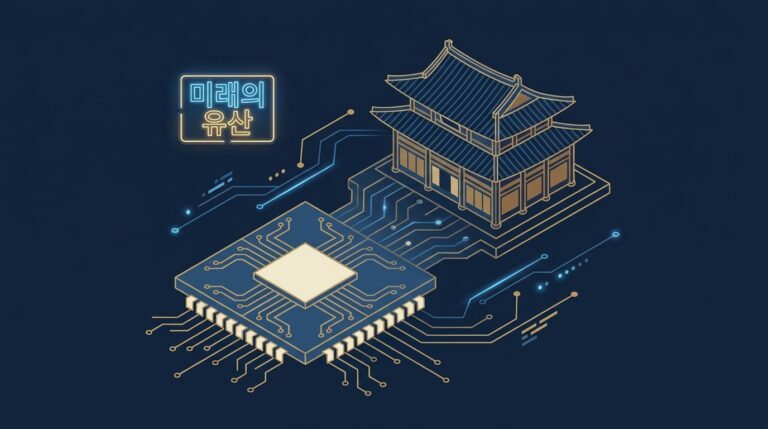
Fast forward to reality. If you’ve been working in or doing business with Korea—especially in the tech hubs like Pangyo or Suwon—you know this isn’t just a K-Drama trope. This is the real-life Semiconductor War (반도체 전쟁), and the buzzword echoing through every corporate boardroom, news channel, and late-night team dinner (Hoesik) is 소부장 (So-bu-jang).
At the C2 (Advanced) level, fluency isn’t just about ordering coffee; it’s about reading the room, understanding the socio-economic pulse, and chiming in during a passionate debate over Soju. If you don’t know the context behind Korea’s fierce push for “localization” (국산화), you’re missing out on the core of modern Korean corporate pride.
This guide is curated from real-life questions asked by expat executives and advanced learners navigating the fierce, fast-paced world of Korean tech. Let’s dive into the boardroom!
Phase 2: Core Expressions Deep Dive
1. 소부장 (So-bu-jang)
- Pronunciation: [so-bu-jang] + [Sounds like: so-boo-jahng]
- Meaning: Literal: An acronym for 소재 (Materials), 부품 (Parts), and 장비 (Equipment). / Real nuance: The holy trinity of the semiconductor supply chain, and a symbol of Korea’s technological independence.
- K-Culture Moment: You’re at a high-end Gangnam Izakaya. Your Korean colleagues are unwinding after a grueling quarter. The R&D lead raises a glass and says, “We finally secured the So-bu-jang supply!” It’s a moment of immense national and corporate pride, akin to winning a gold medal in the Olympics.
- Editor’s Insight: This isn’t just a dry economic term. In 2019, when trade restrictions hit Korea, “So-bu-jang” became a national rallying cry. Using this term shows you don’t just speak Korean; you understand the Korean economic psyche.
- Situation Spectrum:
- Casual with friends: ⚠️ (A bit too nerdy unless they are in tech)
- Colleagues (Semi-formal): ✅
- Boss/Seniors (Formal): ✅ (Perfect for impressing executives)
- 🤔 Think About It: Why does the Korean language love creating four-syllable acronyms (like So-bu-jang or 워라밸 – Work-Life Balance)? Does your native language condense complex socio-economic concepts into catchy abbreviations to mobilize public sentiment?
2. 국산화에 성공하다 (Guksanhwa-e seonggonghada)
- Pronunciation: [guk-san-hwa-e seong-gong-ha-da] + [gook-sahn-hwa-eh sung-gong-ha-da]
- Meaning: Literal: To succeed in domestic production. / Real nuance: We localized it! We are no longer dependent on foreign monopolies!
- K-Culture Moment: Think of the classic underdog story in Korean media. A small, brilliant startup partnered with a giant conglomerate finally produces a crucial chemical that used to be 100% imported. The news anchors announce it with swelling pride.
- Editor’s Insight: The suffix ‘-화’ (-hwa) means ‘-ization’. Here, it carries the heavy emotional weight of “self-reliance.” It’s the ultimate corporate flex.
- Situation Spectrum:
- Casual with friends: ⚠️
- Colleagues (Semi-formal): ✅
- Boss/Seniors (Formal): ✅
- 🤔 Think About It: The word “국산” (domestic product) carries a strong premium in Korea, from beef (Hanwoo) to semiconductors. How does the perception of “domestic vs. imported” differ in your home country?
3. 위기를 기회로 삼다 (Wigireul gihoero samda)
- Pronunciation: [wi-gi-reul gi-hoe-ro sam-da] + [wee-gee-reul gee-hweh-ro sahm-da]
- Meaning: Literal: To make a crisis into an opportunity. / Real nuance: Turning the tables; using a massive setback as a launchpad for innovation.
- K-Culture Moment: This is the ultimate CEO speech line in any K-Drama finale. It reflects the “Han” (한) and resilience of modern Korea—rebuilding an entire economy from the ashes of war, or in this case, overcoming a global semiconductor supply chain crisis.
- Editor’s Insight: If you want to sound like a true visionary in a Korean boardroom, drop this phrase when discussing overcoming supply chain bottlenecks.
- Situation Spectrum:
- Casual with friends: ⚠️ (A bit too dramatic for missing a bus)
- Colleagues (Semi-formal): ✅
- Boss/Seniors (Formal): ✅✅ (Highly recommended in business reports)
- 🤔 Think About It: Does the corporate culture in your country celebrate the “overcoming of extreme adversity” as intensely as Korea’s “Ppalli-Ppalli” (hurry up) and “Can-do” spirit?
Phase 3: Textbook vs. Real Korean
[Scenario 1: Discussing the success of replacing a foreign part]
* 📖 Textbook Korean: 우리 회사는 외국 부품을 한국 부품으로 바꾸는 데 성공했습니다. (Our company succeeded in changing foreign parts to Korean parts.)
* 🗣️ Real Korean: 드디어 핵심 부품 국산화 이뤄냈습니다. 이제 외풍(外風)에 흔들리지 않습니다. (We finally achieved localization of core parts. We won’t be shaken by external headwinds anymore.)
* 💡 Why the difference?: C2 business Korean heavily utilizes Hanja (Sino-Korean) vocabulary like “외풍” (external winds/influence) to sound authoritative, poetic, and professionally resilient.
[Scenario 2: Reacting to a sudden supply chain cut-off]
* 📖 Textbook Korean: 정말 큰 문제입니다. 어떻게 해야 합니까? (This is a really big problem. What should we do?)
* 🗣️ Real Korean: 완전 비상이죠. 근데 까짓거, 이번 참에 맨땅에 헤딩해서라도 우리 기술로 만들어 봅시다! (It’s a total emergency. But whatever, let’s just bash our heads against the wall (start from scratch) and make it with our own tech this time!)
* 💡 Why the difference?: Even in high-level business, Koreans use vivid idioms like “맨땅에 헤딩” (heading the bare ground) to express an aggressive, fearless, underdog spirit during a crisis.
Phase 4: Cultural Context — K-Culture Deep Dive
4-1. Non-Verbal Cues: The Corporate “Nunchi”
When discussing topics of national economic pride like So-bu-jang localization, the atmosphere can get surprisingly patriotic. Non-verbal cues matter here. A firm, slow nod of the head while maintaining eye contact shows you grasp the gravity of the achievement. Don’t brush it off as “just business”—acknowledge the intense late-night R&D hours (야근) that went into it.
4-2. K-Drama Connection: The Boardroom Trope vs. Reality
In dramas like Misaeng or Start-Up, the localization breakthrough happens dramatically overnight, usually preceded by a passionate speech on a rooftop.
Critical View: In reality, the So-bu-jang localization took years of grueling, unglamorous government-corporate collaboration. While dramas focus on the charismatic CEO, the real heroes are the exhausted engineers in Suwon and Hwaseong working 52-hour work weeks. Understanding this reality will earn you massive respect from your Korean peers.
Phase 5: Real-Life Roleplay Scenario
Setting: Friday night, 8 PM. A premium Korean BBQ restaurant in Pangyo (Korea’s Silicon Valley). Sizzling Hanwoo beef on the grill, a gentle clinking of Soju glasses. The atmosphere is euphoric. Your team just successfully tested a localized photoresist material for semiconductor manufacturing.
Characters:
– YOU: A foreign technical consultant who has been working with the team for 2 years.
– Team Lead Choi (45): A veteran engineer who practically lives in the lab. Passionate, a bit tipsy, and deeply emotional about the project.
Dialogue:
Team Lead Choi: 아, 드디어 이 날이 오네요. 2년 전 수출 규제 터졌을 때만 해도 눈앞이 깜깜했는데. 🥩
(Ah, deudieo i nari oneyo. Inyeon jeon suchul gyuje teojeosseul ttaeman haedo nunapi kkamkkamhaenneunde.)
[Ah, this day has finally come. When the export restrictions hit 2 years ago, everything looked completely dark.]
(🎭 Stage Direction: Choi pours you a shot of Soju with both hands, his eyes shining with pride)
YOU: 그러니까요. 그땐 정말 매일 밤샘 회의의 연속이었잖아요.
(Geureonilkkayo. Geuttaen jeongmal maeil bamsaem hoeuiui yeonsogieotjanayo.)
[Tell me about it. Back then, it was just a continuous loop of all-night meetings.]
Team Lead Choi: 맞아요. 다들 우리가 핵심 소재 국산화를 어떻게 하냐고 코웃음 쳤죠.
(Majayo. Dadeul uriga haeksim sojae guksanhwareul eotteoke hanyago kouseum chyeotjyo.)
[Exactly. Everyone scoffed at us, asking how we could possibly localize core materials.]
YOU: 하지만 보란 듯이 해내셨잖아요. 팀장님 리더십 덕분입니다!
(Hajiman boran deusi haenaesyeotjanayo. Timjangnim rideosip deokbunimnida!)
[But you proved them wrong and pulled it off. It’s all thanks to your leadership, Team Lead!]
Team Lead Choi: 에이, 무슨 말씀을요. [Your Name] 님이 옆에서 글로벌 스탠다드 꽉 잡아준 덕분이지! 자, 짠 할까요? 우리의 소부장 독립을 위하여!
(Ei, museun malsseumeullyo. [Your Name] nimi yeopeseo geullobeol seutaendadeu kkwak jabajun deokbuniji! Ja, jjan halkkayo? Uriui sobujang dongnibeul wihayeo!)
[Oh, come on. It’s because you held down the global standards right beside us! Shall we toast? To our So-bu-jang independence!]
🔀 Your Turn! How do you respond to the toast?
– A) “위하여! 감사합니다!” (Cheers! Thank you!) – Safe, but a bit too generic for a C2 speaker.
– B) “위하여! 정말 위기를 기회로 만드셨습니다. 존경합니다!” (Cheers! You truly turned a crisis into an opportunity. I respect you!) – High praise, hits all the right cultural notes.
– C) “아싸! 이제 떼돈 버는 건가요?” (Yay! Are we making bank now?) – Funny, but ruins the emotional, patriotic vibe of the moment.✅ Best Choice: B — In Korean corporate culture, especially during a successful “Hoesik,” elevating your counterpart’s hard work and using high-level idioms like “위기를 기회로” creates an unbreakable bond.
Phase 6: 10-Second Shadowing Drill
Try this powerful C2-level statement, perfect for a business presentation or formal meeting:
😤 이번 / 수출 규제는 / 오히려 / 한국 소부장 산업이 / 자립할 수 있는 / 결정적 기회가 / 되었습니다.
(ibeon / suchul gyujeneun / ohiryeo / hanguk sobujang saneobi / jaripal su inneun / gyeoljeongjeok gihoega / doeeotseumnida.)
[This export restriction, on the contrary, became a decisive opportunity for Korea’s So-bu-jang industry to become self-reliant.]
Phase 7: K-Culture Mini Dictionary
| 한국어 | Romanization | English | Contextual Meaning |
|---|---|---|---|
| 소부장 | so-bu-jang | Materials, Parts, Equipment | The core tech supply chain. A buzzword for tech independence. |
| 국산화 | guk-san-hwa | Localization | Producing previously imported goods domestically. A point of national pride. |
| 맨땅에 헤딩 | maen-ttang-e he-ding | Heading the bare ground | Starting from absolute zero with sheer willpower; a beloved K-corporate attitude. |
| 자립 | ja-rip | Self-reliance | Not depending on foreign monopolies; technological sovereignty. |
| 판교 | Pan-gyo | Pangyo | A city south of Seoul, known as the “Silicon Valley of Korea” where these innovations happen. |
Phase 8: Traveler Survival Kit (Tech Expat Edition)
If you are traveling to Korea for a tech expo (like COEX or KINTEX) or visiting R&D centers, these advanced survival tips will instantly elevate your status.
🆘 Survival Phrases for the Tech Expo
– 🇰🇷 “이 장비의 핵심 부품은 모두 국산화가 완료되었나요?”
(i jangbiui haeksim bupumeun modu guksanhwaga wallyodoeeonnayo?)
[Have all the core parts of this equipment been localized?]
– 📍 Where to use: Trade shows, vendor meetings.
– 💡 Pro Tip: Asking this question shows you have a deep understanding of current Korean industry trends. The vendor will immediately treat you as a serious insider.📌 Editor’s Travel Note: The Pangyo Vibe
– Unlike the suits in Yeouido (finance), Pangyo (tech) is much more casual. Think fleeces, hoodies, and lanyards.
– However, the language remains incredibly competitive and professional. They might dress casually, but they speak the language of aggressive innovation.
Phase 9: Critical Thinking — “One Step Deeper”
Global Era: Language & Power in the Semiconductor War
🧠 Think Deeper:
The term “So-bu-jang” and “Guksan-hwa” are not just economic terms; they are deeply tied to Korea’s geopolitical identity. Historically, Korea has been sandwiched between global superpowers. When supply chains were weaponized in recent years, achieving technological self-reliance wasn’t just about corporate profit—it was viewed as protecting national sovereignty. The language used in Korean media during these times often mirrors military strategy (e.g., 전초기지 – outpost, 무기화 – weaponization). It highlights how modern economic struggles trigger Korea’s deeply ingrained collective defense mechanism and resilience.💬 Your Turn: In your culture, when an industry faces a threat from abroad, does the public view it as a national security issue, or purely an economic one? How does the media language change? Share your thoughts below!
Phase 10: FAQ & Avoiding Misunderstandings
- Q: Can I use “국산화 (Guksan-hwa)” for non-tech things?
- Yes! While heavily used in tech, you can jokingly use it for everyday things. For example, if an Italian chef opens a restaurant in Korea and adapts the pasta to Korean tastes (adding more garlic), you can say, “이 파스타, 완벽하게 국산화됐네요!” (This pasta has been perfectly localized!)
- Q: How should I react if a Korean client talks passionately about beating foreign competitors?
- Acknowledge their hard work. In Korea, validating the effort (고생하셨습니다 – You’ve worked hard) is just as important as congratulating the result.
❌ Common Mistake #1: Confusing 국내산 (Gungnaesan) and 국산 (Guksan).
✅ Do this instead: Use “국내산” mostly for agricultural products (like pork or beef raised in Korea). Use “국산” for manufactured goods, technology, and broadly “made in Korea” products.
Phase 11: Summary & Action Items
- One-Liner Summary: Understanding “So-bu-jang” and “Guksan-hwa” is your VIP pass into the proud, resilient heart of Korean corporate culture and the global tech war.
-
Action Mission 3 Steps:
- 🥉 Bronze (Solo): Practice pronouncing “소부장 국산화” (So-bu-jang Guksan-hwa) 5 times smoothly.
- 🥈 Silver (Online): Read a Korean news headline on Naver Economy containing the word “소부장” and translate it.
- 🥇 Gold (Real World): Bring up the success of Korea’s “So-bu-jang localization” during small talk with a Korean colleague or business partner and watch their eyes light up!
- K-Culture Mission: Watch an episode of a Korean corporate drama (like Search: WWW or Start-Up) and listen carefully for words related to self-reliance (자립) or localization (국산화)!
Phase 12: Quiz — Interactive Challenge
1. Situational Judgment: Your Korean partner company announces they’ve successfully replaced an imported material with their own technology. What is the most C2-appropriate response?
– A) 와! 진짜 대박이네요! (Wow! That’s really awesome!)
– B) 참 잘했어요! (You did very well!)
– C) 드디어 핵심 소재 국산화에 성공하셨군요. 정말 고생 많으셨습니다. (You’ve finally succeeded in localizing the core material. You’ve truly worked hard.)
2. Fill in the Blank:
“이번 위기를 ( ___ )로 삼아 더 크게 성장합시다!”
(Let’s use this crisis as an ( ___ ) to grow even bigger!)
– Hint: Opportunity
3. True or False – K-Corporate Edition:
In Korean corporate culture, achieving “So-bu-jang” localization is viewed purely as a cost-cutting measure, with no emotional or patriotic significance. (T/F)
(Answers: 1. C – A is too casual, B sounds like praising a child. 2. 기회 (gihoe). 3. False – It carries immense national and emotional pride regarding technological sovereignty.)
Frequently Asked Questions (FAQ)
Q: What does "소부장 (So-bu-jang)" mean in Korean and how do you pronounce it?
A: In Korean, "소부장 (So-bu-jang)" is pronounced [so-bu-jang] and means: Literal: An acronym for 소재 (Materials), 부품 (Parts), and 장비 (Equipment). / Real nuance: The holy trinity of the semiconductor supply chain, and a symbol of Korea's technological independence.
Q: What does "국산화에 성공하다 (Guksanhwa-e seonggonghada)" mean in Korean and how do you pronounce it?
A: In Korean, "국산화에 성공하다 (Guksanhwa-e seonggonghada)" is pronounced [guk-san-hwa-e seong-gong-ha-da] and means: Literal: To succeed in domestic production. / Real nuance: We localized it! We are no longer dependent on foreign monopolies!
Q: What does "위기를 기회로 삼다 (Wigireul gihoero samda)" mean in Korean and how do you pronounce it?
A: In Korean, "위기를 기회로 삼다 (Wigireul gihoero samda)" is pronounced [wi-gi-reul gi-hoe-ro sam-da] and means: Literal: To make a crisis into an opportunity. / Real nuance: Turning the tables; using a massive setback as a launchpad for innovation.






