

Phase 1: Empathy & K-Culture Cold Open
Hello, language enthusiasts! This is your Lead Editor at Daily Hangul.
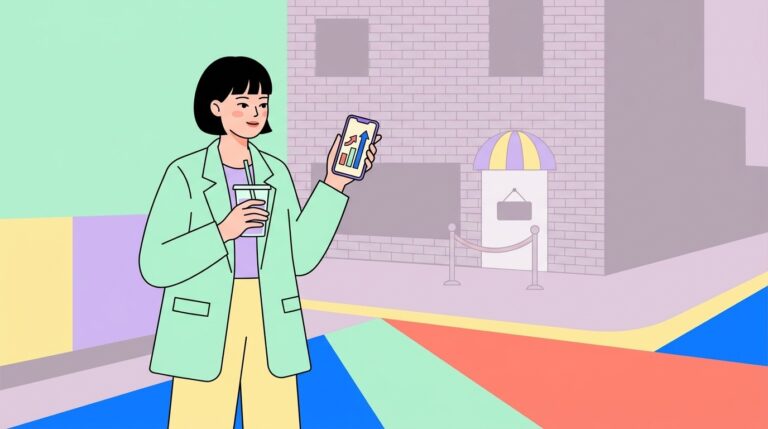
Picture this: It’s Saturday afternoon in Seongsu-dong, the Brooklyn of Seoul. You see a line wrapping around the block, full of trendy twenty-somethings standing in the sweltering heat. Are they waiting for a Michelin-starred restaurant? A famous K-Pop idol? Nope. They are waiting for a two-week-only pop-up store that sells character keychains and vegan hand creams. Welcome to the world of Korean Gen Z consumption.
If you’re a marketer, a brand strategist, or just an advanced learner trying to decode the hyper-segmented Korean market, standard business Korean won’t save you here. The textbook might teach you expressions like ‘소비자 만족’ (customer satisfaction) or ‘매출 증가’ (sales increase), but out there in the viral marketing wild? They speak a completely different language—a highly nuanced mix of internet slang, fan culture, and sociopolitical awareness.
Today, we are going deep. As C2-level learners, you’re not just memorizing words; you’re learning to read the cultural currents. Let’s dive into the Marketing & Branding strategies that actually open the wallets of Korean Gen Z.
(Note: This guide is built from real consulting sessions with global marketing teams trying to break into the Korean market.)
Phase 2: Core Expressions Deep Dive
To understand Korean Gen Z, you need to understand their vocabulary. Here are three crucial expressions that dominate boardrooms and Instagram feeds alike.
1. 가심비
- Pronunciation: [gasimbi] (Sounds like: gah-shim-bee)
- Meaning: (Literal) Price-to-heart ratio / (Real nuance) Psychological and emotional satisfaction gained from a purchase, regardless of the objective price.
- K-Culture Moment: You’re at a boutique cafe in Hongdae. A tiny piece of cake costs 12,000 won (about $9), but it looks like a piece of modern art. A Gen Z consumer doesn’t care about the high price because the aesthetic joy and the perfect Instagram post provide high gasimbi.
- Editor’s Insight: You probably already know 가성비 (gaseongbi – cost-effectiveness). 가심비 is its emotional evolution. It perfectly captures a generation that might eat cheap convenience store ramen for dinner but will happily spend $15 on an aesthetically pleasing dessert.
- Situation Spectrum:
- Casual with friends: ✅
- Strategy meetings (Semi-formal): ✅ (Highly used in marketing pitches)
- Formal contracts: ⚠️ (Keep it to discussions and pitches)
- 🤔 Think About It: Why did a highly practical society like Korea shift from prioritizing sheer volume and cheapness (가성비) to emotional satisfaction (가심비)? How does the pressure of modern urban life influence this “treat yourself” mentality?
2. 돈쭐내다
- Pronunciation: [donjjulnaeda] (Sounds like: don-jjool-nae-dah – heavily stress the double ‘jj’ like the ‘z’ in pizza)
- Meaning: (Literal) To scold with money / (Real nuance) To aggressively support an ethical, kind, or socially responsible business by buying their products en masse.
- K-Culture Moment: A news story goes viral about a fried chicken shop owner who gave free food to a hungry child. Netizens find the restaurant’s address and start ordering hundreds of chickens they don’t even plan to eat, just to give the owner revenue. They are “scolding him with money.”
- Editor’s Insight: This comes from the word 혼쭐내다 (to scold/punish severely). It’s a brilliant linguistic flip. It shows Gen Z’s “Value Consumption” (가치 소비). They view their spending power as a tool for social justice.
- Situation Spectrum:
- Online/Social Media (Casual): ✅
- PR/Marketing Meetings: ✅ (To describe consumer behavior)
- Addressing executives: ⚠️ (Too colloquial, use ‘가치 소비’ instead)
- 🤔 Think About It: Does your home culture have a specific word for positively “boycotting” a business (a “buycott”)? What does this term reveal about the collective power of Korean netizens?
3. 오픈런 뛰다
- Pronunciation: [opeulleon ttwidea] (Sounds like: oh-peun-run ttwee-dah)
- Meaning: (Literal) To run at the open / (Real nuance) Waiting in line hours before a store opens to get limited edition items or enter a trendy pop-up.
- K-Culture Moment: Chanel price increases are announced. The next morning at 5 AM, hundreds of people are lined up outside a department store in Gangnam. When the doors open at 10:30 AM, people physically sprint.
- Editor’s Insight: Scarcity marketing is king in Korea right now. If a brand is easily accessible, it loses its cool factor. Gen Z loves the “experience” of the open run—it’s a badge of honor to prove your dedication to a trend.
- Situation Spectrum:
- Friends/Colleagues (Casual): ✅
- Marketing Meetings: ✅
- Official Press Releases: 🚫 (Use ‘대기 행렬’ – waiting lines)
- 🤔 Think About It: In Korea, “waiting in line” is often seen as proof of quality rather than an inconvenience. Have you noticed how a busy restaurant with a long queue attracts even more people in Korea?
Phase 3: Textbook vs. Real Korean
Let’s see how standard business textbooks differ from the fast-paced reality of an ad agency in Seoul.
[Describing a Successful Campaign]
* 📖 Textbook Korean: 이번 캠페인은 소비자들의 긍정적인 반응을 얻었습니다. (This campaign received a positive response from consumers.)
* 🗣️ Real Korean: 이번 캠페인 완전 바이럴 터졌어요. / Z세대 사이에서 폼 미쳤다고 난리 났어요. (This campaign went completely viral. / Gen Z is going crazy saying its form is insane.)
* 💡 Why the difference?: “폼 미쳤다” (Insane form/quality) originated from sports commentary but has been co-opted by Gen Z to describe anything exceeding expectations. Slang dictates the speed of trends.
[Discussing Niche Targeting]
* 📖 Textbook Korean: 특정 관심사를 가진 고객층을 공략해야 합니다. (We must target the customer segment with specific interests.)
* 🗣️ Real Korean: 요즘은 디깅(Digging) 소비가 대세니까, 찐팬들을 위한 세계관을 만들어야 해요. (These days “digging consumption” is the trend, so we need to create a universe for the hardcore fans.)
* 💡 Why the difference?: Borrowed from K-Pop idol culture, marketing now requires building a “세계관” (fictional universe/lore) for brands. Consumers don’t just buy; they “stan” (찐팬).
Phase 4: Cultural Context — K-Culture Deep Dive
4-1. The Non-Verbal Nuance: ‘Insta-Worthy’ Nunchi (인스타 감성과 눈치)
When visiting a trendy pop-up or a gasimbi cafe, observe the non-verbal culture. In Korea, taking photos before eating isn’t just a habit; it’s a social ritual. If you start cutting into the cake before your Korean friends have taken their “인증샷” (proof shots), you lack nunchi (눈치 – social awareness). The lighting, the angle, and ensuring the brand’s logo is visible are all part of the unwritten Gen Z consumer contract.
4-2. The K-Popification of Marketing
If you want to understand modern Korean brand marketing, look at K-Pop. The strategies used to sell albums are now used to sell coffee, cosmetics, and even bank accounts.
Brands frequently use 포카 (Poca – Photocards) as marketing bait. You aren’t just buying a hamburger; you’re buying a limited-edition photocard of the celebrity endorser that comes with a hamburger. The fan-chant culture, the “unboxing” culture, and the intense loyalty of fandoms have been completely adopted by F&B and fashion brands. When designing a campaign, marketers often ask, “Will this trigger the fandom’s desire to collect?”
Phase 5: Real-Life Roleplay Scenario
Setting: A sleek marketing agency meeting room in Gangnam. It’s 3 PM on a Thursday. Iced Americanos cover the table.
Characters:
– YOU (The Global Marketing Lead): A savvy expat who knows the Korean market.
– Min-young (38, Senior Strategy Director): Sharp, highly focused on ROI.
– Ji-hoon (26, Gen Z Marketer): Trendy, knows exactly what’s popping on Instagram.
The Dialogue:
Min-young: 이번에 새로 런칭하는 비건 화장품 마케팅 전략, 다들 어떻게 생각해요?
(ibeone saero reonchinghaneun bigeon hwajangpum maketing jeollyak, dadeul eotteoke saenggakaeyo?)
[What does everyone think about the marketing strategy for our new vegan cosmetics launch?]
Ji-hoon: 팀장님, 요즘 Z세대들은 단순히 친환경이라는 것만으로는 지갑을 안 열어요. 확실한 ‘가심비’ 포인트가 필요해요.
(timjangnim, yojeum Zsedaedeureun dansunhi chin-hwangyeongiraneun geommanuroneun jigabeul an yeoreoyo. hwaksilhan ‘gasimbi’ pointeuga piryohaeyo.)
[Director, Gen Z these days don’t just open their wallets because something is eco-friendly. We need a clear ‘gasimbi’ point.]
Min-young: 그럼 오프라인 프로모션은 어때요? 할인 행사를 크게 할까요?
(geureom opeurain peuromosyeoneun eottaeyo? harin haengsareul keuge halkkayo?)
[Then how about offline promotions? Should we do a massive discount event?]
Ji-hoon: 할인은 너무 흔해요. 오히려 성수동에 한정판 팝업스토어를 여는 게 어떨까요?
(harineun neomu heunhaeyo. ohiryeo seongsudonge hanjeongpan pabeopseuto-eoreul yeoneun ge eotteolkkayo?)
[Discounts are too common. Instead, how about opening a limited-edition pop-up store in Seongsu-dong?]
Min-young: 팝업스토어요? 비용이 꽤 들 텐데요.
(pabeopseuto-eoyo? biyong-i kkwae deul tendeyo.)
[A pop-up store? That will cost quite a bit.]
YOU: 비용은 들겠지만, 성공하면 효과는 확실할 거예요. 요즘 애들은 팝업 가려고 [ ] 하잖아요.
(biyong-eun deulgetjiman, seonggonghamyeon hyogwaneun hwaksilhal geoyeyo. yojeum aedeureun pabeop garyeogo [ ] hajanayo.)
[It will cost money, but if it succeeds, the effect will be certain. Kids these days do [ ] just to go to pop-ups, you know.]
🔀 Your Turn! What goes in the blank?
– A) 예약을 (make reservations)
– B) 오픈런을 (open runs)
– C) 쇼핑을 (shopping)✅ Best Choice: B — Reason: Saying “오픈런을 하잖아요” demonstrates your deep understanding of Gen Z dedication and scarcity marketing. It proves you’re a local expert.
Min-young: 맞아요. 인스타 인증샷 찍기 좋게 공간을 꾸미면 자발적 바이럴이 터지겠네요.
(majayo. inseuta injeungsyat jjikgi joke gong-ganeul kkumimyeon jabaljeok baireori teojigenneyo.)
[That’s true. If we decorate the space well for Insta proof-shots, it’ll go viral organically.]
YOU: 네, 게다가 수익금 일부를 유기견 센터에 기부한다고 하면, Z세대들이 돈쭐내러 올 겁니다.
(ne, gedaga suikgeum ilbureul yugigyeon senteo-e gibuhandago hamyeon, Zsedaedeuri donjjullaereo ol geomnida.)
[Yes, plus, if we say a portion of the profits goes to a stray dog center, Gen Z will come to scold us with money.]
Ji-hoon: 오, 리더님 트렌드 좀 아시는데요? 폼 미쳤다!
(o, rideonim teurendeu jom asineundeyo? pom michyeotda!)
[Oh, you really know your trends, Lead! Your form is insane!]
Min-young: 좋습니다. 그럼 성수동 팝업 기획안으로 진행해보죠.
(joseumnida. geureom seongsudong pabeop gihoeganeuro jinhaenghaebojyo.)
[Great. Let’s proceed with the Seongsu-dong pop-up proposal.]
Bonus Roleplay: The Seongsu-dong Pop-Up Encounter
(You are at the actual pop-up store. You see a staff member with a tablet managing the queue.)
YOU: 저기요, 지금 대기 등록하면 얼마나 걸릴까요?
(jeogiyo, jigeum daegi deungnokanmyeon eolmana geollilkkayo?)
[Excuse me, if I register for the waitlist now, how long will it take?]
Staff: 고객님, 현재 대기 150팀 있어서 약 2시간 정도 소요 예상됩니다.
(gogaengnim, hyeonjae daegi 150tim isseoseo yak 2sigan jeongdo soyo yesangdoemnida.)
[Customer, there are currently 150 teams waiting, so it’s expected to take about 2 hours.]
YOU: 헉, 2시간이요? 혹시 굿즈 한정판은 아직 남아있나요?
(heok, 2siganiyo? hoksi gutjeu hanjeongpaneun ajik nama-innayo?)
[Gasp, 2 hours? By any chance, are the limited edition goods still available?]
Staff: 아쉽게도 오픈런하신 분들이 다 구매하셔서 품절되었습니다.
(aswipgedo opeulleonhasin bundeuri da gumaehasyeoseo pumjeoldoeeotseumnida.)
[Unfortunately, the people who did the open-run bought them all, so they are sold out.]
Phase 6: 10-Second Shadowing Drill
Practice your boardroom pitch with the correct intonation. Slashes (/) indicate pauses.
😤 요즘 Z세대는 / 가성비보다 / 가심비를 / 훨씬 중요하게 생각합니다! (yojeum Zsedaeneun / gaseongbiboda / gasimbireul / hwolssin jung-yohage saenggakamnida!)
(Nowadays, Gen Z / considers gasimbi / much more important / than gaseongbi!)
😊 착한 기업은 / 무조건 / 돈쭐을 내줘야 해요! (chakan gieobeun / mujogeon / donjjureul naejwoya haeyo!)
(Good companies / unconditionally / must be scolded with money!)
Phase 7: K-Culture Mini-Dictionary (Trend Hunter Edition)
| 한국어 | Romanization | English | Context |
|---|---|---|---|
| 가심비 | gasimbi | Cost-to-psychological-satisfaction ratio | Emotional shopping, treating oneself. |
| 득템 | deuktem | Scoring an item | Used when getting a rare or great item (Get + Item). |
| 인스타그래머블 | inseutageuraemeobeul | Instagrammable | A crucial KPI for any physical space in Korea. |
| 취향존중 (취존) | chwihyang-jonjung | Respecting personal taste | Gen Z’s core philosophy; not judging niche hobbies. |
| 세계관 | segyegwan | Fictional Universe / Lore | Brands now need backstories, just like Marvel or K-Pop. |
Phase 8: Traveler’s Survival Kit (Trend-Hunting in Seoul)
If you’re exploring the trendy streets of Seongsu, Hannam, or Hongdae to observe these marketing trends firsthand, you’ll need these phrases.
🆘 Survival Phrases for Pop-up Hunters
– 🇰🇷 “이거 한정판인가요?” (igeo hanjeongpaningayo?) / Is this limited edition?
– 🇰🇷 “웨이팅 등록 어떻게 해요?” (weiting deungnok eotteoke haeyo?) / How do I register for the waitlist?
– 🇰🇷 “인증샷 이벤트 참여할게요.” (injeungsyat ibenteu chamyeohalgeyo.) / I’d like to participate in the photo proof event. (Brands often give freebies if you post on IG).📌 Editor’s Travel Note
– The Waiting Apps: You absolutely need a Korean phone number or apps like CatchTable (캐치테이블) to queue for hot spots. Very few places let you physically stand in line anymore; it’s all digital kiosks.
– Pop-up Lifespan: A pop-up in Seongsu usually lasts only 1 to 2 weeks. Check Instagram (search #성수팝업) before you go!
Phase 9: Critical Thinking Corner — “A Step Deeper”
Media vs. Reality: The Myth of the “MZ Generation”
🧠 Think Deeper:
If you consume Korean media, you will constantly hear the term “MZ세대” (MZ Generation). Korean media grouped Millennials (born 1981-1996) and Gen Z (born 1997-2012) into one massive demographic. However, actual Korean Gen Z hates this term. A 40-year-old Millennial manager with kids and a 22-year-old university student have completely different consumption habits and struggles. Marketers who lazily target the “MZ Generation” often fail. The real trend is “Hyper-segmentation” (초개인화) – treating consumers as highly individualized niches, respecting their specific 디깅 (digging) habits rather than grouping them into a media buzzword.💬 Your Turn: Does your country’s media create generational labels that don’t match reality? How do young people in your culture react to being categorized by marketers? Share your thoughts in the comments!
Phase 10: FAQ & Common Mistakes
Q: Can I use the word “돈쭐내다” in a formal business presentation to the CEO?
Maybe, but with a caveat. It’s a trendy slang term. If your CEO is progressive or you are directly quoting social media reactions, it shows you have your finger on the pulse. However, in formal written reports, translate it to “소비자의 자발적 가치 소비” (consumers’ voluntary value consumption).
Q: Is it polite to call someone “MZ세대” to their face?
No. In everyday conversation, calling a young person “MZ” can come off as slightly condescending or ‘boomer-ish’ (꼰대). It implies they are self-centered or rebellious. Keep the term strictly in marketing analytics.
❌ Common Mistake #1: Thinking “가성비” (cost-effective) and “가심비” (emotional-effective) are interchangeable.
✅ Do this instead: Use 가성비 for everyday utilitarian items (like buying bulk toilet paper). Use 가심비 for luxury, hobbies, or aesthetic experiences (like an expensive perfume or a trendy cafe).
Phase 11: Summary & Action Items
One-Liner Summary: To win the wallets of Korean Gen Z, you must move beyond textbook logic and master the language of emotional value (gasimbi), ethical support (donjjul), and experiential scarcity (open run).
Action Mission:
– 🥉 Bronze (Solo): Read the 3 core expressions out loud, exaggerating the intonation like a passionate marketer pitching a campaign.
– 🥈 Silver (Online): Go to Instagram, search the hashtag #가심비 or #팝업스토어, and read the captions of 3 posts.
– 🥇 Gold (Real-world): Next time you buy something slightly expensive but emotionally satisfying, tell your Korean friend or tutor: “비싸지만 가심비가 좋아요!” (It’s expensive, but the gasimbi is good!)
K-Culture Mission (Marketing Edition):
Find a Korean brand’s Instagram page (e.g., Gentle Monster, Tamburins, or a K-Pop agency). Look at their latest event. Can you spot elements of “Scarcity Marketing” (limiting supply) or “World-building” (세계관)?
Phase 12: Interactive Quiz
1. Situational Judgment: Your agency’s client is a sustainable fashion brand that donates 50% of its profits to ocean cleanup. Which headline will most likely resonate with Gen Z?
– A) 뛰어난 가성비의 친환경 티셔츠 (Outstanding cost-effective eco-friendly t-shirt)
– B) 우리가 이 브랜드를 돈쭐내야 하는 이유 (Why we need to ‘scold this brand with money’)
– C) 매출 증가를 위한 지속가능성 (Sustainability for sales increase)
2. Fill in the Blank:
“내일 탬버린즈 제니 향수 새로 나온대. 우리 새벽에 만나서
[ _________ ] 뛰자!”
(Tomorrow Tamburins is releasing the new Jennie perfume. Let’s meet at dawn and run a [ _________ ]!)
3. True or False – K-Culture Edition:
“In Korea, if a pop-up store is completely empty with no waiting line, Gen Z consumers will view it as highly desirable because it’s comfortable to shop.”
(Scroll down for answers)
…
…
…
Answers:
1. B (Gen Z loves value consumption and the concept of rewarding ethical brands via ‘donjjul’).
2. 오픈런 (open run – waiting in line before the store opens).
3. False. Long lines and the “open run” phenomenon create social proof. A completely empty pop-up might be perceived as “not trendy enough” or lacking gasimbi.
Frequently Asked Questions (FAQ)
Q: What does "가심비" mean in Korean and how do you pronounce it?
A: In Korean, "가심비" is pronounced [gasimbi] and means: (Literal) Price-to-heart ratio / (Real nuance) Psychological and emotional satisfaction gained from a purchase, regardless of the objective price.
Q: What does "돈쭐내다" mean in Korean and how do you pronounce it?
A: In Korean, "돈쭐내다" is pronounced [donjjulnaeda] and means: (Literal) To scold with money / (Real nuance) To aggressively support an ethical, kind, or socially responsible business by buying their products en masse.
Q: What does "오픈런 뛰다" mean in Korean and how do you pronounce it?
A: In Korean, "오픈런 뛰다" is pronounced [opeulleon ttwidea] and means: (Literal) To run at the open / (Real nuance) Waiting in line hours before a store opens to get limited edition items or enter a trendy pop-up.







