

Hello! I’m your Lead Editor at Daily Hangul.
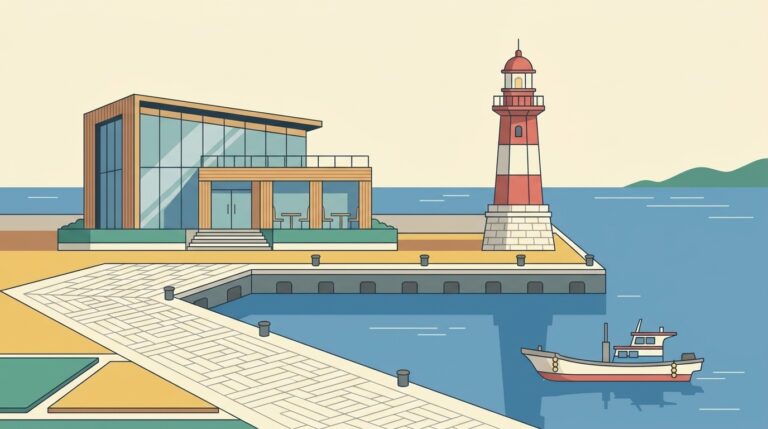
Picture this: You’re watching a beloved K-Drama like Hometown Cha-Cha-Cha or Welcome to Samdal-ri. The camera pans over a picturesque, sun-drenched fishing village. You see the salty sea breeze, the tough-but-warm haenyeo (female divers), and the bustling port. But wait—have you noticed how incredibly pristine the docks look in recent shows? How the community centers look like modern cafes?
That’s not just set design. It’s the real-life manifestation of a massive South Korean government initiative: the 어촌 뉴딜 300 사업 (Fishing Village New Deal 300 Project).
As an advanced (C2) learner, moving beyond basic tourist Korean means understanding the socio-economic undercurrents of the country. South Korea is currently battling 지방소멸 (Regional Extinction) due to an aging population and urbanization. The modernization of fishing ports isn’t just about pretty docks; it’s a desperate, multi-billion-dollar fight for survival.
Today, we are diving deep into the sophisticated vocabulary used in Korean news, documentaries, and policy discussions regarding rural revitalization. If you want to discuss Korean social issues with local intellectuals or truly understand the backdrop of rural K-Dramas, this is your ultimate guide.
Let’s get started!
Phase 2: Core Expressions Deep Dive
Let’s break down the heavy-hitting vocabulary you’ll hear on the KBS 9 O’clock News or from a passionate village head (ijangnim).
1. 어촌 뉴딜 300 사업
- Pronunciation: [eochon nyudil sambaek sa-eop]
- Meaning: (Literal & Real) Fishing Village New Deal 300 Project.
- K-Culture Moment: You’ll hear this in news broadcasts when politicians visit coastal towns, or even in documentaries like KBS Documentary 3 Days showing the transformation of a sleepy port into a bustling tourist hub.
- Editor’s Insight: ‘어촌’ means fishing village. Interestingly, the Korean government loves using the English term ‘New Deal’ to brand large-scale economic revival policies, hoping to evoke the success of Roosevelt’s policies. It sounds progressive and urgent.
- Situation Spectrum:
- Casual with friends: ⚠️ (Too formal unless discussing politics/news)
- Semi-formal (Coworkers): ✅
- Formal (News, Presentations): ✅
- 🤔 Think About It: Why does the South Korean government frequently use English loanwords (like ‘New Deal’, ‘Smart City’) for its national policies? Does it alienate the elderly rural populations it aims to help?
2. 어항 시설 현대화
- Pronunciation: [eohang siseol hyeondaehwa]
- Meaning: (Literal) Modernization of fishing port facilities.
- K-Culture Moment: Think of variety shows like Three Meals a Day: Fishing Village. When the cast returns after a few years, they often marvel at the newly paved breakwaters (방파제) and modernized docks. That’s this policy in action.
- Editor’s Insight: ‘현대화’ (modernization) is a massive buzzword in Korean history. Post-Korean War, it meant survival. Today, in rural areas, it means upgrading crumbling infrastructure to attract young people and tourists.
- Situation Spectrum:
- Casual with friends: 🚫 (Sounds like you’re reading a textbook)
- Semi-formal: ✅
- Formal: ✅
- 🤔 Think About It: Does “modernization” always equal “improvement”? How do Koreans balance preserving authentic cultural heritage with the need for modern convenience?
3. 정주 여건 개선
- Pronunciation: [jeongju yeogeon gaeseon]
- Meaning: (Literal) Improvement of settlement/living conditions. (Real) Making the town actually livable so people stop moving to Seoul.
- K-Culture Moment: This is the core theme of many modern rural dramas. The lack of hospitals, good schools, or cultural facilities drives the youth away. Improving these is the “정주 여건 개선”.
- Editor’s Insight: This is pure C2 level vocabulary. If you use this phrase in a discussion about Korean demographics, locals will be incredibly impressed. It encapsulates housing, education, healthcare, and infrastructure all at once.
- Situation Spectrum:
- Casual with friends: 🚫
- Semi-formal: ⚠️
- Formal: ✅
Phase 3: Textbook vs. Real Korean
How do politicians speak versus the local grandmothers sitting by the dock?
[Situation 1: Describing the town’s upgrade]
* 📖 Textbook/News: 어항 시설이 현대화되어 안전성이 확보되었습니다. (The fishing port facilities have been modernized, securing safety.)
* 🗣️ Real Korean: 우리 동네 항구가 싹 다 바뀌어서 엄청 삐까뻔쩍해졌어! (Our neighborhood port completely changed and got super flashy/shiny!)
* 💡 Why the difference?: Locals use sensory, onomatopoeic words like ‘삐까뻔쩍하다’ (shiny/flashy) and ‘싹’ (completely) rather than dry, Hanja-based bureaucratic terms.
[Situation 2: Discussing young people moving in]
* 📖 Textbook/News: 정주 여건이 개선되며 청년층의 귀어가 증가하는 추세입니다. (With improved living conditions, there is a rising trend of youth returning to fishing.)
* 🗣️ Real Korean: 요즘 살기 좋아져서 서울서 젊은 사람들도 꽤 많이 내려와서 살아. (It’s gotten nice to live here lately, so quite a few young folks from Seoul are coming down to live.)
* 💡 Why the difference?: The official term ‘귀어’ (returning to the fishing village) is heavily pushed by the government, but locals just say ‘내려와서 살다’ (coming down to live), reflecting the Seoul-centric geography of Korea.
Phase 4: Cultural Context — K-Culture Deep Dive
4-1. Non-verbal Element: The Nuance of ‘Nunchi’ in Rural Korea
When visiting a modernized fishing village, reading the room (눈치, nunchi) is crucial. While you might be amazed by a shiny new sea-view cafe built on a modernized port, elder locals might feel alienated by soaring property prices and noisy tourists. When discussing changes with the older generation, speak with a tone of respectful inquiry rather than overly enthusiastic praise for the “gentrification.”
4-2. K-Drama Connection: The Romanticization vs. Reality
K-Dramas like Our Blues and Hometown Cha-Cha-Cha perfectly capture the aesthetic of Korean coastal towns. But notice a trope? There’s always a conflict between the developers (often portrayed as greedy city folks) and the locals trying to protect their heritage.
Critical View: While dramas focus on the romance of a slow life, the reality is that without projects like the “New Deal 300,” these villages literally face extinction. The government actively funds these media portrayals to encourage 귀어 (returning to fishing villages) to combat the hyper-concentration of the population in Seoul.
Phase 5: Real-Life Roleplay Scenario
Setting: Friday afternoon. You are an advanced foreign researcher or journalist visiting a newly modernized port in Namhae. You sit down at a local raw fish restaurant (횟집). You strike up a conversation with Mr. Kim, the Village Head (이장님), over a bowl of spicy fish stew (매운탕).
Characters:
– YOU: An insightful expat with C2 Korean skills.
– Mr. Kim (62): The proud but nostalgic Village Head.
Dialogue:
Mr. Kim: 외국인이 우리 촌구석까진 어쩐 일로 왔소? 옛날엔 배 대기도 힘든 곳이었는데.
(waegugini uri chonguseokkaji eojjeon illo wasso? yennaren bae daegido himdeun gosieonneunde.)
[What brings a foreigner all the way to our rural corner? In the past, it was a place where it was even hard to dock a boat.]
(🎭 Stage Direction: He pours you a glass of water, looking curious)
YOU: 어촌 뉴딜 300 사업으로 항구가 어떻게 변했는지 보러 왔습니다. 시설이 정말 훌륭하네요.
(eochon nyudil sambaek sa-eobeuro hangguga eotteoke byeonhaenneunji boreo watseumnida. siseori jeongmal hullyunghaneyo.)
[I came to see how the port has changed through the Fishing Village New Deal 300 project. The facilities are truly excellent.]
Mr. Kim: 허허, 한국말을 나보다 잘하네. 맞소. 방파제도 새로 깔고, 어항 시설이 현대화되면서 아주 삐까뻔쩍해졌지.
(heoheo, hangungmareul naboda jalhane. masso. bangpajedo saero kkalgo, eohang siseori hyeondaehwadoemyeonseo aju ppikkappeonjjeokhaejeotji.)
[Haha, you speak Korean better than me. That’s right. We laid new breakwaters, and as the port facilities modernized, it got very flashy.]
YOU: 주민분들 정주 여건도 많이 개선되었나요?
(juminbundeul jeongju yeogeondo mani gaeseondoeeonnayo?)
[Have the living conditions for the residents improved a lot as well?]
Mr. Kim: 길이 뚫리고 카페가 생기니 관광객은 늘었는데… 막상 우리 늙은이들 살기는 옛날 그 조용할 때가 그립기도 하고 그렇소. 젊은 사람들이 아예 정착을 해야 할 텐데…
(giri ttulligo kapega saenggini gwangganggaegeun neureonneunde… maksang uri neulgeunideul salgineun yennal geu joyonghal ttaega geurippgido hago geureotso. jeolmeun saramdeuri aye jeongchageul haeya hal tende…)
[Tourists increased since the roads opened and cafes popped up… but honestly, for us old folks, we sometimes miss the quiet old days. We really need young people to settle down permanently, though…]
🔀 Your Turn! How do you respond?
– A) “빨리 적응하셔야죠. 세상이 변하잖아요.” (You need to adapt quickly. The world changes.)
– B) “맞아요. 개발도 좋지만, 마을의 원래 매력이 사라지는 건 아쉬운 일이죠.” (I agree. Development is good, but it’s a pity to lose the village’s original charm.)
– C) “대박! 그래도 땅값은 많이 올랐겠네요!” (Awesome! Still, land prices must have gone up a lot!)✅ Best Choice: B — Acknowledging the bittersweet reality of development shows high cultural empathy and advanced conversational nuance.
⚠️ Choice A & C Analysis: ‘A’ is incredibly rude to an elder. ‘C’ is a very capitalistic Seoul-style joke that might offend a local mourning the loss of their community spirit.
Phase 6: 10-Second Shadowing Drill
Time to sound like a Korean news anchor or documentary narrator! Focus on the pauses (/) and the formal, authoritative yet warm tone.
😤 (Authoritative & Clear) 이 사업으로 인해서 / 낙후된 어항 시설이 현대화되며 / 마을에 다시 / 활기가 돌고 있습니다.
(i sa-eobeuro inhaeseo / nakudoen eohang siseori hyeondaehwadoemyeo / ma-eure dasi / hwalgiga dolgo itseumnida.)
Phase 7: K-Culture Mini Dictionary
| Korean | Romanization | English | Cultural Context |
|---|---|---|---|
| 지방소멸 | jibang somyeol | Regional Extinction | A critical social issue in Korea where rural towns are disappearing due to lack of youth and low birth rates. |
| 귀어 / 귀촌 | gwieo / gwichon | Returning to fish/farm | The trend (often subsidized by the gov) of city dwellers moving to rural areas to start over. |
| 방파제 | bangpaje | Breakwater | Crucial for port safety, often painted with murals in “New Deal” towns to attract tourists. |
| 이장님 | ijangnim | Village Head | The elected leader of a rural village; historically holds massive social influence in the community. |
| 핫플 | hatpeul | Hotplace | Slang for a trendy spot. Many old fishing ports are being transformed into ‘ocean-view hotple’. |
Phase 8: Traveler’s Survival Kit
If you are visiting these newly developed coastal areas, you won’t be using bureaucratic terms to order food. Here is your practical survival kit for navigating rural seaside towns!
🆘 Survival Expressions
– 🇰🇷 “이 근처에 뷰 좋은 카페 어디 있어요?” (i geuncheo-e byu joeun kape eodi isseoyo?)
– Meaning: Where is a cafe with a good view around here?
– 🇰🇷 “배는 보통 몇 시에 들어와요?” (baeneun botong myeot sie deureowayo?)
– Meaning: What time do the boats usually come in? (Great for knowing when the freshest fish is at the market!)
– 🇰🇷 “이건 서울로 택배 되나요?” (igeon seoullo taekbae doenayo?)
– Meaning: Can this be delivered to Seoul via courier? (Essential when buying heavy local specialties like dried fish).📌 Editor’s Travel Note
– Transportation: In rural areas, Kakao T (taxi) might not work well. Ask the restaurant owner to call a local “콜택시” (Call Taxi) for you.
– Payment: Even rural markets in Korea accept credit cards nowadays, but having a little cash is appreciated for tiny transactions or street stalls.
Phase 9: Critical Thinking — “One Step Deeper”
Brain Power: Media vs Reality & Language
Why do we love K-Dramas set in rural seaside towns? Shows like Hometown Cha-Cha-Cha offer a healing escape for exhausted urbanite Koreans. However, the language used in national policies—words like ‘현대화’ (Modernization) and ‘정주 여건’ (Settlement conditions)—reveals a starkly different reality. The seaside isn’t just a romantic backdrop for a love story; it is a battleground against regional extinction. The government wraps these survival policies in shiny English loanwords (“New Deal 300”) to make moving to the countryside sound like an innovative start-up venture rather than a step backward.
💬 Your Turn: Does your country have a problem with rural depopulation? How does the media romanticize rural life versus the actual reality? Let us know in the comments!
Phase 10: FAQ & Avoiding Mistakes
Q: Can I use terms like ‘어촌 뉴딜 사업’ in everyday conversation?
A: Only if you are discussing politics, economy, or news. If you say this while just buying coffee at the port, you will sound like a government auditor!
Q: Is it okay to call the village “시골” (sigol)?
A: “시골” means countryside and is generally fine, but avoid the word “촌” (chon) or “촌구석” (chonguseok) as a foreigner. Locals might use it self-deprecatingly, but if an outsider uses it, it sounds highly derogatory (like calling it the “boondocks” or “backwater”).
❌ Common Mistake #1: Assuming “New Deal” (뉴딜) in Korea refers to the 1930s US history. In modern Korean news, “Korean New Deal” or “Local New Deal” refers to current massive government stimulus packages for green energy, digital infrastructure, and regional revival.
Phase 11: Summary & Action Items
One-Liner Summary: To truly understand Korea’s coastal towns beyond the K-Drama romance, you must master the vocabulary of regional revitalization like 어촌 뉴딜 300 and 현대화.
Action Mission:
– 🥉 Bronze: Shadow the Phase 6 sentence three times, focusing on an authoritative news anchor tone.
– 🥈 Silver: Search “어촌 뉴딜 300” on YouTube and watch a 2-minute Korean news clip. Try to catch the words ‘현대화’ or ‘정주 여건’.
– 🥇 Gold: Next time you visit a Korean coastal city (like Busan, Sokcho, or Namhae), ask a local taxi driver or restaurant owner: “요즘 동네 많이 변했죠? 살기 어떠세요?” (The neighborhood has changed a lot recently, right? How is it living here?)
Phase 12: Interactive Quiz
1. Situational Judgment: You are watching a news report about a rural fishing town building a new high-tech hospital and a youth center. What is the government’s primary goal using C2 vocabulary?
– A) 핫플 만들기 (Making a hot place)
– B) 정주 여건 개선 (Improving settlement conditions)
– C) 어항 시설 현대화 (Modernizing port facilities)
2. True or False – K-Culture Edition:
“The South Korean government encourages people to leave fishing villages to find better jobs in Seoul.”
– T / F ?
3. Fill in the blank:
“항구에 예쁜 조명도 달고 정말 _____해졌네요!” (The port got pretty lights and became really [flashy/shiny]!)
(Answers: 1: B, 2: False – The government actively funds ‘귀어’ to combat regional extinction., 3: 삐까뻔쩍)
Keep exploring the deep currents of Korean language and culture. See you in the next lesson!
Frequently Asked Questions (FAQ)
Q: What does "어촌 뉴딜 300 사업" mean in Korean and how do you pronounce it?
A: In Korean, "어촌 뉴딜 300 사업" is pronounced [eochon nyudil sambaek sa-eop] and means: (Literal & Real) Fishing Village New Deal 300 Project.
Q: What does "어항 시설 현대화" mean in Korean and how do you pronounce it?
A: In Korean, "어항 시설 현대화" is pronounced [eohang siseol hyeondaehwa] and means: (Literal) Modernization of fishing port facilities.
Q: What does "정주 여건 개선" mean in Korean and how do you pronounce it?
A: In Korean, "정주 여건 개선" is pronounced [jeongju yeogeon gaeseon] and means: (Literal) Improvement of settlement/living conditions. (Real) Making the town actually livable so people stop moving to Seoul.







