

Phase 1: Empathy (Immersive Open)
Hello, learners! I’m your Daily Hangul Editor, your veteran tutor and local cultural navigator.
Picture this: You are watching episode 14 of your favorite K-Drama. The male lead, who was the sweetest guy on earth just yesterday, is now sitting in a coffee shop looking at the female lead with eyes as cold as ice. He says something hurtful, pays the bill, and walks out, leaving her in tears. You’re screaming at your screen, “Why are you doing this?!”
But wait… the subtitle just says, “I don’t care anymore.” Did he really mean that? Or is he doing that classic Korean drama move where he acts like a jerk to make the breakup easier for her?
In Korean culture, this heart-wrenching act has a specific name: 정을 떼다 (jeong-eul tteda).
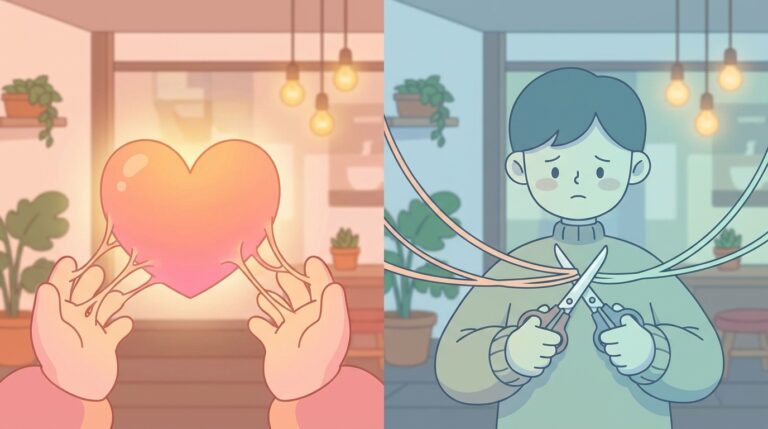
If you only study from textbooks, you might think breaking up is just about saying “Let’s break up.” But in real life—and in every K-Drama you’ve ever watched—relationships in Korea are glued together by 정 (Jeong: affection/attachment). To end things, you can’t just walk away; you have to actively peel that affection off.
Today, we are going to dive deep into how Koreans express “being cold-hearted” or “losing feelings” to break that bond. Trust me, understanding this will completely change how you watch K-Dramas and how you view Korean relationships!
Phase 2: Core Expressions Deep Dive
Let’s look at the 3 most essential expressions you need to know when the warm Jeong turns freezing cold.
1. 정을 떼다
- Pronunciation: jeong-eul tteda [juhng-eul tteh-dah]
- Meaning: (Literal) To peel/pull off Jeong. (Real Nuance) To intentionally detach one’s affection from someone or something; to act cold on purpose so the other person can move on.
- K-Culture Moment: This is the ultimate “Noble Idiocy” trope in K-Dramas. When the protagonist discovers they have a terminal illness or their rich parents threaten their lover, they will “정 떼려고 (to detach Jeong)” act terribly so their partner will hate them and leave without guilt.
- Editor’s Insight: The verb 떼다 (tteda) sounds like peeling off a really sticky band-aid. That’s how Koreans view Jeong—it’s sticky. You have to forcefully peel it off.
- Situation Spectrum:
- Close Friends (Casual): ✅ (e.g., “I need to detach myself from my ex.”)
- Coworkers (Semi-formal): ⚠️ (A bit too personal)
- Boss/Elders (Formal): 🚫
- 🤔 Think About It: Why does Korean language frame ending a relationship as “peeling off” an emotion rather than just “stopping” it? What does this say about the Korean concept of human connection?
2. 정이 떨어지다 (정떨어지다)
- Pronunciation: jeong-i tteoreojida [juhng-ee tteoh-ruh-jee-dah]
- Meaning: (Literal) Jeong falls off. (Real Nuance) To lose all affection; to get the “ick” because of someone’s bad behavior.
- K-Culture Moment: You’re on a blind date (소개팅 – sogaeting) in Gangnam. The guy is handsome, but he is incredibly rude to the waiter. In that exact moment, your Korean friend would text you: “완전 정떨어져 (I totally lost all interest/got the ick).”
- Editor’s Insight: Notice the difference! 정을 떼다 is an intentional action you do to protect someone or yourself. 정이 떨어지다 is a passive, natural reaction when someone’s bad actions kill your affection for them.
- Situation Spectrum:
- Close Friends (Casual): ✅
- Coworkers (Semi-formal): ⚠️
- Boss/Elders (Formal): 🚫 (Never say this to someone older!)
- 🤔 Think About It: In English, we say “I got the ick.” Does your language have a phrase for the sudden loss of romantic or friendly feelings?
3. 매정하다
- Pronunciation: maejeonghada [meh-juhng-hah-dah]
- Meaning: (Literal/Real Nuance) To be cold-hearted, harsh, or pitiless.
- K-Culture Moment: When a K-Pop idol’s agency suddenly kicks out a beloved member without a proper goodbye, fans will flood social media saying, “소속사 진짜 매정하다 (The company is so cold-hearted/cruel).”
- Editor’s Insight: 매 (Mae) means ‘without’ or ‘blind to’, and 정 (Jeong) is affection. Someone who is 매정하다 acts without any empathy or warm feelings. It’s often used with a tone of disappointment.
- Situation Spectrum:
- Close Friends (Casual): ✅
- Coworkers (Semi-formal): ✅ (When complaining about a third party)
- Boss/Elders (Formal): 🚫
Phase 3: Textbook vs. Real Korean
Let’s see how these emotions play out in real life compared to what your B1 textbook teaches.
[Situation 1: When your crush does something gross and you lose feelings]
* 📖 Textbook Korean: 저는 그 사람을 더 이상 좋아하지 않습니다. (I do not like that person anymore.)
* 🗣️ Real Korean: 아, 걔 진짜 정떨어져. (Ugh, he totally gives me the ick / I completely lost feelings.)
* 💡 Why so different?: Textbooks focus on the factual state of “not liking.” Real Korean focuses on the emotional shift—the moment the affection dropped to zero.
[Situation 2: When your friend ignores your request for help]
* 📖 Textbook Korean: 너는 너무 차갑습니다. (You are too cold.) Note: 차갑다 is usually for physical temperature or a cool personality.
* 🗣️ Real Korean: 와, 너 진짜 매정하다. 어떻게 그러냐? (Wow, you are so cold-hearted. How could you do that?)
* 💡 Why so different?: Saying someone is “차갑다 (cold)” can sometimes be a compliment (like a cool, chic city person). But “매정하다” strictly means they lack human warmth and empathy.
Bottom Note: At the B1 level, using “정떨어지다” with your friends will make you sound incredibly fluent. Just make sure to only use it when gossiping or expressing frustration!
Phase 4: Cultural Context — K-Culture Deep Dive
4-1. The Non-Verbal “Jeong” Cut-Off
In Korea, language is only half the communication. When someone is trying to jeong-eul tteda (detach affection), the biggest clue is the sudden shift in speech levels.
Imagine a couple who always uses casual language (반말 – banmal) with each other. Suddenly, during an argument, one person switches to formal language (존댓말 – jondaetmal): “우리 그만합시다. (Let us stop this.)”
This sudden politeness creates an invisible, freezing wall. It’s the ultimate non-verbal way to say, “You are now a stranger to me.”
4-2. The K-Drama Trope: The Noble Breakup
Why do K-Drama writers love the “acting cold to break up” storyline? Because it highlights the depth of the character’s love.
In Korean culture, causing pain to someone you love is seen as the ultimate sacrifice if it’s for their “greater good.” By intentionally making the female lead say “정떨어졌어 (I lost feelings for you),” the male lead bears the burden of being the villain so she can have a clean break.
Critique: While this looks wildly romantic on TV, if you try this in real-life Seoul, you won’t look like a tragic hero—you’ll just look like a bad communicator! Real-life Koreans prefer honest conversations, though the concept of Jeong making breakups difficult remains very true.
Phase 5: Real-Life Roleplay Scenario
Let’s put you in a classic Korean cafe setting. You’re the main character now.
- Setting: A trendy cafe in Yeonnam-dong. It’s raining outside. You are drinking an Iced Americano with your close Korean friend, Minsu.
- Characters:
- YOU: An expat who has been living in Korea for a year.
- Minsu (28): Your Korean best friend. He recently broke up with his toxic girlfriend, but she keeps calling him crying.
Minsu: 하아… (한숨) 전 여친한테 또 연락 왔어. 자꾸 우는데 어떡하지?
(Haa… jeon yeochinhante tto yeollak wasseo. Jakku uneunde eotteokhaji?)
[Sigh… My ex-girlfriend contacted me again. She keeps crying, what should I do?]
(🎭 Stage Direction: Minsu runs his hands through his hair, looking stressed.)
YOU: 아직도? 민수야, 너 그러다가 평생 못 헤어져.
(Ajikdo? Minsuya, neo geureodaga pyeongsaeng mot he-eo-jyeo.)
[Still? Minsu, if you keep this up, you’ll never be able to break up with her.]
Minsu: 알지. 근데 우니까 마음이 약해지잖아. 내가 너무 나쁜 놈 같고.
(Alji. Geunde unikka ma-eumi yakhaejijana. Naega neomu nappeun nom gatgo.)
[I know. But when she cries, I get weak-hearted. I feel like such a bad guy.]
YOU: 지금은 나쁜 놈이 돼야 해. 일부러라도 상처를 줘야지.
(Jigeumeun nappeun nomi dwaeya hae. Ilbureorado sangcheoreul jwoyaji.)
[You have to be the bad guy right now. You need to hurt her on purpose.]
Minsu: 어떻게? 나보고 쌍욕이라도 하라고?
(Eotteoke? Nabogo ssangyogirado harago?)
[How? Are you telling me to swear at her or something?]
🔀 Your Turn! How should you advise Minsu?
– A) “그냥 솔직하게 말해. 더 이상 안 사랑한다고.” (Just tell her honestly. That you don’t love her anymore.)
– B) “네가 완전 매정하게 굴어야 걔도 정을 떼지. 연락 다 씹어!” (You have to act totally cold-hearted so she can detach her feelings. Ignore all her messages!)
– C) “너 진짜 정떨어진다. 그냥 만나줘.” (You give me the ick. Just go meet her.)✅ Best Choice: B — Why?: This uses our core expressions perfectly! You are advising him to be 매정하다 (cold-hearted) so his ex can 정을 떼다 (detach her affection). Also, “연락을 씹다” (to chew/ignore messages) is great B1 slang!
⚠️ Choice A Analysis: A bit too textbook and doesn’t solve Minsu’s problem of being too soft.
⚠️ Choice C Analysis: You just insulted your best friend! You told him that he gives you the ick.
Phase 6: 10-Second Shadowing Drill
Practice saying this like a K-Drama protagonist who just witnessed a terrible betrayal. Follow the pauses (/) and the emotion tags!
😤 나 / 걔 하는 행동 보고 / 완전 / 정떨어졌어.
(na / gyae haneun haengdong bogo / wanjeon / jeong-tteoreojyeosseo.)
[I / saw the way they acted / and totally / lost all feelings/got the ick.]
Tip: Emphasize the “완전 (wanjeon – totally)” and drop your pitch at the end for maximum dramatic effect!
Phase 7: K-Culture Mini Dictionary
| 한국어 (Korean) | Romanization | English | Cultural Context |
|---|---|---|---|
| 정 | jeong | Affection/Attachment | The foundational emotional glue in Korean society. It grows over time through shared experiences, even with people you don’t romantically love. |
| 정(이) 떨어지다 | jeong(-i) tteoreojida | To lose feelings / get the ick | The moment that emotional glue loses its stickiness due to disappointment. |
| 매정하다 | maejeonghada | Cold-hearted / Pitiless | Acting without any Jeong. A strong critique of someone’s lack of empathy. |
| 단호하다 | danhohada | Firm / Resolute | Being strict and clear about your boundaries. Often what you need to be when trying to cut off Jeong. |
| 밀당 | mildang | Push and pull | The game of playing hard to get in dating. If you do this too much, the other person might get 정떨어지다. |
Phase 8: Traveler Survival Kit
Wait, how does “being cold-hearted” apply to traveling in Korea?
If you travel to popular spots like Hongdae or Myeongdong, you might encounter aggressive street vendors or, more commonly, cult recruiters (often asking “Do you know about Korean culture/energy?”).
Because foreigners want to be polite, they often smile and listen. Don’t do this! In these situations, you must be 매정하다 (cold-hearted) to protect your time and safety.
🆘 Survival Phrases for “Acting Cold” to Strangers
– 🇰🇷 “괜찮습니다.” (Gwaenchanseumnida.)
– 🗣️ Meaning: “I’m fine / No thank you.”
– 📍 Where to use: When someone approaches you on the street.
– 💡 Pro Tip: Do not smile when you say this. Avoid eye contact and keep walking. In Korea, giving nunchi (a cold vibe) is a perfectly polite way to reject a stranger without causing a scene.📌 Editor’s Travel Note
– Stranger Danger: If someone says “인상이 참 좋으시네요 (You have a really nice impression/face),” 99% of the time, it’s a cult recruiter. Be 매정하게 (coldly) dismissive!
– Personal Space: Koreans are generally very kind to lost travelers, but ignoring street solicitations is standard city etiquette. You won’t be seen as rude; you’ll be seen as a savvy local.
Phase 9: Critical Thinking — “One Step Deeper”
🧠 Think Deeper: Media vs Reality (The K-Drama Breakup Illusion)
In K-Dramas, 정을 떼다 (acting cold to protect the other person) is romanticized. The male lead suffers in silence while the female lead cries, eventually realizing his “noble” sacrifice. However, this creates a skewed view of Korean communication. In reality, young Koreans today heavily criticize this behavior, calling it “회피형 (avoidant attachment).” Modern Korean dating culture values direct communication, and acting intentionally cruel is more likely to genuinely traumatize someone rather than help them move on. Media uses Jeong to create dramatic tension, but real life requires maturity, not martyrdom.
💬 Your Turn: Does your culture romanticize “noble breakups” in movies or TV shows? Or is honesty always considered the best policy? Share your thoughts in the comments!
Phase 10: FAQ & Avoiding Misunderstandings
Q: Can I tell my boss “부장님, 정떨어져요 (Boss, you give me the ick)”?
NO. NEVER. ABSOLUTELY NOT. This expression is strictly for close friends, romantic partners, or talking about a third party behind their back. Say this to your boss, and you might need to find a new job!
Q: Is ‘정을 떼다’ only used in romantic breakups?
No! You can use it for friends, places, or even things. For example, if your favorite restaurant changes its recipe and gets expensive, you can say, “그 식당에 정떨어졌어 (I lost my affection for that restaurant).”
❌ Common Mistake: Using “매정하다” to mean “cool” or “chic.”
✅ Do this instead: If you want to say a K-Pop idol looks cool and unbothered (in a good way), use “시크하다 (chic)” or “차도녀/차도남 (cold city woman/man).” “매정하다” is almost always a negative critique of someone’s personality.
Phase 11: Summary & Action Items
One-Liner Summary: In Korea, breaking a bond isn’t just saying goodbye; it requires actively “peeling off” affection (정을 떼다), or naturally losing it (정떨어지다) when someone behaves badly.
Your Action Missions:
– 🥉 Bronze (Solo): Look in the mirror, cross your arms, and practice saying “아, 완전 정떨어져” with the most disgusted face you can make.
– 🥈 Silver (Online): Go to YouTube, search for a K-Drama breakup scene, and leave an English/Korean comment: “He is just trying to 정 떼다!”
– 🥇 Gold (Real Life): Next time you are with a Korean friend and someone cuts in line in front of you, shake your head and whisper, “진짜 매정하네 (So cold-hearted).”
🍿 K-Culture Mission:
Think of your favorite K-Drama villain or annoying character. Write down one thing they did that made you feel “정떨어지다” (lose affection for them).
Editor’s Question: Who is the most 매정하다 (cold-hearted) character you’ve ever seen in a K-Drama? Let’s gossip in the comments!
Phase 12: Quiz — Interactive Challenge
1. Situational Judgment:
Your coworker eats your labeled yogurt from the office fridge without asking. You are texting your best friend about it. Which is the most natural B1 Korean text to send?
– A) 우리 회사 동료는 너무 차갑습니다.
– B) 걔 진짜 정떨어져. 내 요거트를 먹었어.
– C) 나는 그에게 정을 떼려고 해.
(Answer: B! It perfectly expresses getting the ‘ick’ from bad behavior. A is too textbook and grammatically awkward for this context. C implies a deep emotional romantic bond that you are trying to break.)
2. True or False — K-Culture Edition:
If a stranger approaches you on the street in Seoul saying “You have a kind face,” you should smile politely and listen to practice your Korean. (T/F)
(Answer: FALSE! This is a classic cult recruiting tactic. You must be ‘매정하다’ (cold) and walk away immediately!)
3. Fill in the Blank:
When K-Drama leads want to break up to protect their partner, they often act rude on purpose to _________.
(Answer: 정을 떼다 / jeong-eul tteda)
Frequently Asked Questions (FAQ)
Q: What does "정을 떼다" mean in Korean and how do you pronounce it?
A: In Korean, "정을 떼다" is pronounced [jeong-eul tteda [juhng-eul tteh-dah] and means: (Literal) To peel/pull off Jeong. (Real Nuance) To intentionally detach one's affection from someone or something; to act cold on purpose so the other person can move on.
Q: What does "정이 떨어지다 (정떨어지다)" mean in Korean and how do you pronounce it?
A: In Korean, "정이 떨어지다 (정떨어지다)" is pronounced [jeong-i tteoreojida [juhng-ee tteoh-ruh-jee-dah] and means: (Literal) Jeong falls off. (Real Nuance) To lose all affection; to get the "ick" because of someone's bad behavior.
Q: What does "매정하다" mean in Korean and how do you pronounce it?
A: In Korean, "매정하다" is pronounced [maejeonghada [meh-juhng-hah-dah] and means: (Literal/Real Nuance) To be cold-hearted, harsh, or pitiless.







