

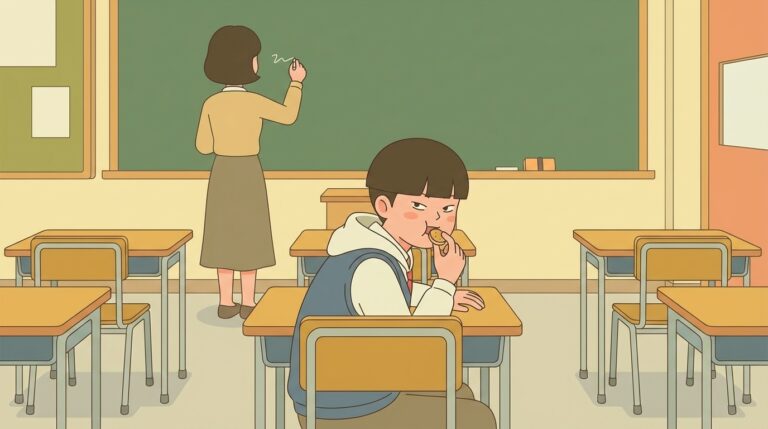
Phase 1: Empathy & Immersion (The K-Culture Cold Open)
Hello there! I’m your Lead Editor at Daily Hangul, your veteran tutor and local cultural navigator.
Picture this: You are watching a classic K-Drama like Reply 1988 or Twenty-Five Twenty-One. The camera pans down a dimly lit school hallway. Suddenly, a group of students is sprinting for their lives, trying to jump over the school wall before the scary homeroom teacher catches them. Have you ever wondered how to talk about these nostalgic, funny school memories in Korean?
Talking about your past, especially funny school episodes (학창 시절 재미있었던 에피소드), is a guaranteed way to break the ice and build a deep bond with your Korean friends. Everyone loves a little nostalgia! However, textbook past tense can sound a bit stiff. Today, we are going to learn how to tell a story like a true native. We’ll explore the real-life phrases Korean people use when reminiscing about their school days over a glass of soju or a cup of coffee.
Note: This guide is based on real questions from my B1 intermediate students who wanted to sound less like a textbook and more like a main character in a K-Drama!
Phase 2: Deep Dive into Core Expressions
Let’s look at the top 3 expressions you need to tell a hilarious school story.
1. 몰래 [동사]다가 걸렸어요
- Pronunciation: [mol-lae …da-ga geol-lyeot-seo-yo] (mol-lae sounds like ‘mole-lay’, ‘geol’ rhymes with ‘gull’)
- Meaning: Literal: ‘I was secretly [verb]-ing and got caught.’ / Real nuance: ‘I got busted doing [verb]!’
- K-Culture Moment: Picture a student hiding a comic book under their math textbook or sneaking a bite of a snack while the teacher is writing on the chalkboard. Suddenly, the teacher turns around. Busted! (딱 걸렸어요!)
- Editor’s Insight: The grammar
~다가means ‘while doing an action (an interruption occurs)’. Combined with걸렸어요(got caught), it perfectly describes the moment your secret plan fails. It’s a very playful and self-deprecating expression.- Situation Spectrum:
- 친구 사이 (Casual): ✅
- 직장 동료 (Semi-formal): ✅ (Great for team-building stories)
- 직장 상사·어른 (Formal): ⚠️ (Use cautiously depending on the vibe)
- 🤔 Think About It: Why is sharing a story about ‘getting caught’ such a popular way to bond in Korea? Sharing minor embarrassing moments shows vulnerability, which quickly lowers walls between people.
2. 수업 시간에 깜빡 졸았어요
- Pronunciation: [su-eop si-gan-e kkam-ppak jo-rat-seo-yo] (jo-rat sounds like ‘joe-rat’)
- Meaning: Literal: ‘I blinked and dozed off during class time.’ / Real nuance: ‘I nodded off/fell asleep in class.’
- K-Culture Moment: Springtime in Korea is notorious for 춘곤증 (spring fatigue). After a heavy school lunch, the warm breeze hits, and students physically cannot keep their eyes open.
- Editor’s Insight:
졸았어요comes from졸다(to doze off). Adding깜빡(the sound/action of blinking) makes it sound like an accident. “I didn’t mean to sleep, my eyes just blinked and closed!”- Situation Spectrum:
- 친구 사이 (Casual): ✅
- 직장 동료 (Semi-formal): ✅
- 직장 상사·어른 (Formal): 🚫 (Don’t use this to excuse yourself at work!)
- 🤔 Think About It: Koreans work and study incredibly long hours. Therefore, taking a quick nap (낮잠) or dozing off is often seen with sympathy rather than strict anger. Does your culture share this sympathy for sleep-deprived students?
3. 야자 째고 놀러 갔어요
- Pronunciation: [ya-ja jjae-go nol-leo gat-seo-yo]
- Meaning: Literal: ‘I cut Yaja and went to play.’ / Real nuance: ‘I skipped night self-study and went to hang out.’
- K-Culture Moment: This is the ultimate K-Drama rebellion. Instead of studying until 10 PM, students sneak out to eat tteokbokki (떡볶이) or go to a PC cafe (PC방).
- Editor’s Insight:
야자is short for 야간자율학습 (Night Self-Study), a hallmark of Korean high schools.째다is a slang word for ‘cutting/skipping’ class.- Situation Spectrum:
- 친구 사이 (Casual): ✅
- 직장 동료 (Semi-formal): ⚠️ (Okay with close peers)
- 직장 상사·어른 (Formal): 🚫 (Too slangy!)
- 🤔 Think About It: Night self-study used to be mandatory for almost all Korean students. Skipping it was considered a huge act of teenage rebellion. What is the equivalent of ‘rebellion’ in your high school culture?
Phase 3: Textbook vs. Real Korean
Let’s compare what you learned in standard classes with how people actually speak on the streets of Hongdae.
[Sleeping in Class]
* 📖 Textbook Korean: 저는 수업 시간에 잤습니다. (I slept during class time.)
* 🗣️ Real Korean: 수업 때 완전 꿀잠 잤어요. (I slept like honey during class.)
* 💡 Why is it different?: ‘꿀’ (honey) is used as a prefix for anything incredibly sweet, lucky, or satisfying. 꿀잠 means a deeply satisfying sleep, reflecting the modern slang trend of adding ‘꿀’ to emphasize a positive feeling.
[Getting Caught by the Teacher]
* 📖 Textbook Korean: 선생님에게 발각되었습니다. (I was discovered by the teacher.)
* 🗣️ Real Korean: 쌤한테 딱 걸렸어요. (I got totally busted by the teach’.)
* 💡 Why is it different?: ‘선생님’ (Teacher) is long, so students shorten it to ‘쌤’ (Ssem) for affection and efficiency. ‘딱’ (precisely/smack) adds dramatic flair to the story.
[Skipping Class]
* 📖 Textbook Korean: 수업에 가지 않고 놀았습니다. (I didn’t go to class and played.)
* 🗣️ Real Korean: 수업 째고 피방 갔어요. (I skipped class and went to the PC bang.)
* 💡 Why is it different?: Korean internet and gaming culture is massive. PC방 (PC bang / internet cafe) is shortened to ‘피방’ by young people for quick communication.
Bottom Note: For B1 learners, using ‘쌤’ or ‘딱 걸렸어요’ will make you sound incredibly natural and observant without crossing the line into offensive slang!
Phase 4: Cultural Context — K-Culture Deep Dive
4-1. Non-Verbal Cues: The Art of Apology and Nunchi (눈치)
When telling a story about getting caught by a teacher in Korea, body language is everything. If a teacher catches you eating in class, you don’t look them straight in the eye (that’s seen as defiant!). Instead, you quickly hide the food, lower your head slightly, gather your hands together in front of you, and use your Nunchi (눈치 – the ability to read the room). In your storytelling, mimicking this ‘guilty posture’ will make your Korean friends roar with laughter!
4-2. The K-Drama Connection & Travel Tip
You’ve definitely seen this in K-Dramas like True Beauty or School 2013. The school uniform (교복 – Gyobok) represents nostalgia.
But did you know you can experience this yourself? A huge trend for both Koreans and tourists is renting retro school uniforms at Lotte World or Everland. People dress up as high schoolers and ride rollercoasters to relive their youth. It’s the perfect place to use the phrases we are learning today with your friends!
Phase 5: Interactive Roleplay Scenario
Setting: Friday, 7 PM. A retro Samgyeopsal (pork belly) restaurant near Gangnam Station. The room is filled with smoke, the sound of sizzling meat, and clinking Soju glasses. You are out with your Korean friends, sharing funny stories.
Characters:
– YOU: A foreign professional who studied Korean and loves K-Culture.
– Min-su (32): Your Korean coworker. He’s very humorous, friendly, and loves a good joke.
Dialogue:
Min-su: 아, 고기 냄새 맡으니까 갑자기 옛날 생각난다. (Ah, smelling the meat suddenly brings back old memories.)
YOU: 학창 시절이요? 민수 씨는 학교 다닐 때 어땠어요? (School days? What were you like when you went to school, Min-su?)
Min-su: 나? 나는 완전 장난꾸러기였지! (Me? I was a total troublemaker!)
YOU: 진짜요? 모범생 같아 보이는데요. (Really? You look like a model student.)
Min-su: 에이~ 아니야. 나는 맨날 뒤에서 몰래 라면 부숴 먹다가 걸렸어. (Nah~ I always got caught secretly crushing and eating raw ramyun in the back.)
YOU: 푸하하! 라면이요? 쌤한테 안 혼났어요? (Hahaha! Ramyun? Didn’t the teacher scold you?)
Min-su: 엄청 혼났지! 복도에서 손 들고 서 있었어. OO 씨는 재미있는 에피소드 없어? (I got scolded so much! I had to stand in the hallway with my hands raised. Do you have any funny episodes?)
🔀 YOUR TURN! How will you answer?
– A) “저는 수업 시간에 항상 열심히 공부했습니다.” (I always studied hard during class.)
– B) “저도 깜빡 졸다가 의자에서 떨어진 적 있어요!” (I also dozed off and fell out of my chair once!)
– C) “저는 매일 학교 째고 클럽에 갔어요!” (I skipped school every day and went to the club!)✅ Best Choice: B — Reason: Option B perfectly matches the funny, self-deprecating vibe of the conversation. It uses the natural phrase “깜빡 졸다”.
⚠️ Choice A & C Analysis: Option A kills the funny mood (too serious!). Option C is a bit too extreme for high school stories and might shock Min-su!
Min-su: (If you chose B) 앗, 진짜? 의자에서 떨어졌다고? 대박 웃기다! (Oh, really? You fell off the chair? That’s hilarious!)
YOU: 네, 그때 반 친구들이 다 쳐다봐서 너무 부끄러웠어요! (Yes, all my classmates stared at me, so I was so embarrassed!)
Phase 6: 10-Second Shadowing Drill
Practice this sentence to sound like you are naturally reminiscing! Pay attention to the pauses (/) and the intonation.
😆 아, 그때 / 진짜 / 웃겼는데! (A, geu-ttae / jin-jja / ut-gyeot-neun-de!)
(Ah, that was / really / funny back then!)
Tip: Drag out the “진~짜” for extra flavor!
Phase 7: K-Culture Mini Dictionary
| 한국어 (Korean) | Romanization | English Meaning | Cultural Context |
|---|---|---|---|
| 야자 | yaja | Night Self-Study | Short for 야간자율학습. Staying at school until 10 PM to study. A core shared trauma/memory for Koreans! |
| 쌤 | ssem | Teacher (Slang) | An affectionate, casual shortening of 선생님. Used by students, but also adults to friendly instructors. |
| 매점 | maejeom | School Kiosk / Tuck shop | The holy grail of Korean schools. Students sprint here during the 10-minute breaks to buy snacks. |
| 교복 | gyobok | School Uniform | Worn by almost all middle and high school students in Korea. Now a popular rental item for theme parks. |
| 딱 걸리다 | ttak geollida | To be totally busted | Used when you are caught red-handed doing something you shouldn’t be doing. |
Phase 8: Traveler’s Survival Kit
Since we are talking about school days, let’s connect this to the Gyobok (School Uniform) Rental trend at Korean theme parks like Lotte World! It’s a must-do for young travelers.
🆘 Survival Phrases for Uniform Rentals
– 🇰🇷 “이거 M 사이즈 있나요?” (i-geo M sa-i-jeu it-na-yo?)
– 🗣️ English: Do you have this in size M?
- 🇰🇷 “피팅룸은 어디예요?” (pi-ting-rum-eun eo-di-ye-yo?)
- 🗣️ English: Where is the fitting room?
🇰🇷 “저희 사진 좀 찍어주실 수 있나요?” (jeo-hui sa-jin jom jjik-eo-ju-sil su it-na-yo?)
- 🗣️ English: Could you please take a picture of us?
- 💡 Pro Tip: When asking someone to take a photo, hand them the phone with both hands. Also, Koreans are known for taking amazing photos for tourists, so trust their angles!
📌 Editor’s Travel Note:
– Popular rental shops are ‘Ewha Gyobok’ (이화교복) near Lotte World and ‘Gamseong Gyobok’ (감성교복).
– You usually need to leave your ID (like a passport) and a cash deposit, so make sure you bring some physical Korean Won (KRW)!
Phase 9: Critical Thinking — “One Step Deeper”
Media vs. Reality (미디어 vs 현실)
🧠 Think Deeper:
If you watch K-Dramas, Korean high school looks incredibly fun, full of romance, aesthetic uniforms, and dramatic escapes. However, the reality behind these “funny escape stories” is the intense pressure of the Korean university entrance exam, the Suneung (수능). Students spend 12 to 14 hours a day at school and private academies (Hagwons). The reason memories like “eating a snack secretly” or “dozing off” become such precious, hilarious stories is precisely because their daily routines were so strictly controlled. Laughter was found in small, rebellious moments.💬 Your Turn: Does your country have a similar intense academic culture, or are school days remembered differently? Share your thoughts in the comments!
Phase 10: FAQ & Mistake Prevention
Q: Can I call a real, older teacher ‘쌤’ to their face?
Yes and No. In a casual private academy (Hagwon) or if you are very close to the teacher, ‘쌤’ is perfectly fine and shows affection. However, if it’s a formal university professor or a strict elder, always use ‘선생님’ (Seon-saeng-nim) or ‘교수님’ (Gyo-su-nim).
Q: Should I use past perfect (-았었/었었) for stories from 10 years ago?
Many B1 learners try to say “저는 몰래 먹었었어요” to show it happened a long time ago. Keep it simple! Regular past tense (-았/었/였어요) is perfectly natural and less clunky for telling stories.
❌ Common Mistake #1:
Because the story is about when you were young, learners sometimes accidentally use Banmal (casual language) to an older Korean listener.
✅ How to fix it: Always match your politeness level to the listener, not to the age you were in the story! If you are talking to an older coworker, still end your sentences with ~요.
Phase 11: Summary & Action Items
- One-Liner Summary: Share your funny past stories using real expressions like 몰래 ~다가 걸렸어요 and 깜빡 졸았어요 to instantly bond with Koreans!
Action Mission 3 Steps:
– 🥉 Bronze (Solo): Stand in front of a mirror and read the Phase 6 shadowing drill 3 times with a dramatic sigh.
– 🥈 Silver (Online): Write a 2-sentence story in Korean about a funny school memory in the comments below!
– 🥇 Gold (Real Life): The next time you are with a Korean friend, ask them: “학교 다닐 때 야자 해봤어요?” (Did you do Yaja when you went to school?)
🎬 K-Culture Mission: Watch an episode of Reply 1988 or Twenty-Five Twenty-One. Try to spot the scenes where students are running away from the dean/teacher (학주 – Hakju)!
Phase 12: Quiz — Interactive Challenge
1. Situational Judgment: You want to tell your Korean friend that you briefly fell asleep during a boring meeting. Which is the most natural phrase?
a) 저는 미팅에서 꿀잠 잤습니다.
b) 미팅 때 깜빡 졸았어요.
c) 야자 째고 잤어요.
2. True or False – K-Culture Edition:
“야자 (Yaja)” refers to a tropical coconut drink that Korean students love to drink after school.
3. Fill in the Blank:
수업 시간에 몰래 빵을 ( _______ ) 쌤한테 딱 걸렸어요!
(Hint: I was doing this when interrupted…)
(Answers: 1. b – it’s the perfect natural phrase for an accidental nap. ‘a’ sounds like you intentionally had a great sleep! 2. False – It means Night Self-Study! 3. 먹다가 – while eating)
Frequently Asked Questions (FAQ)
Q: What does "몰래 [동사]다가 걸렸어요" mean in Korean and how do you pronounce it?
A: In Korean, "몰래 [동사]다가 걸렸어요" is pronounced [mol-lae ...da-ga geol-lyeot-seo-yo] and means: Literal: 'I was secretly [verb]-ing and got caught.' / Real nuance: 'I got busted doing [verb]!'
Q: What does "수업 시간에 깜빡 졸았어요" mean in Korean and how do you pronounce it?
A: In Korean, "수업 시간에 깜빡 졸았어요" is pronounced [su-eop si-gan-e kkam-ppak jo-rat-seo-yo] and means: Literal: 'I blinked and dozed off during class time.' / Real nuance: 'I nodded off/fell asleep in class.'
Q: What does "야자 째고 놀러 갔어요" mean in Korean and how do you pronounce it?
A: In Korean, "야자 째고 놀러 갔어요" is pronounced [ya-ja jjae-go nol-leo gat-seo-yo] and means: Literal: 'I cut Yaja and went to play.' / Real nuance: 'I skipped night self-study and went to hang out.'







