

Phase 1: Empathy (Welcome to the Real Korea!)
Hello there! It’s your Daily Hangul Editor.
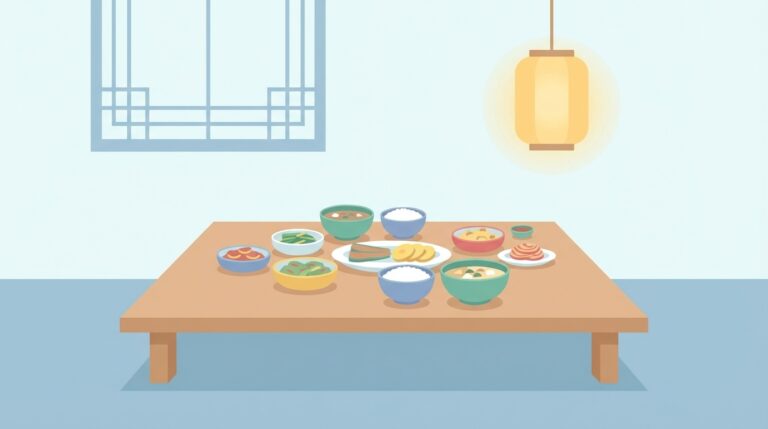
Imagine this: You’ve finally made it out of Seoul and decided to explore the southern provinces of Korea—the legendary Jeolla-do (전라도), often referred to as Namdo (남도). You sit down at a traditional Hanok restaurant and order Hanjeongsik (한정식), the Korean table d’hôte. Suddenly, the server starts bringing out plates. Five, ten, twenty… soon, there are over 30 side dishes covering every square inch of your table.
If you’re like most of my advanced students, your brain goes blank. The textbook phrase, “음식이 아주 많네요” (There is a lot of food), feels woefully inadequate. How do you compliment the chef like a true local? How do you ask for a refill without sounding demanding?
At the C1 level, you don’t just want to communicate; you want to connect. You want to show that you understand the cultural depth behind the meal. This guide is based on real experiences from expats who ventured into the culinary heart of Korea. Let’s upgrade your food vocabulary to Michelin-star local levels!
Phase 2: Core Expressions Deep Dive
Here are three high-level expressions that will make any Korean restaurant owner’s day.
1. 상다리가 부러지겠어요 (The table legs are going to break)
- Pronunciation: [sangdariga bureojigesseoyo]
(Sound analogy: Think of the rhythmic bounce of ‘sang-da-ri-ga’, leading to the dramatic ‘bu-reo-ji-ge-sseo-yo’)- Meaning: Literal: “The table legs are going to break.” / Real nuance: “Wow, you prepared an incredibly lavish and abundant feast!”
- K-Culture Moment: In K-Dramas, when a future son-in-law visits the heroine’s countryside home, the mother prepares a massive feast. He looks at the table, his eyes wide, and exclaims this phrase. It’s the ultimate compliment for Korean hospitality.
- Editor’s Insight: This isn’t a complaint about the furniture! It’s an expression of grateful astonishment. It acknowledges the host’s generosity (정 – Jeong) and the sheer volume of the food.
- Situation Spectrum:
- Casual (Friends): ✅ (상다리 부러지겠다!)
- Semi-formal (Colleagues): ✅ (상다리 부러지겠어요!)
- Formal (Elders/Bosses): ✅ (상다리가 부러지겠습니다!)
- 🤔 Think About It: Why does Korean culture value abundance so much when serving guests? How does this reflect the historical transitions from times of scarcity to modern prosperity?
2. 손맛이 장난 아니네요 (Your ‘hand-taste’ is no joke)
- Pronunciation: [sonmasi jangnan anineyo]
- Meaning: Literal: “Your hand-taste is not a joke.” / Real nuance: “Your intuitive cooking skills are absolutely amazing.”
- K-Culture Moment: You’re at a mom-and-pop restaurant (백반집). You taste the Kimchi and realize it’s the best you’ve ever had. You tell the elderly owner (이모님) this phrase, and she instantly gives you an extra plate of premium meat.
- Editor’s Insight: Son-mat (손맛) is an untranslatable C1-level cultural keyword. It refers to a cook’s intuitive feel for seasoning—no measuring cups, just experience and love. Saying “장난 아니다” (is no joke) is a very native, slightly slangy way to emphasize how impressive something is.
- Situation Spectrum:
- Casual: ✅ (손맛 장난 아니다)
- Semi-formal: ✅ (손맛이 장난 아니시네요)
- Formal: ⚠️ (Use ‘음식 솜씨가 정말 훌륭하십니다’ for strict formal settings)
- 🤔 Think About It: In an era of precise recipes and digital scales, why do Koreans still hold the concept of Son-mat in such high regard?
3. 완전 밥도둑이에요 (It’s a total rice thief)
- Pronunciation: [wanjeon bapdodugieyo]
- Meaning: Literal: “It’s a total rice thief.” / Real nuance: “This dish is so deliciously savory/salty that it makes me eat a lot of rice.”
- K-Culture Moment: When traveling to Yeosu (a famous Namdo city), you eat Gejang (soy sauce marinated raw crab). It’s salty, sweet, and umami-rich. Before you know it, your bowl of plain rice is gone.
- Editor’s Insight: This is the highest praise for a side dish. It means the flavor profile perfectly complements plain white rice, compelling you to order another bowl.
- Situation Spectrum:
- Casual: ✅
- Semi-formal: ✅
- Formal: 🚫 (A bit too casual for a highly formal business dinner)
- 🤔 Think About It: Rice (밥) is the unseasoned canvas of a Korean meal. How does the concept of a “rice thief” explain the balance of Korean cuisine?
Phase 3: Textbook vs. Real Korean
Let’s look at how to sound less like a textbook and more like a seasoned expat.
[Complimenting a massive feast]
* 📖 Textbook Korean: 음식이 아주 많습니다. 감사합니다. (There is a lot of food. Thank you.)
* 🗣️ Real Korean: 와~ 상다리가 부러지겠어요! 잘 먹겠습니다! (Wow, the table legs are gonna break! I will eat well!)
* 💡 Why the difference?: The textbook focuses on objective facts, while the real expression uses emotional hyperbole to praise the host’s generosity.
[Praising the taste of a specific dish]
* 📖 Textbook Korean: 이 반찬이 아주 맛있습니다. (This side dish is very delicious.)
* 🗣️ Real Korean: 사장님, 이거 완전 밥도둑인데요? 손맛이 장난 아니세요! (Boss, this is a total rice thief! Your cooking skills are no joke!)
* 💡 Why the difference?: Advanced speakers use idioms (밥도둑, 손맛) to show deep cultural appreciation, instantly building a bond with the restaurant owner.
[Asking for a refill]
* 📖 Textbook Korean: 반찬을 더 주십시오. (Please give more side dishes.)
* 🗣️ Real Korean: 이모님~ 여기 [반찬 이름] 조금만 더 리필해 주실 수 있나요? (Auntie~ could we get a little refill of [dish name] here?)
* 💡 Why the difference?: Using “조금만” (just a little) softens the request, making it polite rather than demanding. “리필 (refill)” is widely used in modern Korea, even in traditional places.
Phase 4: Cultural Context — K-Culture Deep Dive
4-1. Non-verbal Nuances in a Hanjeongsik Setting
At a traditional Namdo Hanjeongsik restaurant, you’ll likely sit on the floor (좌식).
– Postures: Cross-legged is standard for men, while women traditionally sit with legs tucked to the side, though cross-legged is widely accepted now.
– The Rice Bowl Rule: Never lift your rice bowl off the table to eat! In Korea, eating with the bowl in your hand is traditionally seen as bad manners (unlike in Japan or China). Leave it on the table and use your spoon.
– Nunchi (눈치) during refills: While side dishes are generally free to refill, use your Nunchi. Don’t ask for a refill of an expensive item (like premium meat or raw crab) unless you’re sure it’s included, and try to ask for refills when the staff isn’t overwhelmed.
4-2. The Pride of Namdo (Jeolla Province)
In Korea, the Jeolla provinces (North and South) are unanimously recognized as the culinary capital. When a K-Drama character wants to eat “proper” Korean food, they travel south to Jeonju, Gwangju, or Yeosu. The region’s rich soil and access to the sea mean their ingredients are top-tier. When you compliment a Namdo chef’s Son-mat, you are paying respect to centuries of regional pride.
Phase 5: Interactive Roleplay Scenario
Setting: Friday evening, 6:30 PM. A famous, bustling Hanjeongsik restaurant in Yeosu. The wooden table is currently holding 25 different plates.
Characters:
– YOU: An expat exploring the southern provinces for the weekend.
– Min-su (32): Your Korean friend and unofficial tour guide, highly enthusiastic about local food.
Dialogue:
Min-su: 여기까지 왔는데 남도 한정식은 무조건 먹어야지! 어때?
(Yeogikkaji wanneunde namdo hanjeongsigeun mujogeon meogeoyaji! Eottae?)
[We came all the way here, so we absolutely have to eat Namdo Hanjeongsik! What do you think?]
(🎭 Stage Direction: Min-su gestures proudly at the massive spread of food.)
YOU: 와… 진짜 상다리가 부러지겠어! 뭐부터 먹어야 될지 모르겠네.
(Wa… jinjja sangdariga bureojigesseo! Mwobuteo meogeoya doelji moreugenne.)
[Wow… the table legs are really gonna break! I don’t even know what to eat first.]
Min-su: 일단 이 간장게장부터 먹어봐. 여수 특산물이야.
(Ildan i ganjanggejangbuteo meogeobwa. Yeosu teuksanmuriya.)
[Try this soy sauce marinated crab first. It’s a Yeosu specialty.]
YOU: (Takes a bite and gasps) 대박. 이거 완전 밥도둑이네!
(Daebak. Igeo wanjeon bapdodugine!)
[Jackpot. This is a total rice thief!]
Min-su: 그치? 여기 사장님 손맛이 장난 아니야.
(Geuchi? Yeogi sajangnim sonmasi jangnan aniya.)
[Right? The boss here has incredible ‘hand-taste’.]
YOU: 근데 반찬 이렇게 다 먹으면 리필 돼?
(Geunde banchan ireoke da meogeumyeon ripil dwae?)
[But if we eat all the side dishes, can we get refills?]
🔀 Your Turn! The crab (Gejang) is gone, but you want more. What do you say to the staff?
– A) “사장님! 게장 더 주세요!” (Loud and direct)
– B) “이모님~ 너무 맛있어서 그러는데, 혹시 게장 조금만 더 리필될까요?” (Soft, complimentary, and asking permission)
– C) “저기요, 게장 하나 추가요.” (Like ordering a completely new menu item)✅ Best Choice: B — Why? By complimenting the food first (“너무 맛있어서…”) and asking politely (“혹시… 리필될까요?”), you appeal to the owner’s Jeong. Note: Premium items like Gejang sometimes cost extra to refill, so asking “리필될까요?” (Is a refill possible?) is the safest approach.
⚠️ Choice A Analysis: Too aggressive. It sounds like a demand rather than a polite request.
🌟 Bonus Roleplay: Jeonju Hanok Village Street Food
Setting: Walking down the vibrant streets of Jeonju. You stop at a hotteok (sweet pancake) stand.
Owner: 뜨거우니까 조심해서 드세요~ (Careful, it’s hot!)
YOU: 네, 감사합니다! 우와, 냄새 장난 아니네요. (Thank you! Wow, the smell is no joke.)
Owner: (Smiling) 우리 집이 전주에서 제일 맛있어! (Our place is the most delicious in Jeonju!)
Phase 6: 10-Second Shadowing Drill
Let’s practice the flow and intonation. Remember to pause at the slashes!
😲 우와~ / 이모님, / 상다리가 / 부러지겠어요! (U-wa~ / imonim, / sangdariga / bureojigesseoyo!)
(Tone: Astonished and deeply appreciative)
🤤 이거 / 완전 / 밥도둑인데요? (Igeo / wanjeon / bapdodugindeyo?)
(Tone: Marveling at the taste, slightly raising the end as an exclamation)
Phase 7: K-Culture Mini Dictionary
| Korean | Romanization | English | Cultural Context |
|---|---|---|---|
| 한정식 | hanjeongsik | Korean Table d’hôte | A full-course Korean meal featuring an array of savory side dishes alongside rice and soup. Evolved from royal cuisine. |
| 남도 | namdo | Southern Provinces | Usually refers to Jeolla-do, famous for its rich flavors, generous portions, and deep culinary traditions. |
| 손맛 | son-mat | Hand-taste | The unique, intuitive culinary touch of a cook. The secret ingredient that makes mom’s food taste better than a restaurant’s. |
| 밥도둑 | bap-do-duk | Rice thief | A highly flavorful, usually salty or spicy dish (like salted seafood or stews) that makes you rapidly consume plain rice. |
| 인심 | in-sim | Generosity / Heart | The generous spirit of the locals, often displayed through giving extra food or overflowing portions. |
Phase 8: Traveler Survival Kit (Namdo Tour Edition)
If you’re traveling down south, keep these tools and phrases handy!
🆘 Survival Phrases for Food Travel
– 🇰🇷 “이거 혹시 리필 되나요?” (igeo hoksi ripil doenayo?)
– 🗣️ Meaning: Is this refillable by any chance?
– 📍 Where to use: Hanjeongsik places, local diners when you want more of a specific premium side dish.
– 💡 Pro Tip: Standard side dishes (kimchi, bean sprouts) are usually free to refill. Just take your empty plate to the counter or ask politely.📌 Editor’s Travel Note: Namdo Essentials
– Transport Apps: Use KakaoT for taxis (essential in smaller southern cities where catching cabs on the street is hard) and KorailTalk to book your KTX to Gwangju, Jeonju, or Yeosu.
– Paying for the Feast: Unlike the West, you don’t ask for the check at the table. When you’re done, take the bill (often left on your table) to the front counter to pay. No tipping required!
– Dining Solo?: Hanjeongsik is traditionally meant for 2+ people. If you’re traveling solo, search for “1인 한정식” (1-person Hanjeongsik) or “백반” (Baekban – home-style meals) on Naver Maps.
Phase 9: Critical Thinking — “One Step Deeper”
Food & Identity: The Culture of Commensality
Have you noticed how Korean meals, especially Hanjeongsik, are fundamentally designed to be shared? In many Western cultures, dining is individualized—you order your plate, and I order mine. But in Korea, the multitude of side dishes placed in the center of the table represents a shared communal space. By dipping our chopsticks into the same plates and sharing a massive stew, we are breaking down social boundaries. The overflowing food (상다리가 부러지다) isn’t just about nutrition; it’s a physical manifestation of Jeong (affection/bond) and the desire to build a collective identity. “We” are eating together, therefore “We” are family (식구 – meaning ‘mouths that eat together’).
🧠 Think Deeper:
Does the concept of sharing food from the center of the table exist in your culture? Does it make you feel uncomfortable, or do you find it warm and inviting?💬 Your Turn: “How do you express hospitality and generosity in your home country when hosting a dinner? Let me know in the comments!”
Phase 10: FAQ & Avoiding Misunderstandings
Q: Can I call any restaurant worker “이모님” (Auntie)?
At a traditional, slightly older establishment (like a countryside Hanjeongsik), calling a middle-aged female owner “이모님” is friendly and standard. However, do NOT use this in modern, upscale restaurants, franchises, or with young staff. There, simply raise your hand and say “저기요” (Excuse me) or “사장님” (Boss).
Q: Is it rude to leave food behind when there are 30 side dishes?
Not at all! The host knows you can’t eat everything. The massive spread is a display of generosity. Just make sure to heavily praise the dishes you did enjoy!
❌ Common Mistake #1: Pointing at a dish with your chopsticks to ask for more.
✅ Do this instead: Pick up the empty plate with both hands, politely show it to the server, and ask, “이것 좀 더 주실 수 있나요?” (Could we have a bit more of this?)
Phase 11: Summary & Action Items
- One-Liner Summary: To truly appreciate a Namdo feast, go beyond “맛있어요” and use cultural praises like “상다리가 부러지겠어요” and “완전 밥도둑이에요.”
-
Action Mission 3 Steps:
- 🥉 Bronze (Solo): Say “와, 상다리가 부러지겠어요!” out loud 3 times while imagining a massive feast.
- 🥈 Silver (Online): Comment on a K-Food YouTube video featuring a huge meal with: “진짜 상다리가 부러지겠네요!”
- 🥇 Gold (Real World): Visit a Korean restaurant, try a new side dish, and tell the owner, “사장님, 이거 완전 밥도둑이에요!”
- K-Culture Mission:
Search for “여수 한정식” (Yeosu Hanjeongsik) or “전주 백반” (Jeonju Baekban) on YouTube. Watch how many dishes come out, and try to spot the moment the host’s table is completely covered!
Phase 12: Quiz — Interactive Challenge
1. Situational Judgment:
You are at a famous traditional restaurant in Jeolla-do. You want to compliment the elderly owner on her incredible cooking skills. Which phrase makes you sound like a true local?
– A) 음식이 아주 많습니다.
– B) 손맛이 장난 아니시네요!
– C) 식당이 아주 크네요.
2. Fill in the Blank:
This spicy squid is so good, I already finished my bowl of rice!
“이 오징어볶음 완전 ( ) 인데요?”
– A) 밥도둑 (bap-do-duk)
– B) 밥천사 (bap-cheon-sa)
– C) 밥경찰 (bap-gyeong-chal) – Fun fact: Koreans playfully use ‘Rice Police’ for side dishes that are unpopular or ruin the appetite!
3. True or False — K-Culture Edition:
When eating Hanjeongsik, you should hold your rice bowl in your hand so it’s closer to your mouth. (T/F)
👀 Click here for Answers!
1. B – Praising her ‘Son-mat’ (hand-taste) is the ultimate compliment for an elderly chef.
2. A – 밥도둑 (Rice thief). It steals your rice because it’s so tasty!
3. False – In Korea, leaving the rice bowl on the table is the proper etiquette.
Frequently Asked Questions (FAQ)
Q: What does "상다리가 부러지겠어요 (The table legs are going to break)" mean in Korean and how do you pronounce it?
A: In Korean, "상다리가 부러지겠어요 (The table legs are going to break)" is pronounced [sangdariga bureojigesseoyo] and means: Literal: "The table legs are going to break." / Real nuance: "Wow, you prepared an incredibly lavish and abundant feast!"
Q: What does "손맛이 장난 아니네요 (Your 'hand-taste' is no joke)" mean in Korean and how do you pronounce it?
A: In Korean, "손맛이 장난 아니네요 (Your 'hand-taste' is no joke)" is pronounced [sonmasi jangnan anineyo] and means: Literal: "Your hand-taste is not a joke." / Real nuance: "Your intuitive cooking skills are absolutely amazing."
Q: What does "완전 밥도둑이에요 (It's a total rice thief)" mean in Korean and how do you pronounce it?
A: In Korean, "완전 밥도둑이에요 (It's a total rice thief)" is pronounced [wanjeon bapdodugieyo] and means: Literal: "It's a total rice thief." / Real nuance: "This dish is so deliciously savory/salty that it makes me eat a lot of rice."






