

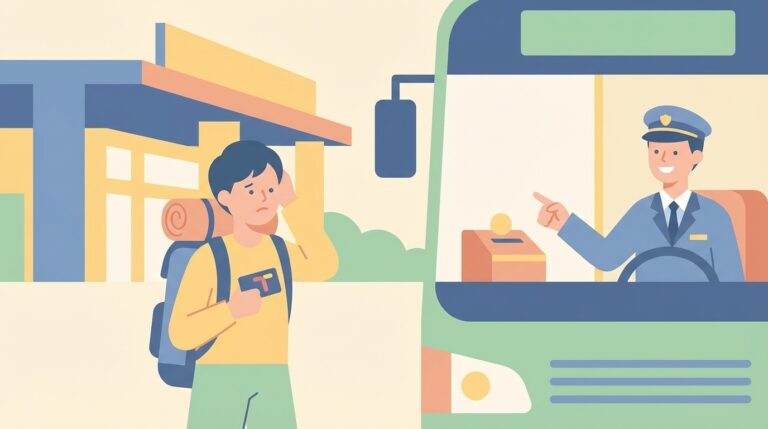
Phase 1: Empathy (The K-Culture Cold Open)
Hello there! I’m the Lead Editor of Daily Hangul, and your personal guide to not just speaking Korean, but actually surviving in Korea.
Picture this: It’s 8:30 AM on a Tuesday at Gangnam Station. The subway gates are a blur of business suits and students. Everyone is moving with the speed of light—this is the legendary Korean Ppalli-Ppalli (hurry-hurry) culture in full swing. You step up to the turnstile, tap your T-money card with confidence, and instead of the cheerful beep, you hear the dreaded, loud robotic voice:
“BEEP BEEP: Janaegi bujokhamnida!”
The gate flashes red. You hit your thighs against the closed turnstile. Suddenly, the line of five busy Seoulites behind you comes to a dead halt. In K-Dramas, this is usually the moment a handsome stranger reaches over and taps their card for the female lead. But in reality? You just feel the heavy weight of nunchi (reading the room) as people wait for you to move.
Don’t panic! It happens to all of us. Today, we’re going to learn exactly what that scary machine is saying, how to gracefully exit the situation, and how to recharge your card like a seasoned local. Let’s dive in!
Phase 2: Core Expressions Deep Dive
Here are the lifesaver phrases you need when your card runs dry.
1. 잔액이 부족합니다 (Insufficient balance)
- Pronunciation: [Janaegi bujokhamnida] + [sounds like: ja-naeg-ee boo-jok-ham-ni-da]
- Meaning: Literal: The balance is insufficient. / Real nuance: “You’re broke (on this card), step aside!”
- K-Culture Moment: You will never actually say this phrase. You will only hear it. It’s the standard voice prompt on all Korean buses and subway gates. Hearing it on a crowded bus might make your heart drop, but it’s just a machine doing its job.
- Editor’s Insight: The word ‘부족하다’ means ‘to lack’ or ‘to be insufficient’. You can also use this word when you feel your Korean skills aren’t good enough yet: “제 한국어가 아직 부족해요” (My Korean is still lacking).
- Situation Spectrum:
- Casual: 🚫 (It’s a robotic system voice!)
- Semi-formal: 🚫
- Formal: ✅ (Used by AI and announcements)
- 🤔 Think About It: Why does the machine announce this so loudly instead of just turning red? In Korea’s fast-paced society, audio cues are essential for keeping the crowd moving efficiently. Have you noticed other loud audio cues in Korean public spaces?
2. 만 원 충전해 주세요 (Please recharge 10,000 won)
- Pronunciation: [Man won chungjeonhae juseyo] + [sounds like: mahn-won choong-jeon-hae joo-se-yo]
- Meaning: Literal: Please recharge 10,000 won. / Real nuance: “Put 10k on this card, please.”
- K-Culture Moment: You hand your card and a crisp green 10,000 won bill to the convenience store worker. They place it on the glowing pad, press a button, and ta-da!
- Editor’s Insight: The magic word here is 충전 (Chungjeon), which means ‘recharge’ or ‘charge’. You use this exact same word for charging your phone! (“핸드폰 충전해 주세요” = Please charge my phone).
- Situation Spectrum:
- Casual: ✅ (When talking to a friend: “나 카드 충전해야 돼” – I need to recharge my card)
- Semi-formal: ✅ (To convenience store staff)
- Formal: ✅
- 🤔 Think About It: Koreans love the word “충전”. We even use it metaphorically for resting: “에너지 충전 중이에요” (I’m recharging my energy). Do you have a similar expression in your language?
3. 현금으로 낼게요 / 그냥 내릴게요 (I’ll pay in cash / I’ll just get off)
- Pronunciation: [Hyeongeumeuro naelgeyo] / [Geunyang naerilgeyo]
- Meaning: I will pay by cash. / I will just get off (the bus).
- K-Culture Moment: You’re on the bus. The machine rejects your card. You quickly dig into your pockets. If you have cash, you declare “현금으로 낼게요!” If your pockets are empty, you do the walk of shame: “아… 죄송합니다, 내릴게요!” and hop off at the same stop.
- Editor’s Insight: At the B1 level, you know the “-(으)ㄹ게요” ending shows your immediate intention or promise to the listener. It shows you are taking quick action, which the bus driver will appreciate!
- Situation Spectrum:
- Casual: ⚠️ (Use polite form to the bus driver!)
- Semi-formal: ✅ (Perfect for service workers)
- Formal: ⚠️
Phase 3: Textbook vs. Real Korean
Let’s see how real Seoulites handle these situations compared to textbook robots.
[Situation 1: Asking to recharge at a convenience store]
* 📖 Textbook Korean: 제 교통카드에 돈을 넣어 주시겠습니까? (Would you please put money into my transit card?)
* 🗣️ Real Korean: 티머니 만 원 충전이요. (T-money, 10,000 won recharge, please.)
* 💡 Why the difference?: Efficiency! In service situations, Koreans often drop the verbs entirely and just use the noun + 이요/요 ending to get straight to the point.
[Situation 2: Realizing you have no money on the bus]
* 📖 Textbook Korean: 돈이 부족해서 버스에서 내리겠습니다. (I will get off the bus because I lack money.)
* 🗣️ Real Korean: 아, 잔액이 없네요. 그냥 내릴게요! (Ah, there’s no balance. I’ll just get off!)
* 💡 Why the difference?: Adding “아” (Ah) and “-네요” (realization ending) softens the embarrassment and makes it sound like a spontaneous, genuine reaction.
Phase 4: Cultural Context — K-Culture Deep Dive
4-1. The Non-Verbal “Oops”
When the machine beeps loudly, your body language matters more than your words.
– The Quick Step Aside: If you are at a subway gate, step backward immediately. Do not stand there blocking the gate to inspect your card.
– The Apologetic Bow: On a bus, if you have to get off, make brief eye contact with the driver, give a slight head bow (about 15 degrees), say “죄송합니다” (Sorry), and exit quickly. It shows you respect the nunchi of the people waiting.
4-2. T-Money is the Ultimate K-Travel Tool
In K-Dramas, you often see high school students tapping their phones or cute character keychains on the bus. Those are all T-money cards! But here’s the catch: You cannot recharge a T-money card with a foreign credit card. You must use CASH (현금). This is why having some 10,000 won bills in your wallet is the ultimate survival rule in Korea. T-money isn’t just for transport; you can buy snacks, K-Pop merch at convenience stores, and even pay for taxis with it!
Phase 5: Real-Life Roleplay Scenario
Setting: It’s a rainy Friday afternoon in Myeongdong. You’ve just hopped onto the green local bus (마을버스) with a line of people behind you. You confidently tap your card.
Characters:
– YOU: A foreign traveler who has spent all their cash on street food.
– Bus Driver (기사님): A busy Korean Ahjussi wearing white driving gloves.
Dialogue:
(Machine): 삑삑! 잔액이 부족합니다.
(BEEP BEEP! Janaegi bujokhamnida.)
[Translation: BEEP BEEP! Insufficient balance.]
YOU: 헉… 어떡하지?
(Heok… eotteokhaji?)
[Translation: Gasp… what do I do?]
(🎭 Stage Direction: You frantically tap the card one more time, hoping it was a glitch. It beeps angrily again.)
기사님: 학생, 잔액 없네. 현금 있어요?
(Haksaeng, janaek eomne. Hyeongeum isseoyo?)
[Translation: Student, you have no balance. Do you have cash?]
(Note: Older Koreans often call younger-looking people ‘학생’ (student) regardless of actual age!)
🔀 Your Turn! How do you respond?
– A) “아저씨, 제발 태워주세요!” (Mister, please let me ride!)
– B) “지갑에 카드가… 아, 그냥 내릴게요. 죄송합니다.”
– C) “계좌이체 할게요. 은행 번호 주세요.”✅ Best Choice: B — “My wallet has a credit card… Ah, I’ll just get off. Sorry.” This is the most polite and realistic exit strategy if you only have foreign credit cards.
⚠️ Choice A Analysis: This might work in a comedy drama, but in Seoul’s rush hour, it’s a huge no-no.
⚠️ Choice C Analysis: Asking for a bank transfer (계좌이체) is common in street markets, but practically impossible on a moving city bus due to time constraints.
Phase 6: 10-Second Shadowing Drill
Practice this excuse so you can say it smoothly under pressure. Pay attention to the pauses!
😢 아, / 잔액이 없네요. / 현금으로 / 낼게요! (Ah, / janaegi eomneyo. / hyeongeumeuro / naelgeyo!)
(Ah, I have no balance. I’ll pay by cash!)
Phase 7: K-Culture Mini Dictionary
| Korean | Romanization | English | Context |
|---|---|---|---|
| 티머니 | Ti-meoni | T-money | The universal public transit card brand in Korea. |
| 충전 | Chungjeon | Recharge | Used for transit cards, phones, and even mental energy. |
| 현금 | Hyeongeum | Cash | The only accepted currency for recharging transit cards at machines. |
| 눈치 | Nunchi | Social awareness | The art of reading the room. Essential when you block a subway gate! |
| 단말기 | Danmalgi | Card reader/Terminal | The machine you tap your card on. |
Phase 8: Traveler’s Survival Kit
If you find yourself stuck at a subway station with an empty card, these phrases are your best friends.
🆘 Survival Phrases for Transport
– 🇰🇷 “가장 가까운 편의점이 어디예요?” (gajang gakkaun pyeonuijeomi eodiyeyo?)
– 🗣️ English: Where is the nearest convenience store?
– 📍 Where to use: Subway stations, bus stops.
– 💡 Pro Tip: All convenience stores (GS25, CU, 7-Eleven) can recharge your card.📌 Editor’s Travel Note
– Cash is King here: You must have Korean Won (KRW) in cash to recharge a T-money card. Foreign credit cards, Apple Pay, or Samsung Pay won’t work on the recharge machines.
– The Climate Card (기후동행카드): If you’re in Seoul for a few days, look into the new ‘Climate Card’ which offers unlimited rides for a flat fee. It saves you from the “insufficient balance” anxiety!
Phase 9: Critical Thinking — “One Step Deeper”
🧠 Think Deeper: Language & Efficiency in the Global Era
Have you ever wondered why Korean public transport systems are so highly automated and vocal? The loud “Janaegi bujokhamnida” isn’t meant to embarrass you. In a hyper-dense megacity like Seoul, moving millions of people requires absolute efficiency. The audio cue immediately alerts the driver and the passengers behind you that there is a delay, prompting everyone to naturally adjust their flow. It reflects a society where collective efficiency often overrides individual comfort.
💬 Your Turn: Does public transport in your home country use loud automated voices when something goes wrong? How does your culture handle small public delays? Share your thoughts in the comments!
Phase 10: FAQ & Avoiding Mistakes
Q: “Can I just tap my Visa/Mastercard from home on the bus?”
No. Unless your card specifically has a Korean post-paid transport chip (후불교통카드), foreign contactless cards will not work on buses and subways. Get a T-money card!
Q: “If I get off the bus because I have no money, do I have to pay when I get back on the next bus?”
Yes. You will pay the base fare again when you board the next bus after recharging.
❌ Common Mistake #1: Asking the convenience store clerk to recharge your card by handing them a credit card.
✅ Do this instead: Hand them the T-money card and the physical cash at the same time.
Phase 11: Summary & Action Items
One-Liner Summary: When the machine yells “잔액이 부족합니다”, either confidently say “현금으로 낼게요” (I’ll pay in cash) or politely bow and say “내릴게요” (I’ll get off).
Action Mission:
– 🥉 Bronze: Stand in front of your mirror and practice the walk of shame: slight bow, “아, 내릴게요!”
– 🥈 Silver: Open KakaoMap or Naver Map, drop a pin anywhere in Seoul, and search for ‘편의점’ (Convenience store) to see how easy it is to find a recharge spot.
– 🥇 Gold: The next time you’re in Korea, confidently hand 10,000 won and your card to a GS25 clerk and say, “만 원 충전해 주세요!”
K-Travel Mission:
Check your wallet right now. Do you have at least one 10,000 won bill tucked away? If not, make that your first mission when you land at Incheon Airport!
Phase 12: Quiz — Interactive Challenge
1. Situational Judgment: You tap your card on the subway gate and hear the error sound. People are behind you. What is the first thing you should do?
A) Stare at the card and try tapping it 5 more times slowly.
B) Step backwards out of the gate so others can pass, then check your balance.
C) Yell “도와주세요!” (Help me!)
2. Fill in the Blank:
You go to CU to put money on your card.
“티머니 5천 원 ______해 주세요.”
(Hint: The word for ‘recharge’)
3. True or False – K-Culture Edition:
You can recharge your T-money card using Apple Pay at a subway ticket machine. (T/F)
(Answers: 1: B – Respect the Nunchi! / 2: 충전 (chungjeon) / 3: False. Cash only!)
Frequently Asked Questions (FAQ)
Q: What does "잔액이 부족합니다 (Insufficient balance)" mean in Korean and how do you pronounce it?
A: In Korean, "잔액이 부족합니다 (Insufficient balance)" is pronounced [Janaegi bujokhamnida] and means: Literal: The balance is insufficient. / Real nuance: "You're broke (on this card), step aside!"
Q: What does "만 원 충전해 주세요 (Please recharge 10,000 won)" mean in Korean and how do you pronounce it?
A: In Korean, "만 원 충전해 주세요 (Please recharge 10,000 won)" is pronounced [Man won chungjeonhae juseyo] and means: Literal: Please recharge 10,000 won. / Real nuance: "Put 10k on this card, please."
Q: What does "현금으로 낼게요 / 그냥 내릴게요 (I'll pay in cash / I'll just get off)" mean in Korean and how do you pronounce it?
A: In Korean, "현금으로 낼게요 / 그냥 내릴게요 (I'll pay in cash / I'll just get off)" is pronounced [Hyeongeumeuro naelgeyo] and means: I will pay by cash. / I will just get off (the bus).







