

Phase 1: Empathy & K-Culture Open
Hello! It’s your Daily Hangul Editor.
Imagine a scene from a deeply moving K-Drama like My Mister (나의 아저씨) or the globally acclaimed film Parasite (기생충). The camera pans over a cramped Gosiwon (고시원) room or a dim semi-basement (Banjiha). A character sits alone in the dark, staring at a stack of unpaid utility bills, eating instant ramen. Outside, a neighbor notices the uncollected mail but hesitates to knock.
Why do they hesitate? Why doesn’t the struggling character just ask for help?
When we reach the C1 (Advanced) level of Korean, we move beyond ordering iced americanos and navigating the subways. We start to see the shadows cast by the bright lights of K-Pop and Seoul’s skyscrapers. Today, we are diving into a heavy but incredibly important topic: Social Inequality and Welfare Blind Spots (복지 사각지대).
If you live in Korea, follow Korean news, or watch social-realist dramas, knowing how to talk about poverty, community support, and maintaining dignity is crucial. If you don’t understand these nuanced expressions, you might accidentally offend someone or miss a subtle cry for help.
Note: This article is based on actual discussions from advanced learners who wanted to understand Korean news articles and social issues on a deeper level.
Phase 2: Core Expressions Deep Dive
1. 복지 사각지대 (Welfare Blind Spot)
- Pronunciation: bok-ji sa-gak-ji-dae [sounds like: boke-jee sah-gak-jee-day]
- Meaning: Literal: Welfare blind spot / Real nuance: People who desperately need social assistance but fall through the cracks of the system.
- K-Culture Moment: You will hear this exact phrase in the 9 PM news anchor’s opening monologue, especially during the harsh winters, reporting on an elderly person living alone (독거노인) who couldn’t pay their heating bill.
- Editor’s Insight: 사각지대 originally means the ‘blind spot’ in a car’s rearview mirror. In a social context, it refers to the invisible poor. It’s an essential term for any advanced debate or essay on Korean society.
- Situation Spectrum:
- Casual friends: ⚠️ (A bit too academic for a pub chat)
- Professional / Academic settings: ✅
- Formal News / Debates: ✅
- 🤔 Think About It: Why is the term “blind spot” used instead of just “poor people”? It shifts the blame from the individual’s failure to a systemic failure. Does your native language have a similar way of describing systemic oversights?
2. 형편이 여의치 않다 (Circumstances are not favorable)
- Pronunciation: hyeong-pyeon-i yeo-ui-chi an-ta [sounds like: hyung-pyun-ee yuh-ee-chee ahn-tah]
- Meaning: Literal: The situation is not as one wishes / Real nuance: A very polite, face-saving way to say someone is struggling financially.
- K-Culture Moment: In a drama, when a proud father is asked why his daughter isn’t going to college, he’ll look down, sigh, and say, “요즘 형편이 여의치 않아서요…” (Things are a bit tight lately…)
- Editor’s Insight: Koreans highly value Chemyen (체면, face/dignity). Bluntly saying “I am poor” (가난해요) or “They have no money” (돈이 없어요) sounds harsh and strips away dignity. This expression is the ultimate empathetic euphemism.
- Situation Spectrum:
- Casual friends: ✅ (Shows deep empathy)
- Co-workers (Semi-formal): ✅
- Elders / Formal: ✅ (Highly appropriate)
- 🤔 Think About It: How does the concept of ‘saving face’ affect the way social workers approach families in need in Korea?
3. 오지랖이 넓다 (To be overly involved / Nosy)
- Pronunciation: o-ji-rap-i neol-ta [sounds like: oh-jee-rap-ee nul-tah]
- Meaning: Literal: The front of one’s coat is wide / Real nuance: Meddling in others’ business. However, in the context of community welfare, it takes on a warm, life-saving nuance (착한 오지랖 – good nosiness).
- K-Culture Moment: Think of the neighborhood Ajumma in Reply 1988 who forces side dishes onto a struggling neighbor. She might say, “내가 오지랖이 넓어서 그래~ 그냥 먹어!” (I’m just being a busybody, just eat it!)
- Editor’s Insight: While usually negative, local governments in Korea actually run campaigns encouraging “Good Ojirap” to find hidden neighbors in need. It’s the Korean Jeong (정, warm attachment) in action.
- Situation Spectrum:
- Casual friends: ✅
- Co-workers (Semi-formal): ⚠️ (Be careful, calling a coworker nosy can start a fight)
- Elders / Formal: 🚫 (Never say this to an elder unless they say it about themselves)
- 🤔 Think About It: Where is the line drawn between invading someone’s privacy and looking out for a neighbor’s welfare in your culture?
Phase 3: Textbook vs. Real Korean
| Situation | 📖 Textbook Korean | 🗣️ Real Korean | 💡 Why is it different? |
|---|---|---|---|
| Admitting financial struggle | 저는 가난합니다. (I am poor.) | 요즘 좀 팍팍하네요. (Things are a bit dry/tight lately.) | Direct admissions of poverty are avoided to preserve dignity (Chemyen). |
| Helping a neighbor | 제가 돈을 주겠습니다. (I will give you money.) | 반찬 좀 넉넉히 했는데, 같이 드실래요? (I made too many side dishes, want to share?) | Koreans prefer indirect help, often using food as a medium to avoid making it feel like charity. |
| Asking for government aid | 도와주세요. (Help me.) | 주민센터 복지과에 문의하러 왔는데요. (I’m here to inquire at the community center’s welfare desk.) | Real administrative language relies heavily on bureaucratic terminology (문의하다, 지원 대상자). |
Bottom Note for C1 Learners: Avoid using textbook absolutes like “가난하다” (poor) or “불쌍하다” (pitiful) when discussing real people’s lives. It can sound patronizing. Use words like “어려움을 겪다” (experiencing difficulties) instead.
Phase 4: Cultural Context — K-Culture Deep Dive
4-1. Non-Verbal Elements: The Art of Invisible Help
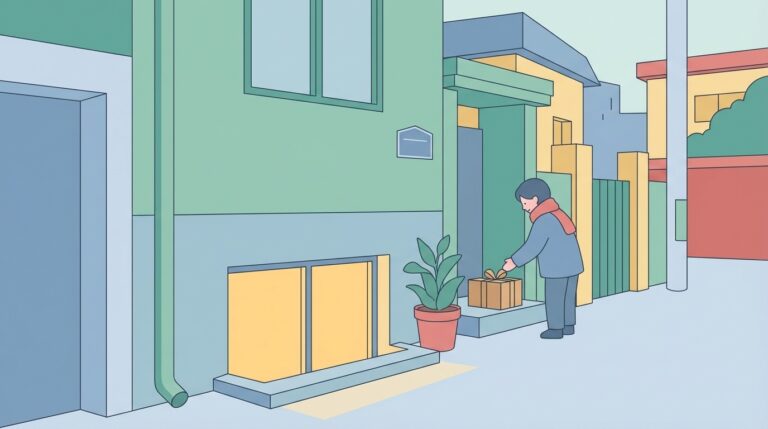
When dealing with social inequality, Nunchi (눈치, situational awareness) is everything. If you notice a neighbor struggling, handing them cash directly is considered highly insensitive. Instead, a true Korean friend will invent an excuse: “I accidentally bought two of these, you take one,” or leave a box of tangerines at their door anonymously. The non-verbal rule is: Help, but don’t force them to acknowledge the charity.
4-2. K-Drama Connection: The Architecture of Inequality
K-Dramas are masterclasses in visually depicting the “Welfare Blind Spots.” Notice the architecture: the Banjiha (semi-basement) in Parasite, or the Oktapbang (rooftop room) in romantic comedies. While often romanticized in K-Pop or rom-coms as a “cozy start for young people,” in reality, these are places highly vulnerable to extreme weather (floods, freezing cold). Understanding the vocabulary of poverty (고시원, 반지하, 쪽방촌) gives you profound insight into why local 주민센터 (Community Centers) focus their welfare checks on these specific housing types before winter hits.
Phase 5: Real-Life Roleplay Scenario
Setting: A Friday evening at a local cafe near your apartment complex. You are sitting with Minji, a Korean neighbor you’ve grown close to through the local resident’s association. Outside, the winter wind is howling.
Characters:
– YOU (Reader): An expat living in Seoul, actively participating in neighborhood matters.
– Minji (34): Your neighbor, observant and warm-hearted.
Dialogue:
Minji: 저기… 201호 할아버지, 요새 통 안 보이시지 않아요?
(jeogi… ibek-il-ho hal-a-beo-ji, yosae tong an bo-i-si-ji an-a-yo?)
[Hey… haven’t seen the grandpa from 201 around lately, have you?]
(🎭 Stage Direction: Minji looks out the window, looking genuinely worried.)
YOU: 맞아요. 며칠 전부터 우편함에 전단지가 쌓여 있더라고요.
(ma-ja-yo. myeo-chil jeon-bu-teo u-pyeon-ham-e jeon-dan-ji-ga ssa-yeo it-deo-ra-go-yo.)
[You’re right. I noticed flyers piling up in his mailbox since a few days ago.]
Minji: 날씨도 이렇게 추운데… 혼자 사시잖아요. 저번에 보니까 형편이 별로 안 좋으신 것 같던데.
(nal-ssi-do i-reo-ke chu-un-de… hon-ja sa-si-ja-na-yo. jeo-beon-e bo-ni-kka hyeong-pyeon-i byeol-ro an jo-eu-sin geot gat-deon-de.)
[And it’s so cold… plus he lives alone. Last time I saw him, it seemed like his circumstances weren’t great.]
YOU: 주민센터에 연락해서 확인해 달라고 할까요?
(ju-min-sen-teo-e yeol-lak-hae-seo hwak-in-hae dal-la-go hal-kka-yo?)
[Should we contact the community center and ask them to check on him?]
Minji: 음… 너무 오지랖 부리는 걸로 생각하시면 어쩌죠? 자존심 상해하실 수도 있는데…
(eum… neo-mu o-ji-rap bu-ri-neun geol-ro saeng-gak-ha-si-myeon eo-jjeo-jyo? ja-jon-sim sang-hae-ha-sil su-do in-neun-de…)
[Hmm… what if he thinks we are being too nosy? His pride might get hurt…]
🔀 Your Turn! How do you respond to Minji?
– A) “그래도 생명이 중요하니까 무조건 신고합시다!” (But life is important, let’s report it no matter what!)
– B) “그럼 우리가 귤 좀 샀다고 핑계 대고 한번 찾아가 볼까요?” (Then how about we use buying tangerines as an excuse and go visit him ourselves?)
– C) “알아서 하시겠죠. 신경 쓰지 마세요.” (He’ll figure it out. Don’t worry about it.)✅ Best Choice: B — This perfectly balances the Korean Jeong (정) with the need to protect his Chemyen (체면). It uses food as a gentle bridge.
⚠️ Choice A Analysis: While logical, “신고합시다” (let’s report) sounds too harsh, like calling the cops on a criminal.
Bonus K-Culture Scenario: At the Community Center (주민센터)
(You visit the community center to ask about donating to a local winter campaign)
Clerk: 겨울철 복지 사각지대 이웃 돕기 캠페인에 오셨군요.
YOU: 네, 저희 동네에 형편이 여의치 않은 분들을 위해 작은 보탬이 되고 싶어서요.
Clerk: 아이고, 따뜻한 오지랖에 정말 감사드립니다!
(The clerk uses “오지랖” humorously and positively here to praise your proactive kindness!)
Phase 6: 10-Second Shadowing Drill
Let’s practice the delicate intonation required for this heavy topic. Speak softly and with empathy.
🥺 요새 / 형편이 / 좀 여의치 않아서요... (yo-sae / hyeong-pyeon-i / jom yeo-ui-chi an-a-seo-yo...)
😤 복지 사각지대를 / 줄이기 위한 / 대책이 필요합니다! (bok-ji sa-gak-ji-dae-reul / ju-ri-gi wi-han / dae-chaeg-i pi-ryo-ham-ni-da!)
Phase 7: K-Culture Mini Dictionary
| Korean | Romanization | English | Context & Explanation |
|---|---|---|---|
| 주민센터 | ju-min-sen-teo | Community Center | The frontline of Korean local administration and social welfare. Formerly known as 동사무소. |
| 독거노인 | dok-geo-no-in | Senior living alone | A major social issue in aging Korea; often the primary target of welfare checks. |
| 기초생활수급자 | gi-cho-saeng-hwal-su-geup-ja | Basic livelihood security recipient | The official, formal term for someone receiving government financial aid. |
| 쪽방촌 | jjog-bang-chon | Flophouse village | Extremely tiny, cheap single rooms, often clustered together. A symbol of urban poverty. |
Phase 8: Traveler / Expat Survival Kit
Even if you are an expat or a traveler, understanding the local administrative safety nets is vital. What if you suddenly become vulnerable?
🆘 Survival Expressions #1: Seeking Help at the Community Center
– 🇰🇷 “긴급 지원 제도가 있는지 문의하고 싶습니다.” (gin-geup ji-won je-do-ga in-neun-ji mun-ui-ha-go sip-seum-ni-da.)
– 🗣️ English Sound Guide: gin-geup jee-won jay-doh-gah een-neun-jee moon-ee-hah-go sip-seum-nee-dah.
– 📍 Where to use: 주민센터 (Community Center) or 다문화가족지원센터 (Multicultural Family Support Center).
– 💡 Pro Tip: If you face a sudden crisis (e.g., medical emergency without insurance), foreign residents can sometimes access emergency local aid. Knowing how to “문의하다” (inquire formally) gets you much faster results than just saying “도와주세요” (help me).📌 Editor’s Note
– Useful Hotlines: Dial 129 for the Health & Welfare Counseling Center. Dial 1339 for medical emergencies if you don’t speak Korean well (they offer translation).
– Community Boards: Look at the bulletin boards near your apartment elevator. You’ll often see flyers about identifying “Welfare Blind Spots.”
Phase 9: Critical Thinking Corner — “Going Deeper”
Media vs. Reality (미디어와 현실)
When the world thinks of Korea, they often picture the flawless skin of K-Pop idols or the luxurious chaebol lifestyles in K-Dramas. However, cultural exports like Squid Game and Parasite have pulled the curtain back on Korea’s intense wealth gap. But there is a danger here: media either over-glamorizes wealth or turns poverty into extreme “poverty porn” (빈곤 포르노).
In reality, the fight against social inequality in Korea is quiet, bureaucratic, and deeply community-driven. It happens in the mundane halls of the Jumin Center and through the quiet Ojirap of the yogurt delivery ladies (야쿠르트 아줌마) who are officially contracted by the government to check on elderly people living alone. The real Korean society isn’t a deadly survival game; it’s a complex web of modern bureaucracy trying to mimic traditional village empathy.
💬 Your Turn: Does your country’s media accurately portray social inequality? Or do they sensationalize it? How does your community check on vulnerable neighbors? Share your thoughts in the comments!
Phase 10: FAQ & Avoiding Misunderstandings
Q: Can I just ask my Korean friend if they are struggling financially?
No. Unless they bring it up first, asking directly is considered incredibly rude and invasive. Wait for them to use hints like “요즘 좀 팍팍해” (Things are tight) or “형편이 여의치 않아” (Circumstances aren’t great).
Q: I saw a homeless person in Seoul. Should I give them cash?
While you can, the primary system of support in Korea is institutional. Many Koreans prefer to donate to specific charities (like the Salvation Army red kettles in winter) or local community centers rather than giving direct cash.
❌ Common Mistake #1: Pointing out someone’s cheap clothes or living situation directly.
✅ Do this instead: Maintain a respectful distance. If you want to help, invite them to dinner and secretly pay the bill beforehand, saying, “오늘은 제가 쏘고 싶어서요!” (I really wanted to treat you today!)
Phase 11: Summary & Action Items
- One-Liner Summary: To discuss social welfare and poverty in Korean, swap blunt words for empathetic, face-saving euphemisms like “형편이 여의치 않다” and recognize the power of community “사각지대 발굴” (finding blind spots).
-
Action Mission 3 Steps:
- 🥉 Bronze (Solo): Read the core expressions out loud, focusing on a soft, empathetic tone.
- 🥈 Silver (Online): Go to a Korean news portal (like Naver) and search the keyword “복지 사각지대”. Read the headline of the first article.
- 🥇 Gold (Real Life): Next time you walk by your local community center, look at the banners outside. Spot the words “이웃” (neighbor) or “지원” (support).
- K-Culture Mission: Watch episode 1 of My Mister (나의 아저씨) or any social-realist drama. Look for the non-verbal cues characters use to hide their financial struggles from their peers.
Phase 12: Quiz — Interactive Challenge
1. Situational Judgment: Your co-worker couldn’t join the team trip because of money issues. How should you explain it to another colleague delicately?
– A) 그 사람 가난해서 못 와요.
-B) 요새 그분 형편이 좀 여의치 않은 것 같아요.
– C) 그 사람 돈이 하나도 없대요.
2. Fill in the Blank:
겨울철 추위에 떠는 독거노인들을 위해 복지 [ ______ ]를 찾아내야 합니다.
(Hint: Blind spot)
3. True or False — K-Culture Edition:
“오지랖이 넓다” is ALWAYS a terrible insult in Korean and should never be used positively. (T/F)
🚨 Click here for the answers!
1. B (It is the most polite and empathetic way to describe someone’s financial situation.)
2. 사각지대 (sa-gak-ji-dae)
3. False (While normally negative, local governments use it positively as “착한 오지랖” to encourage neighbors to check on each other.)
Frequently Asked Questions (FAQ)
Q: What does "복지 사각지대 (Welfare Blind Spot)" mean in Korean and how do you pronounce it?
A: In Korean, "복지 사각지대 (Welfare Blind Spot)" is pronounced [bok-ji sa-gak-ji-dae [sounds like: boke-jee sah-gak-jee-day] and means: Literal: Welfare blind spot / Real nuance: People who desperately need social assistance but fall through the cracks of the system.
Q: What does "형편이 여의치 않다 (Circumstances are not favorable)" mean in Korean and how do you pronounce it?
A: In Korean, "형편이 여의치 않다 (Circumstances are not favorable)" is pronounced [hyeong-pyeon-i yeo-ui-chi an-ta [sounds like: hyung-pyun-ee yuh-ee-chee ahn-tah] and means: Literal: The situation is not as one wishes / Real nuance: A very polite, face-saving way to say someone is struggling financially.
Q: What does "오지랖이 넓다 (To be overly involved / Nosy)" mean in Korean and how do you pronounce it?
A: In Korean, "오지랖이 넓다 (To be overly involved / Nosy)" is pronounced [o-ji-rap-i neol-ta [sounds like: oh-jee-rap-ee nul-tah] and means: Literal: The front of one's coat is wide / Real nuance: Meddling in others' business. However, in the context of community welfare, it takes on a warm, life-saving nuance (착한 오지랖 - good nosiness).







