

Phase 1: Empathy & K-Culture Cold Open
Hello! This is your Daily Hangul Editor.
Imagine this scene: You’re watching a K-Drama. The protagonist just finished a grueling 14-hour workday, gets off the crowded Seoul subway, and trudges up the steep hill to their rooftop apartment. They plop onto the bed, let out a deep, echoing sigh (“Haaa…”), and stare blankly at the ceiling. The subtitles simply read: “I’m tired.”
But as a B2 learner, you probably know that what they are feeling goes way beyond just being “tired” (피곤해요).
Living in a foreign country, studying a new language, or just dealing with life can sometimes leave you feeling completely drained. You want to confide in your Korean friends, but saying “저는 슬퍼요” (I am sad) feels like a children’s textbook, and “피곤해요” (I’m tired) just implies you need a nap.
Today, we are going to dive into the deep, murky waters of Advanced Emotions. We’ll learn how to express burnout, lethargy, and feeling down like a true local. By the end of this guide, you’ll not only know the exact phrases to use, but you’ll also understand how Koreans navigate these heavy feelings socially. Let’s get into it!
Phase 2: Core Expressions Deep Dive
Let’s upgrade your emotional vocabulary with these 3 hyper-realistic expressions.
1. 만사가 다 귀찮아요. (Everything is a hassle.)
- Pronunciation: man-sa-ga da gwi-cha-na-yo [gwi-cha-na-yo sounds like making a soft “gwee” sound followed by “cha-nah-yo”]
- Meaning: Literal = Ten thousand things are all bothersome. / Real nuance = I’m so drained that doing absolutely anything feels like a massive chore.
- K-Culture Moment: You’re lying on the living room floor on a Sunday. Your friend texts you, “Let’s go get coffee!” You just stare at the screen. You don’t hate coffee, and you aren’t angry. You just have zero energy to get dressed.
- Editor’s Insight: This phrase perfectly captures lethargy. It’s not depression; it’s a severe lack of motivation.
- Situation Spectrum:
- Friends (Casual): ✅ (만사가 다 귀찮아)
- Coworkers (Semi-formal): ⚠️ (Use carefully, maybe with close colleagues)
- Boss/Elders (Formal): 🚫 (Sounds like you are complaining about your duties)
- 🤔 Think About It: Why use the word “만사” (10,000 things)? In traditional East Asian culture, the number 10,000 represents “everything” or “infinity.” Does your language have a hyperbole like this to describe feeling overwhelmed?
2. 요즘 번아웃이 온 것 같아요. (I think I’m experiencing burnout lately.)
- Pronunciation: yo-jeum beon-au-si on geot ga-ta-yo
- Meaning: Literal = It seems like burnout has come these days. / Real nuance = I’m completely burnt out from overworking/stress.
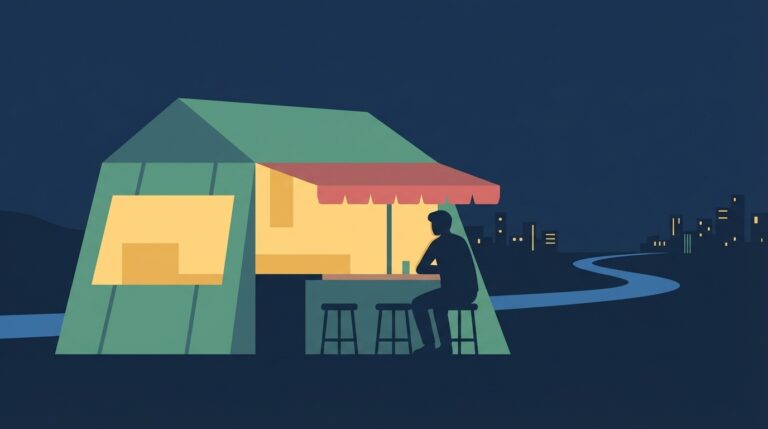
- K-Culture Moment: Sitting at a Pojangmacha (street tent), grilling pork belly. You clink your Soju glass with your friend and confess why you haven’t been smiling lately.
- Editor’s Insight: Notice we don’t say “I am burnt out.” We say “Burnout has come to me.” It treats burnout like a passing storm, not a permanent personality trait. It’s incredibly common among young Korean professionals.
- Situation Spectrum:
- Friends (Casual): ✅
- Coworkers (Semi-formal): ✅ (Very common in Korean corporate life)
- Boss/Elders (Formal): ⚠️ (Depends on how empathetic your boss is!)
- 🤔 Think About It: Why do Koreans use the English word “burnout” instead of a pure Korean word? We’ll discuss this in Phase 9!
3. 기분이 자꾸 가라앉아요. (My mood keeps sinking.)
- Pronunciation: gi-bun-i ja-kku ga-ra-an-ja-yo [ga-ra-an-ja-yo sounds like a gentle, downward glide]
- Meaning: Literal = My mood keeps sinking/submerging. / Real nuance = I’ve been feeling really down/depressed lately.
- K-Culture Moment: Looking out the window of a cozy cafe during the monsoon season (장마철). You are talking to a close friend on the phone, trying to explain why you’ve been so quiet.
- Editor’s Insight: This is a very poetic, visual way to describe feeling blue. It’s softer and more acceptable in daily conversation than saying “저는 우울증이에요” (I have clinical depression).
- Situation Spectrum:
- Friends (Casual): ✅
- Coworkers (Semi-formal): ⚠️
- Boss/Elders (Formal): 🚫
- 🤔 Think About It: The verb “가라앉다” is usually used for ships sinking or sediment settling in water. Why is the “heart” or “mood” often compared to water in Korean?
Phase 3: Textbook vs. Real Korean
| Situation | 📖 Textbook Korean | 🗣️ Real Korean | 💡 Why is it different? |
|---|---|---|---|
| Feeling deeply tired of everything | 저는 무기력합니다. (I am lethargic.) | 아무것도 하기 싫어요. (I don’t want to do anything.) | The real version is more direct and focuses on the action (or lack thereof) rather than a clinical state. |
| Feeling burnt out | 저는 스트레스가 많습니다. (I have a lot of stress.) | 요즘 완전 번아웃이에요. / 현타 왔어요. (I got a reality check/burnout.) | “현타” (Reality hit) is a modern slang used when you suddenly feel empty after working hard for nothing. |
| Feeling depressed | 저는 슬프고 우울해요. (I am sad and depressed.) | 텐션이 너무 낮아요. / 기분이 다운됐어요. (My tension is low / My mood is down.) | Koreans love using Konglish (Tension, Down) to make heavy emotional topics feel slightly lighter and more conversational. |
Bottom Note: At the B2 level, using “기분이 다운됐어요” instead of “우울해요” shows you understand the social tact of not making the conversation too heavy right away.
Phase 4: K-Culture Deep Dive
4-1. Non-verbal Context: The Art of “Spacing Out”
When you express these feelings in Korea, it often comes with a specific non-verbal action: 멍때리기 (Meong-ttae-ri-gi), which means “spacing out” or staring blankly into the void.
If you tell a friend “만사가 다 귀찮아요,” don’t make intense eye contact. Sigh softly, look down at your coffee cup or out the window. In Korean Nunchi culture, forcing a bright smile while saying you are burnt out is confusing. Let your body language match your words.
4-2. The “Han River Healing” Trope
In almost every K-Drama, when the main character hits rock bottom, feels burnt out, or experiences a breakup, where do they go? The Han River (한강).
They sit on the steps in the freezing cold or humid summer, crack open a can of beer, and eat convenience store ramen. In Korean culture, water (specifically the Han River crossing Seoul) represents a place to wash away your heavy thoughts. If a Korean friend says, “나 오늘 한강 가서 맥주 한 캔 하고 싶어” (I want to go to the Han River and have a beer today), they are actually saying, “I am feeling really burnt out and I need you to listen to me.”
Phase 5: Real-Life Roleplay Scenario
Setting: Friday night, 8 PM. A small, dimly lit Izakaya near your office. You are sitting at the bar with your close Korean coworker, Min-su. You’ve been sighing a lot today.
Characters:
– YOU: A foreign professional working in Korea, currently experiencing a mid-year slump.
– Min-su (32): Your Korean coworker. He’s very perceptive (has quick Nunchi) and is acting like an older brother today.
Dialogue:
Min-su: OOO 씨, 오늘 한숨을 엄청 쉬네요. 무슨 일 있어요?
(OOO ssi, oneul hansumeul eomcheong swineyo. Museun il isseoyo?)
[OOO, you’re sighing a lot today. Is something wrong?]
YOU: 아… 티 났어요? 사실 요즘 만사가 다 귀찮아요.
(A… ti nasseoyo? Sasil yojeum mansaga da gwichanayo.)
[Ah… was it obvious? Actually, lately, everything feels like a hassle.]
Min-su: 또 야근 많이 해서 그래요. 일이 너무 많죠?
(Tto yageun mani haeseo geuraeyo. Iri neomu manjyo?)
[It’s because you’ve been working a lot of overtime again. You have too much work, right?]
YOU: 네, 아무래도 번아웃이 온 것 같아요. 기분이 자꾸 가라앉네요.
(Ne, amuraedo beonausi on geot gatayo. Gibuni jakku garaanneyo.)
[Yeah, I think burnout has come. My mood keeps sinking.]
Min-su: (Pouring you a drink) 에고, 고생 많았어요. 오늘 다 털어버려요!
(Ego, gosaeng manasseoyo. Oneul da teoreobeoryeoyo!)
[Oh man, you’ve worked hard. Shake it all off today!]
🔀 Your Turn! How will you respond to Min-su’s comfort?
– A) “감사합니다. 저 진짜 우울증인가 봐요.” (Thank you. I think I really have clinical depression.)
– B) “고마워요. 민수 씨 덕분에 조금 위로가 되네요.” (Thank you. Thanks to you, I feel a little comforted.)
– C) “아니에요, 제가 약해서 그래요.” (No, it’s just because I am weak.)✅ Best Choice: B — Acknowledging their comfort gracefully is the best way to keep the conversation supportive but not overly heavy.
⚠️ Choice A Analysis: Using the medical term “우울증” (depression) suddenly escalates the conversation. The coworker might panic, not knowing how to respond.
⚠️ Choice C Analysis: Korean culture values humility, but overly criticizing yourself when someone is trying to comfort you can make the atmosphere awkward.
Phase 6: 10-Second Shadowing Drill
Let’s practice the intonation. When expressing these feelings, your voice should naturally lower in pitch, and you should drag out the vowels slightly to show exhaustion.
- 😩 “아… / 요즘 진짜 / 번아웃이 / 온 것 같아요…”
(Ah… / yojeum jinjja / beonausi / on geot gatayo…)
Pitch drops at the end, letting out a small sigh. -
😔 “요즘 왠지 / 기분이 자꾸 / 가라앉아요…”
(Yojeum waenji / gibuni jakku / garaan-jayo…)
Pause slightly after ‘자꾸’ (keeps) to emphasize the sinking feeling.
Phase 7: K-Culture Mini Dictionary
| Korean | Romanization | English Meaning | Cultural Context |
|---|---|---|---|
| 멍때리기 | meong-ttae-ri-gi | Spacing out | Considered a valid form of rest in Korea. There is even a “Spacing Out Competition” held annually at the Han River! |
| 힐링 | hil-ling | Healing / Relaxing | Konglish. Used for anything that cures your burnout (e.g., eating good food, watching a movie, going to nature). |
| 소확행 | so-hwak-haeng | Small but certain happiness | A popular lifestyle trend. Curing burnout not with a grand vacation, but with a small slice of cake or buying a new pen. |
| 한풀이 | han-pu-ri | Venting out sorrow | Deeply rooted in Korean culture; the act of completely releasing bottled-up negative emotions by talking or crying with someone. |
Phase 8: Traveler Survival Kit (The “Exhausted” Edition)
Even when traveling in Korea, you might experience physical and mental burnout from walking around crowded places like Myeongdong or navigating the complex subway system. Here is your survival kit.
🆘 Survival Expression #1: The Pharmacy Rescue
– 🇰🇷 “피로회복제 하나 주세요.” (pi-ro-hoe-bok-je ha-na ju-se-yo.)
– 🗣️ English Guide: “Please give me one fatigue recovery medicine.”
– 📍 Where to use: Any 약국 (Pharmacy)
– 💡 Pro Tip: Korean pharmacies sell small, magical brown glass bottles like Bacchus (박카스) or Vita500. If you look completely drained and say this phrase, the pharmacist will usually hand you a warm bottle of one of these. It’s an instant “healing” potion!📌 Editor’s Travel Note
– Finding a place to rest: If you are burnt out from traveling, search for “룸카페” (Room Cafe) or “수면카페” (Sleeping Cafe) on KakaoMap. You can pay a few dollars to sleep in a massage chair in a dark, quiet room for an hour.
– Personal Space: In crowded places, Koreans might bump into you without saying “Sorry.” This isn’t out of malice; it’s just the reality of living in a hyper-dense city. Don’t let it ruin your mood or cause travel burnout!
Phase 9: Critical Thinking — “One Step Deeper”
Language & Power: The Passive Nature of Pain
Have you noticed a pattern in how Koreans express negative emotions? We don’t say “I caught a cold,” we say “A cold came to me” (감기가 왔다). We don’t say “I am burnt out,” we say “Burnout has come” (번아웃이 왔다).
In highly collective and fast-paced societies like Korea, admitting that you are fundamentally depressed or burnt out used to be seen as a personal failure or weakness. However, by using a passive structure—treating burnout like a passing cloud or an uninvited guest—it removes the personal blame. It tells society: “I am a hard worker, but this external force of exhaustion has temporarily visited me.”
💬 Your Turn: Does your native language treat mental exhaustion as an internal state (I am tired) or an external force (Tiredness hit me)? Share your thoughts in the comments!
Phase 10: FAQ & Avoiding Misunderstandings
Q: Can I tell my boss “저 만사가 다 귀찮아요”?
No! Absolutely not. To a boss, this sounds like “I am lazy and I hate doing my job.” If you need to express burnout to a superior to request a break, use professional language: “요즘 무기력증이 좀 와서, 재충전의 시간이 필요할 것 같습니다” (Lethargy has hit me recently, so I think I need time to recharge.)
Q: Can I use these phrases to my favorite K-Pop idol on a fan call/letter?
Maybe, but flip it! Don’t say you are burnt out; use it to comfort them. For example: “요즘 스케줄 많아서 번아웃 올까 봐 걱정돼요. 푹 쉬어요!” (I’m worried burnout might come to you because of your busy schedule. Please rest well!)
❌ Common Mistake: Confusing “귀찮아요” (It’s a hassle) with “싫어요” (I hate it).
✅ How to fix it: If your friend asks you to go to dinner and you say “싫어요,” it means you hate them or hate the food. It’s aggressive. If you say “아.. 오늘은 나가기 귀찮아요” (Ah.. it’s a hassle to go out today), they will understand you are just exhausted, not angry at them.
Phase 11: Summary & Action Items
One-Liner Summary: To sound like a local, stop saying you’re just “tired,” and start treating your burnout like an uninvited guest (번아웃이 왔어요) or a heavy anchor (기분이 가라앉아요).
Your Action Missions:
– 🥉 Bronze (Solo): Look in the mirror, let out a deep sigh, and say “요즘 완전 번아웃이 온 것 같아” with feeling, 3 times.
– 🥈 Silver (Online): Go to your language exchange app (like HelloTalk or Tandem) and post: “요즘 만사가 다 귀찮은데, 여러분만의 힐링 방법이 있나요?” (Everything is a hassle lately, do you guys have your own healing methods?)
– 🥇 Gold (Real World): The next time your Korean friend asks why you look tired, use one of today’s expressions instead of “피곤해요.”
🌟 K-Culture Mission: Go to a Korean convenience store (or Asian market) and buy a small bottle of Bacchus or a Vita500. Drink it while spacing out (멍때리기) for exactly 5 minutes. Experience true Korean healing!
Phase 12: Interactive Quiz
1. Situational Judgment:
You are at a company dinner (회식). Your strict manager asks you why you’ve been so quiet today. What is the safest response?
A) “부장님, 저 만사가 다 귀찮습니다.”
B) “요즘 우울증입니다.”
C) “아, 아닙니다! 요즘 몸이 조금 피곤해서 그렇습니다.”
2. Fill in the Blank:
“My mood keeps sinking lately.”
-> 요즘 기분이 자꾸 (_________).
3. True or False – K-Culture Edition:
If a Korean friend says “I want to go to the Han River and have a beer,” they probably just want to exercise and swim in the water. (T / F)
(Answers: 1: C – Always play it safe and polite with strict bosses! 2: 가라앉아요 3: False – They probably need emotional support and want to vent!)
Frequently Asked Questions (FAQ)
Q: What does "만사가 다 귀찮아요. (Everything is a hassle.)" mean in Korean and how do you pronounce it?
A: In Korean, "만사가 다 귀찮아요. (Everything is a hassle.)" is pronounced [man-sa-ga da gwi-cha-na-yo [gwi-cha-na-yo sounds like making a soft "gwee" sound followed by "cha-nah-yo"] and means: Literal = Ten thousand things are all bothersome. / Real nuance = I'm so drained that doing absolutely anything feels like a massive chore.
Q: What does "요즘 번아웃이 온 것 같아요. (I think I'm experiencing burnout lately.)" mean in Korean and how do you pronounce it?
A: In Korean, "요즘 번아웃이 온 것 같아요. (I think I'm experiencing burnout lately.)" is pronounced [yo-jeum beon-au-si on geot ga-ta-yo] and means: Literal = It seems like burnout has come these days. / Real nuance = I'm completely burnt out from overworking/stress.
Q: What does "기분이 자꾸 가라앉아요. (My mood keeps sinking.)" mean in Korean and how do you pronounce it?
A: In Korean, "기분이 자꾸 가라앉아요. (My mood keeps sinking.)" is pronounced [gi-bun-i ja-kku ga-ra-an-ja-yo [ga-ra-an-ja-yo sounds like a gentle, downward glide] and means: Literal = My mood keeps sinking/submerging. / Real nuance = I've been feeling really down/depressed lately.







