

Hello there! I’m the Lead Editor of Daily Hangul.
Picture this: You are sitting in a bustling café in Gangnam, sipping an iced Americano. Suddenly, BEEP! BEEP! BEEP! Every single smartphone in the café goes off simultaneously with a deafening siren. Your heart drops. You check your screen, and it’s a 재난 문자 (Emergency Alert). You frantically try to translate it, and your Korean friend casually glances at their phone, sighs, and says, “Ah, another sinkhole warning near the construction site.”
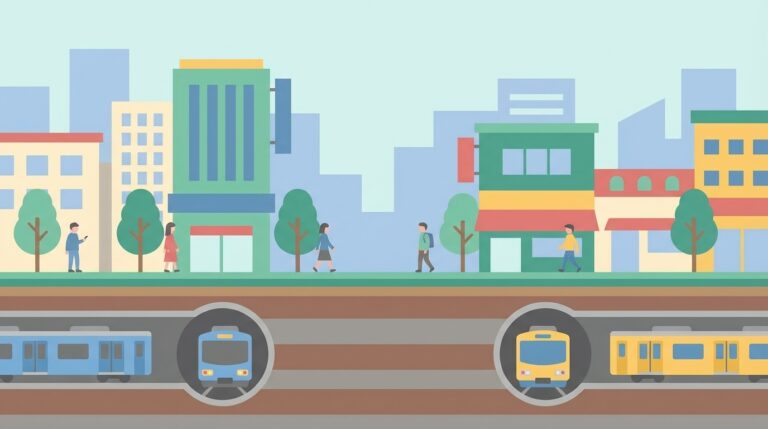
Disaster Safety (재난 안전) and Underground Safety Management (지하 안전 관리) might sound like topics strictly reserved for civil engineers or the 9 PM news. But if you live in or visit Seoul—a megacity layered with massive subway networks, sprawling underground malls like COEX, and relentless urban development—these concepts are a very real part of daily life. Remember the 2021 Korean blockbuster movie Sinkhole? It perfectly captured the uniquely Korean anxiety of sudden ground collapse intertwined with the hyper-competitive real estate market.
As a C2 (Advanced) learner, moving beyond ordering food or quoting K-Dramas is crucial. To truly integrate into Korean society, you need to be able to discuss social issues, critique public safety, and understand the news just like a local. Today, we are diving deep into the vocabulary of disaster safety and the cultural psychology behind it.
Let’s upgrade your Korean to the anchor desk level!
Phase 2: Core Expressions Deep Dive
1. 안전 불감증 (Insensitivity to Safety / Safety Complacency)
- Pronunciation: [an-jeon-bul-gam-jjeung] (The ‘jjeung’ sounds like the sharp ‘jj’ in ‘jigae’ but tighter).
- Meaning: Literal: Safety insensitivity syndrome. Real nuance: A societal complacency or lack of awareness regarding safety protocols, often blamed for man-made disasters.
- K-Culture Moment: Whenever a major accident or a sinkhole (싱크홀) occurs due to shoddy construction, news anchors with grave expressions will inevitably state, “This was another disaster caused by an-jeon-bul-gam-jjeung.” It’s the ultimate societal buzzword for blaming preventable tragedies.
- Editor’s Insight: This isn’t just a vocabulary word; it’s a cultural critique. Koreans use this to express frustration with the side effects of rapid economic development.
- Situation Spectrum:
- Casual with friends: ✅ (Discussing news)
- Semi-formal (Co-workers): ✅
- Formal (Debates/Essays): ✅
- 🤔 Think About It: Why does Korean have a specific “syndrome” (증 – 症) for ignoring safety? How does this reflect the historical trauma of rapid modernization vs. public safety? Do you have a similar all-encompassing word in your language?
2. 소 잃고 외양간 고친다 (Mending the barn after losing the cow)
- Pronunciation: [so ilgo oeyanggan gochinda] (Flows smoothly: so-il-ko / oe-yang-gan / go-chin-da).
- Meaning: Literal: Fixing the cowshed after losing the cow. Real nuance: Closing the stable door after the horse has bolted; taking action too late.
- K-Culture Moment: You’re in a taxi passing a newly repaired road where a sinkhole previously swallowed a car. The middle-aged taxi driver (Ahjussi) clicks his tongue and mutters this proverb to criticize the local government’s reactive, rather than proactive, safety measures.
- Editor’s Insight: Proverbs (속담 – sokdam) are the secret weapon of C2 speakers. Dropping this proverb when discussing infrastructure management instantly commands respect. It shows you understand Korean cynicism toward bureaucratic inefficiency.
- Situation Spectrum:
- Casual with friends: ✅
- Semi-formal (Co-workers): ✅
- Formal (Boss/Elders): ⚠️ (Use cautiously; it sounds very critical of authorities).
- 🤔 Think About It: Proverbs often use agricultural metaphors. Even in highly urbanized, tech-savvy modern Seoul, why do these agrarian idioms still hold so much emotional weight?
3. 땜질식 처방 (Band-aid solution / Quick fix)
- Pronunciation: [ttaem-jil-sik cheo-bang] (‘Ttaem’ has a strong, tense ‘tt’ sound, like the ‘t’ in ‘stop’).
- Meaning: Literal: Soldering-style prescription. Real nuance: A superficial, temporary fix to a deep-rooted structural problem (like just paving over a sinkhole without investigating the underground water leak).
- K-Culture Moment: During a corporate meeting or a political debate on TV, an executive or politician will aggressively reject a proposal by calling it a “ttaem-jil-sik cheo-bang,” demanding a fundamental investigation (진상 규명) instead.
- Editor’s Insight: ‘땜질’ means soldering or patching up. Koreans value ‘근본적인 대책’ (fundamental countermeasures). When you see underground safety management failing, this is the perfect analytical phrase.
- Situation Spectrum:
- Casual with friends: ⚠️ (A bit too formal for casual chat)
- Semi-formal (Co-workers): ✅
- Formal (News/Business): ✅
- 🤔 Think About It: This phrase implies that taking the easy way out is bad. How does this contrast with the Korean “Pali-pali” (hurry up) culture?
Phase 3: Textbook vs. Real Korean
| Situation | 📖 Textbook Korean | 🗣️ Real Korean (C2 Level) | 💡 Why the difference? |
|---|---|---|---|
| Warning about a dangerous area | 거기는 위험해요. (It is dangerous there.) | 지반 침하 우려가 있으니 우회하세요. (There is a risk of ground subsidence, please detour.) | Real-life alerts use Sino-Korean (Hanja) administrative terms for precision and gravity. |
| Criticizing poor construction | 건물을 잘못 지었어요. (They built the building poorly.) | 전형적인 부실 공사네요. (It’s a textbook case of shoddy construction.) | “부실 공사” is a highly recognized socio-political keyword in Korea. |
| Asking for an investigation | 왜 이런 일이 생겼는지 알아보세요. (Please find out why this happened.) | 철저한 진상 규명이 필요합니다. (A thorough investigation of the truth is required.) | Formal complaints demand “truth” (진상), reflecting a culture that seeks accountability. |
Phase 4: Cultural Context — K-Culture Deep Dive
4-1. Non-Verbal Elements: The Art of Public Frustration
When Koreans discuss systemic failures like sinkholes or poor disaster management, you’ll often hear a specific non-verbal sound: the sharp inhalation of air through teeth (쓰읍 – sseup) or a slow clicking of the tongue (쯧쯧 – jjeut-jjeut). It’s a collective display of Nunchi and shared frustration toward authority. If you use “안전 불감증” while shaking your head slightly and letting out a quiet sigh, you will sound 100% native.
4-2. The “Pali-pali” Paradox & Underground Seoul
Seoul is an underground labyrinth. From the massive COEX Mall to the Goto Mall at Express Bus Terminal, entire cities exist beneath the surface. This marvel of engineering was born from Korea’s famous 빨리빨리 (Pali-pali / Hurry-hurry) culture. However, the dark side of this hyper-speed development is the occasional oversight in 지하 안전 관리 (Underground safety management), leading to incidents like sinkholes (싱크홀) or ground subsidence (지반 침하).
In K-Dramas like Stranger (비밀의 숲), you often see prosecutors investigating corrupt construction conglomerates (재벌) cutting corners. The fear of “shoddy construction” (부실 공사) is deeply ingrained in the modern Korean psyche, making disaster safety a highly emotional and political topic, not just a scientific one.
Phase 5: Real-Life Roleplay Scenario
Setting: A rainy Tuesday afternoon. You and two Korean colleagues are having lunch at a Kalguksu (knife-cut noodle) restaurant in Yeouido. The news playing on the wall TV shows a massive sinkhole that just opened up in a downtown street.
Characters:
– YOU (The Reader): An expat working in Seoul, highly observant, C2 level Korean speaker.
– Min-soo (34): Your senior colleague, prone to political rants, loves using proverbs.
– Ji-won (28): Your junior colleague, always checking real-time Twitter trends.
Dialogue:
Ji-won: 헐, 대박. 방금 뉴스 봤어요? 강남 한복판에 또 싱크홀 생겼대요.
(Heol, daebak. Banggeum nyuseu bwasseoyo? Gangnam hanbokpane tto singkeuhol saenggyeotdaeyo.)
[Whoa, crazy. Did you just see the news? They say another sinkhole appeared right in the middle of Gangnam.]
(🎭 Stage Direction: Ji-won aggressively taps her phone to check social media)
Min-soo: 아휴, 또 시작이네. 저번에 거기 지하철 공사할 때부터 알아봤어.
(Ahyu, tto sijagine. Jeobeone geogi jihacheol gongsahal ttaebuteo arabwasseo.)
[Sigh, here we go again. I knew it since they were doing subway construction there last time.]
YOU: 맞아요. 최근에 그 주변에서 지반 침하 징후가 있었다고 들었는데, 왜 조치를 안 취했을까요?
(Majayo. Choegeune geu jubyeoneseojiban chimha jinghuga isseotdago deureonneunde, wae jochireul an chwihaesseulkkayo?)
[Right. I heard there were signs of ground subsidence around there recently, why didn’t they take action?]
Min-soo: 내 말이! 맨날 사고 터지고 나서야 수습하려 들지. 완전 소 잃고 외양간 고치는 격이잖아요.
(Nae mari! Maennal sago teojigo naseoya suseuparyeo deulji. Wanjeon so ilgo oeyanggan gochineun gyeogijanayo.)
[That’s what I’m saying! They always try to fix it only after an accident happens. It’s totally mending the barn after losing the cow.]
🔀 Your Turn! How should you respond to Min-soo to show off your C2 fluency and deep cultural understanding?
- A) “네, 한국은 건물을 너무 빨리 지어서 위험해요.” (Yes, Korea builds buildings too fast, so it’s dangerous.)
- B) “진짜 전형적인 안전 불감증이네요. 철저한 원인 규명이 필요해 보여요.” (It’s truly a classic case of safety complacency. It seems a thorough investigation of the cause is needed.)
- C) “경찰에 신고합시다!” (Let’s report it to the police!)
✅ Best Choice: B — Reason: It uses native-level news vocabulary (안전 불감증, 원인 규명) that perfectly matches the intellectual and cynical tone Koreans use when discussing national infrastructure failures.
⚠️ Choice A Analysis: While true, stating it so bluntly can sound overly critical of the host country as a foreigner. Using societal buzzwords (Choice B) frames it as an objective critique rather than a personal attack.
Phase 6: 10-Second Shadowing Drill
Practice reading this like a professional Korean news anchor. Pay attention to the pauses (/) and the grave, authoritative tone.
😤 단호하게 (Firmly & Gravely)
이번 싱크홀 사태는 / 전형적인 안전 불감증이 부른 / 인재입니다. / 철저한 진상 규명과 / 근본적인 대책 마련이 / 시급합니다.(Ibeon singkeuhol sataeneun / jeonhyeongjeogin anjeon bulgamjjeungi bureun / injae-imnida. / Cheoljeohan jinsang gyumyeong-gwa / geunbonjeogin daechaeng maryeoni / sigeuphamnida.)
[This sinkhole crisis is a man-made disaster caused by typical safety complacency. A thorough fact-finding investigation and the establishment of fundamental countermeasures are urgently needed.]
Phase 7: K-Culture Mini Dictionary (Infrastructure Edition)
| Korean | Romanization | English | Cultural Context |
|---|---|---|---|
| 싱크홀 | singkeuhol | Sinkhole | A major urban fear in Seoul due to rapid underground development and old water pipes. |
| 재난 문자 | jaenan munja | Emergency Alert Text | Loud, unavoidable mobile alerts sent by the government for everything from COVID-19 to heavy rain and missing persons. |
| 인재 | injae | Man-made disaster | Used to emphasize that an accident was not an act of God, but a failure of human management. |
| 부실 공사 | busil gongsa | Shoddy construction | The ultimate villain in Korean infrastructure history; a highly sensitive political topic. |
| 지반 침하 | jiban chimha | Ground subsidence | The formal, technical term for the ground sinking, frequently used in news broadcasts. |
Phase 8: Traveler’s Survival Kit
Even as an advanced learner, knowing how to handle emergencies in real-time is vital when navigating Seoul’s massive underground stations.
🆘 Survival Phrases for Hazards
– 🇰🇷 “저기 바닥이 푹 꺼져 있어요. 위험할 것 같아요.” (Jeogi badagi puk kkeojyeo isseoyo. Wiheomhal geot gatayo.)
– 🗣️ Meaning: The ground over there is caved in. I think it’s dangerous.
– 📍 Where to use: Reporting a hazard to a subway station master or a police officer.
– 💡 Pro Tip: If you see something dangerous, you can report it via the 안전신문고 (Safety e-Report) app, which Koreans actively use to report infrastructure issues directly to the government.📌 Editor’s Travel Note: 119 vs. 112 vs. 120
– 119: Fire and Medical Emergencies (Ambulance). Like 911 in the US.
– 112: Police.
– 120 (Dasan Call Center): For non-emergency civil complaints in Seoul (e.g., a pothole, a small water leak, translation help). They offer foreign language services!
Phase 9: Critical Thinking — “One Step Deeper”
🧠 Think Deeper: The Legacy of “Pali-pali” (Language & Power / Rapid Growth)
The prominence of words like 안전 불감증 (Safety Complacency) and 부실 공사 (Shoddy Construction) in the Korean lexicon is deeply intertwined with the nation’s history. Following the Korean War, the “Miracle on the Han River” required astonishingly rapid urbanization. The Pali-pali (hurry-hurry) ethos was the driving force of this economic triumph. However, this hyper-efficiency often came at the cost of meticulous safety checks—a trauma highlighted by tragedies like the Sampoong Department Store collapse in 1995. Today, when modern Koreans fiercely demand 진상 규명 (Fact-finding) for a sinkhole, they are not just complaining about a hole in the ground; they are using language to actively shift society’s values from “fast growth at all costs” to “sustainable safety and accountability.”💬 Your Turn: Has your home country experienced a similar shift in values regarding infrastructure and safety? How do the media and citizens talk about it in your native language? Let’s discuss in the comments!
Phase 10: FAQ & Mistake Prevention
Q: When I receive a ‘재난 문자’ (Emergency Alert), do I need to evacuate immediately?
A: Not always! In Korea, alerts are sent out for everything from severe air pollution (미세먼지) to traffic detours. Read it carefully. If it mentions “대피” (evacuate) or “접근 금지” (do not approach), take it seriously.
Q: Is it okay to use “안전 불감증” to criticize a specific person?
A: No. It is a societal and institutional critique. Using it directly to a coworker who forgot to wear a safety helmet might sound incredibly dramatic and condescending. Use it to describe the system or the culture.
❌ Common Mistake #1: Trying to translate “The government needs to fix this” directly as “정부가 이것을 고쳐야 합니다.”
✅ Do This Instead: Use the C2 level formal expression: “당국의 근본적인 대책 마련이 시급합니다.” (The authorities urgently need to prepare fundamental countermeasures.) It sounds infinitely more professional.
Phase 11: Summary & Action Items
💡 One-Liner Summary: To master C2 Korean, you must learn to critique societal infrastructure issues using news-anchor-level vocabulary like 안전 불감증 (Safety Complacency) and 땜질식 처방 (Band-aid solution).
🎯 Action Missions:
– 🥉 Bronze (Solo): Read the 10-second shadowing drill out loud 3 times in front of a mirror, channeling your inner news anchor.
– 🥈 Silver (Online): Search for “싱크홀” (Sinkhole) on Naver News. Read the top headline and try to spot the vocabulary we learned today.
– 🥇 Gold (Real World): The next time you are with a Korean friend and an emergency alert text (재난 문자) goes off, casually sigh and say, “안전이 제일인데 말이죠” (Safety is the most important thing, you know).
🎬 K-Culture Mission: Watch the trailer or a scene from the 2021 Korean movie Sinkhole (싱크홀) or the K-Drama Stranger (비밀의 숲). Notice how the characters react to the breakdown of safety and authority.
Phase 12: Quiz — Interactive Challenge
1. Situational Judgment: You are watching the news with your Korean boss. A report shows a hastily repaired water pipe bursting again, causing a small sinkhole. What is the most sophisticated (C2) comment to make?
– A) 아, 너무 위험해요! (Ah, it’s too dangerous!)
– B) 완전 땜질식 처방의 결과네요. (It is the exact result of a band-aid solution.)
– C) 정부가 나빠요. (The government is bad.)
2. Fill in the Blank:
사고가 난 후에야 법을 바꾸는 것은 ( _______ ) 고치는 격이다.
(Changing the law only after an accident happens is like fixing the ______.)
3. True or False — K-Culture Edition:
If you spot a dangerous pothole or a potential sinkhole in Seoul, the best and most common way Koreans report it is by calling 119.
🚨 Click here for the Answers!
1. B – It demonstrates a high-level understanding of Korean societal critique phrases. A is too basic, C is childish.
2. 소 잃고 외양간 (Losing the cow and mending the barn).
3. False – While 119 is for immediate life-threatening emergencies, Koreans actively use the 안전신문고 (Safety e-Report) app or call the 120 Dasan Call Center to report infrastructure hazards like potholes.
Did this guide help you understand the deeper layers of Korean society? What topic should we dive into next? Drop a comment below! 👇
Frequently Asked Questions (FAQ)
Q: What does "안전 불감증 (Insensitivity to Safety / Safety Complacency)" mean in Korean and how do you pronounce it?
A: In Korean, "안전 불감증 (Insensitivity to Safety / Safety Complacency)" is pronounced [an-jeon-bul-gam-jjeung] and means: Literal: Safety insensitivity syndrome. Real nuance: A societal complacency or lack of awareness regarding safety protocols, often blamed for man-made disasters.
Q: What does "소 잃고 외양간 고친다 (Mending the barn after losing the cow)" mean in Korean and how do you pronounce it?
A: In Korean, "소 잃고 외양간 고친다 (Mending the barn after losing the cow)" is pronounced [so ilgo oeyanggan gochinda] and means: Literal: Fixing the cowshed after losing the cow. Real nuance: Closing the stable door after the horse has bolted; taking action too late.
Q: What does "땜질식 처방 (Band-aid solution / Quick fix)" mean in Korean and how do you pronounce it?
A: In Korean, "땜질식 처방 (Band-aid solution / Quick fix)" is pronounced [ttaem-jil-sik cheo-bang] and means: Literal: Soldering-style prescription. Real nuance: A superficial, temporary fix to a deep-rooted structural problem (like just paving over a sinkhole without investigating the underground water leak).






