

Phase 1: Empathy (The K-Drama Cold Open)
Hello! I’m your Daily Hangul Editor, your local culture navigator and veteran tutor here in Seoul.
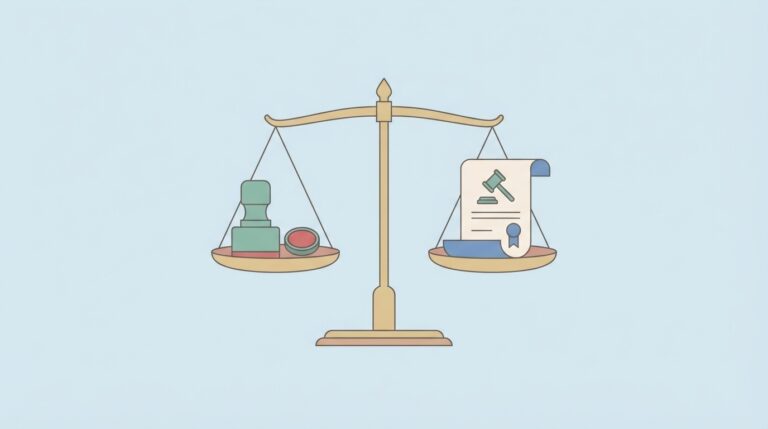
Picture this: A sleek, cold lawyer’s office in Seocho-dong. Or maybe a dimly lit high-end cafe. A white envelope is slowly slid across the table. One character looks at the other with icy disdain and says, “도장 찍어 (Stamp the paper).” If you’ve watched K-dramas like The World of the Married or Queen of Tears, you know exactly what this scene means. The battle lines are drawn.
Today, we are diving into a heavy but fascinating topic at the C1 (Advanced) level: Conflict Resolution, specifically Divorce Mediation and Asset Division (이혼 조정 및 재산 분할).
Now, I genuinely hope you never have to use these expressions in your personal life! So, why learn them? Because reaching fluency in Korean means understanding societal shifts, decoding evening news reports, and grasping the intense legal jargon thrown around in top-tier K-Dramas. Knowing the difference between ‘alimony’ and ‘asset division’ in Korean doesn’t just make you a language expert—it makes you a cultural insider who understands the shifting dynamics of the modern Korean family.
This guide is built from the real questions my advanced students ask when they stop watching rom-coms and start watching intense Korean legal thrillers. Let’s get into it.
Phase 2: Core Expressions Deep Dive
Let’s unpack the heavy hitters of Korean legal and relational conflict.
1. 위자료 (Consolation Money / Alimony for Damages)
- Pronunciation: [wijaryo] / wee-jah-ryo (‘wee’ like the game console, ‘jah’ like jar, ‘ryo’ like Rio)
- Meaning:
- Literal: Consolation money.
- Real Nuance: Financial compensation paid by the spouse who is at fault (귀책배우자) for the psychological pain caused by the divorce.
- K-Culture Moment: The classic Makjang (over-the-top soap opera) scene where a wealthy mother-in-law throws a thick envelope of cash at her son’s spouse, yelling, “위자료 넉넉히 넣었으니 내 아들한테서 떨어져!” (I put plenty of alimony in here, so stay away from my son!)
- Editor’s Insight: Do not confuse this with regular asset division. Wijaryo is specifically about “Who messed up?” (e.g., affairs, domestic violence). It’s essentially a penalty fee for ruining the marriage.
- Situation Spectrum:
- Casual with friends watching drama: ✅
- Legal context / Semi-formal: ✅
- Daily workplace small talk: 🚫 (Too heavy!)
- 🤔 Think About It: Why does Korean law strictly separate ‘compensation for mental suffering’ from ‘dividing what we earned together’? What does this say about the moral expectations placed on marriage in Korea?
2. 재산 분할 (Asset/Property Division)
- Pronunciation: [jaesan bunhal] / jae-san boon-hal
- Meaning:
- Literal: Property division.
- Real Nuance: Splitting the marital assets. In modern Korea, this is the real battlefield. It considers how much each person contributed to the wealth, including domestic labor.
- K-Culture Moment: You’ll see characters fighting bitterly over who gets the Gangnam apartment. The phrase “재산 분할 소송 갈 거야” (I’m going to take the asset division to court) is the ultimate declaration of war.
- Editor’s Insight: A few decades ago, full-time housewives had a hard time getting a fair share. Today, Korean courts heavily recognize “가사 노동” (household labor/homemaking) as a direct contribution to asset building.
- Situation Spectrum:
- Casual / Legal Context: ✅
- Formal business negotiations: ⚠️ (Can be used metaphorically for corporate splits, but usually literal)
- 🤔 Think About It: In your culture, are prenuptial agreements common? In Korea, ‘prenups’ are legally very weak, which makes jaesan bunhal during a divorce a massive, complex process.
3. 도장을 찍다 (To stamp the seal)
- Pronunciation: [dojangeul jjikda] / doh-jang-eul jjik-dah
- Meaning:
- Literal: To stamp a seal.
- Real Nuance: To finalize a divorce (or a major legal contract).
- K-Culture Moment: “내 눈에 흙이 들어가기 전엔 절대 도장 못 찍어!” (I will never stamp that paper until dirt goes into my eyes! / Over my dead body!). This is the most dramatic line you can utter in a Korean living room.
- Editor’s Insight: In Korea, official documents don’t just take signatures; they require a registered personal seal (도장). Hence, “stamping the paper” has become the ultimate metonymy for finalizing a divorce or a major breakup.
- Situation Spectrum:
- Friends (metaphorically meaning ‘we are done’): ✅
- Legal / Formal: ✅
Phase 3: Textbook vs Real Korean
How do people actually talk when things fall apart?
| Situation | 📖 Textbook Korean | 🗣️ Real Korean | 💡 Why the difference? |
|---|---|---|---|
| Initiating a breakup/divorce | 우리 이혼합시다. (Let’s divorce.) | 우리 갈라서자. / 그만하자. (Let’s split / Let’s stop.) | Koreans often use softer, indirect verbs (‘split’, ‘stop’) even in extreme situations to avoid the harshness of the legal word. |
| Asking for an agreement | 합의해 주시겠습니까? (Will you agree?) | 협의 이혼으로 끝내. (Just end it with a consensual divorce.) | ‘협의 이혼’ (uncontested divorce) saves time, money, and most importantly, public face (체면) compared to a messy lawsuit. |
| Demanding your share | 제 몫을 주세요. (Please give me my share.) | 내 몫은 확실히 챙길 거야. (I’m going to make sure I get what’s mine.) | The verb ‘챙기다’ (to pack/secure) implies actively fighting for one’s rights, showing determination. |
Bottom Note for C1 Learners: You might hear slang like “이혼각이다” (It’s the angle/trajectory for divorce), used jokingly among friends when a spouse makes a huge mistake (like buying an expensive car without asking). Use it only with very close friends!
Phase 4: Cultural Context — K-Culture Deep Dive
4-1. Non-Verbal Cues: The Art of the ‘Cold Silence’
In Korean conflict resolution, silence is a weapon. When someone says “도장 찍어” (Stamp it), they usually don’t scream it. The most terrifying K-Drama characters say it quietly, maintaining unblinking eye contact, often sliding the document across the table with one hand (which is considered rude, emphasizing the breakdown of respect). The shift from using polite Jondaetmal (존댓말) to blunt Banmal (반말) mid-argument is the verbal equivalent of a slap in the face.
4-2. The “Nunchi” of Divorce in Korea
While divorce is increasingly common, public perception still matters. Many couples opt for 조정 이혼 (Divorce by Mediation), which is done privately through the court without a messy public trial, keeping their societal image (체면) intact. You’ll often see K-Drama chaebols going through mediation behind closed doors to prevent their company’s stock prices from crashing!
Phase 5: Real-Life Roleplay Scenario
Setting: A quiet, private room in an upscale cafe near the Seoul Family Court in Seocho-dong. Your close Korean friend, Min-ji, is going through a tough divorce. As an advanced Korean speaker and a loyal friend, you are there to offer emotional support and help her review her lawyer’s notes.
Characters:
– YOU: An expat who has lived in Korea for 5 years. You know your legal terms.
– Min-ji (34): Your friend. Exhausted, holding a coffee cup with both hands.
Min-ji: 변호사 만나고 왔어. 결국 소송까지 가야 할 것 같아. 😢
(Byeonhosa mannago wasseo. Gyeolguk sosongkkaji gaya hal geot gata.)
[I just met the lawyer. It looks like we’ll have to go to a full trial after all.]
YOU: 진짜? 저쪽에서 협의 이혼은 절대 안 한대?
(Jinjja? Jeojjogeseo hyeobi ihoneun jeoldae an handae?)
[Really? They absolutely refuse an uncontested divorce?]
Min-ji: 응. 재산 분할에서 의견이 너무 달라. 자기가 번 돈이니까 다 자기 거래.
(Eung. Jaesan bunhareseo uigyeoni neomu dalla. Jagiga beon doninikka da jagi georae.)
[Yeah. We are too far apart on the asset division. He says since he earned the money, it’s all his.]
YOU: 말도 안 돼. 네가 가사 노동하면서 기여한 게 얼만데!
(Maldo an dwae. Nega gasa nodonghamyeonseo giyeohan ge eolmande!)
[That makes no sense. Think about how much you contributed through household labor!]
Min-ji: 내 말이! 게다가 바람피운 건 그쪽이잖아. 위자료도 줘야지.
(Nae mari! Gedaga barampiun geon geujjokijana. Wijaryodo jwoyaji.)
[Exactly! Plus, he’s the one who cheated. He has to pay alimony too.]
🔀 Your Turn! Decision Point: How do you support Min-ji?
- A) “그래, 법대로 해! 다 뺏어와!” (Yeah, go by the law! Take everything from him!)
- B) “조정 위원회를 먼저 거치는 건 어때? 소송은 너무 지치잖아.” (How about going through the mediation committee first? A trial is too exhausting.)
- C) “대박 사건… 나중에 밥이나 먹자.” (Crazy incident… Let’s eat later.)
✅ Best Choice: B — Reason: It shows C1-level empathy and legal/cultural knowledge. A full trial (소송) in Korea takes years and drains people. Suggesting mediation (조정) shows you truly understand the Korean legal system’s preference for mediated settlements.
⚠️ Choice C Analysis: Highly inappropriate! “대박 사건” is for celebrity gossip, not your best friend’s tragic divorce. You will lose a friend.
🎬 Bonus K-Drama Roleplay: The Confrontation
Imagine you are an actor reading a script for a weekend drama.
Mother-in-law: (Throwing an envelope) “이거 받고 내 아들이랑 갈라서!”
(Take this and split from my son!)
You (Protagonist): “어머님, 저 돈 필요 없습니다. 소송으로 정확히 재산 분할 받겠습니다.”
(Mother, I don’t need your money. I will receive an exact asset division through a lawsuit.)
Cue the dramatic ending theme song!
Phase 6: 10-Second Shadowing Drill
Master the intonation of a calm, collected negotiator. Pay attention to the pauses!
😤 위자료보다 / 재산 분할이 / 훨씬 더 / 중요합니다.
(wijaryoboda / jaesan bunhari / hwolssin deo / jung-yohamnida.)
[Asset division is much more important than alimony.]
🙄 협의 이혼으로 / 끝내는 게 / 서로에게 / 좋을 텐데요.
(hyeobi ihoneuro / kkeunnaeneun ge / seoroege / joeul tendeyo.)
[It would be best for both of us to end this with an uncontested divorce.]
Phase 7: K-Culture Mini Dictionary
| Korean | Romanization | English | Context |
|---|---|---|---|
| 귀책사유 | gwichaeksayu | Grounds for fault | The legal term for ‘who is to blame’ for the marriage’s failure. Crucial for alimony. |
| 협의 이혼 | hyeobi ihon | Consensual divorce | Both parties agree on all terms. Quickest way to divorce in Korea. |
| 조정 이혼 | jojeong ihon | Divorce by mediation | Settling with the help of a court-appointed mediator. Preferred by celebrities to avoid public trials. |
| 양육권 | yangyukgwon | Child custody | The legal right to raise the child. |
| 면접교섭권 | myeonjeopgyoseopgwon | Visitation rights | The non-custodial parent’s right to see their child. |
Phase 8: Traveler & Expat Survival Kit
Even if you aren’t getting divorced, you might find yourself needing legal or formal conflict resolution help while living or traveling in Korea (e.g., a landlord dispute, a contract issue).
🆘 Survival Expressions TOP 3 (Formal Conflict)
– 🇰🇷 “영어가 가능한 변호사/직원 분이 계신가요?” (Yeong-eoga ganeunghan byeonhosa/jigwon buni gyesingayo?)
– Is there an English-speaking lawyer/staff member?
– 🇰🇷 “이 부분, 서면으로 남겨주실 수 있나요?” (I bubun, seomyeoneuro namgyeojusil su innayo?)
– Can you leave this part in writing? (Crucial for evidence!)
– 🇰🇷 “합의점을 찾아보시죠.” (Habuijeomeul chajabosijyo.)
– Let’s try to find a point of agreement / middle ground.📌 Editor’s Note: Navigating Legal Korea
– The Legal Hub: If you need a lawyer in Seoul, head to Seocho-dong (서초동) near Seocho Station or Kyodae (Seoul Nat’l Univ. of Education) Station. It’s packed with law firms.
– Recording Laws: In Korea, it is generally legal to secretly record a conversation as long as you are a participant in that conversation. This is why voice recordings are heavily used in Korean mediations and dramas!
Phase 9: Critical Thinking — “A Step Deeper”
🫠 Think Deeper: Media vs Reality (미디어와 현실)
If you watch Korean dramas, you might think divorce mediation involves throwing water in someone’s face at a cafe or tearing up documents. In reality, the Korean family court system places a massive emphasis on mediation (조정 위원회) rather than litigation. The system is designed to force couples to sit down with mediators (often older, respected community members or psychological experts) to find a compromise before allowing a trial. It reflects traditional Korean values that prioritize harmony, compromise, and quiet resolution over aggressive, public legal battles.💬 Your Turn: How does your country handle divorce or major mediations? Is the system designed to encourage fighting, or is it designed to force a compromise? Let us know in the comments!
Phase 10: FAQ & Avoiding Common Mistakes
Q: If I hear a friend got divorced, can I ask “왜 이혼했어?” (Why did you get divorced?)
– Absolutely NO. Even among close friends, probing into the reasons (귀책사유) is considered incredibly rude and intrusive. Wait until they bring it up themselves. A better response is simply “많이 힘들었겠다” (You must have had a really hard time).
Q: Are “위자료” and “재산 분할” used interchangeably?
– No. This is the biggest mistake even advanced learners make. Wijaryo is a penalty for emotional damage (e.g., affairs). Jaesan Bunhal is dividing the shared bank accounts and real estate. You can receive zero Wijaryo but still get 50% Jaesan Bunhal.
❌ Common Mistake: Using ‘싸우다’ (to fight) for legal battles.
✅ Do This Instead: Use ‘소송하다’ (to sue/litigate) or ‘분쟁’ (dispute). E.g., “재산 분할로 소송 중이야” (We are in the middle of a lawsuit over asset division).
Phase 11: Summary & Action Items
💡 One-Liner Summary: True fluency means understanding the heavy stuff: knowing that ‘위자료’ (alimony) punishes fault, while ‘재산 분할’ (asset division) splits the life built together.
🎯 Action Mission 3 Steps:
– 🥉 Bronze: Say “도장 찍어” in the mirror with your best dramatic, cold K-Drama villain face.
– 🥈 Silver: Write a 3-sentence review of a Korean legal drama you’ve watched, using the words 위자료 and 재산 분할 in a Korean study community.
– 🥇 Gold: Try explaining the difference between uncontested divorce (협의 이혼) and a lawsuit (소송) in Korean to your language exchange partner.
🎬 K-Culture Mission: Watch an episode of a Korean legal drama (like Extraordinary Attorney Woo or Divorce Attorney Shin). Turn on the Korean subtitles and pause every time you see a scene in a mediation room (조정실). Can you spot any of today’s vocabulary?
Phase 12: Interactive Challenge (Quiz)
1. Situational Judgment: Your favorite K-pop idol group is unfortunately disbanding, and the members are fighting the company over the division of the money they earned together. What is the correct legal term for dividing this money?
– A) 위자료
– B) 재산 분할
– C) 양육권
Hint: Which one deals with earned assets vs. psychological damages?
2. True or False – K-Culture Edition:
In Korea, you finalize a major legal agreement or a divorce by simply signing your name with a pen. (T/F)
3. Fill in the blank:
“법정까지 가지 말고, ______ 이혼으로 조용히 끝내자.”
(Let’s not go to court, let’s end this quietly with a _______ divorce.)
👉 Click here for Answers!
1. B (재산 분할). A is for psychological damages, and C is child custody.
2. False. While signatures are becoming more common, traditionally and formally, you must use a registered personal seal (도장).
3. 협의 (Hyeobi) – Consensual/uncontested.
Frequently Asked Questions (FAQ)
Q: What does "위자료 (Consolation Money / Alimony for Damages)" mean in Korean and how do you pronounce it?
A: In Korean, "위자료 (Consolation Money / Alimony for Damages)" is pronounced [wijaryo] and means: Literal: Consolation money.
Q: What does "재산 분할 (Asset/Property Division)" mean in Korean and how do you pronounce it?
A: In Korean, "재산 분할 (Asset/Property Division)" is pronounced [jaesan bunhal] and means: Literal: Property division.
Q: What does "도장을 찍다 (To stamp the seal)" mean in Korean and how do you pronounce it?
A: In Korean, "도장을 찍다 (To stamp the seal)" is pronounced [dojangeul jjikda] and means: Literal: To stamp a seal.







