

Phase 1: Empathy (The “I Got The Tickets!” Moment)
Hello! This is your Daily Hangul Editor.
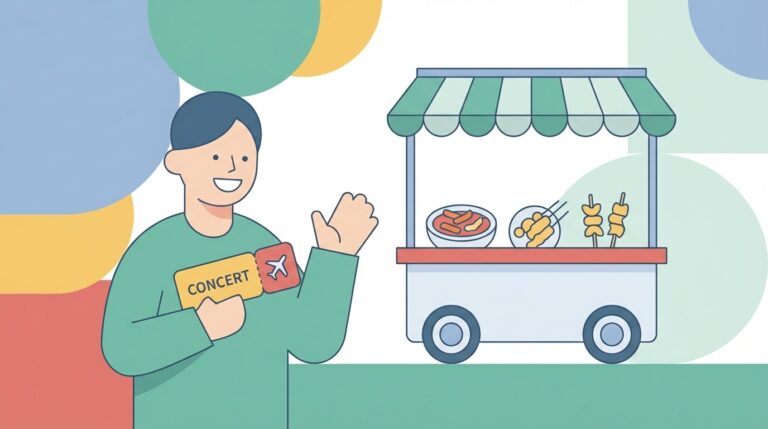
Picture this: You are sitting in a cozy café in Seoul, aggressively tapping the refresh button on your phone. Suddenly, the screen loads. You did it. You just secured front-row VIP tickets to your favorite K-Pop idol’s sold-out concert. Your heart is pounding, you want to scream, and you turn to your Korean friend sitting next to you to say, “I’m so excited!”
You quickly type “excited” into your translation app, read the first result out loud, and suddenly… your friend’s eyes go wide with shock.
Why? Because the dictionary often translates “excited” into a word that actually means medically agitated or sexually aroused in Korean! Yikes!
Expressing your true feelings in a new language is tough, but it’s also where the magic happens. As a tutor who has seen countless students accidentally make their language partners blush, I’m here to save you from that awkwardness. Today, we are going to learn how to express genuine, heart-fluttering excitement the real Korean way. Let’s dive in!
Phase 2: Core Expressions Deep Dive
Let’s look at the top 3 expressions you actually need.
1. 너무 신나요! (I am so excited!)
- Pronunciation: neomu sin-na-yo! (Sounds like: no-moo sheen-nah-yo! The ‘신’ sounds like the English word ‘sheen’.)
- Meaning: Literal: Excitement comes out. / Real nuance: I’m so excited/thrilled!
- K-Culture Moment: You will hear this in almost every Korean variety show when the cast finds out they are going on a trip or eating premium Hanwoo (Korean beef).
- Editor’s Insight: This is the safest, most natural way to say “I’m excited” in a joyful, upbeat way. It feels like a child on Christmas morning.
- Situation Spectrum:
- Friends (Casual): ✅ (Drop the ‘요’ -> 너무 신나!)
- Co-workers (Semi-formal): ✅
- Boss/Elders (Formal): ⚠️ (It’s okay, but might sound a bit too playful for very strict business settings.)
- 🤔 Think About It: In Korean, the base verb ‘신나다’ literally translates to “excitement comes out/arises.” Why do you think Koreans describe emotions as things that “happen to” them rather than something they “are”?
2. 완전 기대돼요! (I’m really looking forward to it!)
- Pronunciation: wanjeon gi-dae-dwae-yo! (Sounds like: wahn-jeon gee-day-dway-yo!)
- Meaning: Literal: It is completely expected. / Real nuance: I can’t wait / I’m looking forward to it.
- K-Culture Moment: When a K-Drama ends on a massive cliffhanger, netizens flood the comments with “다음 주 완전 기대돼요!” (I’m so excited for next week!).
- Editor’s Insight: English speakers use “I’m excited” for future events. Koreans prefer to say “I’m looking forward to it” (기대돼요) when talking about something that hasn’t happened yet.
- Situation Spectrum:
- Friends (Casual): ✅
- Co-workers (Semi-formal): ✅
- Boss/Elders (Formal): ✅ (Use ‘기대됩니다’ for highly formal situations)
- 🤔 Think About It: This passive structure (“It is expected”) takes the focus off the speaker (‘I’) and puts it on the event itself. How does this reflect the Korean cultural preference for indirectness?
3. 대박! (Awesome! / Jackpot!)
- Pronunciation: dae-bak (Sounds like: day-bahk)
- Meaning: Literal: Big gourd (from an old folktale). / Real nuance: Wow! / Crazy! / So exciting!
- K-Culture Moment: Walking into an amazing hotel room in Jeju Island, or seeing your bias at a fan sign event.
- Editor’s Insight: This isn’t a verb, but it is the ultimate expression of hype. If you are excited and words fail you, just say “대박!”
- Situation Spectrum:
- Friends (Casual): ✅
- Co-workers (Semi-formal): ⚠️
- Boss/Elders (Formal): 🚫 (Way too casual!)
- 🤔 Think About It: Slang words like ‘대박’ change the entire energy of a room. Do you have a similar slang word in your language that instantly shows you are hyped?
Phase 3: Textbook vs. Real Korean
| Situation | 📖 Textbook Korean | 🗣️ Real Korean | 💡 Why is it different? |
|---|---|---|---|
| Anticipating a trip | 저는 여행이 매우 기대됩니다. | 아, 빨리 가고 싶어요! (Ah, I want to go quickly!) | Koreans love the “빨리 빨리” (hurry hurry) culture. Saying you want to do it “quickly” shows true excitement! |
| Reacting to good news | 저는 정말 기쁩니다. | 대박! 완전 신나요! (Jackpot! Totally excited!) | “기쁩니다” sounds like a robot or a politician giving a speech. Real life requires more emotion! |
| Waiting for food | 음식이 곧 나올 것입니다. | 와, 치킨 왔다! 신난다! (Wow, the chicken is here! Yay!) | Dropping formal endings when talking to yourself (or reacting out loud) is very common in Korea. |
Phase 4: Cultural Context — K-Culture Deep Dive
4-1. Non-Verbal Clues: The “Sol” Pitch
When Koreans get excited, it’s not just about the words. The pitch of the voice goes up significantly! We call this the “솔(Sol) 톤” (from the Do-Re-Mi scale). If you say “너무 신나요” in a low, flat voice, people might think you are being sarcastic. Also, small claps while laughing or covering your mouth are very common non-verbal signs of excitement.
4-2. The K-Pop Fandom Connection: “Tension”
In K-Pop culture and Korean broadcast media, you’ll often hear the English word “Tension” (텐션). But it doesn’t mean stress! In Konglish (Korean-English), “Tension” means energy or excitement levels.
– When an idol is super hyper and excited on a V-Live, fans will say: “오늘 텐션 최고다!” (Your tension is the best today! / You are so energetic today!).
– If you want to sound like a true K-Pop insider, use “텐션” to describe the vibe of a fun, exciting situation.
Phase 5: Interactive Roleplay Scenario
Scenario A: The Jeju Island Trip
Setting: Friday afternoon at a trendy café in Hongdae. You and your Korean friend, Minji, have been trying to book cheap flights to Jeju Island for the long weekend.
Characters:
– YOU: A foreign student excited for your first trip to Jeju.
– Minji (25): Your energetic Korean friend.
Minji: 야, 나 방금 비행기 표 예매했어! ✈️
(Ya, na banggeum bihaenggi pyo yemaehaesseo!)
[Hey, I just booked the flight tickets!]
(Stage Direction: Minji excitedly waves her phone in your face)
You: 정말? 우리 진짜 제주도 가는 거야?
(Jeongmal? Uri jinjja jejudo ganeun geoya?)
[Really? Are we actually going to Jeju Island?]
Minji: 어! 호텔도 바다 앞이야. 어때?
(Eo! Hotel-do bada apiya. Eottae?)
[Yeah! The hotel is right in front of the ocean too. What do you think?]
🔀 YOUR TURN! How do you reply?
– A) 저는 매우 기쁩니다. (Jeoneun maeu gippeumnida.)
– B) 대박! 완전 기대돼! (Daebak! Wanjeon gidaedwae!)
– C) 수고하셨습니다. (Sugohasyeotseumnida.)✅ Best Choice: B — You are close friends, so dropping the ‘요’ to say “기대돼” perfectly captures your hype.
⚠️ Choice A Analysis: Too robotic! Minji might think you aren’t actually happy.
⚠️ Choice C Analysis: “Good job / Thank you for your effort.” While polite, it sounds like you are her boss, not her travel buddy!
Scenario B: Bonus K-Food Roleplay
Setting: Your apartment, 10 PM. You ordered Korean fried chicken 40 minutes ago.
Delivery Driver: (Rings doorbell) 배달 왔습니다~ (Baedal watseumnida ~) [Delivery is here~]
You: (Taking the box) 감사합니다!
You (to your roommate): 와, 치킨 냄새 대박! 진짜 신난다! 빨리 먹자!
(Wa, chikin naemsae daebak! Jinjja sinnanda! Ppal-li meokja!)
[Wow, the chicken smells awesome! I’m so excited! Let’s eat quickly!]
Phase 6: 10-Second Shadowing Drill
Practice speaking like a native! Follow the pauses (/) and the emotion tags.
- 😊 Bright & Happy: 와! / 진짜 / 너무 신나요!
(Wa! / jinjja / neomu sin-na-yo!) -
🤩 Hyped up: 다음 주 / 콘서트 / 완전 기대돼요!
(Daeum ju / konseoteu / wanjeon gi-dae-dwae-yo!) -
😱 Disbelief & Joy: 대박… / 진짜 가는 거예요?
(Dae-bak… / jinjja ganeun geo-ye-yo?)
Phase 7: K-Culture Mini Dictionary
| Korean | Romanization | English | Context |
|---|---|---|---|
| 불금 | bulgeum | Fire Friday | TGIF! The excitement of Friday night. Usually involves drinks and good food. |
| 티켓팅 | tiketting | Ticketing | The intense, competitive process of buying concert tickets online. Very stressful, but exciting when you win! |
| 텐션 | tensyeon | Tension (Energy) | Used to describe someone’s energy level. “텐션 높다” means having high, excited energy. |
| 치맥 | chimaek | Chicken & Beer | The ultimate exciting combo of Korean Fried Chicken (치킨) and Beer (맥주). |
Phase 8: Traveler Survival Kit
Are you traveling to Korea soon? Excitement is a huge part of travel! Here are your survival phrases when you see something amazing.
🆘 Survival Phrase #1: “우와, 여기 진짜 예뻐요!”
– 🗣️ Pronunciation: U-wa, yeogi jinjja yeppeoyo!
– 🇬🇧 Meaning: Wow, it’s really pretty here!
– 📍 Where to use: At Gyeongbokgung Palace, N Seoul Tower, or a cute aesthetic café.🆘 Survival Phrase #2: “이거 대박 맛있어요!”
– 🗣️ Pronunciation: Igeo daebak masisseoyo!
– 🇬🇧 Meaning: This is amazingly delicious!
– 📍 Where to use: Gwangjang Market, Korean BBQ restaurants. The owner (이모님) will love you!📌 Editor’s Travel Note:
– Volume Control: While it’s great to be excited, remember that talking loudly on Korean subways or buses is considered rude. Save your loud “대박!” for the streets, concerts, and restaurants!
– Expressing Joy to Strangers: If a kind local helps you find your way, a bright “너무 감사합니다!” (Thank you so much!) with a big smile is the best way to show your happy appreciation.
Phase 9: Critical Thinking — “One Step Deeper”
Media vs. Reality: Are Koreans Always This Hyped?
If you watch K-Dramas or K-Pop reality shows, you might think Koreans are always screaming “대박!” and clapping loudly when something good happens. However, in reality, Korean society values Nunchi (눈치) — the ability to read the room. In professional settings, showing too much raw emotion (even positive ones) can be seen as immature. Therefore, Koreans often have “two modes”: a calm, composed face for work, and an explosive, high-energy “텐션” for Friday nights with friends.
🧠 Think Deeper:
How does this compare to your culture? Is it acceptable to jump up and down with excitement at your workplace, or do people keep it professional like in Korea?💬 Your Turn: Share your thoughts in the comments! How do people express extreme joy in your country?
Phase 10: FAQ & Avoiding Misunderstandings
Q: Can I say “신나요” to my boss?
Maybe. It depends on your relationship. If your boss treats the team to a nice lunch, saying “신납니다!” (formal version) with a smile is perfectly fine. But during a serious meeting, keep it professional.
Q: Can I use “대박” on social media?
Yes! It’s the perfect word for Instagram comments or replying to a friend’s story.
❌ CRITICAL MISTAKE #1: Translating “Excited” to “흥분하다”
If you type “I am excited” into a dictionary, you might get “저는 흥분했어요” (Jeoneun heungbunhaesseoyo).
DO NOT USE THIS! 😨
In everyday Korean, “흥분하다” implies being physically agitated, uncontrollably angry, or sexually aroused. If you tell your Korean friend “I’m heungbunhaesseo” before a K-Pop concert, they will be very confused and concerned! Always stick to “신나요” or “기대돼요” for pure joy.
Phase 11: Summary & Action Items
One-Liner Summary: Never say “흥분하다” when you’re happy—use “너무 신나요!” for present excitement and “완전 기대돼요!” for things you can’t wait for!
🚀 Your Action Missions:
– 🥉 Bronze (Solo): Say “아, 진짜 신나요!” out loud 3 times with the highest pitch you can manage.
– 🥈 Silver (Online): Find a post about your favorite K-Pop group’s comeback or a K-Drama trailer and comment: “완전 기대돼요!”
– 🥇 Gold (Real Life): Next time you meet your language exchange partner or Korean friend, tell them how excited you are to see them using today’s phrases!
🎬 K-Culture Mission:
Watch one episode of a Korean variety show (like Running Man or Going Seventeen). I guarantee you will hear “신난다” or “대박” within the first 15 minutes. Try to catch it!
Phase 12: Quiz — Interactive Challenge
Test your knowledge before you go out into the wild!
1. You just found out your favorite Korean restaurant is opening a branch in your city next month. What is the most natural thing to say?
A) 저는 흥분했습니다.
B) 완전 기대돼요!
C) 너무 예뻐요.
2. True or False: If you get a promotion at work, you should scream “대박!” and high-five your CEO.
True / False
3. Fill in the blank:
Friend: “I bought us tickets to Jeju Island!”
You: “____! 진짜 신난다!”
(Answers: 1. B – You are looking forward to a future event. Never choose A! / 2. False – Keep it professional with elders/bosses. / 3. 대박 – Daebak!)
Frequently Asked Questions (FAQ)
Q: What does "너무 신나요! (I am so excited!)" mean in Korean and how do you pronounce it?
A: In Korean, "너무 신나요! (I am so excited!)" is pronounced [neomu sin-na-yo! (Sounds like: no-moo sheen-nah-yo! The '신' sounds like the English word 'sheen'.] and means: Literal: Excitement comes out. / Real nuance: I'm so excited/thrilled!
Q: What does "완전 기대돼요! (I'm really looking forward to it!)" mean in Korean and how do you pronounce it?
A: In Korean, "완전 기대돼요! (I'm really looking forward to it!)" is pronounced [wanjeon gi-dae-dwae-yo! (Sounds like: wahn-jeon gee-day-dway-yo!] and means: Literal: It is completely expected. / Real nuance: I can't wait / I'm looking forward to it.
Q: What does "대박! (Awesome! / Jackpot!)" mean in Korean and how do you pronounce it?
A: In Korean, "대박! (Awesome! / Jackpot!)" is pronounced [dae-bak (Sounds like: day-bahk] and means: Literal: Big gourd (from an old folktale). / Real nuance: Wow! / Crazy! / So exciting!







