

Mastering Eco-Friendly Korean: Navigating Zero-Waste Culture Like a Local 🌿
Hello, fellow language learners! I’m the Lead Editor at Daily Hangul, your personal guide to not just speaking Korean, but living it.
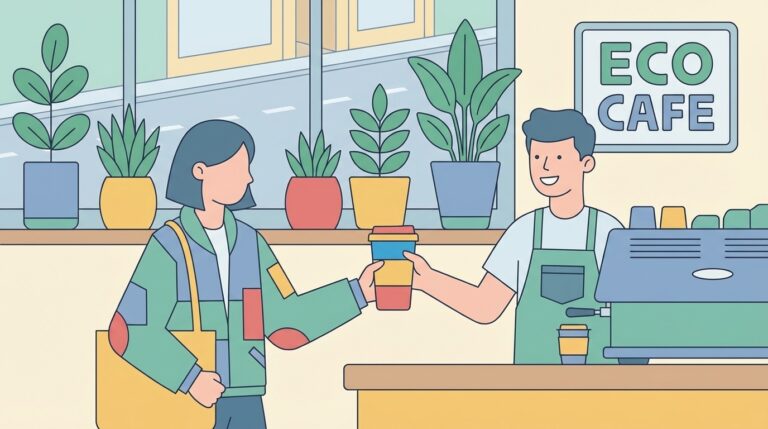
Imagine this: You’re in Seongsu-dong, Seoul’s Brooklyn, waiting in line at a trendy minimalist cafe. You order an Iced Americano, but instead of the usual plastic cup, the barista slides a reusable mug toward you. Or perhaps you’re unboxing the latest album from your favorite K-Pop group, and you realize it’s made entirely of biodegradable soy ink and recycled paper.
Welcome to modern Korea! The eco-friendly (친환경) and zero-waste (제로웨이스트) movements are completely reshaping K-Culture, from cafe regulations to K-Pop merchandise and food delivery apps.
If you’re at a C1 level, you already know how to order coffee. But do you know the witty, culturally nuanced phrases to refuse plastic, ask for a digital receipt, or participate in Korea’s intense recycling culture without causing a scene? Let’s dive into the authentic expressions that will make Koreans think, “Wow, this person really gets our culture.”
Phase 2: Core Expressions — Beyond the Dictionary
Let’s look at the top three expressions you need for eco-friendly consumption, packed with advanced nuances.
1. 일회용 수저는 빼주세요 / 안 주셔도 돼요.
- Pronunciation: ilhoeyong sujeoneun ppaejuseyo / an jusyeodo dwaeyo.
- Meaning: (Literal) Please remove the disposable cutlery / It is okay even if you don’t give it to me. (Real nuance) I’m going green; skip the plastic spoons and forks.
- K-Culture Moment: You’re ordering Tteokbokki on the Baedal Minjok (Baemin) delivery app. At checkout, there’s a tiny checkbox that defaults to skipping single-use plastics. If you’re ordering by phone or talking to a restaurant owner, this is exactly what you say.
- Editor’s Insight: Using
-도 돼요(it is okay even if you…) is a cornerstone of advanced Korean politeness. Instead of a direct command like “Don’t give it to me,” you’re softening the request by saying, “You are freed from the obligation of giving it to me.” It’s considerate and natural.- Situation Spectrum:
- Casual (Friends): ✅ (When ordering together)
- Semi-formal (Clerks/Staff): ✅
- Formal (Boss/Elders): ✅
- 🤔 Think About It: Why do Koreans prefer saying “You don’t have to give it to me” over “I don’t want it”? It reflects the culture of Kibun (기분 – mood/feelings)—preserving the listener’s feelings by making it sound like you’re doing them a favor by saving their resources!
2. 영수증은 모바일로 받을게요.
- Pronunciation: yeongsujeungeun mobaillo badeulgeyo.
- Meaning: (Literal) I will receive the receipt via mobile. (Real nuance) Please send an e-receipt, no paper needed.
- K-Culture Moment: You’re paying for groceries at Emart or Olive Young. The cashier rings you up. Before the machine starts printing miles of paper, you hit them with this smooth phrase.
- Editor’s Insight: Notice the use of the particle
-로(by means of). While beginners just say “영수증 버려주세요” (Please throw away the receipt), stating how you want it (via mobile app) shows you are fully integrated into Korea’s digital ecosystem.- Situation Spectrum:
- Casual: 🚫 (You don’t say this to friends)
- Semi-formal: ✅ (Perfect for cashiers)
- Formal: ⚠️
- 🤔 Think About It: Korea is heavily pushing for paperless transactions. Did you know that many Korean retail apps automatically link to your credit card to issue digital receipts?
3. 용기 내서 포장할게요.
- Pronunciation: yonggi naeseo pojanghalgeyo.
- Meaning: (Literal) I will pack it by being brave. (Real nuance) I brought my own container to pack the food.
- K-Culture Moment: This is a brilliant C1-level pun! The word 용기 (yong-gi) means both “courage” and “container.” The “용기내 챌린지” (Courage/Container Challenge) is a massive trend on Korean Instagram where people bring their own Tupperware to traditional markets or restaurants to avoid plastic waste.
- Editor’s Insight: If you use this pun with a young cafe owner or a zero-waste shop clerk, expect a big smile. It shows a deep mastery of Korean homonyms and current social media trends.
- Situation Spectrum:
- Casual: ✅
- Semi-formal: ✅ (Great for trendy spots)
- Formal: ⚠️ (Might be too playful for a highly formal business setting)
- 🤔 Think About It: Puns are a huge part of Korean marketing and slang. Can you think of any words in your native language that have a double meaning useful for social campaigns?
Phase 3: Textbook vs. Real Korean
Are you still sounding like a 1990s textbook? Let’s upgrade your vocabulary to 2024 Seoul standards.
| Situation | 📖 Textbook Korean | 🗣️ Real Korean | 💡 Why is it different? |
|---|---|---|---|
| Buying groceries | 비닐봉투 주시겠어요? (Could you give me a plastic bag?) | 종량제 봉투 하나 주세요. (Give me one standard garbage bag.) | Supermarkets legally can’t give free plastic bags. Locals buy the official city garbage bag (종량제) to carry groceries, then reuse it for trash! |
| Refusing items | 빨대 안 필요해요. (I don’t need a straw.) | 빨대는 빼주세요. (Please leave the straw out.) | Using ‘빼다’ (to remove/exclude) sounds much more native than translating “I don’t need.” |
| Coffee to-go | 포장해 주세요. (Please pack it.) | 텀블러에 담아주세요. (Please put it in my tumbler.) | Cafes offer discounts for tumblers. Be specific! |
Bottom Note: At the C1 level, precision is key. Use specific terms like 텀블러 (tumbler), 다회용기 (reusable container), or 장바구니 (reusable shopping bag) instead of generic words.
Phase 4: Cultural Context — K-Culture Deep Dive
4-1. The Non-Verbal ‘Nunchi’ of Korean Cafes
If you order a drink in a disposable cup and then sit down at a table in a Korean cafe, you’ll immediately feel the intense Nunchi (눈치) from the staff. Why? It’s currently illegal for cafes in Korea to allow dine-in customers to use single-use plastics. If caught by an inspector, the cafe gets hit with a massive fine. The non-verbal rule here: If you’re holding plastic, stay near the door or walk out. If you change your mind and want to sit, you must ask the staff to transfer your drink to a glass mug (머그잔에 옮겨 주시겠어요?).
4-2. K-Food Delivery Guilt & The Plastic Dilemma
Korean food culture is all about sharing and abundance, best represented by the endless array of banchan (side dishes). But when you order K-Food on a delivery app, every single garlic clove, kimchi slice, and dipping sauce comes in its own little plastic container. The guilt of throwing away 15 plastic tubs after eating a simple meal has sparked a massive eco-backlash among young Koreans. This is why checking the 일회용 수저 안 받기 (Don’t receive disposable cutlery) box is considered the bare minimum of eco-etiquette.
Phase 5: Real-world Roleplay Scenario
Setting: It’s 12:30 PM on a Wednesday. You and your Korean coworker, Min-su, are swamped with work, so you decide to order lunch to the office via the Baemin app.
Characters:
– YOU: A foreign professional working in Seoul, highly aware of environmental issues.
– Min-su (30): Your friendly but slightly rushed coworker who loves convenience.
Dialogue:
Min-su: 오늘 점심은 그냥 배달시킬까요? 제가 앱으로 주문할게요. 마라탕 어때요?
(oneul jeomsimeun geunyang baedalsikkilkkayo? jaega aebeuro jumunhalgeyo. maratang eottaeyo?)
[Shall we just order delivery for lunch today? I’ll order on the app. How about Malatang?]
YOU: 좋아요! 아, 민수 씨, 주문할 때 일회용 수저는 빼달라고 체크해 주시겠어요?
(joayo! a, minsu ssi, jumunhal ttae ilhoeyong sujeoneun ppaedallago chekeuhae jusigesseoyo?)
[Sounds good! Ah, Min-su, when you order, could you check the box to leave out the disposable cutlery?]
(🎭 Stage Direction: Min-su pauses, looking around your messy desks)
Min-su: 어? 사무실에 우리 쓸 숟가락이랑 젓가락이 없지 않아요? 그냥 받는 게 편할 텐데…
(eo? samusire uri sseul sutgaragirang jeotgaragi eopji anayo? geunyang banneun ge pyeonhal tende…)
[Huh? Don’t we not have spoons and chopsticks to use in the office? It would be easier to just get them…]
🔀 Your Turn! How do you respond?
– A) 아, 그런가요? 그럼 그냥 받죠 뭐. (Oh, is that so? Then let’s just get them.)
– B) 제가 집에서 다회용기랑 수저 세트 챙겨왔어요! 제 거 쓰시면 돼요. (I brought reusable containers and a cutlery set from home! You can use mine.)
– C) 플라스틱 쓰레기 나오면 지구가 아파요! 손으로 먹읍시다! (If we make plastic waste, the Earth hurts! Let’s eat with our hands!)✅ Best Choice: B — It offers a practical solution while politely maintaining your eco-friendly stance without sounding preachy.
⚠️ Choice A Analysis: Safe, but you lose your eco-warrior points!
⚠️ Choice C Analysis: A funny joke, but definitely too extreme for an office environment. Malatang with bare hands is a disaster waiting to happen!
Phase 6: 10-Second Shadowing Drill
Practice this until it flows out of your mouth naturally. Pay attention to the pauses (/) and intonation!
😊 아, / 영수증은 괜찮고요, / 텀블러에 담아주시겠어요?
(A, / yeongsujeungeun gwaenchangoyo, / teombeulleoe damajusigesseoyo?)
[Ah, / I’m fine without the receipt, / and could you put it in my tumbler?]
Tip: Keep your tone light and friendly (😊). The slight pause after ‘아’ makes you sound like a native speaker who is naturally recalling what to say.
Phase 7: K-Culture Mini Dictionary
Boost your vocabulary with these trending eco-keywords:
| Korean | Romanization | English | Cultural Context |
|---|---|---|---|
| 분리수거 | bunrisugeo | Waste sorting/Recycling | Korea has one of the strictest recycling systems in the world. You must separate paper, plastics, vinyl, and food waste! |
| 종량제 봉투 | jongnyangje bongtu | Standardized garbage bag | You cannot throw regular trash in a random plastic bag. You must buy these specific city-mandated bags at convenience stores. |
| 다회용기 | dahoeyonggi | Reusable container | The formal term for Tupperware or reusable cups, heavily used in news and zero-waste campaigns. |
| 플로깅 | peulloging | Plogging | Picking up trash while jogging. A massive trend among young health-conscious Koreans on Instagram (#플로깅). |
Phase 8: Traveler’s Survival Kit
Navigating Korean cafes and stores as a traveler? These phrases will save you from awkward interactions at the register.
🆘 Survival Phrases for Eco-Conscious Travelers
– 🇰🇷 “매장에서 먹고 갈게요.” (maejangeseo meokgo galgeyo) – “I will eat/drink here in the store.” (Use this to avoid getting an illegal plastic cup).
– 🇰🇷 “테이크아웃 할게요 / 가져갈게요.” (teikeuaut halgeyo / gajyeogalgeyo) – “I will take it to go.”
– 🇰🇷 “봉투는 필요 없어요.” (bongtuneun piryo eopseoyo) – “I don’t need a bag.”📌 Editor’s Travel Note: The “Trash Bin” Mystery
You will quickly notice something shocking in Seoul: There are almost no public trash cans on the streets. Why? Because of the strict Jongnyangje (pay-as-you-throw) system, people used to dump household trash in public bins. Now, you are expected to carry your trash with you until you find a designated recycling station, or take it back to your hotel. Don’t leave your empty coffee cup on a random ledge!
Phase 9: Critical Thinking — “One Step Deeper”
🧠 Think Deeper: Food & Identity vs. Environmental Crisis
The core of Korean culinary identity is “Jeong” (정 – warmth/affection), which is traditionally expressed through food. A table overflowing with various banchan (side dishes) is a symbol of hospitality. However, in the modern era of food delivery apps, this beautiful tradition has collided with the environmental crisis. A single order of Bossam (pork wraps) can result in over a dozen plastic containers for the meat, lettuce, garlic, ssamjang, kimchi, and soup.
This creates a unique cultural dilemma for Koreans: How do we preserve our generous food culture without drowning the peninsula in plastic? The rise of reusable container delivery services (where you leave the dishes outside your door for pickup, just like the old days of Chinese delivery!) is a fascinating modern solution to a cultural problem.
💬 Your Turn: How does your culture balance convenience, traditional food values, and environmental protection? Share your thoughts in the comments!
Phase 10: FAQ & Mistake Prevention
Q: “Can I use 반말 (informal language) if I’m trying to be friendly with a young cafe barista?”
No! Unless you are close friends, always use 존댓말 (formal language), even if they look younger than you. Using the polite -주세요 or -시겠어요? is mandatory for customer-staff interactions.
Q: “If I forget my reusable bag at the supermarket, can I just ask for a plastic bag?”
Large supermarkets (E-mart, Lotte Mart, Homeplus) do not legally sell single-use plastic bags anymore. You must buy a paper bag, a reusable fabric bag, or a standard city garbage bag (종량제 봉투) at the checkout.
❌ Common Mistake #1: Throwing food scraps into the regular trash.
✅ How to fix it: Eum-sseu (음식물 쓰레기 – Food waste) is strictly separated in Korea and processed into animal feed or fertilizer. Putting it in regular trash can result in a massive fine. If you’re staying at an Airbnb, ask the host where the yellow food waste bin is!
Phase 11: Summary & Action Items
One-Liner Summary: To navigate Korea’s eco-friendly trends, master the art of politely refusing plastics (빼주세요), utilizing digital alternatives (모바일 영수증), and understanding the strict recycling rules.
Your Action Mission:
– 🥉 Bronze (Solo): Stand in front of a mirror and practice the “용기 내서 포장할게요” pun with a confident smile.
– 🥈 Silver (Online): Search the hashtag #다회용기 or #제로웨이스트 on Instagram and leave a supportive comment in Korean on a post.
– 🥇 Gold (Real World): Visit a Korean cafe, hand them your tumbler, and say: “일회용 컵 대신 여기에 담아주세요!” (Please put it in here instead of a disposable cup!)
🎯 K-Culture Mission: Next time you order Korean food delivery (or watch someone do it on a vlog), spot how many side dishes come in separate containers, and practice saying “일회용 수저는 안 주셔도 돼요” out loud.
Phase 12: Quiz — Interactive Challenge
1. Situational Judgment: You are at an Olive Young store. The cashier asks, “봉투 50원인데 드릴까요?” (Bags are 50 won, shall I give you one?). You have your own tote bag. What is the most natural C1 response?
a) 비닐봉투 안 좋아해요. (I don’t like plastic bags.)
b) 아니요, 가방에 넣을게요. 영수증은 모바일로 주세요. (No, I’ll put it in my bag. Please give me the receipt on mobile.)
c) 봉투 버려주세요. (Throw the bag away.)
2. Fill in the Blank: To politely tell the delivery app you don’t need plastic forks, you write: “일회용 수저는 안 [ ] 돼요.”
3. True or False – K-Culture Edition: If you buy an Iced Americano in a plastic take-out cup, you are legally allowed to sit in the cafe for 10 minutes to rest.
(Answers: 1: b, 2: 주셔도, 3: False – If you have a single-use cup, you cannot sit in the cafe at all!)
Did you learn something new today? Let me know in the comments if you plan to bring your ‘텀블러’ on your next trip to Seoul!
Frequently Asked Questions (FAQ)
Q: What does "일회용 수저는 빼주세요 / 안 주셔도 돼요." mean in Korean and how do you pronounce it?
A: In Korean, "일회용 수저는 빼주세요 / 안 주셔도 돼요." is pronounced [ilhoeyong sujeoneun ppaejuseyo / an jusyeodo dwaeyo.] and means: (Literal) Please remove the disposable cutlery / It is okay even if you don't give it to me. (Real nuance) I'm going green; skip the plastic spoons and forks.
Q: What does "영수증은 모바일로 받을게요." mean in Korean and how do you pronounce it?
A: In Korean, "영수증은 모바일로 받을게요." is pronounced [yeongsujeungeun mobaillo badeulgeyo.] and means: (Literal) I will receive the receipt via mobile. (Real nuance) Please send an e-receipt, no paper needed.
Q: What does "용기 내서 포장할게요." mean in Korean and how do you pronounce it?
A: In Korean, "용기 내서 포장할게요." is pronounced [yonggi naeseo pojanghalgeyo.] and means: (Literal) I will pack it by being brave. (Real nuance) I brought my own container to pack the food.







