

Jeju Car Rental Prices Going Crazy? How to Outsmart the System Like a True Local
Phase 1: Empathy (The “Wait, This Isn’t What I Saw in the Drama” Moment)
안녕하세요! 매일한글(Daily Hangul) 수석 에디터입니다.
We’ve all seen that iconic K-Drama trope. The protagonist is stressed, so they impulsively pack a tiny aesthetic bag, hop on a flight to Jeju Island, and immediately drive off in a sleek convertible along the coastal roads. The breeze in their hair, the indie acoustic soundtrack playing in the background… It looks effortless, doesn’t it?
But let me tell you about the reality of planning a domestic trip to Jeju, especially during peak seasons. You open a car rental app, and suddenly, the background music stops. You’re staring at prices that rival a round-trip ticket to Europe! Over the past few years, the skyrocketing cost of Jeju rental cars (렌터카 비용 폭등) has become a massive pain point for locals.
If you’re an advanced (C2) Korean learner living in or traveling around Korea, you need to know how to navigate this real-world frustration. You won’t find these expressions in standard textbooks, but drop them in a cafe in Yeonnam-dong while planning a trip, and your Korean friends will look at you like you’ve lived here your whole life.
Let’s dive into the authentic, slightly cynical, and highly practical Korean needed to survive the Jeju travel inflation!
Phase 2: Core Expressions – Deep Dive
When standard complaints just won’t cut it, here are the top 3 expressions Koreans use when dealing with travel inflation.
1. 바가지(를) 씌우다 / 바가지요금
- Pronunciation: [bagaji-reul ssiuda / bagaji-yogeum] / Sounds like: ba-ga-jee-yo-geum
- Meaning: Literal: To put a gourd over someone’s head / Real nuance: To rip someone off; Exorbitant pricing.
- K-Culture Moment: Every summer, Korean news channels broadcast segments about “holiday season rip-offs” (휴가철 바가지요금) at popular beaches or markets. It’s practically a seasonal tradition to complain about this.
- Editor’s Insight: You use this when you feel the pricing is not just expensive, but fundamentally unfair or predatory. If a rental car is usually $50 a day but suddenly costs $200 because it’s a holiday, that’s bagaji-yogeum.
- Situation Spectrum:
- Casual (Friends): ✅ “완전 바가지야!” (It’s a total rip-off!)
- Semi-formal (Coworkers): ⚠️ “거기 바가지가 심하대요.” (I hear they rip people off there.)
- Formal (Boss/Elders): 🚫 (Too informal. Use ‘비용이 과장되었다’ instead, though less natural in daily chat.)
- 🤔 Think About It: In the past, vendors used a ‘bagaji’ (gourd dipper) to measure grains. If they secretly used a smaller gourd, they cheated the customer. Does your language have an idiom for getting ripped off that originates from old market practices?
2. 호갱(이) 되다
- Pronunciation: [hogaeng(-i) doeda] / Sounds like: ho-gang-ee dweh-da
- Meaning: Literal: To become a ‘hogang’ / Real nuance: To be a sucker, an easy mark who pays more than they should.
- K-Culture Moment: When planning a trip or buying a phone, your friend might grab your shoulder and say, “야, 너 또 호갱 당했어?” (Hey, did you get played like a sucker again?).
- Editor’s Insight: Hogang is a brilliant portmanteau of 호구 (hogu – a pushover/fool in the game of Go) and 고객 (gogaek – customer). It captures the hyper-capitalist anxiety of modern Koreans who hate paying more than the “smart” price.
- Situation Spectrum:
- Casual (Friends): ✅
- Semi-formal (Coworkers): ⚠️ (Only with close colleagues)
- Formal (Boss/Elders): 🚫
- 🤔 Think About It: Why does modern Korean have so many words related to being a “smart consumer” (스마트 컨슈머)? What does this tell us about the speed of information-sharing in Korean society?
3. 차량 탁송(을) 맡기다
- Pronunciation: [charyang taksong(-eul) matgida] / Sounds like: cha-ryang tack-song-eul mat-gee-da
- Meaning: Literal/Real: To consign or ship a vehicle.
- K-Culture Moment: Search YouTube for “제주도 여행” (Jeju trip) recently, and half the vlogs are titled “렌터카 대신 내 차 탁송!” (Shipping my car instead of a rental!). It’s the ultimate C2-level travel hack.
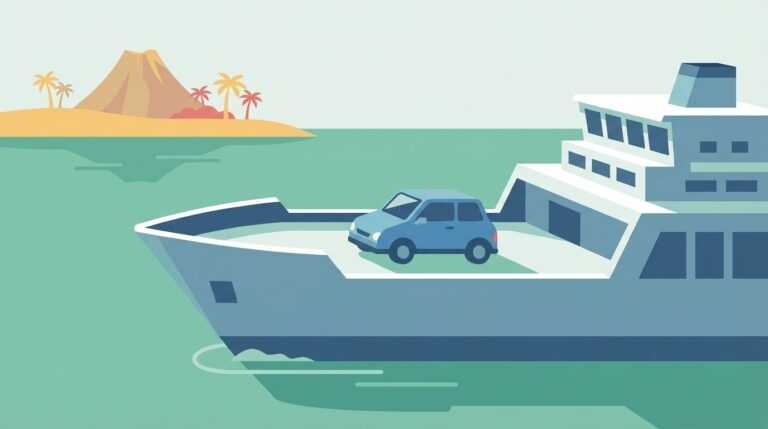
- Editor’s Insight: This is the sophisticated solution to the bagaji problem. Instead of renting, you pay a company to drive your car to a port (like Mokpo) and put it on a ferry to Jeju. It requires complex booking, which is why knowing this word makes you sound like a true insider.
- Situation Spectrum:
- Casual (Friends): ✅
- Semi-formal (Coworkers): ✅
- Formal (Boss/Elders): ✅ (It’s a formal, standard vocabulary word.)
- 🤔 Think About It: The Hanja ‘탁’ (託) means to entrust, and ‘송’ (送) means to send. You’ll see these roots in other high-level words like 부탁 (request) and 배송 (delivery).
Phase 3: Textbook vs. Real Korean
Let’s see how a textbook learner vs. an assimilated expat reacts to Jeju prices.
| 상황 | 📖 교과서 한국어 | 🗣️ 진짜 한국어 | 💡 왜 다를까? |
|---|---|---|---|
| Shocked at prices | 렌터카 비용이 너무 비싸네요. | 렌터카 가격 진짜 사악하다. | ‘사악하다’ (evil) is heavily used as slang to describe outrageously high prices. |
| Feeling ripped off | 속아서 비싸게 샀어요. | 완전 호갱 당했어. | ‘호갱 당하다’ shifts the blame to the predatory system rather than just one’s own mistake. |
| Suggesting an alternative | 차를 배로 보내는 게 어때요? | 렌터카 빌리느니 차라리 탁송 부르는 게 개이득. | ‘-느니 차라리’ (rather than X, I’ll Y) is a perfect C2 grammar point. ‘개이득’ (huge benefit) is universal slang. |
Phase 4: Cultural Context — K-Culture Deep Dive
4-1. Non-Verbal Cues: The “Sigh and Scroll”
When Koreans discuss ridiculous prices, it’s rarely a shouting match. It’s usually accompanied by a heavy sigh (한숨), frantically scrolling through an app (무한 새로고침), and clicking the tongue (쯧쯧). If you want to master the vibe, drop your phone slightly on the table, lean back, and say “아, 진짜 제주도 물가 미쳤네…” (Wow, Jeju prices are genuinely insane…).
4-2. K-Travel: The “I’d Rather Go to Japan” Phenomenon (차라리 일본 간다)
Here’s a deep cultural insight for C2 learners: Because of the bagaji-yogeum (rip-off pricing) in Jeju—from 100,000 KRW black pork dinners to 200,000 KRW daily car rentals—a massive meme/sentiment has emerged in Korea: “그 돈이면 차라리 일본 간다” (For that money, I’d rather go to Japan).
Due to the weak Yen and budget airlines, sometimes a weekend in Osaka is literally cheaper than a weekend in Jeju. Understanding this economic irony is crucial when discussing domestic travel with locals. Suggesting ‘탁송’ (shipping your own car) is seen as a smart rebellion against the Jeju monopoly.
Phase 5: Interactive Roleplay Scenario
Setting: Friday, 8 PM. A trendy, slightly noisy cafe in Seongsu-dong. You and your close Korean friend, Min-su (32, practical and loves traveling), are trying to book a trip to Jeju for next month.
Characters:
– YOU: A savvy expat who knows how to navigate Korean travel hacks.
– Min-su: Your Korean friend, currently staring at his phone with a frown.
Dialogue:
민수: 하아… 야, 우리 제주도 그냥 취소할까? 렌터카 앱 보는데 가격이 완전 사악해.
(Haa… ya, uri jejudo geunyang chwisohalkka? Renteoka aep boneunde gageogi wanjeon saakae.)
[Sigh… Hey, should we just cancel Jeju? I’m looking at the rental app and the prices are purely evil.]
(🎭 Stage Direction: Min-su tosses his phone on the table in defeat.)
YOU: 왜? 성수기라서 또 바가지 씌우는구나?
(Wae? Seongsugiraseo tto bagaji ssiuneunguna?)
[Why? Because it’s peak season, they’re ripping people off again?]
민수: 어, 하루에 15만 원이래. 아반떼가! 이 돈이면 진짜 차라리 동남아를 가겠다. 우리 완전 호갱 되는 거야.
(Eo, harue sibo-man wonirae. Abanttega! I donimyeon jinjja charari dongnamareul gagetda. Uri wanjeon hogaeng doeneun geoya.)
[Yeah, they’re asking 150,000 won a day. For an Avante! For this money, I’d seriously rather go to Southeast Asia. We’re totally becoming suckers.]
🔀 당신의 차례! 어떻게 대답할까요? (Your Turn!)
– A) “어쩔 수 없지 뭐. 그냥 예약하자.” (Can’t be helped. Let’s just book it.)
– B) “그럼 버스 타고 다니자. 뚜벅이 여행 어때?” (Then let’s take the bus. How about a walking trip?)
– C) “야, 그럴 바엔 그냥 내 차 탁송 맡기자. 내가 알아볼게!”✅ Best Choice: C — “Hey, if that’s the case, let’s just ship my car. I’ll look into it!”
Reasoning for C2: Using “-ㄹ 바엔” (If it comes to that/Rather than doing that) perfectly captures the Korean sentiment of finding a pragmatic alternative. It shows high-level problem-solving. While B is okay, taking the bus in Jeju is notoriously difficult, so Min-su might cry.
민수: (Eyes widening) 어? 탁송? 야, 너 그런 것도 알아? 비용 괜찮아?
(Eo? Taksong? Ya, neo geureon geotdo ara? Biyong gwaenchana?)
[Huh? Consignment? Hey, you know about things like that? Is the cost okay?]
YOU: 왕복 60만 원 정도 하던데, 우리 5일 갈 거니까 렌터카보다 훨씬 가성비 좋아. 짐도 내 차에 다 때려 넣으면 되고.
(Wangbok yuksip-man won jeongdo hadeonde, uri oil gal kkeonikka renteokaboda hwolssin gaseongbi joa. Jimdo nae chae da ttaeryeo noeumyeon doego.)
[It’s about 600,000 won round trip, but since we’re going for 5 days, the cost-effectiveness is way better than a rental. Plus, we can just cram all our luggage into my car.]
민수: 와, 너 진짜 한국인 다 됐구나. 당장 알아보자!
(Wa, neo jinjja hangugin da dwaetguna. Dangjang arabojam!)
[Wow, you’ve really become fully Korean. Let’s look into it right now!]
Phase 6: 10-Second Shadowing Drill
Master the rhythm and intonation. To sound like a native complaining about prices, elongate the first syllable of the descriptive word and pause for dramatic effect.
😤 렌터카 / 빌릴 바에는 차라리 / 내 차 탁송 보내는 게 / 훨씬 낫겠다.
(renteoka / billil ba-eneun charari / nae cha taksong bonaeneun ge / hwol~~~~ssin natgetda.)
[Rather than renting a car, it’d be waaaaay better to just ship my own car.]
Phase 7: K-Culture Mini Dictionary (Jeju Survival Edition)
| 한국어 | Romanization | English | 맥락 설명 (Context) |
|---|---|---|---|
| 성수기 | seongsugi | Peak Season | The time when prices double. The opposite is 비수기 (off-season). |
| 뚜벅이 | ttubeogi | Someone traveling on foot | Derived from the sound of walking ‘뚜벅뚜벅’. Used for travelers without cars. |
| 가성비 | gaseongbi | Cost-effectiveness | Short for 가격 대비 성능 (performance vs. price). A core Korean value. |
| 자차 | jacha | One’s own car | Short for 자기 차량. As opposed to 렌터카 (rental car) or 대중교통 (public transit). |
| 카푸어 | kapueo | Car Poor | Slang for someone who buys an expensive car they can’t afford, eating instant noodles to pay the lease. |
Phase 8: Traveler Survival Kit
If you actually decide to use a taksong (consignment) service for your Jeju trip, you’ll need to communicate with the logistics company. Here are your C2 survival phrases:
🆘 Survival Phrase #1: Confirming the Handover
– 🇰🇷 “기사님, 내일 오전 9시에 자택 주차장에서 뵙겠습니다.”
– 🗣️ (Gisanim, naeil ojeon a-hop-sie jataek juchajang-eseo boepgetseumnida.)
– 📍 Context: Speaking on the phone with the designated driver who will take your car to the ferry port.
– 💡 Pro Tip: Always use “기사님” (Driver) as a title of respect.🆘 Survival Phrase #2: Checking Port Arrival
– 🇰🇷 “제주항에는 대략 몇 시쯤 도착 예정인가요?”
– 🗣️ (Jeju-hang-eneun daeryak myeot si-jjum dochak yejeong-ingayo?)
– 📍 Context: Asking the company about the ship’s schedule.📌 Editor’s Travel Note
– App Recommendations: If taksong is too much work, Koreans use car-sharing apps like Socar (쏘카) or GreenCar (그린카) for short-term rentals, rather than traditional rental houses.
– Insurance: Always say “완전자차(Super Collision Damage Waiver)로 할게요.” It costs a bit more, but ensures you pay absolutely nothing if an accident happens.
Phase 9: Critical Thinking Corner — “한 발 더 깊이”
Media vs Reality: The K-Drama Illusion vs. The Economics of Domestic Tourism
In media, Jeju Island is portrayed as an ethereal paradise—a place of healing, tangerines, and romantic ocean views. However, the reality of Korean domestic travel is deeply tied to aggressive capitalism. The concept of bagaji-yogeum (rip-off pricing) isn’t just a minor inconvenience; it’s a hot-button social issue that creates generational divides. Younger Koreans, armed with apps and global awareness, refuse to become hogang (suckers) and openly boycott overpriced domestic spots in favor of cheap flights to Japan or Vietnam. The rise of “탁송” (car consignment) is a fascinating linguistic and cultural byproduct of this: it’s a high-effort, logistical workaround created purely because consumers refuse to be taken advantage of by local monopolies.
💬 Your Turn: Does your country have a “domestic tourist trap” that locals avoid or have found clever hacks around? How do you express the feeling of “refusing to be ripped off” in your native language? Let us know in the comments!
Phase 10: FAQ & Avoiding Misunderstandings
Q: “If I feel like I’m being overcharged (바가지), can I argue with the staff using these words?”
A: NO. Words like 바가지 and 호갱 are strictly used behind the seller’s back or among friends. Saying “이거 바가지 아니에요?” (Isn’t this a rip-off?) directly to a vendor is highly aggressive and will likely start a severe argument. If you need to negotiate, use diplomacy: “예상했던 것보다 예산이 좀 초과되네요” (It exceeds my budget a bit more than expected).
Q: What is the exact difference between 탁송, 배송, and 배달?
– 배달 (Delivery): For food or small parcels (e.g., 배달의민족 for chicken).
– 배송 (Shipping): For online shopping goods (e.g., Coupang, clothes).
– 탁송 (Consignment): For large vehicles or heavy industrial machinery handled by a third-party logistics driver.
❌ Common Mistake:
Calling a company and saying “제 차 배달해 주세요” (Please deliver my car). You will sound like you are ordering a toy car from a restaurant.
✅ Do This Instead:
“차량 탁송 예약하려고 하는데요” (I’d like to book a vehicle consignment).
Phase 11: Summary & Action Items
One-Liner Summary: Don’t be a hogang (sucker) paying bagaji (rip-off) prices in Jeju; step up your C2 game by using taksong (consignment) and discussing travel economics like a native!
Action Mission 3단계:
– 🥉 Bronze: Say “아, 진짜 렌터카 가격 사악하다” out loud 3 times with a dramatic sigh.
– 🥈 Silver: Write a short journal entry in Korean comparing the cost of a domestic trip vs. going abroad.
– 🥇 Gold: Search “제주 탁송 비용” on Naver or YouTube and read/listen to one Korean review.
K-Culture Mission:
Go to YouTube and search for “차라리 일본 간다”. Watch a short news clip or vlog discussing why Koreans are choosing overseas travel over Jeju, and try to catch words like 물가 (prices) and 바가지 (rip-off).
Phase 12: C2 Interactive Quiz
1. Situational Judgment: You are talking to your boss about your upcoming vacation to Jeju. He asks if you rented a car. You want to say it was too expensive so you shipped your own car. Which is the MOST appropriate C2-level response?
– A) “렌터카 바가지가 쩔어서 그냥 제 차 탁송 보냈어요!”
– B) “렌터카 비용이 생각보다 높아서, 이번에는 제 차량을 탁송 맡기기로 했습니다.”
– C) “제가 호갱 되기 싫어서 제 차를 배달시켰습니다.”
정답 확인 (Click for Answer)
Best Answer: B.
Explanation: A uses inappropriate slang (‘바가지가 쩔다’) for a boss. C incorrectly uses ‘배달’ (delivery for food) instead of ‘탁송’. B uses the correct vocabulary (‘탁송 맡기다’) while maintaining professional polite speech.
2. Fill in the Blank:
“이번 연휴에 계곡 백숙 가격이 20만 원이래. 완전 ( _____ ) 요금이야!”
(This holiday, chicken soup at the valley is 200,000 won. It’s totally _____ pricing!)
정답 확인 (Click for Answer)
정답: 바가지
3. True or False – K-Culture:
In Korea, it is considered polite to directly accuse a taxi driver or vendor of ‘바가지’ (ripping you off) if you suspect they took a longer route.
정답 확인 (Click for Answer)
False.
Directly using the word ‘바가지’ to someone’s face is highly confrontational. It is better to indirectly ask, “원래 이 길이 맞나요? 시간이 좀 더 걸리는 것 같아서요” (Is this the original route? It feels like it’s taking a bit longer).
Frequently Asked Questions (FAQ)
Q: What does "바가지(를) 씌우다 / 바가지요금" mean in Korean and how do you pronounce it?
A: In Korean, "바가지(를) 씌우다 / 바가지요금" is pronounced [bagaji-reul ssiuda / bagaji-yogeum] and means: Literal: To put a gourd over someone's head / Real nuance: To rip someone off; Exorbitant pricing.
Q: What does "호갱(이) 되다" mean in Korean and how do you pronounce it?
A: In Korean, "호갱(이) 되다" is pronounced [hogaeng(-i] and means: Literal: To become a 'hogang' / Real nuance: To be a sucker, an easy mark who pays more than they should.
Q: What does "차량 탁송(을) 맡기다" mean in Korean and how do you pronounce it?
A: In Korean, "차량 탁송(을) 맡기다" is pronounced [charyang taksong(-eul] and means: Literal/Real: To consign or ship a vehicle.







