

안녕하세요! 매일한글(Daily Hangul) 에디터입니다.
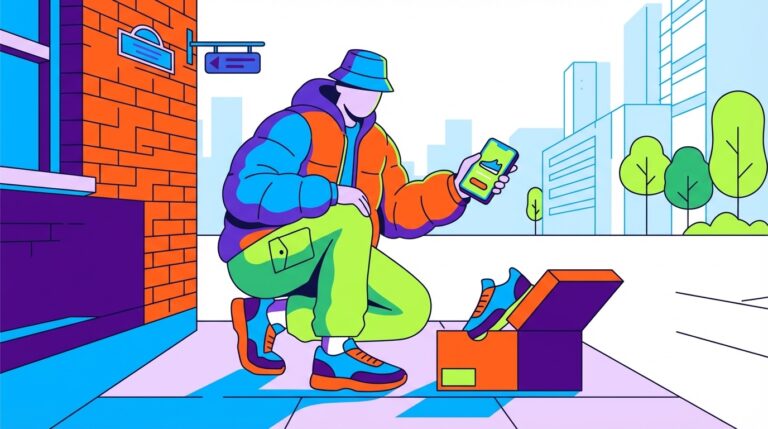
Imagine this: You are standing at Exit 3 of Hongdae Station on a crisp Friday evening. People are swarming around, but your eyes are locked on one person holding a distinct, pristine shoebox. You’re about to secure a pair of limited-edition Travis Scott Jordans you’ve been hunting for months. Your heart is racing, but then panic sets in. The seller approaches and says something fast in Korean. It’s not in your textbook. How do you casually inspect the shoes, negotiate the price, and close the deal without looking like a clueless tourist?
Welcome to the fast-paced, highly nuanced world of Korean Second-hand Trading and Resell-Tech (리셀테크).
Whether you are using the ubiquitous Karrot Market (당근마켓) or specialized platforms like KREAM, mastering the local terminology is your golden ticket. At the C1 level, you already know how to buy things at a store. But navigating the C2C (Consumer-to-Consumer) market requires a completely different vocabulary—one heavily influenced by internet slang, MZ generation trends, and a hyper-pragmatic mindset. Let’s dive into the secret language of Seoul’s hypebeasts and savvy thrifters!
Phase 2: Core Expressions Deep Dive
1. 쿨거래 (Cool-georae)
- Pronunciation: [kul-geo-rae] (Sounds like: cool-guh-reh)
- Meaning: Literal: Cool trade. Real nuance: A fast, hassle-free transaction without tedious questions or haggling.
- K-Culture Moment: You see this in almost every online listing. “쿨거래 시 택포” (Free shipping if it’s a cool trade). It perfectly reflects the Palli-palli (hurry up) culture of Korea applied to digital commerce.
- Editor’s Insight: If you message a seller and say “쿨거래 할게요,” you instantly gain their respect. It means “I know what I’m buying, I have the money ready, let’s get this done in 3 messages or less.”
- Situation Spectrum:
- Online marketplaces/Direct Trade: ✅
- With friends/acquaintances: ⚠️ (Usually reserved for strangers)
- Retail stores/Formal business: 🚫
- 🤔 Think About It: Why do Koreans value a “cool” trade so much? Could it be tied to the high-density, fast-paced lifestyle of cities like Seoul, where time is literally money?
2. 네고 (Nego) / 에눌 (Enul)
- Pronunciation: [ne-go] / [e-nul] (Sounds like: neh-go / eh-nool)
- Meaning: Nego is short for ‘Negotiation’. Enul is a native Korean word meaning a slight discount or allowance.
- K-Culture Moment: You’ll often see “네고 불가” (No negotiation) or “에눌 가능” (Discount possible) in item descriptions. If a seller is firm, asking for a nego might get you left on ‘read’.
- Editor’s Insight: Nego is Konglish, but it’s used more than the actual Korean verb 깎다 (to cut down) in resell markets. It sounds slightly more professional and less aggressive than saying “깎아주세요” (Cut the price).
- Situation Spectrum:
- Second-hand platforms: ✅
- Street markets (Dongdaemun): ✅
- Department stores/Franchises: 🚫
- 🤔 Think About It: Koreans love a good bargain, but they also have strict unwritten rules about when and how to ask for it. How do people negotiate prices in your country?
3. 찔러보기 사절 (Jjilleobogi sajeol)
- Pronunciation: [jjil-leo-bo-gi sa-jeol] (Sounds like: jjil-luh-bo-gee sah-juhl)
- Meaning: Literal: Refusing the act of poking. Real nuance: No tire-kickers. Don’t message me just to test the waters if you have no real intention to buy.
- K-Culture Moment: When a highly anticipated sneaker drops on the SNKRS app, the resell market gets flooded. Sellers get annoyed by hundreds of messages asking “Is this still available?” without follow-ups. Hence, they write this warning.
- Editor’s Insight: 찔러보다 literally means “to poke.” It’s a great C1-level verb used to describe someone “testing the waters” in dating, business, or shopping.
- Situation Spectrum:
- Writing a seller listing: ✅
- Saying it out loud to someone: 🚫 (It’s primarily written slang)
- 🤔 Think About It: This phrase shows a strong boundary. How does this contrast with the traditional Korean concept of Jeong (정 – warm attachment/affection)?
Phase 3: Textbook vs. Real Korean
| 상황 | 📖 교과서 한국어 | 🗣️ 진짜 한국어 | 💡 왜 다를까? |
|---|---|---|---|
| Asking for a discount | 가격을 조금 깎아 주시겠어요? | 네고 가능할까요? / 좀 에눌 되나요? | The resell community adopted “Nego” for efficiency. It feels less personal and more like a business transaction. |
| Condition of the item | 한 번도 입지 않은 새 옷입니다. | 미시착 새상품 / 극민트급 | “미시착” (Never tried on) is crucial for sneakers. “Mint condition” became “민트급” to denote pristine quality. |
| Closing the deal quickly | 불만 없이 바로 구매하겠습니다. | 쿨거래 할게요. 계좌 주세요. | Directness is key. Asking for the bank account (계좌) immediately proves you are a serious buyer. |
| Asking to include shipping | 배송비는 판매자님이 내주시나요? | 쿨거래 시 택포(택배비 포함) 되나요? | Acronyms rule the internet. 택포 (Taek-po) saves keystrokes and sounds like a seasoned trader. |
Bottom Note for C1 Learners: Using abbreviations like “택포” or “네고” shows you are deeply integrated into the local culture. However, always maintain polite sentence endings (요/비니다) since you are dealing with strangers!
Phase 4: Cultural Context — K-Culture Deep Dive
4-1. 비언어적 요소: The “Manner Temperature” (매너온도)
If you use the Karrot app (당근마켓), you will notice a “Manner Temperature” starting at 36.5°C. Good reviews raise it; bad etiquette (like ghosting or unreasonable haggling) lowers it. In Korean C2C culture, punctuality is sacred. If you set a time for a Jik-georae (직거래 – direct face-to-face trade), arriving 5 minutes early is the norm. If you ghost someone, you will be blocked and reported instantly.
4-2. K-Culture 연결 고리: The Rise of ‘Resell-Tech’ (리셀테크)
In Seoul hotspots like Seongsu-dong or Hannam-dong, streetwear isn’t just fashion; it’s an investment. The MZ generation combined the words ‘Resell’ and ‘Tech’ (from Jae-tech, meaning wealth management) to form 리셀테크. Limited edition sneakers, Supreme drops, or exclusive K-Pop merch are bought and sold like stocks.
Platforms like KREAM (a highly popular resell app in Korea) even provide stock-market-like graphs for sneaker prices. A true hypebeast will check if the item has the “KREAM tag” (크림택) still attached, which acts as the ultimate certificate of authenticity in Korea.
Phase 5: 실전 롤플레이 시나리오
Setting: Friday, 7 PM. Gangnam Station Exit 11. The bustling heart of Seoul. You arranged to meet a seller from a second-hand app to buy a pair of limited-edition Nike Dunks.
Characters:
* YOU (The Learner): An expat living in Seoul, a bit nervous but excited to secure these sneakers.
* Seller (민수, 28): A local sneakerhead. Wearing an oversized hoodie and holding a Nike shoebox.
Dialogue:
민수: 혹시… 당근이세요?
(hoksi… danggeun-iseyo?)
[Are you… Karrot? (Common greeting for Karrot Market users)]
YOU: 아, 네! 덩크 로우 보러 왔어요. 안녕하세요.
(a, ne! deongkeu rou boreo wasseoyo. annyeonghaseyo.)
[Ah, yes! I’m here to see the Dunk Lows. Hello.]
민수: 네, 여기요. 상태 확인해 보세요. 크림택 그대로 있는 미시착 새상품이에요.
(ne, yeogiyo. sangtae hwaginhae boseyo. keurimtaek geudaero inneun misichak saesangpumieyo.)
[Here you go. Please check the condition. It’s a never-worn brand-new item with the KREAM tag still on.]
(🎭 Stage Direction: You open the box. The shoes look flawless, but you notice a tiny scratch on the box itself.)
YOU: 오, 신발은 완전 깨끗하네요. 근데 박스에 약간 흠집이 있네요.
(o, sinbareun wanjeon kkaekkeuthaneyo. geunde bakseue yakgan heumjibi inneyo.)
[Oh, the shoes are perfectly clean. But there’s a slight scratch on the box.]
민수: 아, 배송 올 때부터 그랬어요. 신발 자체는 퀄리티 체크 다 한 양품입니다.
(a, baesong ol ttaebuteo geuraesseoyo. sinbal jacheneun kwolliti chekeu da han yangpumimnida.)
[Ah, it came like that during shipping. The shoes themselves are top-tier quality, thoroughly checked.]
🔀 당신의 차례! 어떻게 대답할까요? (Your Turn! How do you respond?)
- A) “흠집이 있으니까 안 살래요.” (Since there’s a scratch, I won’t buy it.)
- B) “아, 그렇군요. 제가 쿨거래 할 테니까 혹시 만 원만 네고 가능할까요?”
- C) “이거 가짜 아니에요? 영수증 보여주세요.”
✅ Best Choice: B — “Ah, I see. Since I’m making a cool trade right now, could we negotiate 10,000 won off?” It acknowledges the flaw gently while offering a fast transaction (쿨거래) as leverage for a slight discount (네고).
⚠️ Choice C Analysis: Asking “Is this fake?” directly to a Korean seller is considered very rude and confrontational. If you doubt authenticity, politely ask, “혹시 구매 내역 캡처본 볼 수 있을까요?” (Could I see a screenshot of the purchase history?).
민수: 음… 원래 네고 불가로 올리긴 했는데, 여기까지 와주셨으니까 만 원 빼드릴게요.
(eum… wollae nego bulgaro olligin haenneunde, yeogikkaji wajusyeosseunikka man won ppaedeurilgeyo.)
[Hmm… I originally posted it as non-negotiable, but since you came all the way here, I’ll take 10,000 won off.]
YOU: 감사합니다! 바로 계좌이체 해드릴게요. 계좌번호 알려주세요.
(gamsahamnida! baro gyejwaiche haedeurilgeyo. gyejwabeonho allyeojuseyo.)
[Thank you! I’ll do a bank transfer right away. Please give me your account number.]
Phase 6: 10초 섀도잉 드릴
Practice your rhythm! When asking for a discount, your tone shouldn’t be demanding. It should be light, friendly, and slightly cautious.
😊 저기요 / 쿨거래 하시면 / 혹시 택포로 / 가능할까요?
(jeogiyo / kul-geo-rae hasimyeon / hoksi taek-po-ro / ganeunghalkkayo?)
Excuse me / if we do a cool trade / by any chance, with shipping included / is it possible?
Phase 7: K-Culture 미니 사전
| 한국어 | Romanization | 영어 | 맥락 설명 |
|---|---|---|---|
| 당근하다 | danggeun-hada | To buy/sell on Karrot | Used as a verb! “나 어제 아이패드 당근했어” (I Karroted an iPad yesterday). |
| 크림택 | keurim-taek | KREAM tag | The authentication tag attached by the KREAM platform. Removing it instantly drops the resell value. |
| 실착러 | silchang-neo | Wearer | A person who actually wears the limited edition sneakers (실제 착용), as opposed to a reseller. |
| 피(P) | pi (P) | Premium | The extra money added to the original retail price. “피가 10만 원 붙었다” (It has a 100k won premium). |
| 잠수타다 | jamsu-tada | To ghost | Literal: “To dive underwater.” When a buyer or seller suddenly stops replying and disappears. |
Phase 8: 여행자 서바이벌 키트
Even if you are just visiting Seoul for a few weeks, buying second-hand items or limited streetwear (like from Ader Error or Supreme Seoul) is a huge draw.
🆘 서바이벌 표현 TOP 3
1. 🇰🇷 “혹시 구매 내역 증빙 가능하신가요?” (hoksi gumae naeyeok jeungbing ganeunghasingayo?)
– 🗣️ Meaning: Is it possible to provide proof of purchase?
– 📍 Use when: Buying high-end sneakers or luxury items to avoid fakes.
- 🇰🇷 “제가 외국인이라서요, 현금 거래도 괜찮을까요?” (jega oeguginiraseoyo, hyeongeum georaedo gwaenchaneulkkayo?)
- 🗣️ Meaning: I am a foreigner, is cash transaction okay?
- 📍 Use when: You don’t have a Korean bank account for direct transfers.
- 🇰🇷 “역 개찰구 안에서 봬도 될까요?” (yeok gaechalgu aneseo bwaedo doelkkayo?)
- 🗣️ Meaning: Can we meet inside the subway ticket gates?
- 📍 Use when: You are taking the subway to meet a seller and don’t want to pay the exit fare. A very common Korean life hack!
📌 Editor’s Travel Note:
To use the Karrot app (당근마켓), you must have a Korean phone number linked to an ARC (Alien Registration Card) for identity verification. If you are a tourist, you won’t be able to sign up. Instead, use platforms like Bunjang (번개장터) global, or join Facebook Expat Buy/Sell groups!
Phase 9: 비판적 사고 코너 — “한 발 더 깊이”
🧠 Think Deeper: 글로벌 시대의 한국어 (Korean in the Global Era)
Notice how heavily the Korean sneaker/resell market relies on English loanwords? Nego (Negotiation), Cool-georae (Cool trade), Mint-geup (Mint condition), Premium/P. However, these aren’t just English words borrowed lazily; they have been meticulously reshaped into Konglish to fit the hyper-efficient lifestyle of the Korean MZ generation. By morphing “negotiation” into a two-syllable word “네고”, or taking the English concept of “cool” to mean “fast and emotionless”, the language adapts to the digital transaction environment. It’s a fascinating blend of Western capitalism and Korean Palli-palli culture.
💬 Your Turn:
Does your culture have specific slang for buying and selling online? Do you use abbreviations to save time while typing? Share it in the comments below!
Phase 10: FAQ & 오해 방지
Q: Can I use “네고 (Nego)” at a department store or a regular boutique?
Absolutely NO. “네고” and “에눌” are exclusively for C2C (peer-to-peer) markets or traditional street markets (like Dongdaemun). Using it at a retail store like Nike or a department store will confuse the staff and make you look quite rude.
Q: Is it okay to return an item if I change my mind after a direct trade (직거래)?
Generally, NO. The unwritten rule of the Korean second-hand market is that unless the item has a severe, undisclosed defect, “변심에 의한 환불” (refunds due to a change of heart) are strictly refused. Always inspect thoroughly before handing over the cash!
❌ 흔한 실수 (Common Mistake): Greeting the seller with a bow and highly formal language, but then brutally lowballing the price. In Korea, politeness and “reading the room” (눈치 – Nunchi) go hand in hand. If a listing says “네고 불가” (No negotiation), respect it. Asking anyway shows a lack of Nunchi.
Phase 11: 요약 및 액션 아이템
✨ One-Liner Summary: To survive the Korean resell market, be fast (쿨거래), be polite, and know when—and when not—to ask for a discount (네고).
🚀 Action Mission 3단계:
* 🥉 Bronze: Say “쿨거래 시 택포 가능할까요?” out loud 3 times with a natural, friendly tone.
* 🥈 Silver: Search for an item you want on a Korean platform (like KREAM or Bunjang) and see if you can spot the word “미개봉” or “새상품”.
* 🥇 Gold: The next time you buy something second-hand (even in your home country), try to embody the “쿨거래” mindset—be fast, decisive, and respectful!
👟 K-Culture Mission: Download the KREAM app (or visit their website). Search for “Jordan” or “Supreme”. Look at the charts and listings. Can you figure out what the “Premium (P)” is for the most popular sizes?
Phase 12: 퀴즈 — 인터랙티브 챌린지
1. Situational Judgment: You are selling a BTS limited edition photocard on Karrot. A buyer messages you: “5만 원에 바로 살게요. 근데 제가 지금 돈이 없어서 다음 주에 입금해도 될까요?” (I’ll buy it for 50k won right now. But I don’t have money, can I deposit it next week?)
What is the most appropriate Korean internet slang to describe this buyer?
A) 쿨거래러 (Cool trader)
B) 찔러보기 (Tire-kicker)
C) 실착러 (Wearer)
2. Fill in the Blank:
Seller: 신발 상태 어때요? (How is the shoe condition?)
You: 한 번도 안 신은 ____ 새상품입니다. (It’s a never-worn ____ brand new item.)
A) 네고
B) 당근
C) 미시착
3. True or False – K-Culture Edition:
If you buy something on the Karrot app, it is culturally acceptable to ask the seller for a refund 3 days later simply because you don’t like the color. (T/F)
(Scroll down for answers!)
.
.
.
Answers:
1. B (Asking to hold an item without immediate payment is classic annoying behavior, akin to Jjilleobogi.)
2. C (미시착 means “not tried on”.)
3. False (Refunds for a change of heart are generally not accepted in C2C trades in Korea.)
Frequently Asked Questions (FAQ)
Q: What does "쿨거래 (Cool-georae)" mean in Korean and how do you pronounce it?
A: In Korean, "쿨거래 (Cool-georae)" is pronounced [kul-geo-rae] and means: Literal: Cool trade. Real nuance: A fast, hassle-free transaction without tedious questions or haggling.
Q: What does "네고 (Nego) / 에눌 (Enul)" mean in Korean and how do you pronounce it?
A: In Korean, "네고 (Nego) / 에눌 (Enul)" is pronounced [ne-go] and means: Nego is short for 'Negotiation'. Enul is a native Korean word meaning a slight discount or allowance.
Q: What does "찔러보기 사절 (Jjilleobogi sajeol)" mean in Korean and how do you pronounce it?
A: In Korean, "찔러보기 사절 (Jjilleobogi sajeol)" is pronounced [jjil-leo-bo-gi sa-jeol] and means: Literal: Refusing the act of poking. Real nuance: No tire-kickers. Don't message me just to test the waters if you have no real intention to buy.







