

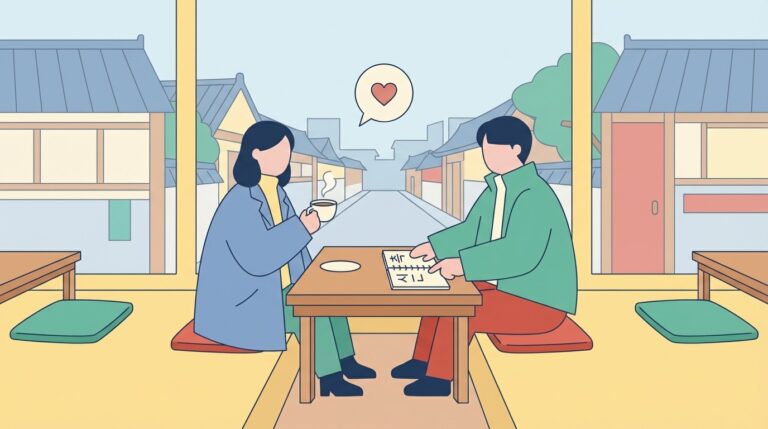
Phase 1: Empathy & The K-Culture Cold Open
Hello! I am the Lead Editor of Daily Hangul, your veteran tutor and local cultural navigator in Seoul.
Picture this: You are watching a hit K-Drama. The “evil” secondary character steps out of a luxury car in Gangnam, looking absolutely flawless but slightly artificial. You check the internet comments, and netizens are spamming a mysterious word: “성괴” (Seong-goe). Since it’s used everywhere online, you might think, “Oh, cool new slang! Let me use this to joke around with my Korean friends!”
Stop right there. 🛑
If you drop that word at a cafe in Hongdae or during a team dinner, the music will practically stop, and people will stare at you in shock. Today, we are diving into a very sensitive but fascinating part of Korean society: the culture of plastic surgery, the harsh reality behind beauty standards, and the words you must never use. Let’s learn how to navigate these tricky waters like a true local!
Phase 2: Core Expressions Deep Dive
Let’s break down the expressions you might hear, and more importantly, the ones you should avoid.
1. 성괴 (Seong-goe) / 성형 괴물 (Seonghyeong Goemul)
- Pronunciation: [seong-goe] (Sounds like: sung-gweh)
- Meaning: Literal: Plastic surgery monster. / Real nuance: A highly derogatory slur for someone who has had too much obvious plastic surgery.
- K-Culture Moment: You will see this word heavily in toxic K-Pop netizen forums or as an insult thrown in intense K-Drama revenge scenes.
- Editor’s Insight: This isn’t just a “bad word”; it’s deeply offensive. It mocks someone’s appearance and the money they spent to fit into society’s beauty standards. Never use it as a joke.
- Situation Spectrum:
[🚫 절대 금지 (Absolute Ban)] ———— [⚠️ 주의 (Caution)] ———— [✅ 자유롭게 (Freely)]
- Casual friends: 🚫
- Co-workers: 🚫
- Seniors/Bosses: 🚫
- 🤔 Think About It: South Korea is famous for accessible cosmetic procedures. Why do you think a society that normalizes plastic surgery also created such a cruel word for people who get “too much” of it?
2. 어디 고쳤어? (Eodi gochyeosseo?)
- Pronunciation: [eo-di go-chyeo-sseo] (Sounds like: uh-dee go-chuh-sso?)
- Meaning: Literal: Where did you fix? / Real nuance: Did you get work done? Which part of your face did you change?
- K-Culture Moment: Two best friends meet at a cafe after a long holiday. One looks noticeably different. The other leans in and whispers this.
- Editor’s Insight: The verb 고치다 (to fix/repair) is casually used for plastic surgery. However, asking this directly implies their face was “broken” before.
- Situation Spectrum:
- Casual friends: ⚠️ (Only if you are VERY close)
- Co-workers: 🚫
- Seniors/Bosses: 🚫
- 🤔 Think About It: In your culture, is it acceptable to directly ask if someone had cosmetic surgery?
3. 분위기가 달라졌어요 (Bunwigiga dallajyeosseoyo)
- Pronunciation: [bun-wi-gi-ga dal-la-jyeo-sseo-yo] (Sounds like: boon-wee-gee-gah dahl-la-juh-sso-yo)
- Meaning: Literal: Your atmosphere has changed. / Real nuance: You have a new vibe! You look great! (A safe, indirect compliment).
- K-Culture Moment: A coworker returns from a two-week vacation looking “refreshed” (and maybe wearing a mask or glasses to hide swelling). This is the safe, polite way to acknowledge their glow-up.
- Editor’s Insight: This is the ultimate Nunchi (social tact) phrase. You acknowledge they look good without forcing them to confess to a procedure.
- Situation Spectrum:
- Casual friends: ✅
- Co-workers: ✅
- Seniors/Bosses: ✅
Phase 3: Textbook vs. Real Korean
| Situation | 📖 Textbook Korean | 🗣️ Real Korean | 💡 Why is it different? |
|---|---|---|---|
| Complimenting a glow-up | 정말 아름다우시네요. (You are so beautiful.) | 오늘 폼 미쳤다! / 분위기 대박! (Your vibe is crazy today!) | Textbooks sound too formal. Real Koreans focus on “vibe” or use slang among peers. |
| Asking if they got surgery (Don’t do this) | 혹시 성형수술을 하셨나요? (Did you perhaps have plastic surgery?) | 쌍수 했어? (Did you do ssang-su / double-eyelids?) | Ssang-su is such a common procedure it has its own casual abbreviation. |
| Describing natural beauty | 자연미인이시네요. (You are a natural beauty.) | 쌩얼도 예뻐요. (You look pretty even bare-faced.) | Younger generations focus more on looking good without makeup (ssaeng-eol) rather than “un-surgified” beauty. |
Bottom Note: At the B1 level, avoid using extreme slang like “성괴”. Stick to safe compliments like “분위기가 좋아요” (Your vibe is good) to show off your high-level cultural tact!
Phase 4: Cultural Context — K-Culture Deep Dive
4-1. The Non-Verbal Rule: Nunchi and Eye Contact
If you meet a Korean friend and notice they have a bandage on their nose or their eyelids are swollen, do not stare. Staring makes people incredibly uncomfortable. Exercise your Nunchi (the ability to read the room). If they want to talk about it, they will bring it up. If they don’t, just talk about the weather or the delicious food in front of you!
4-2. The Gangnam Travel Connection
If you travel to Gangnam or Apgujeong stations, you will see giant advertisements for plastic surgery clinics everywhere. You will also frequently see people walking around with bandages, sunglasses, or hats, drinking pumpkin juice (known to reduce swelling).
Critical Rule: Do not point at them. Do not take photos of them. For locals, taking a “recovery walk” after a procedure is totally normal, but it is deeply disrespectful to treat them like tourist attractions.
Phase 5: Real-Life Roleplay Scenario
Setting: A trendy dessert cafe in Gangnam. Saturday afternoon.
Characters:
– YOU: A foreign exchange student who just finished midterms.
– Minji (22): Your close Korean friend. She has been avoiding video calls for the past two weeks. She shows up wearing a bucket hat and big glasses, but you can tell her nose looks completely different.
Minji: 미안, 내가 요즘 좀 바빠서 연락을 못 했어. 😅
(Mian, naega yojeum jom bappaseo yeollageul mot haesseo.)
[Translation] Sorry, I was a bit busy lately so I couldn’t contact you.
(🎭 Stage Direction: Minji nervously adjusts her glasses, waiting to see if you notice)
🔀 Your Turn! How do you respond?
– A) “와, 코 고쳤어? 어디서 했어?”
– B) “진짜? 성괴 되는 거 아니야? ㅋㅋㅋ”
– C) “아, 진짜? 근데 오늘 분위기가 뭔가 달라 보이네! 예쁘다!”✅ Best Choice: C — “Oh really? But your vibe looks somewhat different today! Pretty!”
Why? It perfectly utilizes Nunchi. You acknowledge her glow-up politely without putting her on the spot. If she wants to share the clinic details, she will now feel safe to do so.
⚠️ Choice A Analysis: A bit too direct, even for friends.
🚫 Choice B Analysis: Absolute disaster. Using “Seong-goe” as a joke will instantly end your friendship.
Phase 6: 10-Second Shadowing Drill
Practice this safe, foolproof compliment out loud!
😊 우와, / 오늘 / 분위기가 / 완~~전 / 달라 보여요!
(Uwa, / oneul / bunwigiga / wan~~jeon / dalla boyeoyo!)
[Vibe:] Bright, encouraging, and impressed.
Phase 7: K-Culture Mini Dictionary
| Korean | Romanization | English | Context |
|---|---|---|---|
| 눈치 | nunchi | Social tact / Wit | The ultimate Korean superpower. The ability to read the mood and act accordingly. |
| 쌍수 | ssangsu | Double eyelid surgery | Short for 쌍꺼풀 수술. So common it’s often given as a high school graduation gift. |
| 시술 | sisul | Minor procedure | Used for non-invasive things like Botox or fillers, as opposed to 수술 (major surgery). |
| 쌩얼 | ssaeng-eol | Bare face | A face with zero makeup. Often used as a compliment: “쌩얼도 예쁘다.” |
| 얼빠 | eolppa | Looks-obsessed fan | Slang for a fan who only likes a celebrity for their face (얼굴). |
Phase 8: Traveler Survival Kit (Gangnam Medical Tourism Edition)
Many foreigners visit Korea specifically for K-Beauty treatments. If you find yourself in a clinic, here are the B1 survival phrases!
🆘 Survival Phrases #1
– 🇰🇷 “자연스럽게 해주세요.” (Jayeonseureopge hae juseyo.)
– 🗣️ Meaning: Please make it look natural.
– 📍 Where to use: Hair salons, makeup studios, dermatology clinics.
– 💡 Pro Tip: Koreans value the “꾸안꾸” (Kku-an-kku: effortlessly chic/natural) look over heavy modifications.📌 Editor’s Travel Note
– Tax Refunds: Many approved cosmetic surgery clinics offer tax refunds for foreigners! Keep your passport handy.
– Navigating Gangnam: Clinics are often hidden inside giant office buildings. Use Naver Map or KakaoMap, as Google Maps doesn’t work well for walking directions in Korea.
Phase 9: Critical Thinking — “One Step Deeper”
Media vs. Reality: The Double Standard of K-Beauty
🧠 Think Deeper:
South Korea’s beauty industry is world-class, but it comes with a harsh double standard. Society (and K-Pop/K-Drama media) constantly demands visual perfection, pushing people toward cosmetic procedures. However, if it becomes too obvious that someone had surgery, society quickly turns around and labels them a “성괴” (Plastic Monster). This paradox forces many Koreans to seek “secret” surgeries to look naturally perfect. Understanding this contradiction helps you realize why direct questions about appearance can be so stressful for Koreans.💬 Your Turn: Does your culture have a similar double standard about beauty and cosmetic procedures? Share your thoughts in the comments!
Phase 10: FAQ & Avoiding Misunderstandings
- “Can I ask my idol during a fancall if they had surgery?”
Absolutely NOT. This is incredibly disrespectful and will likely get you banned from future events. - “What if a Korean asks ME if I had surgery?”
Sometimes older Koreans (like a taxi driver or a restaurant owner) might ask you personal questions out of sheer curiosity. Don’t be offended! Just laugh it off and say “아니요, 부모님 덕분이에요!” (No, it’s thanks to my parents!).
❌ Common Mistake #1: Trying to use internet insults (like 성괴) in real life to sound “fluent.”
✅ Do This Instead: True fluency is knowing what not to say. Stick to positive, respectful adjectives like 멋있다 (cool) or 분위기 있다 (has a great vibe).
Phase 11: Summary & Action Items
- One-Liner Summary: Never use the slur “성괴”; instead, use your Nunchi and compliment someone’s “vibe” respectfully!
Action Mission 3 Steps:
– 🥉 Bronze (Solo): Stand in front of a mirror and practice saying “분위기가 달라졌어요!” three times with a bright smile.
– 🥈 Silver (Online): Find a photo of your favorite K-Pop idol’s new comeback and leave a comment: “오늘 분위기 대박!”
– 🥇 Gold (Real Life): Next time you notice a Korean friend changed their hair or style, use the phrase to compliment them!
K-Culture Mission:
Take a virtual walk around Gangnam Station using Google Street View or Naver Map’s Street View. Look at the building signs and see how many “성형외과” (Plastic Surgery Clinics) you can spot!
Phase 12: Quiz — Interactive Challenge
1. You meet a friend who clearly got a nose job. What is the most culturally appropriate reaction?
A) Shout, “Whoa! Seong-goe!” as a joke.
B) Stare at their nose until they explain.
C) Say, “Wow, you look great today! Your vibe changed!”
2. True or False: It is socially acceptable to take photos of people wearing bandages in Apgujeong because they are in public.
3. Fill in the blank: To compliment someone who looks great without makeup, you can say “[ ]도 예뻐요!” (Hint: Look at the Mini Dictionary!)
(Answers: 1. C / 2. False! Always respect privacy. / 3. 쌩얼 – Ssaeng-eol)
Frequently Asked Questions (FAQ)
Q: What does "성괴 (Seong-goe) / 성형 괴물 (Seonghyeong Goemul)" mean in Korean and how do you pronounce it?
A: In Korean, "성괴 (Seong-goe) / 성형 괴물 (Seonghyeong Goemul)" is pronounced [seong-goe] and means: Literal: Plastic surgery monster. / Real nuance: A highly derogatory slur for someone who has had too much obvious plastic surgery.
Q: What does "어디 고쳤어? (Eodi gochyeosseo?)" mean in Korean and how do you pronounce it?
A: In Korean, "어디 고쳤어? (Eodi gochyeosseo?)" is pronounced [eo-di go-chyeo-sseo] and means: Literal: Where did you fix? / Real nuance: Did you get work done? Which part of your face did you change?
Q: What does "분위기가 달라졌어요 (Bunwigiga dallajyeosseoyo)" mean in Korean and how do you pronounce it?
A: In Korean, "분위기가 달라졌어요 (Bunwigiga dallajyeosseoyo)" is pronounced [bun-wi-gi-ga dal-la-jyeo-sseo-yo] and means: Literal: Your atmosphere has changed. / Real nuance: You have a new vibe! You look great! (A safe, indirect compliment).







