

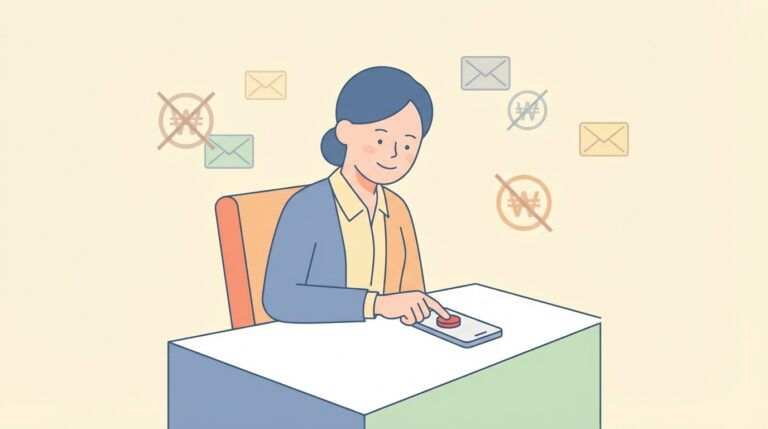
Hello! I’m the lead editor at Daily Hangul, your veteran tutor and local cultural navigator.
Imagine this: You’re watching a classic office K-Drama like Misaeng or Business Proposal. The protagonist is deeply focused on an important presentation. Suddenly, their desk phone rings. They pick it up with their best professional voice: “Yeoboseyo, Marketing Team…” But then, their expression drops. It’s not the CEO. It’s someone trying to sell them a high-interest loan, or maybe a stranger aggressively looking for a “Mr. Kim” who doesn’t even work there.
Notice what the character does next? They don’t just slam the phone down (unless it’s a dramatic plot point!). Instead, they deliver a swift, polite, yet incredibly firm rejection before hanging up.
If you work in Korea, or even if you just have a Korean phone number for your travels, you will get these calls. Knowing how to handle spam and wrong numbers without losing your cool—or your professional image—is the ultimate sign of a seasoned local, an true Inssa (insider).
Today, we’re going to learn how to expertly cut the cord on unwanted calls, the Korean way.
Phase 2: Deep Dive into Key Expressions
Let’s look at the top three ways to escape an unwanted call like a pro.
1. 잘못 거셨습니다. (You have the wrong number.)
- Pronunciation: jalmot geosyeotseumnida [jal-moat go-shyeot-seum-nee-da]
- Meaning: (Literal) You dialed incorrectly. / (Real nuance) You have the wrong number.
- K-Culture Moment: You get a call asking for “Min-ji.” You don’t know a Min-ji. Instead of saying “Who?” in a panicked voice, you drop this phrase. It’s cold, efficient, and immediately solves the problem.
- Editor’s Insight: The key here is the tone. It shouldn’t sound angry, just informative. It’s the verbal equivalent of a “Return to Sender” stamp.
- Situation Spectrum:
[🚫 절대 금지] ———— [⚠️ 주의] ———— [✅ 자유롭게]
- Casual (to friends): 🚫 (Friends don’t usually dial wrong numbers, but if they do, you’d say “야, 너 잘못 걸었어!”)
- Semi-formal (colleagues): ⚠️
- Formal (strangers/business): ✅
- 🤔 Think About It: Why do Koreans use the highly respectful honorific “거셨습니다” (you gracefully dialed) to a complete stranger who just interrupted their day? It shows that Korean politeness is often about maintaining social dignity, not necessarily personal affection.
2. 아, 괜찮습니다. (Ah, I’m fine / No thank you.)
- Pronunciation: a, gwaenchanseumnida [ah, gwen-chan-seum-nee-da]
- Meaning: (Literal) Ah, it is okay. / (Real nuance) No thank you, I don’t need whatever you are selling.
- K-Culture Moment: The telemarketer launches into a rapid-fire speech about a new insurance policy. A veteran Korean office worker will interject with a soft “Ah…” followed by a firm “gwaenchanseumnida,” and immediately click the end button.
- Editor’s Insight: This is the polite Korean shield. Saying “I don’t want it” (싫어요) sounds childish. Saying “It’s okay” is the mature, unbreakable defense.
- Situation Spectrum:
[🚫 절대 금지] ———— [⚠️ 주의] ———— [✅ 자유롭게]
- Casual: 🚫
- Semi-formal: ✅
- Formal: ✅
- 🤔 Think About It: Does your language use “It’s okay” to mean “No”? In Korea, direct refusal can cause someone to “lose face” (kibun/기분), so indirect rejection is an art form.
3. 지금 바빠서 이만 끊겠습니다. (I’m busy right now, so I’ll hang up here.)
- Pronunciation: jigeum bappaseo iman kkeungesseumnida [jee-geum bah-ppa-so ee-man kkeung-ge-seum-nee-da]
- Meaning: (Literal) Because I am busy now, I will cut it at this point. / (Real nuance) I’m ending this conversation now, goodbye.
- K-Culture Moment: The caller is persistent. They ignore your “괜찮습니다.” It’s time to bring out the heavy artillery. You announce your departure and hang up before they can take another breath.
- Editor’s Insight: Announcing that you are going to hang up before actually doing it softens the blow. It shifts the blame to your “busy schedule” rather than your dislike of the caller.
- Situation Spectrum:
[🚫 절대 금지] ———— [⚠️ 주의] ———— [✅ 자유롭게]
- Casual: 🚫
- Semi-formal: ⚠️ (A bit too firm for a coworker)
- Formal (Spam/Telemarketers): ✅
- 🤔 Think About It: Why not just hang up silently? In Korean culture, sudden disconnection is seen as an aggressive act. A verbal warning, even a rapid one, maintains the baseline of manners.
Phase 3: Textbook vs. Real Korean
| Situation | 📖 Textbook Korean | 🗣️ Real Korean | 💡 Why the difference? |
|---|---|---|---|
| Telemarketer calls | 저는 관심이 없습니다. (I have no interest.) | 아, 네. 괜찮습니다~ Click | “괜찮습니다” is the universal, polite reject button in Korean society. |
| Wrong number | 전화번호를 다시 확인해 주세요. (Please check the phone number again.) | 아, 잘못 거셨는데요. (Ah, you dialed wrong.) | Ending with “~는데요” softens the sentence, making it sound less like a command. |
| Persistent spam | 전화를 끊겠습니다. (I will hang up the phone.) | 바빠서요. 수고하세요~ (I’m busy. Keep up the good work~) | Wishing them to “work hard” (수고하세요) before hanging up is the ultimate business reflex. |
Phase 4: Cultural Context — K-Culture Deep Dive
4-1. Non-Verbal Cues: The Power of “Ah…” (아…)
Even though they can’t see you, Korean phone etiquette requires a specific rhythm. Before you reject someone, you almost always start with a short, slightly hesitant “아…” (Ah…) or “어…” (Uh…).
Why? It shows Nunchi (눈치). It signals that you are considering their request, even for a microsecond, before letting them down. It makes the rejection feel less robotic and more human.
4-2. The “Sugo-haseyo” Reflex (수고하세요)
In Korean office life, you will hear “수고하세요” (Keep up the good work / Goodbye) dozens of times a day. It is so ingrained in the culture that Koreans will often say it even to telemarketers right before hanging up. It acknowledges that, hey, you’re just a person doing your job, but I still don’t want to buy your insurance. It’s a fascinating blend of empathy and boundaries.
Phase 5: Real-life Roleplay Scenario
Setting: 2:30 PM on a Tuesday. You are sitting at your desk in a bustling tech startup in Pangyo. Your Excel spreadsheet is a mess. Suddenly, your desk phone rings.
Characters:
– YOU: A foreign employee managing the global partnership team.
– Telemarketer (NPC): Fast-talking, highly polite, but very persistent.
Dialogue:
Telemarketer: 안녕하십니까, 고객님! OO은행입니다. 혹시 김민수 대표님 자리에 계십니까?
(Annyeonghasimnikka, gogaengnim! OO-eunhaeng-imnida. Hoksi Kim Min-su daepyonim jarie gyesimnikka?)
[Hello, customer! This is OO Bank. Is CEO Kim Min-su at his desk?]
YOU: 아, 대표님 지금 회의 중이신데요. 무슨 일이시죠?
(Ah, daepyonim jigeum hoeui jung-isinde-yo. Museun irisijyo?)
[Ah, the CEO is in a meeting right now. What is this regarding?]
Telemarketer: 아, 그러시군요! 다름이 아니라 이번에 저희 은행에서 기업 맞춤형 초저금리 대출 상품이 나와서 안내차 연락드렸습니다. 대표님 언제쯤 통화 가능하실까요?
(Ah, geureosigunyo! Dareumi anira ibeone jeohi eunhaeng-eseo gieop matchumhyeong chojeogeumri daechul sangpumi nawaseo annaecha yeollakdeuryeotseumnida. Daepyonim eonjejjeum tonghwa ganeunghasilkkayo?)
[Ah, I see! Actually, our bank just launched a custom ultra-low interest corporate loan product, so I’m calling to inform you. When would the CEO be available to talk?]
🔀 Your Turn! How should you respond?
– A) “우리는 돈 필요 없어요!” (We don’t need money!)
– B) “아, 저희는 그런 상품 필요 없습니다. 괜찮습니다.”
– C) Silently hang up the phone.✅ Best Choice: B — “Ah, we don’t need that kind of product. We’re fine.” It’s polite, firm, and uses the magic word “괜찮습니다.”
⚠️ Why not A or C? Choice A (“We don’t need money”) sounds a bit aggressive and unnatural. Choice C (silent hang-up) is common for robocalls, but if you’ve already started a conversation, it’s considered poor business manners.
🎬 Bonus K-Travel Roleplay: The Confused Delivery Driver
You ordered fried chicken to your Airbnb. The phone rings.
Driver: 여보세요? 저 배달 왔는데, 여기 101호 맞아요? 문이 안 열리는데요.
(Yeoboseyo? Jeo baedal watneunde, yeogi baeg-il-ho majayo? Muni an yeollinde-yo.)
[Hello? I’m here for the delivery, is this room 101? The door isn’t opening.]
YOU: 아, 기사님! 거기는 옆 건물 같아요. 저희는 ‘파란색 대문’ 건물이에요!
(Ah, gisanim! Geogineun yeop geonmul gatayo. Jeohineun ‘paransaek daemun’ geonmurieyo!)
[Ah, driver! I think that’s the building next door. We are the building with the ‘blue gate’!]
Phase 6: 10-Second Shadowing Drill
Practice your tone! Remember, you are a busy professional.
😔 (Apologetic but firm)
아, 죄송한데 / 제가 지금 좀 바빠서요. / 이만 끊겠습니다.
(Ah, joesonghande / jega jigeum jom bappaseoyo. / iman kkeungesseumnida.)
[Ah, I’m sorry but / I’m a bit busy right now. / I’ll hang up now.]
Phase 7: K-Culture Mini Dictionary
| Korean | Romanization | English | Context |
|---|---|---|---|
| 눈치 | nunchi | Social awareness | The ability to read the room. Knowing when to hang up requires nunchi. |
| 보이스피싱 | boiseupising | Voice Phishing | Phone scams. Korea has strict campaigns against this. Never give out your ARC number over the phone! |
| 수고하세요 | sugohaseyo | Keep up the good work | The standard sign-off for service workers or colleagues leaving work. |
| 스팸 | seupaem | Spam | Unwanted calls/texts (Also the beloved canned meat, context is key!) |
Phase 8: Traveler Survival Kit
Even if you aren’t working in Korea, getting a temporary SIM card means you will inherit someone else’s old number, leading to endless wrong number calls.
🆘 Survival Phrases for Travelers
– 🇰🇷 “한국말 잘 못해요. 죄송합니다.” (Hangungmal jal mothaeyo. Joesonghamnida.)
– 🗣️ Pronunciation: [han-gung-mal jal mo-tae-yo. joe-song-ham-nee-da]
– 📍 Where to use: Anytime a Korean speaker starts talking too fast on the phone.
– 💡 Pro Tip: If you say this and immediately hang up, no one will be offended. They will just assume they dialed the wrong number!
📌 Editor’s Travel Note
If you see a call from a number starting with 070-, it’s almost always a telemarketer or internet phone. Many Koreans just ignore 070 numbers entirely!
Phase 9: Critical Thinking Corner — “One Step Deeper”
🧠 Language & Power (언어와 권력)
Have you ever noticed that even when a Korean person is annoyed by a telemarketer, they still use formal language (존댓말 – jondaetmal)? They will say “괜찮습니다” (formal) rather than “괜찮아” (casual).
This reveals a fascinating aspect of Korean society. Formal language isn’t just about showing affection; it’s a structural boundary. By using formal language with a spam caller, you are maintaining a professional distance. It says, “We are strangers, and we will remain strangers.” In your native culture, do you change your level of formality when you want to create distance from someone bothering you?
💬 Your Turn: How do you politely reject spam calls in your country? Do you use a specific phrase, or just hang up? Let me know in the comments!
Phase 10: FAQ & Avoiding Mistakes
Q: Can I just block the number instead of answering?
Yes! Most Korean smartphones have built-in spam filters. If your screen says “스팸 신고” (Spam reported), just let it ring.
Q: What if I say “괜찮습니다” and they keep talking?
It happens. That’s when you deploy Phrase 3: “바빠서 끊겠습니다” (I’m busy so I’ll hang up) and press the red button. Don’t feel guilty!
❌ Common Mistake #1: Saying “싫어요” (I hate it / No)
✅ Do this instead: Say “관심 없습니다” (I’m not interested) or “괜찮습니다” (I’m fine). “싫어요” sounds like a toddler refusing to eat vegetables.
Phase 11: Summary & Action Items
🎯 One-Liner Summary: To hang up politely in Korea, use the magical shield of “괜찮습니다” (I’m fine) or “잘못 거셨습니다” (Wrong number), and remember to keep it strictly formal!
🚀 Action Missions:
– 🥉 Bronze: Say “아, 괜찮습니다” out loud 3 times, pretending you are rejecting a loan offer.
– 🥈 Silver: Next time you watch a K-Drama, listen closely when someone is on the phone. Can you catch them saying “수고하세요” before hanging up?
– 🥇 Gold: If you get a wrong number call in Korea, don’t panic! Use “잘못 거셨습니다” and politely end the call like a pro.
Phase 12: Quiz — Interactive Challenge
1. Situational Judgment: Your office phone rings. The caller asks for “Director Choi.” Your company doesn’t have a Director Choi. What is the most natural response?
– A) 최 이사님? 그런 사람 없는데요.
– B) 아, 전화 잘못 거셨습니다.
– C) 누구세요?
2. True or False — K-Culture Edition:
It is considered polite to say “수고하세요” (Keep up the good work) to a telemarketer before hanging up. (True / False)
(Answers: 1. B – It’s the most professional way to handle a wrong number. 2. True – Acknowledging their hard work before rejecting them is peak Korean business etiquette!)
Frequently Asked Questions (FAQ)
Q: What does "잘못 거셨습니다. (You have the wrong number.)" mean in Korean and how do you pronounce it?
A: In Korean, "잘못 거셨습니다. (You have the wrong number.)" is pronounced [jalmot geosyeotseumnida [jal-moat go-shyeot-seum-nee-da] and means: (Literal) You dialed incorrectly. / (Real nuance) You have the wrong number.
Q: What does "아, 괜찮습니다. (Ah, I'm fine / No thank you.)" mean in Korean and how do you pronounce it?
A: In Korean, "아, 괜찮습니다. (Ah, I'm fine / No thank you.)" is pronounced [a, gwaenchanseumnida [ah, gwen-chan-seum-nee-da] and means: (Literal) Ah, it is okay. / (Real nuance) No thank you, I don't need whatever you are selling.
Q: What does "지금 바빠서 이만 끊겠습니다. (I'm busy right now, so I'll hang up here.)" mean in Korean and how do you pronounce it?
A: In Korean, "지금 바빠서 이만 끊겠습니다. (I'm busy right now, so I'll hang up here.)" is pronounced [jigeum bappaseo iman kkeungesseumnida [jee-geum bah-ppa-so ee-man kkeung-ge-seum-nee-da] and means: (Literal) Because I am busy now, I will cut it at this point. / (Real nuance) I'm ending this conversation now, goodbye.







