

Phase 1: Empathy (The K-Culture Cold Open)
Hello there! Daily Hangul Editor here.
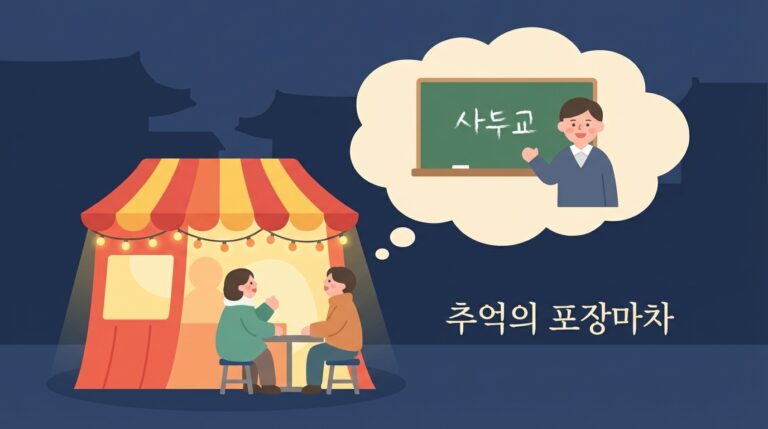
Picture this: You’re watching a classic slice-of-life K-Drama like Reply 1988 or Hospital Playlist. The characters are sitting at a cozy pojangmacha (street tent), the rain is lightly tapping against the tarp, and they’re sharing a bottle of soju. Suddenly, the mood shifts. One character stares blankly into their glass, sighs, and says, “You know… my dream used to be…”
Have you ever wondered how to talk about the things you wanted to be before adulting hit you? Whether you’re exchanging life stories with a Korean friend over chimaek (chicken and beer) or trying to understand your favorite idol when they talk about what they would have been if they hadn’t debuted, talking about childhood dreams is a massive part of bonding in Korea.
Today, we are going to learn how to perfectly say, “My childhood dream was to be a teacher,” and explore the cultural weight behind the word ‘Dream’ (꿈) in Korea. Let’s dive right in!
Phase 2: Core Expressions Deep Dive
1. 어릴 때 꿈이 뭐였어요?
- Pronunciation: [eoril ttae kkumi mwoyeosseoyo?] + [Oh-reel ttay kkoo-mee mwo-yuh-sso-yo?]
- Meaning: What was your childhood dream? (Literal: When young, dream what was it?)
- K-Culture Moment: This is the ultimate “getting to know you deeper” question. You’ll hear this on Korean variety shows when the MC is trying to show a different, more human side of a famous actor or singer.
- Editor’s Insight: The word 어릴 때 (when I was young) sets the nostalgic tone. Make sure to drag out the ‘어~릴’ slightly if you want to sound extra reminiscent!
- Situation Spectrum:
[🚫 0%] ———— [⚠️ 50%] ———— [✅ 100%]
- Close friends (Casual – 어릴 때 꿈이 뭐였어?): ✅
- Coworkers/Acquaintances (Semi-formal): ✅
- Boss/Elders (Formal): ⚠️ (It can feel a bit too personal to ask your 50-year-old boss out of the blue, unless you are very close.)
- 🤔 Think About It: Why do Koreans love asking about the past? In a fast-paced society where everyone is rushing toward the future, asking about a childhood dream is a rare moment to pause and connect on a deeply human level. Do people in your culture ask this often?
2. 제 꿈은 선생님이었어요.
- Pronunciation: [je kkumeun seonsaengnimieosseoyo.] + [Jeh kkoom-eun sun-sang-neem-ee-uh-sso-yo.]
- Meaning: My dream was to be a teacher.
- K-Culture Moment: You are on a date, or having a deep late-night chat with a language exchange partner. You say this, and they immediately go, “Wow, you really suit that! (잘 어울려요!)”
- Editor’s Insight: Notice the past tense ‘-이었어요’ (was). If you use the present tense ‘-이에요’ (is), it means you are currently studying or trying to become one!
- Situation Spectrum:
[🚫 0%] ———— [⚠️ 50%] ———— [✅ 100%]
- Close friends (Casual – 내 꿈은 선생님이었어): ✅
- Coworkers/Acquaintances (Semi-formal): ✅
- Boss/Elders (Formal): ✅
- 🤔 Think About It: “선생님” (Teacher) is one of the most respected professions in Korea. Historically, stepping on a teacher’s shadow was even considered rude! What is the most traditionally respected job in your home country?
3. 원래 커서 선생님이 되고 싶었어요.
- Pronunciation: [wollae keoseo seonsaengnimi doego sipeosseoyo.] + [Won-leh kuh-suh sun-sang-neem-ee dweh-go shee-puh-sso-yo.]
- Meaning: Originally, I wanted to become a teacher when I grew up.
- K-Culture Moment: This sounds incredibly natural. The magic word here is 원래 (originally). It implies, “I wanted to be a teacher, BUT things changed, and now I’m doing something else.”
- Editor’s Insight: If you want to sound like a B1-level native speaker, sprinkle in ‘원래’ (originally) and ‘커서’ (growing up). It adds a beautifully dramatic storytelling layer to your sentence.
- Situation Spectrum:
[🚫 0%] ———— [⚠️ 50%] ———— [✅ 100%]
- Friendly conversations: ✅
- Professional interviews: ⚠️ (A bit too conversational for a strict corporate interview.)
Phase 3: Textbook vs. Real Korean
| Situation | 📖 Textbook Korean | 🗣️ Real Korean | 💡 Why is it different? |
|---|---|---|---|
| Answering “What did you want to be?” | 저는 선생님이 되는 것이 꿈이었습니다. (My dream was to become a teacher.) | 전 어릴 때 쌤 되고 싶었어요. (I wanted to be a ‘ssam’ when I was little.) | Koreans love abbreviations! ‘선생님’ (Seonsaengnim) is often shortened to ‘쌤’ (Ssam) in casual/friendly settings. |
| Adding the “But reality hit” nuance | 하지만 꿈이 바뀌었습니다. (However, my dream changed.) | 근데 현실은 직장인이네요 하하. (But the reality is I’m an office worker, haha.) | Self-deprecating humor about being an ordinary worker (직장인) is very common in modern Korean adult conversations. |
Bottom Note: As a B1 learner, try using “쌤” (Ssam) when talking about teachers with your Korean friends. It will instantly make you sound like you’ve lived in Seoul for years! (Just don’t call your actual formal professor “쌤” to their face unless they are cool with it.)
Phase 4: Cultural Context — K-Culture Deep Dive
4-1. Non-Verbal Cues: The Nostalgic Smile
When Koreans talk about their childhood dreams, it’s rarely a loud, boastful moment. It usually comes with a soft, wistful smile and a gaze that looks slightly off into the distance or down at their drink. It’s a moment of vulnerability. You might also hear a small sigh of “하아…” (Haaa…) before they say, “원래 내 꿈은…” (Originally, my dream was…).
4-2. The “Jangnaehuimang” (장래희망) Culture in Schools
If you watch school-themed K-Dramas, you’ll often see a scene where the homeroom teacher hands out a piece of paper and asks students to write down their 장래희망 (Future Hope/Dream Career).
Interestingly, students didn’t just write their own dreams; there was often a section for “What parents want you to be.” For decades, the holy trinity of Korean parents’ dream jobs for their kids were “사” (Sa) professions: 의사 (Doctor), 판사 (Judge), and 변호사 (Lawyer), alongside 선생님 (Teacher) for its incredible stability.
However, if you ask Korean kids today, the top answers have shifted dramatically to 유튜버 (YouTuber), 아이돌 (Idol), and even 건물주 (Building Owner—because rental income is the ultimate dream!).
Phase 5: Real-Life Roleplay Scenario
Setting: Friday night, 8:00 PM. You and your Korean language exchange partner, Min-su, are sitting on a picnic mat at Yeouido Han River Park. You’re eating delivery fried chicken and looking at the city lights reflecting on the water.
Characters:
– YOU: A B1 Korean learner, currently working a standard corporate job.
– Min-su (28): Your Korean friend. Friendly, a bit of a deep thinker.
Dialogue:
Min-su: 아, 한강 오니까 진짜 좋다. 그치? 🍗
(a, hangang onikka jinjja jota. geuchi?)
[Ah, coming to the Han River is so nice. Right?]
YOU: 응, 일주일 스트레스가 다 풀리는 것 같아.
(eung, iljuil seuteureseuga da pullineun geot gata.)
[Yeah, it feels like all my stress from the week is melting away.]
Min-su: (Looking at the tall office buildings) 저기 불 켜진 빌딩들 봐. 야근하는 사람들 진짜 많다.
(jeogi bul kyeojin bildingdeul bwa. yageunhaneun saramdeul jinjja manta.)
[Look at those lit-up buildings. So many people working overtime.]
Min-su: 너는 어릴 때 꿈이 뭐였어? 원래 지금 하는 일 하고 싶었어?
(neoneun eoril ttae kkumi mwoyeosseo? wollae jigeum haneun il hago sipeosseo?)
[What was your childhood dream? Did you originally want to do the work you do now?]
🔀 YOUR TURN! How do you answer?
– A) 아니요. 저는 선생님이 되는 것이 꿈이었습니다. (Formal, textbook)
– B) 아니, 원래 커서 선생님이 되고 싶었는데… 지금은 그냥 직장인이네. (Natural, slightly nostalgic)
– C) 대박! 나 쌤 되고 싶었어! (A bit too energetic for a deep, reflective question)✅ Best Choice: B — It perfectly matches the chill, slightly reflective mood of a Han River chat. Using “원래” (originally) and “직장인” (office worker) makes you sound incredibly fluent.
⚠️ Choice A Analysis: You are friends with Min-su! Using the formal ‘-습니다’ here would sound like you are suddenly giving a presentation at work.
(Roleplay Continues based on B)
YOU: 아니, 원래 커서 선생님이 되고 싶었는데… 지금은 그냥 평범한 직장인이네. 하하.
(ani, wollae keoseo seonsaengnimi doego sipeonneunde… jigeumeun geunyang pyeongbeomhan jikjanginine. haha.)
[No, originally I wanted to be a teacher when I grew up… but now I’m just an ordinary office worker. Haha.]
Min-su: 오, 진짜? 무슨 과목 선생님?
(o, jinjja? museun gwamok seonsaengnim?)
[Oh, really? What subject teacher?]
YOU: 영어 선생님! 가르치는 걸 좋아했거든.
(yeongeo seonsaengnim! gareuchineun geol joahaetgeodeun.)
[An English teacher! Because I liked teaching.]
Min-su: 와, 잘 어울린다! 나중에 나도 영어 좀 가르쳐 줘. 쌤!
(wa, jal eoullinda! najunge nado yeongeo jom gareuchyeo jwo. ssam!)
[Wow, that suits you! Teach me some English later on. Ssam (Teach)!]
Phase 6: 10-Second Shadowing Drill
Practice this sentence to perfect your rhythm and intonation. Follow the slashes for pauses!
😌 Nostalgic tone:
원래는 / 커서 / 선생님이 / 되고 싶었어요.go sipeosseoyo.)
(wollaeneun / keoseo / seonsaengnimi / doe
*Pro-tip: Stretch out the “되” (doe) slightly to emphasize your past longing!”
Phase 7: K-Culture Mini Dictionary
| Korean | Romanization | English | Cultural Context |
|---|---|---|---|
| 장래희망 | jangnaehuimang | Future Dream / Career Goal | Literally “future hope.” The official term used in Korean schools for what you want to be when you grow up. |
| 취준생 | chwijunsaeng | Job Seeker | Short for 취업 준비생. A very common phase in a Korean young adult’s life, characterized by studying in cafes and high stress. |
| 쌤 | ssam | Teacher (Slang) | An affectionate, casual shortening of 선생님. Students use it, and adults use it with tutors or instructors they are close to. |
| 현실 | hyeonsil | Reality | Often paired with dreams. “꿈은 ~였는데, 현실은…” (My dream was ~, but reality is…). |
Phase 8: Traveler’s Survival Kit (Campus & Making Friends)
Even if you’re just traveling, talking about majors and careers is a fast track to making local friends, especially if you visit university areas like Hongdae or Sinchon!
🆘 Survival Phrases for Making Local Friends
– 🇰🇷 “전공이 뭐예요?” (jeongongi mwoyeyo?)
– 🗣️ Pronunciation: [Jun-gong-ee mwo-yeh-yo?]
– 📍 Meaning: What is your major?
- 🇰🇷 “어떤 일 하세요?” (eotteon il haseyo?)
- 🗣️ Pronunciation: [Uh-tton eel ha-seh-yo?]
- 📍 Meaning: What kind of work do you do? (More polite than asking “What is your job?”)
📌 Editor’s Travel Note:
In Korea, asking about someone’s age or occupation quite early in a relationship isn’t considered rude; it’s actually necessary to figure out which level of politeness (존댓말 or 반말) to use! Don’t be offended if a new Korean friend asks what you do for a living within the first 10 minutes of meeting you.
Phase 9: Critical Thinking Corner — “One Step Deeper”
🧠 Think Deeper: Language & Power (The Pressure of the “Right” Dream)
In Korea, the concept of a “dream” (꿈) historically carried a lot of societal weight. It wasn’t just about what made you happy; it was about fulfilling family duties, achieving stability, and gaining social status. That’s why “Teacher” was such a universally praised dream—it offered an ironclad pension, immense social respect, and stability. Today, however, young Koreans are rebelling against these rigid paths. The rise of K-Pop idols, Webtoon artists, and YouTubers as top dream jobs shows a massive cultural shift from valuing stability to valuing self-expression and passion.
💬 Your Turn:
Is there a specific job in your culture that parents universally push their children toward? Or are childhood dreams completely up to the child’s imagination? Let us know in the comments!
Phase 10: FAQ & Avoiding Misunderstandings
Q: Can I use “제 꿈은 선생님이에요” (My dream is a teacher) if I am 30 years old?
Yes, absolutely! BUT only if you are currently studying for the certification or actively planning a career change. If you are just talking about a forgotten childhood wish, you MUST use the past tense: “선생님이었어요” (was a teacher).
Q: Can I ask an older person about their childhood dream?
If you are drinking together or having a deep conversation, yes! But to be more polite, use “어렸을 때” instead of “어릴 때” and make sure to use formal language: “어렸을 때 꿈이 무엇이셨어요?” (eoryeosseul ttae kkumi mueosisyeosseoyo?).
❌ Common Mistake #1: Confusing ‘having a dream while sleeping’ with ‘future goals.’
DO NOT say: “나는 어젯밤에 선생님 꿈을 꾸었어요” (I had a dream about a teacher last night) when you mean you wanted to be a teacher.
✅ Do this: Use “제 꿈은 ~였어요” (My dream was ~) to talk about career goals.
Phase 11: Summary & Action Items
🌟 One-Liner Summary:
To talk about your past aspirations, use “어릴 때 꿈은 [Job]이었어요” to sound natural, nostalgic, and totally Korean!
🎬 Action Missions:
– 🥉 Bronze (Solo): Stand in front of a mirror and say what your actual childhood dream was using the formula: “제 꿈은 [Your Dream]이었어요.”
– 🥈 Silver (Online): Go to a language exchange app like HelloTalk or Tandem and ask a Korean partner: “어릴 때 꿈이 뭐였어요?”
– 🥇 Gold (Real World): The next time you grab coffee or a drink with a Korean friend, casually bring up the topic using today’s phrases!
– 🎧 K-Culture Mission: Go to YouTube and search for “[Your favorite Idol’s name] 장래희망” (Future Dream). You’ll find cute clips of them talking about what they wanted to be before they became a star!
Phase 12: Quiz — Interactive Challenge
1. Fill in the Blank:
You want to tell your friend that you wanted to be a teacher when you grew up.
“원래 ______ 선생님이 되고 싶었어요.”
A) 자면서 (while sleeping)
B) 커서 (growing up)
C) 작아서 (being small)
2. Situational Judgment:
You meet your 55-year-old boss at a company dinner. You want to ask about his childhood dream to break the ice. Which is the BEST approach?
A) “부장님, 어릴 때 꿈이 뭐였어?”
B) “부장님은 어렸을 때 꿈이 무엇이셨어요?”
C) Don’t ask. It’s too personal for a boss you aren’t close to.
3. True or False – K-Culture Edition:
In Korea, it is considered extremely rude if someone asks what your job is or what you majored in shortly after meeting you.
(Scroll down for answers!)
…
…
…
Answers:
1. B (커서) – It means “when I grew up.”
2. B or C – If the mood is right and he’s sharing personal stories, B is perfectly polite. If it’s a stiff, formal dinner, C is the safest bet!
3. False! Koreans often ask about age and occupation early on to establish the correct level of polite speech (honorifics). It’s a sign they want to communicate properly with you!
Did you enjoy today’s lesson? What was your childhood dream? Drop a comment below using “제 꿈은 ~이었어요!” We read every single one! 😊
Frequently Asked Questions (FAQ)
Q: What does "어릴 때 꿈이 뭐였어요?" mean in Korean and how do you pronounce it?
A: In Korean, "어릴 때 꿈이 뭐였어요?" is pronounced [eoril ttae kkumi mwoyeosseoyo?] and means: What was your childhood dream? (Literal: When young, dream what was it?)
Q: What does "제 꿈은 선생님이었어요." mean in Korean and how do you pronounce it?
A: In Korean, "제 꿈은 선생님이었어요." is pronounced [je kkumeun seonsaengnimieosseoyo.] and means: My dream was to be a teacher.
Q: What does "원래 커서 선생님이 되고 싶었어요." mean in Korean and how do you pronounce it?
A: In Korean, "원래 커서 선생님이 되고 싶었어요." is pronounced [wollae keoseo seonsaengnimi doego sipeosseoyo.] and means: Originally, I wanted to become a teacher when I grew up.







