

How to Visit Seodaemun Prison: Essential Korean & K-Culture Guide
Hello there! I’m the Lead Editor at Daily Hangul.
Have you ever watched a historical K-Drama like Mr. Sunshine or Chicago Typewriter? Remember those heartbreaking scenes where the main characters sacrificed everything for their country’s independence? The tears, the fierce dialogue, the waving of the Taegeukgi (Korean flag)…
Visiting Seodaemun Prison History Hall (서대문 형무소) in Seoul is like stepping out of the drama and into the real, raw history of Korea. It’s not your typical bright and bubbly K-Pop tourist spot. It is a place of profound sorrow, resilience, and respect.
But how do you navigate such a solemn place as a foreigner? How do you ask for tickets, or know if it’s okay to take photos? Today, I’m going to share the essential A2-level Korean expressions and the cultural Nunchi (sense) you need to make your visit meaningful.
All the tips below come straight from my experiences guiding foreign students through Seoul’s historical sites. Let’s dive in!
🗝️ Core Expressions: Navigating the History Hall
Let’s learn three crucial phrases you’ll need at the ticket booth and inside the museum.
1. 어른 두 장 주세요. (Two adult tickets, please.)
- Pronunciation: eoreun du jang juseyo. [Uh-reun doo jahng joo-seh-yo]
(Think of ‘Uh’ like hesitation, and ‘jang’ sounds like ‘John’ with an ‘ng’ at the end)- Meaning: Two adults, please. (Literal: Adult two pieces give me.)
- K-Culture Moment: When you go to any museum, palace, or cinema in Korea, you use the counter 장 (jang) for flat objects like tickets!
- Editor’s Insight: You might have learned 명 (myeong) for counting people. But at a ticket booth, Koreans often say “adult two tickets” implicitly by using jang.
- Situation Spectrum:
[🚫 Never] ———— [⚠️ Caution] ———— [✅ Freely]
- Ticket staff: ✅ (Perfectly natural and polite)
- Friends: 🚫 (You wouldn’t use formal ‘-yo’ to close friends)
- 🤔 Think About It: Why do Koreans specify “adult” (어른) or “child” (어린이) instead of just asking for “two tickets”? It’s because age dictates the price and social structure in Korea! How does ticket buying work in your country?
2. 사진 찍어도 돼요? (Can I take a picture here?)
- Pronunciation: sajin jjigeodo dwaeyo? [Sah-jin jjee-guh-doh dweh-yo?]
- Meaning: Is it okay to take a picture?
- K-Culture Moment: You see a deeply moving artifact. You want to snap a photo for your travel blog, but there’s an intense, quiet atmosphere. You ask the guard this phrase.
- Editor’s Insight: This is a magical survival phrase. “~아/어도 돼요?” means “Is it okay if I…?”. Use it whenever you are unsure about the rules!
- Situation Spectrum:
[🚫 Never] ———— [⚠️ Caution] ———— [✅ Freely]
- Museum Guards / Staff: ✅
- Strangers: ✅
- 🤔 Think About It: In many historical sites, photography is banned to preserve the solemn atmosphere. Does your culture have places where taking photos is considered disrespectful?
3. 마음이 아파요. (It breaks my heart.)
- Pronunciation: maeumi apayo. [Mah-eu-mee ah-pah-yo]
- Meaning: My heart aches. / I feel so sad.
- K-Culture Moment: You are walking through the actual prison cells. Your Korean friend looks down, sighing. You say, “마음이 아파요.” It shows deep empathy.
- Editor’s Insight: Koreans use physical pain words to describe emotional states. 마음 (mind/heart) + 아파요 (hurts) = I am emotionally pained/sad. It’s much more poetic and natural than just saying “슬퍼요” (I am sad).
- Situation Spectrum:
[🚫 Never] ———— [⚠️ Caution] ———— [✅ Freely]
- Close friends: ✅
- Acquaintances: ✅
📖 Textbook vs. 🗣️ Real Korean
| Situation | 📖 Textbook Korean | 🗣️ Real Korean | 💡 Why is it different? |
|---|---|---|---|
| Buying Tickets | 입장권 두 매 주십시오. (Please give me two admission tickets.) | 어른 두 장 주세요. (Two adults, please.) | Spoken Korean prefers simple words and the softer ‘~요’ ending over the rigid ‘~습니다’ military-style ending. |
| Asking about photos | 사진 촬영이 가능합니까? (Is photography permitted?) | 여기 찍어도 돼요? (Can I take pics here?) | We drop complex formal nouns (촬영/가능) and use the casual-polite verb 찍다 (to snap/take). |
| Expressing sadness | 저는 매우 슬픕니다. (I am very sad.) | 진짜 마음이 아파요. (My heart really hurts.) | Koreans emphasize the physical sensation of feelings in everyday speech. |
(Bottom Note: As an A2 learner, stick to the “Real Korean” column. It makes you sound friendly, fluent, and perfectly polite!)
🇰🇷 Cultural Context — K-Culture Deep Dive
4-1. Non-verbal: The Weight of “Nunchi” (눈치)
When visiting Seodaemun Prison, your Nunchi (the ability to read the room) is your best friend. Unlike K-Pop pop-up stores where you can scream and laugh, this is a memorial site.
– Volume control: Speak in hushed tones.
– Body language: Walk slowly. Don’t run or point aggressively at artifacts.
– Respectful distance: Give others space when they are reading the memorial plaques.
4-2. K-Drama Connection: The Spirit of “Han” (한)
If you’ve watched historical dramas set in the 1920s-1940s, you’ve witnessed the concept of 한 (Han)—a deeply ingrained cultural emotion of unresolved sorrow, injustice, and resilient hope. The activists (독립운동가) imprisoned at Seodaemun carried this Han. When you walk through the chilling underground interrogation rooms, you aren’t just looking at bricks; you are walking through the very scenes that inspire those heavy K-Drama narratives.
Critical View: TV dramas often romanticize this era with beautiful costumes and dramatic slow-motion shootouts. However, visiting the actual prison grounds reminds us of the stark, unglamorous, and painful reality these real-life heroes faced.
🎬 Real-Life Roleplay Scenario
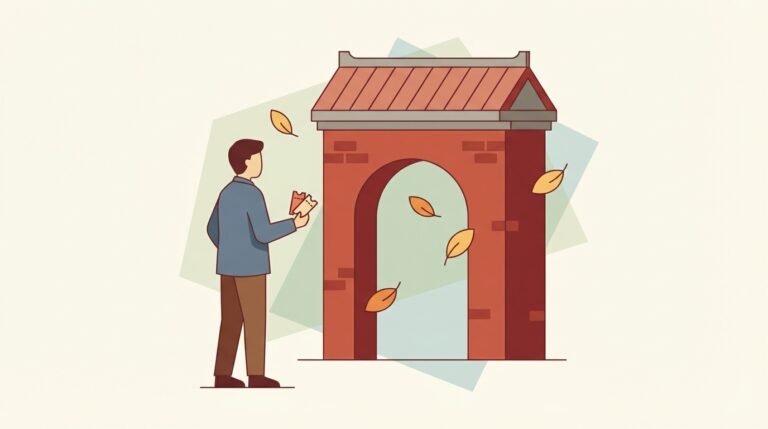
Setting: It is a crisp autumn Saturday. You are standing at the red-brick entrance of Seodaemun Prison History Hall with your Korean friend, Minji. The air is quiet, and people are speaking in low voices.
Characters:
– YOU: A foreigner learning Korean, deeply interested in history.
– Minji (28): Your Korean language exchange partner. She is guiding you today.
Dialogue:
Minji: 다 왔어요. 여기가 서대문 형무소예요.
(Da wasseoyo. Yeogiga Seodaemun hyeongmusoyeyo.)
[We are here. This is Seodaemun Prison.]
YOU: 진짜 넓네요. 표는 어디서 사요?
(Jinjja neomneyo. Pyoneun eodiseo sayo?)
[It’s really spacious. Where do we buy tickets?]
Minji: 저기 매표소가 있어요. 제가 살게요!
(Jeogi maepyosoga isseoyo. Jaega salgeyo!)
[There’s the ticket booth over there. I’ll buy them!]
YOU: 아니에요, 제가 살게요. 어른 두 장 주세요!
(Anieyo, jaega salgeyo. Eoreun du jang juseyo!)
[No, I’ll buy them. Two adults, please!] (Speaking to the ticket staff)
(🎭 Stage Direction: You both get the tickets and walk inside. The atmosphere shifts. It’s somber.)
Minji: 분위기가 너무 무겁죠?
(Bunwigiga neomu mugeopjyo?)
[The atmosphere is really heavy, right?]
YOU: 네… 마음이 아파요.
(Ne… maeumi apayo.)
[Yes… my heart aches.]
(🎭 Stage Direction: You enter an exhibition hall. You want to take out your camera, but you aren’t sure if it’s allowed.)
🔀 Your Turn! What do you say to the museum staff?
– A) “저기요! 사진 찰칵!” (Excuse me! Photo click!)
– B) “사진 찍어도 돼요?” (Can I take a picture?)
– C) “왜 사진 안 돼요?” (Why no photos?)✅ Best Choice: B — It’s the standard, polite way to ask for permission.
⚠️ Choice A & C Analysis: ‘찰칵’ (Click) is too childish for this solemn place. Choice C sounds aggressive, as if you are picking a fight!
🗣️ 10-Second Shadowing Drill
Practice speaking like a local! Follow the slashes for pauses and match the emotional tags.
😔 여기는 / 너무 슬퍼요. / 마음이 / 아파요.
(yeogineun / neomu seulpeoyo. / maeumi / apayo.)
[This place is so sad. My heart hurts.]
🤫 저기요, / 여기서 / 사진 / 찍어도 돼요?
(jeogiyo, / yeogiseo / sajin / jjigeodo dwaeyo?)
[Excuse me, can I take a picture here?]
📚 K-Culture Mini Dictionary
Here are some keywords you will frequently see at Seodaemun Prison:
| Korean | Romanization | English | Context |
|---|---|---|---|
| 독립운동가 | dongnip-undongga | Independence Activist | The heroes who fought for Korea’s independence during the colonial period. |
| 태극기 | taegeukgi | Korean National Flag | You will see a massive one hanging on the prison building. |
| 촬영 금지 | chwaryeong geumji | No Photography | Look out for this sign! It means you cannot take photos. |
| 묵념 | mungnyeom | Silent Tribute | Closing your eyes and bowing your head in respect for the deceased. |
🧳 Traveler’s Survival Kit
Getting to Seodaemun Prison and surviving the trip!
🆘 Survival Expression #1: Finding the exit
– 🇰🇷 “서대문 형무소는 몇 번 출구예요?” (Seodaemun hyeongmusoneun myeot beon chulguyeyo?)
– 🗣️ Meaning: Which exit is for Seodaemun Prison?
– 📍 Where to use: Inside the subway station.
– 💡 Pro Tip: Take Subway Line 3 to Dongnimmun Station (독립문역), and go straight out of Exit 5. It leads directly to the entrance!📌 Editor’s Travel Note
– Best App: Naver Map or KakaoMap. Google Maps doesn’t provide walking directions in Korea!
– Time check: The museum usually closes at 5 or 6 PM depending on the season, and it’s closed on Mondays. Check the time before you go!
– Audio Guide: They offer translation apps/audio devices. Look for the ‘QR Code’ at the entrance to listen to the history in English.
🧠 Critical Thinking Corner — “One Step Deeper”
Media vs. Reality (미디어와 현실)
When we watch K-Dramas, history is often packaged with thrilling background music, impeccable makeup, and dramatic lighting. However, standing in front of the tiny solitary confinement cells (먹방 – literally “ink rooms” because they were pitch black) at Seodaemun Prison strips away that glossy media filter. It challenges us as learners to separate the ‘entertainment’ of K-Culture from the very real, painful sacrifices made by actual people. Understanding this duality makes you not just a fan of Korean media, but someone who truly respects Korea.
💬 Your Turn: Have you ever visited a historical site in your country that totally changed your perspective on a movie or book? Share your experience in the comments!
🛑 FAQ & Avoiding Mistakes
Q: “Can I wear bright clothes like a red dress or K-Pop merch to Seodaemun Prison?”
Editor says: Yes, there is no strict dress code! However, keep your demeanor respectful. It’s okay to look stylish, but avoid making loud TikTok dance videos on the memorial grounds.
Q: “Can I say ‘수고하세요’ (Keep up the good work) to the ticket staff?”
Editor says: Yes! Saying “감사합니다, 수고하세요” when receiving your tickets is a very sweet and natural Korean habit.
❌ Common Mistake: Confusing “아파요” (I am sick/injured) with “마음이 아파요” (My heart is sad).
✅ Do this instead: If you have a headache, just say “아파요.” But if you are looking at a sad historical artifact, be sure to add the word “마음이” (mind/heart) first!
🎯 Summary & Action Items
One-Liner Summary: To respectfully navigate Seodaemun Prison, ask “사진 찍어도 돼요?” before snapping photos, and express your empathy with “마음이 아파요.”
Your 3-Step Mission:
– 🥉 Bronze (Solo): Say “어른 두 장 주세요” out loud to your mirror 3 times.
– 🥈 Silver (Online): Comment below using one of today’s expressions!
– 🥇 Gold (Real-world): If you are in Seoul, take Line 3 to Dongnimmun Station, buy your ticket in Korean, and experience the history firsthand.
🌟 Special K-Culture Mission: Watch an episode of a historical drama (like Mr. Sunshine or Pachinko) and try to spot the word “독립” (Independence) in the dialogue!
📝 Interactive Quiz
1. You are at the Seodaemun Prison ticket booth with your mom. What should you say?
A) 어른 두 명 있습니다.
B) 어른 두 장 주세요.
C) 표 빨리 주세요.
2. Fill in the blank: You see a beautiful old tree near the prison, but you aren’t sure if taking a photo is allowed. “저기요, 사진 ______ 돼요?”
3. True or False: It is completely fine to film loud dance challenges anywhere inside Seodaemun Prison.
(Answers: 1: B, 2: 찍어도, 3: False – Always practice Nunchi and maintain respect!)
Did you find this guide helpful? Drop a 🇰🇷 in the comments if you plan to visit Seodaemun Prison on your next trip to Korea!
Frequently Asked Questions (FAQ)
Q: What does "어른 두 장 주세요. (Two adult tickets, please.)" mean in Korean and how do you pronounce it?
A: In Korean, "어른 두 장 주세요. (Two adult tickets, please.)" is pronounced [eoreun du jang juseyo. [Uh-reun doo jahng joo-seh-yo] and means: Two adults, please. (Literal: Adult two pieces give me.)
Q: What does "사진 찍어도 돼요? (Can I take a picture here?)" mean in Korean and how do you pronounce it?
A: In Korean, "사진 찍어도 돼요? (Can I take a picture here?)" is pronounced [sajin jjigeodo dwaeyo? [Sah-jin jjee-guh-doh dweh-yo?] and means: Is it okay to take a picture?
Q: What does "마음이 아파요. (It breaks my heart.)" mean in Korean and how do you pronounce it?
A: In Korean, "마음이 아파요. (It breaks my heart.)" is pronounced [maeumi apayo. [Mah-eu-mee ah-pah-yo] and means: My heart aches. / I feel so sad.






