

Phase 1: Empathy (Immersive Opening)
Hello! I’m the Lead Editor of Daily Hangul.
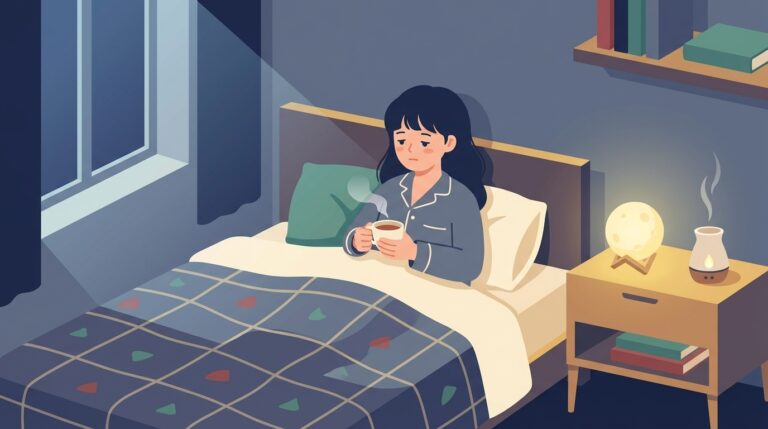
Picture this: It’s 3:00 AM. You are watching a K-Drama, and the protagonist is tossing and turning in bed. The camera pans to their phone screen, glowing in the dark, then to a cup of untouched warm milk. They let out a deep sigh and whisper, “아, 또 잠이 안 와…” (Ah, I can’t sleep again…)
Or maybe, you don’t even need to imagine it. Perhaps you’ve experienced this firsthand after a long day of navigating the bustling, neon-lit streets of Seoul, overstimulated by the ppali-ppali (hurry-hurry) culture and that late-night iced Americano.
As advanced (C1) Korean learners, you already know how to say “I’m tired” (피곤해요). But when stress piles up and insomnia hits, simply saying “I can’t sleep” doesn’t quite capture the emotional and physical toll. In Korea, where long working hours and intense studying are common, conversations about burnout, mental care, and sleep disorders have evolved into a shared cultural bonding experience.
Today, we are going completely beyond the textbook. I’ll show you exactly how Koreans express their sleepless nights, how to comfort someone going through burnout, and the cultural nuances behind mental care in Korea. Let’s dive in!
Phase 2: Core Expressions Deep Dive
1. 밤새 뒤척이다 (To toss and turn all night)
- Pronunciation: [bamsae dwicheogida] / bam-sae dwee-chuck-ee-da
- Meaning: Literal: To flip over all night. Real nuance: To toss and turn due to insomnia, anxiety, or deep thoughts.
- K-Culture Moment: If you listen to K-Pop ballads, you’ve heard this a million times! Singers always croon about “밤새 뒤척이다” when missing an ex. In real life, you use this to express the physical frustration of not being able to fall asleep.
- Editor’s Insight: This phrase emphasizes the physical restlessness. It shows you were actively trying to sleep but your brain and body wouldn’t cooperate. It feels much more descriptive and emotional than just saying “I couldn’t sleep.”
- Situation Spectrum:
[🚫 Formal Boss] ———— [⚠️ Semi-formal] ———— [✅ Casual]- Casual (Friends): ✅ “어제 생각 많아서 밤새 뒤척였어.”
- Semi-formal (Co-workers): ⚠️ “어제 잠자리를 좀 뒤척였네요.”
- Formal (Elders/Boss): 🚫 (A bit too personal. Stick to “잠을 잘 못 주무셨습니까?”)
- 🤔 Think About It: Korean often uses vivid physical verbs to describe mental states. Why do you think expressing physical discomfort is more culturally accepted than directly stating emotional anxiety? Does your native language do this too?
2. 뜬눈으로 밤을 새우다 (To stay up all night with open eyes)
- Pronunciation: [tteunnuneuro bameul sae-uda] / tteun-noon-eu-ro bam-eul sae-oo-da
- Meaning: Literal: To stay up the night with floating/open eyes. Real nuance: To not sleep a single wink.
- K-Culture Moment: Think of a K-Drama character sitting in the dark, staring blankly at the ceiling until the sun comes up. They are enduring the insomnia.
- Editor’s Insight: This carries a heavy nuance of suffering. You didn’t just stay up late watching Netflix (that’s 밤을 새다); you could not close your eyes because of extreme stress or a sleep disorder.
- Situation Spectrum:
[🚫 Formal Boss] ———— [⚠️ Semi-formal] ———— [✅ Casual]- Casual: ✅
- Semi-formal: ✅ (Actually quite common in Korean offices to show how stressed you are about a project!)
- Formal: 🚫
- 🤔 Think About It: Notice the passive endurance in this phrase. It implies the sleeplessness happened to you.
3. 통 잠을 못 자다 (Can’t sleep at all)
- Pronunciation: [tong jameul mot jada] / tong jam-eul moht ja-da
- Meaning: Literal: Cannot sleep entirely. Real nuance: I haven’t been able to get any decent sleep lately.
- K-Culture Moment: This is the ultimate water-cooler talk in Korean offices. When a colleague looks like a zombie holding a Venti Americano, this is what they say.
- Editor’s Insight: The word ‘통’ (entirely/at all) is an advanced native-speaker modifier used with negative sentences. Adding it instantly upgrades your Korean from B1 to C1.
- Situation Spectrum:
[🚫 Formal] ———— [⚠️ Semi-formal] ———— [✅ Casual]- Casual: ✅ “요새 스트레스 받아서 통 잠을 못 자.”
- Semi-formal: ✅ “요즘 통 잠을 못 자서 피곤하네요.”
- Formal: ⚠️
Phase 3: Textbook vs. Real Korean
| Situation | 📖 Textbook Korean | 🗣️ Real Korean | 💡 Why the difference? |
|---|---|---|---|
| Explaining your condition | 저는 불면증에 걸렸습니다. (I caught insomnia.) | 요새 통 잠을 못 자요. (I can’t sleep at all lately.) | Koreans prefer describing the symptom rather than self-diagnosing with a clinical medical term in daily chat. |
| Asking if they slept well | 간밤에 안녕히 주무셨습니까? (Did you sleep peacefully last night?) | 어제 꿀잠 잤어? / 잠은 좀 잤어? (Did you sleep like honey? / Did you get some sleep?) | ‘꿀잠’ (honey sleep) is a trendy, ubiquitous slang. ‘안녕히 주무셨습니까’ is strictly for grandparents or highly formal settings. |
| Expressing extreme fatigue | 너무 피곤합니다. (I am very tired.) | 아, 완전 번아웃 온 것 같아. (Ah, I think I’m completely burned out.) | Mental health terminology like ‘burnout’ (번아웃) has become mainstream slang to describe modern work fatigue. |
Bottom Note for C1 Learners: While ‘불면증’ (insomnia) is perfectly fine for a doctor, using ‘번아웃’ (burnout) or ‘통 잠을 못 자다’ makes you sound deeply integrated into modern Korean society.
Phase 4: Cultural Context — K-Culture Deep Dive
4-1. Non-Verbal Cues: The Art of the ‘Sigh’
When discussing stress or insomnia in Korea, the non-verbal cues are just as important as the words. You’ll often see Koreans let out a deep, audible sigh (한숨 쉬기) before saying “아… 요새 잠이 안 와.” In the past, elders would scold people for sighing, saying “복 나간다” (your luck is escaping). But today, it’s an accepted physical release of Hwa (화 – fire/anger/stress) from the body. It shows your Nunchi (눈치); if someone sighs, it’s your cue to ask, “무슨 일 있어?” (Is something wrong?).
4-2. The K-Lifestyle Paradox: Caffeine and ASMR
Korea has a fascinating relationship with sleep. On one hand, it’s the land of the 24/7 lifestyle. You can order spicy Tteokbokki at 2 AM and drink iced Americanos at 10 PM. This ppali-ppali lifestyle inevitably leads to stress and sleep disorders.
To counter this, a massive ‘Mental Care’ subculture has emerged. Have you noticed how K-Pop idols often do late-night V-Live/Weverse streams speaking in very soft, hushed voices? They know their fans are awake and stressed. Furthermore, Korea is a powerhouse of “Sleep ASMR” (수면 ASMR) and “Spacing Out” (멍때리기) competitions. The culture simultaneously creates the stress and invents highly specific, community-driven ways to cure it.
Phase 5: Real-Life Roleplay Scenario
Setting: Friday at 7 PM. A dimly lit, quiet tea house in Insadong. The scent of traditional herbal tea fills the air. You are meeting your Korean coworker, Minji.
Characters:
– YOU: An expat working in Seoul, navigating the intense corporate culture.
– Minji (32): Your close work friend. She usually has high energy but today she looks like she’s running on 1% battery.
Dialogue:
Minji: 하아… (Deep sigh)
(ha-a…)
[Haah…]
(🎭 Stage Direction: Minji rubs the back of her neck and stares blankly at the menu)
YOU: 민지 씨, 안색이 안 좋아요. 무슨 일 있어요?
(Minji ssi, ansaegi an joayo. Museun il isseoyo?)
[Minji, you don’t look well. Is something wrong?]
Minji: 요새 프로젝트 때문에 스트레스 받아서… 며칠째 통 잠을 못 잤어요.
(Yosae peurojekteu ttaemune seuteureseu badaseo… myeochiljjae tong jameul mot jasseoyo.)
[I’m so stressed about the project lately… I haven’t been able to sleep at all for days.]
YOU: 헐, 어쩐지. 어제도 야근했죠?
(Heol, eojjeonji. Eojedo yageunhaetjyo?)
[Oh man, no wonder. You worked overtime yesterday too, right?]
Minji: 네. 침대에 누워도 계속 일 생각만 나서 밤새 뒤척였어요.
(Ne. Chimdaee nuwodo gyesok il saenggangman naseo bamsae dwicheogyeosseoyo.)
[Yeah. Even when I lay in bed, I kept thinking about work, so I tossed and turned all night.]
YOU: 저런… 병원은 가봤어요? 불면증 심해지면 큰일 나요.
(Jeoreon… byeongwoneun gabwasseoyo? Bulmyeonjeung simhaejimyeon keunil nayo.)
[Oh no… have you been to the doctor? It’s dangerous if insomnia gets worse.]
Minji: 병원 갈 시간도 없어요. 낮에 졸려서 커피만 4잔 마셨더니 심장이 너무 뛰네요.
(Byeongwon gal sigando eopseoyo. Naje jollyeoseo keopiman nejan masyeotdeoni simjangi neomu ttwineyo.)
[I don’t even have time to go to the doctor. I was sleepy during the day so I drank 4 cups of coffee, and now my heart is racing.]
🔀 Your Turn! How should you respond?
– A) “그러니까 커피를 마시면 안 되죠. 자업자득이네요.” (That’s why you shouldn’t drink coffee. You reap what you sow.)
– B) “진짜 번아웃 오겠다. 오늘은 무조건 디카페인 따뜻한 차 마셔요. 제가 살게요!” (You’re really going to get burned out. Today you must drink a warm decaf tea. It’s on me!)
– C) “수면제를 드세요.” (Take sleeping pills.)✅ Best Choice: B — Reason: Empathy is key. Acknowledging her potential ‘번아웃’ (burnout) shows deep cultural understanding, and offering to buy her a soothing tea demonstrates great Nunchi and warmth (Jeong/정).
⚠️ Choice C Analysis: Telling someone bluntly to take sleeping pills (수면제) sounds very clinical and severe in Korea. It lacks the emotional comfort she is seeking.
YOU: 진짜 번아웃 오겠다. 오늘은 무조건 디카페인 따뜻한 차 마셔요. 제가 살게요!
(Jinjja beona-ut ogetda. Oneureun mujogeon dikapein ttatteutan cha masyeoyo. Jaega salgeyo!)
[You’re really going to get burned out. Today you must drink a warm decaf tea. It’s on me!]
Minji: 아… 감동이에요. 진짜 고마워요.
(A… gamdongieyo. Jinjja gomawoyo.)
[Ah… I’m touched. Thank you so much.]
(🎭 Stage Direction: Minji finally smiles, looking a bit more relaxed)
Phase 6: 10-Second Shadowing Drill
Read these out loud to master the natural rhythm and intonation. Pay attention to the pauses (/)!
😤 Exhausted/Frustrated
요새 / 스트레스 때문에 / 통 잠을 / 못 자요.
(Yosae / seuteureseu ttaemune / tong jameul / mot jayo.)
😢 Weary/Complaining mildly
어제 / 뜬눈으로 / 밤을 새웠더니 / 죽겠네…
(Eoje / tteunnuneuro / bameul saewotdeoni / jukgenne…)
Phase 7: K-Culture Mini Dictionary
| Korean | Romanization | English | Contextual Explanation |
|---|---|---|---|
| 번아웃 | beona-ut | Burnout | Literally from the English word, but widely used as a noun in Korea to describe the physical and mental collapse from overworking. |
| 꿀잠 | kkuljam | Sweet sleep | Honey (꿀) + Sleep (잠). The ultimate goal for stressed modern Koreans. Used heavily in marketing for bedding or ASMR. |
| 수면 유도제 | sumyeon yudoje | Sleep aid (OTC) | Mild over-the-counter sleep aids you can buy at a pharmacy without a prescription. Distinct from heavy sleeping pills (수면제). |
| 멍때리기 | meongttaerigi | Spacing out | The act of intentionally zoning out to clear the mind. Seen as a legitimate form of mental care; there are even national ‘spacing out’ competitions! |
| 디카페인 | dikapein | Decaf | Decaffeinated coffee. A lifesaver for Koreans who love the cafe culture but suffer from insomnia. |
Phase 8: Traveler’s Survival Kit
Even if you’re just visiting Korea, travel stress and jet lag can cause sleep issues. Here are the survival phrases you need for a peaceful rest.
🆘 Survival Expression #1: At the Pharmacy (약국)
– 🇰🇷 “수면 유도제 있나요?” (sumyeon yudoje innayo?)
– 🗣️ Meaning: Do you have sleep aids?
– 📍 Where to use: Pharmacies (You cannot buy sleep medicine at convenience stores).
– 💡 Pro Tip: Do not ask for ‘수면제’ (sumyeonje), which are strong prescription-only sleeping pills. Ask for ‘수면 유도제’ (mild sleep inducers) or simply say “잠이 안 와서요” (Because I can’t sleep) and the pharmacist will help you.🆘 Survival Expression #2: At the Hotel
– 🇰🇷 “최대한 조용한 방으로 부탁드려요.” (choedaehan joyonghan bangeuro butakdeuryeoyo.)
– 🗣️ Meaning: Please give me the quietest room possible.
– 📍 Where to use: Hotel front desk during check-in.🆘 Survival Expression #3: At the Cafe
– 🇰🇷 “이거 디카페인으로 변경 되나요?” (igeo dikapeineuro byeonggyeong doenayo?)
– 🗣️ Meaning: Can this be changed to decaf?
– 📍 Where to use: Late-night cafe visits.
📌 Editor’s Travel Note:
Korean pharmacies (약국) are highly accessible and pharmacists are essentially your first line of medical consultation. Don’t be afraid to walk in and describe your symptoms. Also, if you need a calming tea, look for ‘캐모마일’ (Chamomile) or ‘유자차’ (Yuja/Citron tea) at any cafe.
Phase 9: Critical Thinking — “One Step Deeper”
Language & Culture: The Evolution of Mental Health Stigma
Historically, in Korean society, discussing mental health or severe stress was somewhat taboo. People masked their depression or anxiety by simply saying, “피곤하다” (I’m physically tired) or “몸살 났다” (I have body aches). However, observing the Korean language today reveals a massive cultural shift. The ubiquitous adoption of words like ‘번아웃’ (burnout), ‘힐링’ (healing), and ‘멘탈 케어’ (mental care) into everyday vocabulary shows that younger generations are actively breaking the stigma. Acknowledging that you are “tossing and turning” because of anxiety is no longer a sign of weakness; it’s a shared modern experience.
🧠 Think Deeper:
The language we use shapes our reality. By adopting specific words for mental fatigue, Koreans have created a space to openly discuss it.💬 Your Turn: How is insomnia or mental burnout discussed in your culture? Is it openly shared among coworkers, or kept strictly private? Let me know in the comments!
Phase 10: FAQ & Avoiding Misunderstandings
Q: Can I tell my boss “저 불면증 있어요” (I have insomnia)?
A: Maybe. While mental health awareness is growing, oversharing medical conditions with a traditional boss might cause unnecessary concern about your work performance. It is safer and more natural to say, “요즘 일이 많아서 잠을 좀 설쳤습니다” (I haven’t slept well lately because of the workload).
Q: If an idol posts “잠이 안 와요ㅠㅠ” on Weverse, can I reply using informal language (반말)?
A: Yes! On fan platforms, fans usually use affectionate informal language or polite language (해요체). Replying with “밤새 뒤척이지 말고 따뜻한 우유 마셔요!” (Don’t toss and turn all night, drink some warm milk!) is perfect.
❌ Common Mistake #1: Saying “너 수면제 먹어라” (Take sleeping pills) to a friend.
✅ Do this instead: As mentioned, ‘수면제’ sounds very heavy. Instead, suggest a lifestyle remedy: “따뜻한 차 마시고 푹 쉬어” (Drink warm tea and get a good rest).
Phase 11: Summary & Action Items
One-Liner Summary: To talk about insomnia like a local, focus on the physical feeling of restlessness (“밤새 뒤척이다”) and the intensity of the fatigue (“통 잠을 못 자다”).
Action Mission:
– 🥉 Bronze (Solo): Stand in front of a mirror, let out a deep Korean sigh, and practice saying: “아… 요새 통 잠을 못 자요.”
– 🥈 Silver (Online): Write a 2-sentence journal entry tonight about your sleep using ‘꿀잠’ or ‘뒤척이다’.
– 🥇 Gold (Real World): Next time a Korean friend or colleague looks tired, ask them: “요즘 잠은 잘 자요?”
🎬 K-Culture Mission: Go to YouTube and search “수면 ASMR” (Sleep ASMR) or “아이돌 수면” (Idol sleep). Read the Korean comments. You will definitely spot the words 꿀잠 and 뒤척이다!
Phase 12: Quiz — Interactive Challenge
1. Situational Judgment: Your friend looks extremely exhausted and says they stayed up all night worrying about a job interview. Which phrase correctly describes their night?
A) 밤을 새웠다 (Just stayed up, maybe playing games)
B) 뜬눈으로 밤을 새웠다 (Stayed up with eyes open/couldn’t sleep a wink)
C) 꿀잠을 잤다 (Slept like a log)
2. Fill in the Blank:
“스트레스가 너무 심해서 요새 ___ 잠을 못 자요.” (I’m so stressed I can’t sleep at all lately.)
A) 통
B) 덜
C) 참
3. True or False – K-Culture Edition:
In Korea, you can easily buy strong sleeping pills (수면제) at a convenience store (편의점) 24/7.
(Answers below!)
Click to reveal answers
1. B – It perfectly captures the passive endurance of insomnia due to anxiety.
2. A (통) – ‘통’ combined with a negative verb means “not at all.”
3. False – Convenience stores sell basic pain relievers and digestive meds, but for any sleep aid (even mild 수면 유도제), you must go to a pharmacy (약국). Strong sleeping pills (수면제) require a doctor’s prescription!
Frequently Asked Questions (FAQ)
Q: What does "밤새 뒤척이다 (To toss and turn all night)" mean in Korean and how do you pronounce it?
A: In Korean, "밤새 뒤척이다 (To toss and turn all night)" is pronounced [bamsae dwicheogida] and means: Literal: To flip over all night. Real nuance: To toss and turn due to insomnia, anxiety, or deep thoughts.
Q: What does "뜬눈으로 밤을 새우다 (To stay up all night with open eyes)" mean in Korean and how do you pronounce it?
A: In Korean, "뜬눈으로 밤을 새우다 (To stay up all night with open eyes)" is pronounced [tteunnuneuro bameul sae-uda] and means: Literal: To stay up the night with floating/open eyes. Real nuance: To not sleep a single wink.
Q: What does "통 잠을 못 자다 (Can't sleep at all)" mean in Korean and how do you pronounce it?
A: In Korean, "통 잠을 못 자다 (Can't sleep at all)" is pronounced [tong jameul mot jada] and means: Literal: Cannot sleep entirely. Real nuance: I haven't been able to get any decent sleep lately.







