

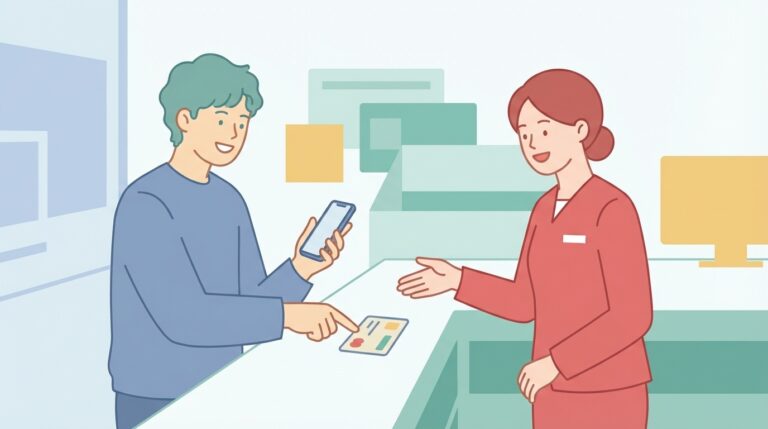
Phase 1: Empathy — The Immersive Hook
안녕하세요! Your Daily Hangul Editor is here.
Picture this: You are watching your favorite K-Drama. The main character finds out a shocking secret, dramatically drops their sleek new smartphone on the pavement, and walks away. You might be thinking, “Wow, what a scene!” but also… “Wait, who is going to pay for that broken screen?!”
If you drop your phone while navigating the crowded streets of Myeongdong, or if the expensive Korean rice cooker you bought as a souvenir suddenly stops working, you can’t just walk away like a K-Drama lead. You need to visit an AS (After-Sales Service) Center.
Korea is world-famous for its lightning-fast customer service, but walking into a bustling tech center can be intimidating if you don’t know the magic words. Today, we are going to learn exactly how to ask if your warranty is still valid and if you can get that sweet, sweet free repair.
(Note: This lesson is based on real SOS messages from my students who dropped their phones in the subway!)
Phase 2: Deep Dive — Core Expressions
Let’s break down the 3 ultimate survival phrases you need at a Korean service center.
1. 보증 기간 남았나요?
- Pronunciation: bojeung gigan namannayo? [bo-jeung gi-gan na-man-na-yo?]
- Sound-alike guide: “Bo” (like bow) + “jeung” (j + ugh + ng) + “gi-gan” (key-gone) + “na-man-na-yo” (Nah, man, nah, yo?)
- Meaning: Is the warranty period still valid? (Literal: Is the warranty period left?)
- K-Culture Moment: You hand over your device to the technician in a clean, brightly lit Samsung or LG center. Before they quote you a scary price, you hit them with this phrase.
- Editor’s Insight: The verb 남다 (to remain/be left) is super useful in Korea. We use it for time, food, and yes, warranties! It feels much more natural than saying “When does my warranty end?”
- Situation Spectrum:
[🚫 절대 금지] ———— [⚠️ 주의] ———— [✅ 자유롭게]- Friends (Casual): ⚠️ (You’d say 남았어?)
- Service Staff (Polite): ✅ (Perfectly natural)
- 🤔 Think About It: Why do Koreans prefer asking “Is it left?” rather than “Is it expired?” Focusing on what remains rather than what is dead is a common polite phrasing in Korean customer service.
2. 무상 수리 되나요?
- Pronunciation: musang suri doenayo? [mu-sang su-ri dwe-na-yo?]
- Sound-alike guide: “Moo-sang” (Moo like a cow + sang) + “soo-ree” + “dwe-na-yo” (dway-nah-yo)
- Meaning: Can I get it fixed for free? (Literal: Is free-of-charge repair possible?)
- K-Culture Moment: In Korea, “Service” (서비스) usually means a freebie at a restaurant. But at an electronics center, you must use the word 무상 (Musang – free of charge) instead of just “free” or “service” to avoid confusion.
- Editor’s Insight: This is the golden question. If the answer is “네 (Yes),” you just saved yourself hundreds of dollars. If it’s “유상입니다 (It’s paid),” get your wallet ready.
- Situation Spectrum:
[🚫 절대 금지] ———— [⚠️ 주의] ———— [✅ 자유롭게]- Friends (Casual): 🚫
- Service Staff (Polite): ✅
- 🤔 Think About It: Does your home country differentiate between “complimentary items” and “free-of-charge technical service” with entirely different vocabulary words?
3. 영수증 잃어버렸는데 괜찮은가요?
- Pronunciation: yeongsujeung ireobeoryeonneunde gwaenchaneungayo?
- Sound-alike guide: “Young-soo-jung” + “ee-ro-bo-ryeon-neun-de” + “gwen-cha-neun-ga-yo”
- Meaning: I lost the receipt, is that okay?
- K-Culture Moment: You’re a tourist. Who keeps paper receipts while traveling? Luckily, Korean systems are heavily digitalized.
- Editor’s Insight: Use this when you look slightly distressed. The ending “~은가요?” sounds softer and more polite than a direct “괜찮아요?”
Phase 3: Textbook vs Real Life
| Situation | 📖 Textbook Korean | 🗣️ Real Korean | 💡 Why is it different? |
|---|---|---|---|
| Asking about warranty | 보증 기간이 언제까지입니까? (Until when is the warranty period?) | 이거 아직 무상 되죠? (This is still under free repair, right?) | Real Korean assumes the outcome you want (free repair) and asks for confirmation directly. |
| Asking the price | 수리비가 얼마입니까? (How much is the repair fee?) | 견적 얼마나 나올까요? (How much will the estimate come out to be?) | “견적” (estimate) sounds more professional and native when dealing with cars or electronics. |
| Expressing urgency | 빨리 고쳐주세요. (Please fix it quickly.) | 혹시 오늘 안에 될까요? (By any chance, can it be done today?) | Being indirect (“By any chance…”) is the polite way to rush someone in Korea without being rude. |
Phase 4: Cultural Deep Dive
4-1. Non-verbal Communication: The Art of Handing Things Over
When handing your broken phone or laptop to the service technician, do not slide it across the desk with one hand. In Korea, handing over an item with two hands (or one hand supporting the other arm) shows respect. Also, make sure to unlock your screen before handing it over—it saves time, and in Korea’s Ppalli-Ppalli (hurry up) culture, time is everything!
4-2. K-Culture Connection: The “Ppalli-Ppalli” AS Marvel
If you ever visit a major electronics AS Center in Korea (like Samsung or LG), prepare to be amazed. It looks more like a premium bank lounge than a repair shop. You pull a number ticket, sit on a comfy sofa, drink free mixed coffee, and wait.
For many minor repairs, like a cracked screen or a battery replacement, it takes less than an hour. K-Dramas rarely show the waiting time because, in Korea, there really isn’t much waiting! If your warranty is valid (보증 기간이 남았다면), the technician will fix it, bow, and send you on your way without charging a single won.
Phase 5: Immersive Roleplay
Scenario A: The Broken Screen Crisis
Setting: Tuesday afternoon, 2 PM. A brightly lit smartphone service center in Hongdae. You dropped your phone while trying to take a selfie at a cafe. You are sitting across from a friendly technician.
Characters:
– YOU: A foreign traveler/resident trying to save money.
– Technician (기사님): Professional, wearing a neat uniform.
기사님: 고객님, 어떤 문제가 있으신가요? 📱
(gogaengnim, eotteon munjega isseusingayo?)
[Customer, what seems to be the problem?]
YOU: 제가 핸드폰을 떨어뜨려서 액정이 깨졌어요.
(jega haendeuponeul tteoreotteuryeoseo aekjeongi kkaejyeosseoyo.)
[I dropped my phone and the screen broke.]
기사님: 아고, 속상하시겠네요. 한번 확인해보겠습니다.
(ago, soksanghasigenneyo. hanbeon hwaginhaebogetseumnida.)
[Oh no, you must be upset. Let me check it for you.]
(🎭 Stage Direction: The technician types your serial number into the computer.)
기사님: 다행히 내부는 괜찮은데, 전면 교체를 해야 할 것 같습니다.
(dahaenghi naebuneun gwaenchaneunde, jeonmyeon gyochereul haeya hal geot gatseumnida.)
[Fortunately the inside is fine, but we’ll have to replace the front panel.]
🔀 Your Turn! How should you respond?
– A) “너무 비싸요. 안 할래요.” (Too expensive. I won’t do it.)
– B) “혹시… 보증 기간 남았나요? 무상 수리 되나요?” (By any chance… is the warranty still valid? Is it free?)
– C) “대박! 고마워요.” (Jackpot! Thanks.)✅ Best Choice: B — Always ask about the warranty first before accepting the repair!
⚠️ Choice C Analysis: “대박” is strictly casual slang. Using it with a professional technician will make you sound like a teenager, and it doesn’t solve your money problem!
YOU: (Choosing B) 혹시… 보증 기간 남았나요? 무상 수리 되나요?
(hoksi… bojeung gigan namannayo? musang suri doenayo?)
기사님: 네, 구매하신 지 1년이 안 되어서 무상 수리 가능합니다! 30분 정도 걸립니다.
(ne, gumaehasin ji illyeoni an doeeoseo musang suri ganeunghamnida! sipsibbun jeongdo geollimnida.)
[Yes, it hasn’t been a year since you bought it, so free repair is available! It will take about 30 minutes.]
YOU: 휴, 다행이다. 감사합니다!
(hyu, dahaengida. gamsahamnida!)
[Phew, what a relief. Thank you!]
Phase 6: 10-Second Shadowing Drill
Practice this until it becomes muscle memory! Follow the pauses (/) and the emotion tags.
🥺 저기요 / 혹시 이거 / 보증 기간 남았나요?
(jeogiyo / hoksi igeo / bojeung gigan namannayo?)
🙏 무상 수리가 / 되면 / 좋겠는데요.
(musang suriga / doemyeon / joketneundeyo.)
Pro-tip: Stretch out the ‘혹~시’ (hok~si – by any chance) to sound extra polite and hopeful!
Phase 7: K-Culture Glossary
| 한국어 (Korean) | Romanization | English | Cultural Context |
|---|---|---|---|
| AS센터 | a-i-eu-se-sen-teo | Service Center | “After Service” (Konglish). Never say “Customer Service”; say “AS Center”. |
| 무상 | musang | Free of charge | Used strictly for services, repairs, and official contexts. |
| 유상 | yusang | Paid (requires fee) | The opposite of Musang. If you hear this, you have to pay. |
| 액정 | aekjeong | Screen / Display | Literal meaning: liquid crystal. Used for phone/TV screens. |
| 진동벨 | jindong-bel | Vibrating buzzer | Given to you at the AS center so you can roam around while they fix it. |
Phase 8: Traveler’s Survival Kit
Electronics emergencies happen while traveling. Here is your cheat sheet.
🆘 Survival Phrases for Tech Emergencies
– 🇰🇷 “액정이 나갔어요.” (aekjeongi nagasseoyo.) = The screen went black / broke.
– 🇰🇷 “충전이 안 돼요.” (chungjeoni an dwaeyo.) = It’s not charging.
– 🇰🇷 “돼지코 있나요?” (dwaejiko innayo?) = Do you have a plug adapter? (Literal: pig nose 🐽)
– 📍 Where to use: AS Centers, electronics markets (like Yongsan), convenience stores.
– 💡 Pro Tip: Need an adapter? Ask a convenience store or hotel front desk for a “돼지코” (Pig nose)—it’s the cute local slang for a 220v plug adapter because the two round holes look like a pig’s snout!
📌 Editor’s Travel Note:
– Map Apps: Don’t use Google Maps to find a repair center! Search “삼성 서비스센터” (Samsung) or “애플스토어” (Apple) on Naver Map or Kakao Map.
– Receipts: Korean warranty tracking is usually tied to your phone’s serial number or the phone number you gave at purchase. No paper? No panic!
Phase 9: Think Deeper — “One Step Further”
Global Era: Konglish and Efficiency
Have you ever wondered why Koreans say “AS” (에이에스 – After Service) instead of “Warranty claim” or “Repair shop”? As Korea rapidly industrialized and adopted Western technology, they took English words and shortened them for maximum efficiency. “AS” perfectly encapsulates the Korean consumer’s expectation: the relationship with the brand doesn’t end when you buy the product; the after service must be flawless, fast, and polite. It is a prime example of language evolving to fit a culture’s specific social demands.
💬 Your Turn: Are service centers fast or slow in your country? Do people expect free repairs, or is there a culture of DIY (Do It Yourself)? Share in the comments!
Phase 10: FAQ & Troubleshooting
- Q: Can I use “무상 수리 되나요?” to a senior manager or older person?
- A: YES! This is a perfectly polite, standard phrase suitable for all customer service interactions.
- Q: I dropped my phone and the screen is totally black. Do I say “액정이 깨졌어요 (broken)”?
- A: If the glass is fine but the screen won’t turn on, say “화면이 안 나와요” (The screen isn’t showing anything) or “전원이 안 켜져요” (The power won’t turn on).
- Q: Do I tip the technician if they fix it for free?
- A: 🚫 NO! Korea has absolutely no tipping culture. Tipping the technician will cause massive confusion. A polite bow and a sincere “감사합니다” (Thank you) is the highest form of appreciation.
❌ Common Mistake:
Saying “서비스 되나요?” (Is service possible?)
✅ Do this instead:
“서비스” in Korea often implies “a free extra side dish/gift.” While they might understand you at a tech center, it sounds slightly awkward. Always use “무상 수리” (free repair) for electronics!
Phase 11: Wrap-up & Action Missions
One-Liner Summary: To save your wallet at a Korean tech center, simply ask with a polite smile: “보증 기간 남았나요?” (Is the warranty still valid?)
Action Mission:
– 🥉 Bronze (Solo): Look at your current phone, pretend it’s broken, and say “무상 수리 되나요?” to the mirror.
– 🥈 Silver (Online): Change your phone’s language to Korean for 1 hour to get familiar with the tech vocabulary.
– 🥇 Gold (Real Life): Next time you pass by a Korean electronics store, walk in, look around, and mentally practice the phrases we learned today!
– 🌟 K-Culture Mission: Watch a K-Drama this week. Count how many times you see the “PPL” (Product Placement) of a brand new Samsung phone.
What would you do if you broke your phone in Seoul? Let me know below!
Phase 12: Interactive Quiz
1. Fill in the Blank:
You want to ask if the warranty is still valid.
“_______ 기간 남았나요?”
(A) 수리 (Repair)
(B) 보증 (Warranty)
(C) 액정 (Screen)
2. Situational Judgment:
You lost your receipt but need a repair. What is the best thing to say?
(A) 영수증 잃어버렸는데 괜찮은가요?
(B) 빨리 고쳐주세요!
(C) 서비스 주세요.
3. True or False – K-Culture Edition:
(T/F) If the technician fixes your phone for free, you should leave a 10,000 won tip as a gesture of gratitude.
(Answers: 1: B / 2: A / 3: False – Tipping is not practiced in Korea!)
Frequently Asked Questions (FAQ)
Q: What does "보증 기간 남았나요?" mean in Korean and how do you pronounce it?
A: In Korean, "보증 기간 남았나요?" is pronounced [bojeung gigan namannayo? [bo-jeung gi-gan na-man-na-yo?] and means: Is the warranty period still valid? (Literal: Is the warranty period left?)
Q: What does "무상 수리 되나요?" mean in Korean and how do you pronounce it?
A: In Korean, "무상 수리 되나요?" is pronounced [musang suri doenayo? [mu-sang su-ri dwe-na-yo?] and means: Can I get it fixed for free? (Literal: Is free-of-charge repair possible?)
Q: What does "영수증 잃어버렸는데 괜찮은가요?" mean in Korean and how do you pronounce it?
A: In Korean, "영수증 잃어버렸는데 괜찮은가요?" is pronounced [yeongsujeung ireobeoryeonneunde gwaenchaneungayo?] and means: I lost the receipt, is that okay?







