

Phase 1: 공감 — 몰입형 오프닝 (Immersive Hook)
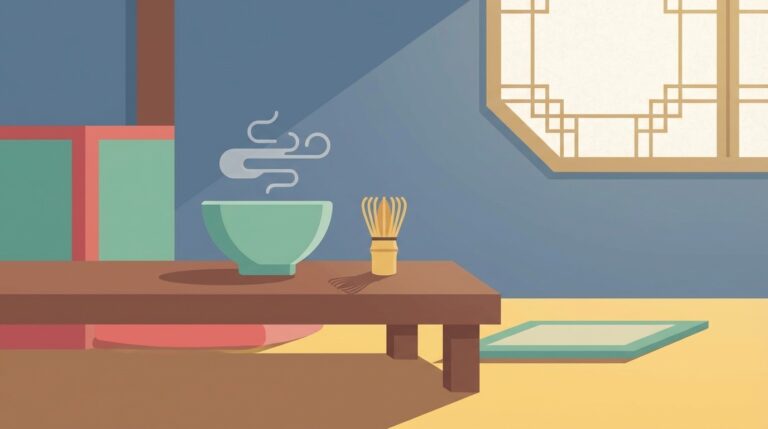
Hello! I’m your Daily Hangul editor. Picture this: You’re watching an intense historical K-Drama (sageuk). The Queen Dowager sits in a beautifully painted pavilion. The tension is thick enough to cut with a knife. Instead of yelling, she gracefully takes a bamboo whisk and vigorously whisks bright green tea in a celadon bowl. She takes a slow sip, sets the bowl down silently, and delivers a line that entirely destroys her political rival.
That elegant, intense whisking action? It’s not just making a beverage. It’s a profound act of meditation, control, and mindfulness.
Today, we aren’t plotting against the king. But if you walk into any trendy hanok cafe in Bukchon or Seongsu-dong, you’ll see young Koreans engaging in this very same traditional practice. Why? Because in a hyper-fast society, making matcha is the ultimate pause button. As an advanced (C1) Korean learner, simply saying “I mix the tea” isn’t enough anymore. You need the sophisticated vocabulary that captures the philosophy behind the movement.
Let’s dive deep into the elegant world of 다도 (Dado – Tea Ceremony) and learn exactly how to talk about 말차 격불하는 방법 (How to whisk matcha) like a true insider.
Phase 2: 핵심 표현 심층 분석 (Deep Dive)
At the C1 level, vocabulary is all about precision and cultural weight. Here are the essential expressions for traditional tea preparation.
1. 격불하다
- Pronunciation: [gyeokbulhada]
(Sound-alike guide: ‘Gyeok’ sounds like the ‘yuck’ you say when stepping in gum, but with a hard G at the start. ‘Bul’ sounds like ‘bull’.)- Meaning: (Literal) To strike/whisk vigorously. (Real nuance) To whisk matcha powder and water with a bamboo whisk to create a rich, dense foam.
- K-Culture Moment: You won’t hear this at Starbucks. But go to a premium tea house in Insadong, and the tea master will say, “이제 차선으로 빠르게 격불해 보겠습니다” (Now, I will whisk it quickly with the chaseon). It elevates the conversation instantly.
- Editor’s Insight: This word carries a sense of artistry and discipline. You aren’t just “mixing” (섞다); you are actively creating a state of harmony between water, tea, and air.
- Situation Spectrum:
[🚫 절대 금지] ———— [⚠️ 주의] ———— [✅ 자유롭게]
- Making instant coffee at home: 🚫
- Chatting with a barista about making matcha lattes: ⚠️ (A bit too formal, but they’ll be impressed!)
- In a traditional tea ceremony class: ✅
- 🤔 Think About It: Why does Korean traditional culture use such specific, elevated vocabulary (Hanzi-based words) for specific actions in ceremonies? How does using “격불하다” instead of “거품을 내다” (to make foam) change the atmosphere of the room?
2. 차선 (Chaseon) & 다완 (Dawan)
- Pronunciation: [cha-seon] / [da-wan]
(Sound-alike guide: ‘Cha’ like cha-cha-cha, ‘seon’ like ‘sun’ but with a slightly more open ‘eo’ sound.)- Meaning: (Literal/Real) Bamboo tea whisk & Traditional tea bowl.
- K-Culture Moment: In K-Pop behind-the-scenes vlogs, when idols try “healing” activities, they often struggle with the chaseon, breaking the delicate bamboo strings because they press too hard. The instructor usually gently corrects them: “차선은 바닥에 닿지 않게 주의해 주세요” (Please be careful not to let the whisk touch the bottom).
- Editor’s Insight: Knowing the specific names of these tools shows profound respect for the culture. It shifts you from a “tourist” to an “apprentice.”
- Situation Spectrum:
[🚫 절대 금지] ———— [⚠️ 주의] ———— [✅ 자유롭게]
- Standard cafes (asking for a mug): 🚫
- Buying souvenirs in Insadong: ✅
- Tea ceremony settings: ✅
- 🤔 Think About It: Traditional Korean tea bowls (Dawan) are often intentionally imperfect or asymmetric. How does this reflect the Korean aesthetic philosophy of naturalness compared to the pursuit of flawless symmetry in other cultures?
3. 마음을 가라앉히다
- Pronunciation: [maeumeul garaanjida]
(Sound-alike guide: ma-eum-eul ga-ra-an-chi-da. The ‘앉’ blends into ‘치’ due to the ‘ㅎ’ in the following syllable. Ga-ra-an-chi-da.)- Meaning: (Literal) To let the mind sink/settle. (Real nuance) To calm oneself down, to find inner peace, to center oneself.
- K-Culture Moment: Before the protagonist in a K-Drama makes a major life decision—like handing in a resignation letter—they might sit quietly with a warm cup of tea to ma-eum-eul ga-ra-an-chi-da.
- Editor’s Insight: This is a beautiful C1-level phrase. While beginners say “마음이 편해요” (I am comfortable), advanced learners describe the process of letting their racing thoughts settle like sediment in water.
- Situation Spectrum:
[🚫 절대 금지] ———— [⚠️ 주의] ———— [✅ 자유롭게]
- Casual joking with friends: ⚠️
- Discussing mental health/meditation: ✅
- During a tea ceremony: ✅
Phase 3: 교과서 vs 진짜 한국어 (Textbook vs Real Life)
At the C1 level, you must navigate between formal traditional language and modern café slang.
| 상황 | 📖 교과서 한국어 (Traditional/Formal) | 🗣️ 진짜 한국어 (Modern Cafe/Trend) | 💡 왜 다를까? (Why the difference?) |
|---|---|---|---|
| Whisking the tea | “말차를 격불해 줍니다.” (I will whisk the matcha.) | “말차 샷 하나 추가해 주세요.” (Add one matcha shot, please.) | The ancient art has been commercialized into “matcha shots” poured over milk in modern cafes. |
| Describing the foam | “거품이 아주 곱게 났습니다.” (The foam is formed very finely.) | “크림 폼 쫀쫀한 것 좀 봐!” (Look at how chewy/dense this cream foam is!) | “쫀쫀하다” (chewy/dense) is a trendy tactile slang used by MZ generation for food and beauty products. |
| The purpose of tea | “명상을 통해 마음을 수양합니다.” (I cultivate my mind through meditation.) | “완전 힐링 재질. 차멍 때리기 딱 좋아요.” (Total healing vibe. Perfect for zoning out with tea.) | Modern Koreans blend English (“healing”) and slang (“chameong” – tea spacing out) to describe mental rest. |
Bottom Note: If you are at a traditional Hanok tea class, stick to the textbook column. If you are Instagramming at a Seongsu matcha bar, use the real-life column to sound like a savvy local!
Phase 4: 문화적 맥락 — K-Culture 딥다이브 (Cultural Deep Dive)
4-1. 비언어적 요소 (Non-verbal Communication)
When practicing Dado (다도), your body language speaks louder than your words.
– The Two-Hand Rule (두 손의 미학): Everything—from picking up the chaseon to drinking from the dawan—is done with two hands. It shows mindfulness.
– Eye Contact & Nunchi: In a traditional setting, you don’t make intense eye contact while drinking. You gently lower your gaze to the bowl. It’s an inward journey. Your nunchi here is applied to the pacing of the host: you drink when they drink, and you admire the bowl only after finishing the tea.
4-2. K-Culture 연결 고리 (K-Culture Connection)
The “Cha-meong” (차멍) Phenomenon in Modern Korea
You’ve probably heard of Bul-meong (staring at a campfire). Now, Cha-meong (staring blankly while making or drinking tea) is a huge trend. In a society infamous for its intense work culture (야근) and “Pali-pali” (빨리빨리 – hurry hurry) mindset, the slow, repetitive act of gyeokbul (whisking) has become a lifeline for stressed-out urbanites.
When K-Pop idols go on “healing reality shows” (like In the SOOP), there is always a scene of them quietly brewing tea in the morning mist. It’s a visual rebellion against their normally chaotic schedules. Understanding tea culture gives you profound insight into modern Korea’s desperate desire for mental rest.
Phase 5: 실전 롤플레이 시나리오 (Immersive Roleplay)
시나리오 A: 메인 롤플레이 (The Tea Class in Bukchon)
- Setting: A quiet Saturday morning inside a 100-year-old Hanok in Bukchon. The smell of tatami mats and roasted green tea fills the air. Rain is gently falling outside.
- Characters:
- YOU: An expat in Seoul, taking a premium weekend tea ceremony class to relieve workplace stress.
- 다기장 선생님 (Tea Master Lee): A serene, soft-spoken woman in her 50s wearing a modernized Hanbok.
선생님: 자, 이제 손목에 힘을 빼고, M자를 그리듯이 가볍게 격불해 보세요.
(Ja, ije sonmoge himeul ppaego, M-jareul geurideusi gabyeopge gyeokbulhae boseyo.)
[Now, relax your wrist, and lightly whisk as if you are drawing the letter M.]
(🎭 Stage Direction: The Master effortlessly creates a thick, emerald foam in seconds.)
YOU: (Struggling) 생각보다 쉽지 않네요. 선생님처럼 고운 거품이 안 나요.
(Saenggakboda swipji anneyo. Seonsaengnimcheoreom goun geopumi an nayo.)
[It’s not as easy as I thought. I’m not getting that fine foam like you, Master.]
선생님: 처음엔 다 그렇기 마련입니다. 너무 잘하려고 힘을 주면 오히려 차선이 망가져요. 마음을 비우는 게 중요합니다.
(Cheoeumen da geureoki maryeonimnida. Neomu jalharyeogo himeul jumeyon ohiryeo chaseoni manggajyeoyo. Maeumeul biuneun ge jung-yohamnida.)
[It’s naturally like that at first. If you use too much force trying to do well, the whisk will actually break. Emptying your mind is important.]
🔀 당신의 차례! 어떻게 대답할까요? (How do you respond?)
– A) “아, 짜증 나. 이거 불량품 아니에요?” (Ah, so annoying. Is this defective?)
– B) “마음을 비우라… 알겠습니다. 다시 천천히 해볼게요.” (Empty my mind… Understood. I will try again slowly.)
– C) “대박! 선생님 완전 금손이시네요!” (Daebak! Master, you have magic hands!)✅ Best Choice: B — At the C1 level, showing that you understand the philosophical advice (“마음을 비우라”) and responding with calm determination perfectly matches the mood of Dado.
⚠️ Choice C 분석: “대박” (Daebak) and “금손” (Geum-son: slang for someone very skilled) are great for a modern cafe with friends, but utterly destroy the zen atmosphere of a traditional Hanok class with a respected elder.
시나리오 B: K-Culture 보너스 롤플레이 (Ordering Modern Matcha)
Fast forward. You are now at a hip, industrial-style cafe in Seongsu-dong.
바리스타: 주문하시겠어요? (May I take your order?)
YOU: 제주 유기농 말차 라떼 하나 주세요. 우유는 오트 밀크로 변경해 주시고요. (I’ll have the Jeju organic matcha latte. Please change the milk to oat milk.)
바리스타: 네, 말차 샷 진하게 넣어드릴까요? (Sure, would you like the matcha shot strong?)
YOU: 네! 그리고 위에 크림 폼 쫀쫀하게 많이 올려주세요! (Yes! And please put a lot of that thick/chewy cream foam on top!)
Phase 6: 10초 섀도잉 드릴 (Shadowing Drill)
Let’s practice the rhythm of mindful speaking. In Dado, speaking slowly and clearly is key.
🧘♀️ 마음을 / 텅 비우고, / 오직 / 차선의 소리에만 / 집중해 보세요.
(maeumeul / teong biugo, / ojik / chaseonui sorieman / jipjunghae boseyo.)
[Empty your mind completely, and focus solely on the sound of the tea whisk.]감정 태그: 😌 차분하고 부드럽게 (Calmly and softly, like an ASMR narrator)
Phase 7: K-Culture 미니 사전 (K-Culture Glossary)
| 한국어 | Romanization | 영어 | 맥락 설명 (Context) |
|---|---|---|---|
| 다도 | dado | Tea ceremony | The way of tea. The formal practice of brewing, serving, and drinking tea. |
| 차멍 | chameong | Zoning out with tea | A modern slang combining ‘차’ (tea) and ‘멍 때리다’ (to space out). A popular healing activity for MZ generation. |
| 소확행 | sohwakhaeng | Small but certain happiness | A lifestyle philosophy. Taking a moment to whisk matcha is a perfect example of sohwakhaeng. |
| 번아웃 | beon-aut | Burnout | The exact reason why traditional tea ceremonies are experiencing a massive revival in Korea. |
| 예절 | yejeol | Etiquette/Manners | The strict set of rules governing behavior in traditional settings, rooted in Confucianism. |
Phase 8: 여행자 서바이벌 키트 (Traveler’s Survival Kit)
If you are visiting Seoul and want to experience this yourself, head to Insadong or Bukchon. Here are your C1 survival phrases.
🆘 서바이벌 표현 TOP 3
– 🇰🇷 “다도 체험 프로그램, 외국인도 무리 없이 참여할 수 있나요?”
(dado cheheom peurogeuraem, oegugindo muri eopsi chamyeohal su innayo?)
– 🗣️ Meaning: Can foreigners participate in the tea ceremony experience without difficulty?
– 📍 쓰는 곳: Calling or messaging a traditional tea house.
- 🇰🇷 “집에서 쓸 만한 입문용 차선과 다완을 추천해 주시겠어요?”
(jibeseo sseul manhan immun-yong chaseon-gwa dawaneul chucheonhae jusigesseoyo?)
- 🗣️ Meaning: Could you recommend a beginner-friendly tea whisk and bowl for home use?
- 📍 쓰는 곳: Tea ware shops in Insadong.
- 🇰🇷 “이 말차는 어느 지역 다원에서 재배된 건가요?”
(i malchaneun eoneu jiyeok dawoneseo jaebaedoen geongayo?)
- 🗣️ Meaning: From which region’s tea plantation was this matcha cultivated?
- 📍 쓰는 곳: A premium tea house, to impress the owner! (Usually Jeju or Boseong).
📌 Editor’s Travel Note
– Reservation Apps: Use Naver Map (네이버 지도) or Catchtable (캐치테이블) to book premium tea ceremony classes. Many require reservations weeks in advance!
– Kneeling: Traditional Dado often requires kneeling (정좌) on the floor. If you have knee issues, ask nicely: “다리가 좀 불편해서 그런데, 방석을 더 주시거나 의자에 앉아도 될까요?” (My legs are a bit uncomfortable, could I have an extra cushion or sit on a chair?)
Phase 9: 비판적 사고 코너 — “한 발 더 깊이” (Think Deeper)
글로벌 시대의 한국어 (Korean in the Global Era): The Evolution of ‘Tradition’
When we think of Korean culture globally, we usually think of dynamic, explosive energy: K-Pop choreographies, spicy K-Food, and dramatic K-Dramas. However, a new wave of “K-Healing” is emerging. The vocabulary of Dado—once considered outdated and strictly for elders—is being reclaimed by the younger generation and blended with English terms like “wellness” and “mindfulness.” As an advanced learner, observing how ancient Hanja words like Gyeokbul (격불) survive by integrating into modern Instagram aesthetics reveals how a language breathes and adapts to the psychological needs of its people.
💬 Your Turn: Does your culture have a traditional ritual that has been unexpectedly revived by the younger generation to cope with modern stress? Let us know in the comments!
Phase 10: FAQ & 오해 방지 (Troubleshooting)
- Q: “선생님” (Teacher/Master) is only for school, right? What do I call the tea instructor?
- A: Absolutely use “선생님”! In Korea, anyone who teaches you a skill, especially a traditional art, is highly respected and addressed as 선생님. Never use “당신” (You) or their first name.
- Q: Do I have to drink the matcha in one gulp?
- A: No! It’s not a shot of soju! In traditional Dado, you typically divide the tea into three gentle sips, appreciating the color, the aroma, and finally the taste.
❌ 흔한 실수 (Common Mistake):
Using casual restaurant expressions like “더 주세요” (Give me more) in a tea ceremony.
✅ 이렇게 하세요:
If offered more tea, politely accept with “감사히 한 잔 더 받겠습니다” (I will gratefully receive one more cup).
Phase 11: 요약 및 액션 아이템 (Wrap-up)
One-Liner Summary: Whisking matcha (Gyeokbul) in Korea is not just a recipe; it is a linguistic and cultural practice of emptying the mind and finding peace in a fast-paced society.
Action Mission:
– 🥉 Bronze: Stand in front of a mirror and slowly, gracefully say, “마음을 텅 비우고 격불합니다.” (I empty my mind and whisk the tea.)
– 🥈 Silver: Search the hashtag #차멍 on Instagram or TikTok and read the Korean captions. Notice how they combine traditional tea imagery with modern stress-relief slang.
– 🥇 Gold (K-Culture Mission): Go to a Korean cafe, order a matcha drink, and ask the barista (just for fun/practice): “거품 쫀쫀하게 내주세요!” (Please make the foam thick and chewy!)
Phase 12: 퀴즈 — 인터랙티브 챌린지 (Interactive Quiz)
1. [상황 판단] You are at a traditional Hanok tea class. The master pours tea for you. What is the most culturally appropriate physical response?
A) Give a thumbs up and say “대박!”
B) Receive the bowl with one hand while holding your phone in the other.
C) Bow your head slightly and receive the bowl carefully with both hands.
2. [빈칸 채우기] 현대인들은 스트레스를 풀기 위해 따뜻한 차를 마시며 ( ___ )을 때립니다.
A) 불멍 (Bul-meong)
B) 차멍 (Cha-meong)
C) 물멍 (Mul-meong)
3. [True or False – K-Culture Edition]
In modern Korean cafes, it is perfectly acceptable to ask for “matcha shots” to be added to regular coffee or oat milk. (T/F)
정답 확인하기 (Click to reveal answers)
1. C (Two hands and a slight bow demonstrate respect and Dado etiquette. ‘A’ is too casual, ‘B’ is considered rude.)
2. B (차멍 – spacing out with tea. It’s the ultimate healing activity!)
3. True! (The traditional art has blended with cafe culture, creating beloved fusion drinks like “Matcha Einspanner” or oat matcha lattes.)
Frequently Asked Questions (FAQ)
Q: What does "격불하다" mean in Korean and how do you pronounce it?
A: In Korean, "격불하다" is pronounced [gyeokbulhada] and means: (Literal) To strike/whisk vigorously. (Real nuance) To whisk matcha powder and water with a bamboo whisk to create a rich, dense foam.
Q: What does "차선 (Chaseon) & 다완 (Dawan)" mean in Korean and how do you pronounce it?
A: In Korean, "차선 (Chaseon) & 다완 (Dawan)" is pronounced [cha-seon] and means: (Literal/Real) Bamboo tea whisk & Traditional tea bowl.
Q: What does "마음을 가라앉히다" mean in Korean and how do you pronounce it?
A: In Korean, "마음을 가라앉히다" is pronounced [maeumeul garaanjida] and means: (Literal) To let the mind sink/settle. (Real nuance) To calm oneself down, to find inner peace, to center oneself.






