

안녕하세요! 매일한글 에디터입니다.
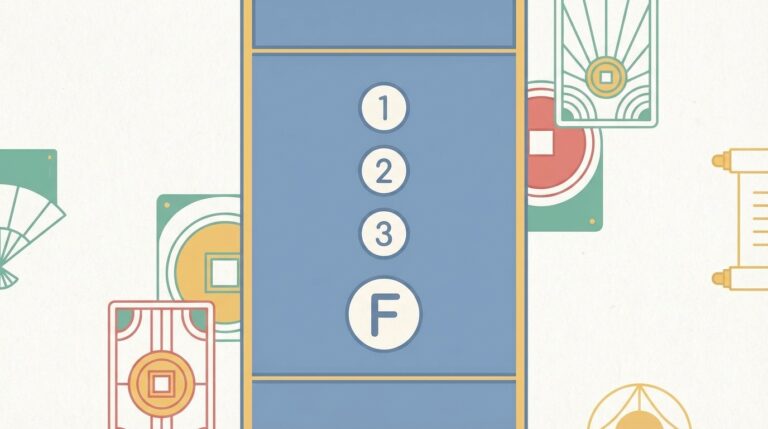
Imagine this: You’ve just arrived in Seoul. You step into a sleek, ultra-modern elevator in your hotel or a shiny new hospital. You look at the panel to press the button for the 4th floor, but… wait, where is it? The buttons read: 1, 2, 3, and then… ‘F’? Did they skip a floor? Did the building run out of numbers?
Welcome to one of the most visible and fascinating quirks of Korean everyday life! This phenomenon is known as Tetraphobia—the fear or avoidance of the number 4. In a country that boasts some of the world’s most advanced technology, ancient superstitions (미신, misin) still quietly dictate floor plans, wedding dates, and even the amount of money you put in a congratulatory envelope.
Today, we are diving deep into the cultural psychology behind the number 4, how to navigate these superstitions, and the real-life Korean expressions you need to sound like a true local. Whether you are B2-level learner trying to grasp cultural nuances or planning your next trip to Korea, this guide will save you from some serious cultural faux pas!
Phase 2: Core Expressions Deep Dive
To truly understand Korean superstitions, let’s look at the vocabulary locals actually use.
1. 사 (sa) & F층 (efu-cheung)
- Pronunciation: [sa] & [efu-cheung]
- Meaning: ‘Four’ & ‘F Floor’ (Alternative for the 4th floor)
- K-Culture Moment: You’re in a K-Drama hospital scene. A character is rushing to find a patient. Have you ever noticed that you almost never see a Room ‘444’? The Korean word for four (사, sa) sounds exactly like the Sino-Korean word for death (死, sa). Because of this homophone, the number 4 is considered highly ominous. Elevators often replace ‘4’ with ‘F’ (for Four).
- Editor’s Insight: You don’t need to be terrified of the number 4, but Koreans subconsciously avoid it in critical situations. Nobody wants to be assigned a hospital bed numbered 4!
- Situation Spectrum:
[🚫 절대 금지] ———— [⚠️ 주의] ———— [✅ 자유롭게]
- Giving gifts in sets of 4 (Casual or Formal): 🚫
- Living on the 4th floor (F층): ✅ (It’s just a number to most young people now)
- 🤔 Think About It: Why do you think modern, rational societies still hold onto superstitions based on simple wordplay? Does your language have any numbers or words avoided just because of how they sound?
2. 왠지 찝찝하다 (waenji jjipjjiphada)
- Pronunciation: [waen-ji jjip-jjip-ha-da] (Think of the sticky, uncomfortable feeling when you step in a puddle with fresh socks)
- Meaning: (Literal) To feel sticky/damp. (Real nuance) To feel uneasy, slightly superstitious, or bothered by a bad omen.
- K-Culture Moment: You are about to take a major Korean proficiency exam (TOPIK). Your friend drops their pencil right before walking in. They might say, “아, 왠지 찝찝한데…” (Ah, I have a bad feeling about this…).
- Editor’s Insight: This is an essential B2 word! We don’t say “I am cursed.” We say “찝찝하다” when something just doesn’t feel right in our gut, especially regarding luck or hygiene.
- Situation Spectrum:
[🚫 절대 금지] ———— [⚠️ 주의] ———— [✅ 자유롭게]
- Close friends (Casual): ✅
- Coworkers (Semi-formal): ✅ (With ‘-해요’ ending)
- Formal business meetings: ⚠️ (A bit too casual for a boardroom)
- 🤔 Think About It: Koreans heavily value the ‘atmosphere’ or ‘vibe’ of a situation. How does expressing your discomfort as a physical feeling (sticky/damp) soften the impact compared to saying “This is bad luck”?
3. 재수(가) 없다 (jaesu-ga eopda)
- Pronunciation: [jae-su-ga eop-tta]
- Meaning: (Literal) To have no luck. (Real nuance) 1. To be incredibly unlucky. 2. (Slang) To describe someone who is arrogant or obnoxious.
- K-Culture Moment: In a K-Drama, a villain arrogantly throws money at the main character. The main character mutters, “진짜 재수 없어.” Here, it doesn’t mean the villain is unlucky; it means they are insufferable! But if you miss the bus by one second, you can say to yourself, “아, 오늘 진짜 재수 없네” (Ugh, I’m so unlucky today).
- Editor’s Insight: Context is everything! Be careful not to say this to someone unless you want to start a fight.
- Situation Spectrum:
[🚫 절대 금지] ———— [⚠️ 주의] ———— [✅ 자유롭게]
- About a situation (Complaining to a friend): ✅
- Directing it at a person: 🚫 (Highly offensive!)
Phase 3: Textbook vs. Real Life
How do we talk about bad luck and superstitions in real life? Textbooks often sound too poetic or overly dramatic.
| 상황 | 📖 교과서 한국어 | 🗣️ 진짜 한국어 | 💡 왜 다를까? |
|---|---|---|---|
| Feeling unlucky about a number | 숫자 4는 불길합니다. (The number 4 is ominous.) | 4는 좀 찝찝해요. (4 makes me feel a bit uneasy.) | ‘불길하다’ is too dramatic for daily life. ‘찝찝하다’ is the perfect everyday term for mild discomfort. |
| Having a streak of bad luck | 불운이 계속됩니다. (Misfortune continues.) | 아, 오늘 진짜 안 풀리네. (Ah, nothing is working out today.) | Koreans focus on the ‘flow’ of things. ‘안 풀리다’ literally means ‘not untangling’. |
| Trying to avoid jinxing something | 나쁜 일이 생길까 두렵습니다. (I fear bad things will happen.) | 부정 타게 왜 그래! (Why are you jinxing it!) | ‘부정 타다’ is a traditional concept of bringing bad spirits into a situation by saying the wrong thing. |
Phase 4: Cultural Deep Dive — K-Culture & Superstitions
4-1. Non-verbal Communication: The Art of Giving
Understanding the fear of 4 isn’t just about reading elevator buttons; it dictates how you interact. When buying gifts, never buy a set of 4. If you are buying a tea set for a Korean friend’s housewarming party (집들이, jipdeuri), buy 2, or stretch it to 5.
Also, when attending a Korean wedding, you must give a cash gift (축의금, chuguigeum). The amounts usually go 30,000, 50,000, 70,000, and 100,000 KRW (odd numbers are considered lucky). Notice what’s missing? 40,000 KRW. Never give exactly 40,000 won. It’s a huge taboo!
4-2. K-Drama & K-Travel Connection
In K-Dramas, whenever families pick a wedding date or a moving day, you’ll see the older generation consulting a fortune teller or a lunar calendar to find a 길일 (Lucky day).
If you travel to Korea and book an Airbnb, don’t be shocked if your room number is 501, but the building only has 4 floors. Landlords sometimes completely skip the 400s when numbering units to ensure good luck for their tenants!
Phase 5: Immersive Roleplay Scenario
Setting: A beautiful Saturday afternoon. You are at a luxury ceramics shop in Insa-dong with your Korean friend, Min-su. You want to buy a beautiful set of traditional teacups as a gift for your boss, who invited you to dinner.
Characters:
– YOU: A B2-level Korean learner, excited to show respect to your boss.
– Min-su (30): Your helpful but slightly superstitious Korean friend.
Dialogue:
Min-su: 이 찻잔 세트 진짜 예쁘다. 부장님이 좋아하실 것 같아. 🍵
(i chatjan sete jinjjya yeppeuda. bujangnimi joahasil geot gata.)
[Translation: This teacup set is really pretty. I think the boss will like it.]
(🎭 Stage Direction: Min-su points to a beautiful celadon tea set)
YOU: 그쵸? 저도 이게 마음에 들어요. 4개 한 세트로 포장해 달라고 할게요.
(geuchyo? jeodo ige maeume deureoyo. ne-gae han seteu-ro pojanghae dallago halgeyo.)
[Translation: Right? I like this one too. I’ll ask them to wrap a set of 4.]
Min-su: (Eyes widening) 어? 잠깐만! 4개는 좀 그렇지 않아?
(eo? jamkkanman! ne-gaeneun jom geureochi ana?)
[Translation: Uh? Wait a second! Isn’t 4 a bit… you know?]
YOU: 왜요? 가족이 4명이라고 하셨거든요.
(waeyo? gajogi ne-myeongirago hasyeotgeodeunyo.)
[Translation: Why? He said he has a family of 4.]
Min-su: 한국에서는 어른들한테 선물할 때 4개는 잘 안 맞춰서 주거든. 사(死)자랑 발음이 같아서 찝찝해 하시는 분들도 계셔.
(hangugeseoneun eoreundeulhante seonmulhal ttae ne-gaeneun jal an matchwoseo jugeodeun. sa-jarang bareumi gataseo jjipjjiphae hasineun bundeuldo gyesyeo.)
[Translation: In Korea, we don’t usually give 4 of something as a gift to elders. The pronunciation is the same as the word for death, so some people feel uneasy about it.]
🔀 당신의 차례! 어떻게 대답할까요? (Your Turn! How will you respond?)
– A) “에이, 미신이잖아요! 그냥 4개 살게요.” (Oh, it’s just a superstition! I’ll just buy 4.)
– B) “아, 정말요? 그럼 5개 한 세트로 사야겠네요! 알려줘서 고마워요.”
– C) “부장님은 안 그러실 거예요.”✅ Best Choice: B — Reason: Even if you don’t believe in superstitions, respecting the cultural norms of gift-giving (especially to superiors) shows high cultural intelligence (눈치, nunchi).
⚠️ Choice A 분석: Brushing it off might make Min-su feel like his advice was ignored, and you run the risk of genuinely offending your boss.
Phase 6: 10-Second Shadowing Drill
Practice this natural B2-level response when someone asks if you believe in Korean superstitions.
😊 저는 / 미신을 잘 안 믿지만, / 왠지 4층은 / 좀 찝찝해요!
(jeo-neun / misineul jal an mitjiman, / waenji sa-cheung-eun / jom jjipjjiphaeyo!)
I don’t really believe in superstitions, but for some reason, the 4th floor just feels a bit uneasy!
Phase 7: K-Culture Glossary
| 한국어 | Romanization | 영어 | 맥락 설명 |
|---|---|---|---|
| 미신 | misin | Superstition | General term for superstitions, like avoiding the number 4 or writing names in red ink. |
| 징크스 | jingkeuseu | Jinx | Usually personal bad luck triggers (e.g., “If I wash my hair on exam day, I wash away the knowledge”). |
| 길일 | giril | Auspicious day | A lucky day chosen for moving or weddings, usually calculated by traditional fortune tellers. |
| 축의금 | chuguigeum | Congratulatory money | Money given at weddings. Always give odd numbers (3, 5, 7, 10), never 4. |
| 부적 | bujeok | Talisman/Amulet | Yellow paper with red writing meant to ward off evil spirits, sometimes seen in shops or older homes. |
Phase 8: Traveler’s Survival Kit
Navigating Korean buildings and hotels without the number 4!
🆘 서바이벌 표현 TOP 3
– 🇰🇷 “엘리베이터에서 F층 눌러주세요.” (ellibeiteo-eseo efu-cheung nulleojuseyo.)
– 🗣️ Meaning: Please press the F floor in the elevator.
– 🇰🇷 “혹시 4층 말고 다른 층 방이 있을까요?” (hoksi sa-cheung malgo dareun cheung bang-i isseulkkayo?)
– 🗣️ Meaning: By any chance, do you have a room on a floor other than the 4th?
– 🇰🇷 “집들이 선물인데, 5개 세트로 포장해 주세요.” (jipdeuri seonmurinde, daseot-gae seteu-ro pojanghae juseyo.)
– 🗣️ Meaning: It’s a housewarming gift, please wrap a set of 5.📌 Editor’s Travel Note
If you are staying in a modern, international hotel chain in Seoul, you will likely see a 4th floor. The ‘F’ floor is more common in older buildings, smaller commercial buildings, and hospitals. Don’t panic if your Airbnb is on the 4th floor—younger hosts rarely care!
Phase 9: Think Deeper — “한 발 더 깊이”
미디어 vs 현실 (Media vs Reality): High-Tech vs. Deep Roots
Korea is the land of 5G, cutting-edge AI, and futuristic cities. Yet, right in the middle of Gangnam, you will find neon signs for ‘사주 카페’ (Fortune Telling Cafes). Why does a highly rational, modern society still avoid the number 4 or check their lunar fortune before a job interview?
It’s because in Korea, superstitions often serve as psychological comfort rather than literal fear. In a highly competitive society (school, job market, housing), people want to feel they’ve done absolutely everything possible to secure success—even if that just means avoiding a supposedly unlucky number. It is a culturally ingrained coping mechanism, intertwined with filial piety and tradition.
💬 Your Turn: Does your culture have a seemingly irrational superstition that even modern people still follow? Let me know in the comments!
Phase 10: FAQ & Troubleshooting
Q: “Can I say my favorite number is 4?”
Yes! If someone asks “가장 좋아하는 숫자가 뭐예요?” you can absolutely say “4번이요!” Koreans know that in Western cultures, or just personally, 4 is just a number. It only becomes a taboo in specific contexts like gifts, hospitals, or major life events.
Q: “If I buy a 2+1 item at a convenience store and it equals 4 items total, is that bad?”
Not at all! Commercial transactions and daily purchases are completely exempt from this. The cashier won’t think you’re cursing yourself by buying 4 bottles of banana milk.
❌ 흔한 실수 (Common Mistake):
Writing a Korean friend’s name in Red Ink.
✅ 이렇게 하세요 (Do this instead):
This is another huge superstition. Red ink was traditionally used to write the names of the deceased. Always use black or blue ink when writing a card to a Korean friend!
Phase 11: Wrap-up & Action Items
✨ One-Liner Summary: The number 4 (사) sounds like death (사) in Korean, so swap it for ‘F’ in elevators and avoid giving gifts in sets of four so you don’t feel 찝찝하다!
🎯 Action Mission 3단계:
– 🥉 Bronze (혼자서): Look at your own apartment or house number. Does it contain the number 4? How would you explain that in Korean?
– 🥈 Silver (온라인): Leave a comment in Korean using the word “찝찝하다” to describe a situation that makes you feel uneasy.
– 🥇 Gold (실전): Watch an episode of a K-Drama set in a hospital (like Hospital Playlist) and pay close attention to the room numbers or elevator panels!
Phase 12: Interactive Quiz
1. You are preparing a cash gift for your Korean manager’s wedding. How much should you put in the envelope?
A) 40,000 KRW (You want to be unique)
B) 50,000 KRW
C) 44,000 KRW
2. True or False: If you book an Airbnb in Korea and the host puts you in Room 404, it means they dislike you.
3. 빈칸 채우기 (Fill in the blank):
“아, 오늘 우산을 안 가져왔는데 비가 오네. 진짜 ( ) 없어!”
A) 길일
B) 재수
C) 축의금
👀 정답 보기 (Click for Answers)
1. B – Never give amounts starting with 4. 50,000 KRW is standard and auspicious.
2. False – While 4 is avoided, many modern buildings don’t care anymore. It just means you got a regular room!
3. B (재수) – “진짜 재수 없어!” (I’m so unlucky!).
여러분, 오늘 레슨이 재미있었나요? 다음 시간에도 한국인의 진짜 생활 문화를 듬뿍 담아 올게요. 다음에 만나요!
Frequently Asked Questions (FAQ)
Q: What does "사 (sa) & F층 (efu-cheung)" mean in Korean and how do you pronounce it?
A: In Korean, "사 (sa) & F층 (efu-cheung)" is pronounced [sa] and means: 'Four' & 'F Floor' (Alternative for the 4th floor)
Q: What does "왠지 찝찝하다 (waenji jjipjjiphada)" mean in Korean and how do you pronounce it?
A: In Korean, "왠지 찝찝하다 (waenji jjipjjiphada)" is pronounced [waen-ji jjip-jjip-ha-da] and means: (Literal) To feel sticky/damp. (Real nuance) To feel uneasy, slightly superstitious, or bothered by a bad omen.
Q: What does "재수(가) 없다 (jaesu-ga eopda)" mean in Korean and how do you pronounce it?
A: In Korean, "재수(가) 없다 (jaesu-ga eopda)" is pronounced [jae-su-ga eop-tta] and means: (Literal) To have no luck. (Real nuance) 1. To be incredibly unlucky. 2. (Slang) To describe someone who is arrogant or obnoxious.







