

Hello! I am the Senior Editor of Daily Hangul.
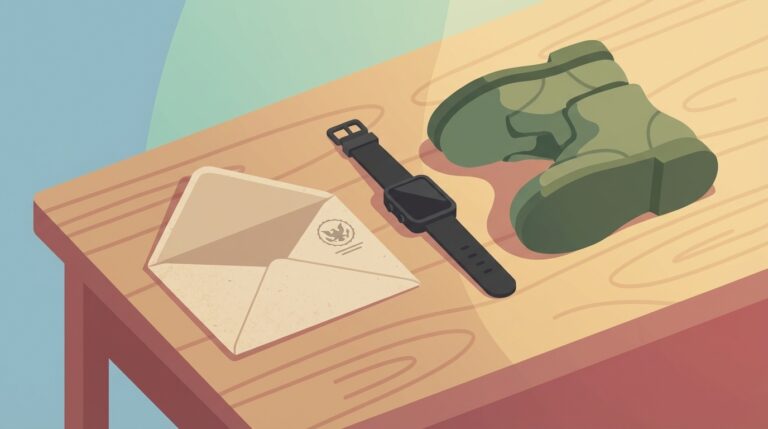
If you have ever been heavily invested in K-Pop or K-Dramas, you know the heartbreak of that moment. You are scrolling through Weverse or Instagram, and suddenly, there is a handwritten letter from your favorite idol. The atmosphere instantly shifts. The dreaded piece of paper from the Military Manpower Administration (병무청) has arrived. It is time for their mandatory military service.
But this isn’t just about celebrities. In South Korea, military service is a universal rite of passage for young men. As an advanced Korean learner (C2), simply knowing the word ‘군대’ (military) isn’t enough. How do young Korean men actually talk about receiving their draft notice? What are the ‘survival items’ they frantically buy before heading to the training center? And most importantly, how do you comfort a Korean friend who just received the news?
Today, we are diving deep into the raw, unfiltered reality of military enlistment notices (입영 통지서) and pre-enlistment preparations (입대 전 준비물). Trust me, textbooks won’t teach you the heavy sighs and the dark humor that accompany these phrases. Let’s get into it.
Phase 2: Deep Dive into Core Expressions
Here are the top expressions you will hear when a Korean man’s civilian life is put on pause.
1. 영장 날아왔어 (The draft notice flew in)
- Pronunciation: [yeong-jang nar-a-wa-sseo]
- Tip: The ‘eo’ (어) sounds like the sound you make when you are slightly confused: “uh?”
- Meaning: Literal: The warrant flew in. / Real nuance: I got drafted (and it feels like I got hit by a sudden projectile).
- K-Culture Moment: Picture a K-Drama scene where a university student is happily playing PC games with his friends. Suddenly, his mother calls, her voice trembling, “Son, a letter from the government arrived.” He drops his headset. He just got ‘the notice’.
- Editor’s Insight: Why ‘날아왔다’ (flew in)? Because it often feels completely out of the blue. You don’t ‘receive’ it gracefully; it ‘strikes’ you. It carries a heavy, melancholic weight mixed with inevitable resignation.
- Situation Spectrum:
[🚫 절대 금지] ———— [⚠️ 주의] ———— [✅ 자유롭게]
- Close Friends (Casual): ✅ (Perfect for complaining over drinks)
- Coworkers (Semi-formal): ⚠️ (Use ‘입영 통지서 받았습니다’ instead)
- Boss/Elders (Formal): 🚫
- 🤔 Think About It: Does your language have a specific verb to describe something inevitable and life-changing suddenly ‘landing’ in your life?
2. 머리 빡빡 밀다 (To shave one’s head completely)
- Pronunciation: [meo-ri ppak-ppak mil-da]
- Tip: ‘ppak’ (빡) is a strong, tense sound. Clench your jaw slightly when saying it. It phonetically mimics the harsh scraping of clippers.
- Meaning: Literal: To push the hair tightly. / Real nuance: To get a military buzz cut.
- K-Culture Moment: Every K-Pop idol posts this exact selfie before disappearing for 18 months—the black beanie, the shy smile, and the newly shaved head. Fans cry, but members playfully rub his head.
- Editor’s Insight: We also call this ‘까까머리’ (kka-kka-meo-ri), which is a cute, affectionate term for a shaved head, making the grown man look like a little boy again. Saying ‘머리 잘랐어’ (I cut my hair) is too ordinary. ‘밀다’ (to push/shave off) captures the dramatic transformation.
- Situation Spectrum:
[🚫 절대 금지] ———— [⚠️ 주의] ———— [✅ 자유롭게]
- Close Friends (Casual): ✅
- Coworkers (Semi-formal): ✅
- Boss/Elders (Formal): ⚠️ (Slightly too slangy, better to say ‘머리를 짧게 깎았습니다’)
- 🤔 Think About It: Hair holds immense significance in traditional Korean culture (historically, cutting hair was seen as a profound disrespect to parents). How does this historical context amplify the modern emotional impact of the military buzz cut?
3. 훈련소 꿀템 장만하다 (Stocking up on sweet training camp essentials)
- Pronunciation: [hul-lyeon-so kkul-tem jang-man-ha-da]
- Meaning: Literal: To prepare honey items for the training center. / Real nuance: Buying essential survival gear (like digital watches and blister-preventing insoles) to make boot camp slightly less miserable.
- K-Culture Moment: You are walking through Myeongdong or browsing an online store, and you see a category labeled ‘입대 준비물’ (Enlistment Prep). Girlfriends (곰신 – gom-shin) meticulously pack care packages with blister patches, camo face paint, and heavy-duty insoles for their boyfriends.
- Editor’s Insight: ‘꿀’ (honey) means something incredibly good, lucky, or beneficial in Korean slang. ‘템’ is short for item. A cheap, durable Casio digital watch with a backlight (전자시계) is the absolute number one ‘꿀템’ because you need to check the time during freezing night watches.
- Situation Spectrum:
[🚫 절대 금지] ———— [⚠️ 주의] ———— [✅ 자유롭게]
- Close Friends (Casual): ✅
- Coworkers (Semi-formal): ✅
- Boss/Elders (Formal): 🚫
- 🤔 Think About It: Why do you think consumer culture has created a whole industry around ‘military survival kits’ in Korea?
Phase 3: Textbook vs. Real Life
Let’s see how the dry textbook Korean transforms when fueled by the anxiety of impending enlistment.
| Situation | 📖 Textbook Korean | 🗣️ Real Korean | 💡 Why the difference? |
|---|---|---|---|
| Announcing the draft | 입영 통지서를 받았습니다. (I received the enlistment notice.) | 나 영장 날아왔어… (My draft notice flew in…) | The slang captures the emotional shock and suddenness of the event. |
| Going to the military | 다음 달에 군대에 갑니다. (I am going to the military next month.) | 나 다음 달에 군대 끌려가. (I’m getting dragged to the military next month.) | A deeply relatable self-deprecating joke. It highlights that conscription is mandatory, not voluntary. |
| Getting a haircut | 내일 머리를 자를 예정입니다. (I plan to cut my hair tomorrow.) | 내일 머리 빡빡 밀고 올게. (I’ll go shave my head bald tomorrow.) | Emphasizes the severity of the buzz cut compared to a normal trim. |
Note for C2 Learners: Using terms like ‘끌려가다’ (dragged away) is very common among friends, but be careful using it in front of older, conservative generations who view military service strictly as a sacred patriotic duty.
Phase 4: Cultural Deep Dive
4-1. Non-verbal Communication: The Art of the Heavy Sigh
When a Korean friend says “나 영장 나왔어…” (I got my draft notice), do not immediately jump up and congratulate them. The proper non-verbal response is to let out a deep sigh of empathy, look at them with a mix of pity and solidarity, and pat them on the shoulder. Silence speaks volumes here. It is the ultimate display of Nunchi (눈치).
4-2. K-Pop Connection: The Dreaded ‘Gunbaekgi’ (군백기)
If you are a K-Pop fan, you know the term 군백기 (gun-baek-gi). It is a portmanteau of 군대 (military) + 공백기 (hiatus). When idols receive their enlistment notice, they hold a final live stream. Fans leave comments like “건강히만 다녀와!” (Just come back healthy!). The pre-enlistment preparation for idols isn’t just buying insoles; it’s pre-recording months’ worth of YouTube content so fans don’t feel their absence. Understanding this cultural phenomenon explains the extreme loyalty of K-Pop fandoms—waiting 18 months for an idol is considered the ultimate test of devotion.
Phase 5: Immersive Roleplay Scenario
Setting: Friday night, 8 PM. A smoky, bustling Samgyeopsal (pork belly) restaurant near Hongdae. Empty Soju bottles line the table. You are drinking with your close Korean friend, Min-su (22), who has been unusually quiet tonight.
Characters:
– YOU: A foreign exchange student who has become best friends with Min-su.
– Min-su: A university sophomore. Usually the life of the party, but tonight he looks like he lost his soul.
Dialogue:
Min-su: (Sighs deeply, pouring himself a shot of Soju) 하아… 야, 한잔 받어라.
(Ha-a… ya, han-jan ba-deo-ra.)
[Sigh… hey, take a shot.]
(🎭 Stage Direction: Min-su clinks his glass against yours without smiling.)
YOU: 무슨 일 있어? 오늘따라 왜 이렇게 조용해?
(Mu-seun il isseo? O-neul-tta-ra wae i-reo-ke jo-yong-hae?)
[What’s wrong? Why are you so quiet today of all days?]
Min-su: (Pulls out his phone and shows a KakaoTalk message from 병무청) …나 영장 날아왔어. 다음 달 입대야.
(…na yeong-jang nar-a-wa-sseo. Da-eum dal ip-dae-ya.)
[…My draft notice flew in. I’m enlisting next month.]
YOU: 헐… 진짜? 갑자기 왜 이렇게 빨리 나왔어?
(Heol… jin-jja? Gap-ja-gi wae i-reo-ke ppal-li na-wa-sseo?)
[OMG… really? Why did it come out so fast all of a sudden?]
Min-su: 몰라… 다음 주에 훈련소 들어갈 때 쓸 전자시계랑 깔창이나 사러 가야겠다. 내 까까머리 상상이 안 간다…
(Mol-la… da-eum ju-e hul-lyeon-so deu-reo-gal ttae sseul jeon-ja-si-gye-rang kkal-chang-i-na sa-reo ga-ya-get-da. Nae kka-kka-meo-ri sang-sang-i an gan-da…)
[I don’t know… Next week I should go buy a digital watch and insoles for the training center. I can’t imagine my shaved head…]
🔀 Your Turn! How do you comfort Min-su?
– A) “우와! 축하해! 진짜 멋진 남자가 되어서 돌아오겠다!” (Wow! Congratulations! You’ll come back a real man!)
– B) “너무 걱정하지 마. 몸 건강히 잘 다녀와! 휴가 나오면 내가 맛있는 거 쏠게!” (Don’t worry too much. Serve safely and come back healthy! I’ll buy you good food when you’re out on leave!)
– C) “요즘 군대 편하다던데? 금방 지나갈 거야!” (I heard the military is easy these days? Time will fly!)✅ Best Choice: B — Empathy and promising food during their leave (휴가) is the absolute best way to comfort a Korean man heading to the military.
⚠️ Choice A & C Analysis: ‘Congratulating’ someone on mandatory conscription is a huge faux pas in Korea. It is a sacrifice, not a promotion. Saying “it’s easy these days” (C) is a massive trigger for Korean men; never minimize their upcoming hardship.
Phase 6: 10-Second Shadowing Drill
Channel your inner empathetic friend. Say this with a warm, slightly emotional, yet encouraging tone.
🥺 너무 / 걱정하지 말고! / 몸 건강히 / 잘 다녀와! / 휴가 나오면 / 무조건 연락해!
(Neo-mu / geok-jeong-ha-ji mal-go! / Mom geon-gang-hi / jal da-nyeo-wa! / Hyu-ga na-o-myeon / mu-jo-geon yeol-la-kae!)
[Don’t worry too much! Serve safely and come back healthy! Call me unconditionally when you get out on leave!]
Phase 7: K-Culture Glossary (Mini Dictionary)
| Korean | Romanization | English | Contextual Meaning |
|---|---|---|---|
| 병무청 | byeong-mu-cheong | Military Manpower Administration | The government agency that sends out the dreaded draft notices. |
| 군백기 | gun-baek-gi | Military Hiatus | The 18-month gap in a celebrity’s career due to enlistment. |
| 곰신 | gom-shin | Rubber Shoes | Slang for a girlfriend waiting for her boyfriend to finish his military service. (Derived from ‘고무신’). |
| 입대 전야 | ip-dae jeon-ya | The Night Before Enlistment | A bittersweet night usually spent binge-drinking with friends and shedding a few tears. |
| 훈련소 | hul-lyeon-so | Training Center | Boot camp. The most infamous one is the Nonsan Army Training Center (논산훈련소). |
Phase 8: Traveler’s Survival Kit
How does military enlistment relate to a tourist? If you travel off the beaten path to Nonsan (논산) in Chungcheongnam-do, you are entering the heart of Korean military culture. Every Tuesday and Thursday, the town is flooded with pale, nervous young men with freshly shaved heads and their tearful families.
🆘 Survival Phrases for the Military Town
– 🇰🇷 “군인용 전자시계 튼튼한 걸로 주세요.” (Gu-nin-yong jeon-ja-si-gye teun-teun-han geol-lo ju-se-yo.)
– 🗣️ Pronunciation: [gu-nin-yong jeon-ja-si-gye teun-teun-han geol-lo ju-se-yo]
– 📍 Where to use: Small stalls and shops around Nonsan Training Center.
– 💡 Pro Tip: If you want to buy a going-away gift for a Korean friend, ask for ‘행군용 깔창’ (Insoles for marching). It shows an incredibly deep understanding of Korean military life.📌 Editor’s Travel Note
The restaurants immediately outside the Nonsan Training Center gates are notorious for being overpriced and mediocre. Since it’s the recruit’s “last civilian meal,” families often fall into tourist traps. If you are accompanying a friend, it is highly recommended to eat a hearty meal in Seoul or a major city before driving down to the base.
Phase 9: Think Deeper — “One Step Further”
🧠 Think Deeper: Language & Power (Military Hierarchy in Daily Life)
Have you ever wondered why Korean corporate culture is so famously hierarchical? The mandatory military service acts as a linguistic incubator. Young men spend 18 months using the rigid ‘다/까’ (da/kka) formal speech style, learning absolute obedience to ranks. This militarized communication inevitably bleeds into university clubs (선후배 culture) and corporate boardrooms. The concept of ‘상명하복’ (obeying orders from above) shapes not just how Korean men act, but the very grammar and honorifics they choose in professional settings. The draft notice isn’t just a call to defend the country; it is a profound socialization process into Korean linguistic hierarchy.💬 Your Turn: Does your country have mandatory military service? How do you think military culture influences your native language’s slang or corporate culture? Share in the comments!
Phase 10: Troubleshooting (FAQ & Common Mistakes)
Q: If I’m older than the person enlisting, can I pat them on the head after they shave it?
Yes! In fact, it’s almost a cultural tradition. Friends and older acquaintances will playfully rub the newly shaved head (까까머리) like a monk’s head. It breaks the ice and lightens the melancholic mood.
Q: Can I ask them exactly when their discharge date (전역일) is?
Yes, asking “언제 전역해?” (When do you get discharged?) shows you care. Just don’t say “Wow, that’s so far away!” (아직 한참 남았네!). To them, it feels like an eternity.
❌ Common Mistake: Saying “군대 캠프 같아서 재밌겠다!” (The military seems like a fun camp!)
✅ Do This Instead: Acknowledge their sacrifice. “많이 힘들겠지만 응원할게!” (It will be very tough, but I’m rooting for you!). South Korean military service is physically grueling and mentally isolating. Never trivialize it.
Phase 11: Wrap-up & Action Items
One-Liner Summary: A Korean draft notice (영장) isn’t just a letter; it is an emotional milestone requiring heavy sighs, buzz cuts (까까머리), survival gear (꿀템), and empathetic friends.
Action Mission:
– 🥉 Bronze: Stand in front of a mirror and practice the ultimate empathetic sigh, followed by: “몸 건강히 잘 다녀와!”
– 🥈 Silver: Search “입대 전야” (Night before enlistment) on YouTube and observe the mood and conversations in the vlogs.
– 🥇 Gold: If you have a Korean friend who recently enlisted or is about to, send them a KakaoTalk message using today’s vocabulary: “훈련소 꿀템은 다 장만했어? 건강하게 잘 다녀와!”
Phase 12: Interactive Challenge (Quiz)
1. Situational Judgment: Your friend Min-su posts a photo of his newly shaved head on Instagram with the caption: “영장 나왔다… 내일 논산 간다…” What is the MOST appropriate comment as an advanced Korean speaker?
A) ㅋㅋㅋ 캠프 잘 다녀와!
B) 우와 멋지다! 군대 파이팅!
C) 머리 빡빡 민 거 보니까 실감 나네. 몸 조심하고 휴가 때 보자!
2. Fill in the Blank: K-Pop fans hate this 18-month period where they cannot see their favorite boy groups perform. It is called the ________ (군대 + 공백기).
3. True or False (K-Culture Edition):
When buying a gift for a friend enlisting in the military, an expensive luxury leather watch is the best choice.
(Scroll down for answers)
Answers:
1. C (A is disrespectful, B lacks Nunchi, C perfectly acknowledges the shaved head and offers comfort).
2. 군백기 (Gunbaekgi)
3. False. Luxury watches will get ruined or stolen in boot camp. A durable, cheap electronic watch (전자시계) with a light function is the ultimate ‘꿀템’.
Frequently Asked Questions (FAQ)
Q: What does "영장 날아왔어 (The draft notice flew in)" mean in Korean and how do you pronounce it?
A: In Korean, "영장 날아왔어 (The draft notice flew in)" is pronounced [yeong-jang nar-a-wa-sseo] and means: a key conversational Korean expression covered in this lesson.
Q: What does "머리 빡빡 밀다 (To shave one's head completely)" mean in Korean and how do you pronounce it?
A: In Korean, "머리 빡빡 밀다 (To shave one's head completely)" is pronounced [meo-ri ppak-ppak mil-da] and means: a key conversational Korean expression covered in this lesson.
Q: What does "훈련소 꿀템 장만하다 (Stocking up on sweet training camp essentials)" mean in Korean and how do you pronounce it?
A: In Korean, "훈련소 꿀템 장만하다 (Stocking up on sweet training camp essentials)" is pronounced [hul-lyeon-so kkul-tem jang-man-ha-da] and means: Literal: To prepare honey items for the training center. / Real nuance: Buying essential survival gear (like digital watches and blister-preventing insoles) to make boot camp slightly less miserable.







