

Master the Art of Korean Convenience Store Food Reviews: From K-Drama Vibes to Local Slang
Hello there! It’s your lead editor at Daily Hangul, your veteran tutor, and your personal Seoul culture navigator.
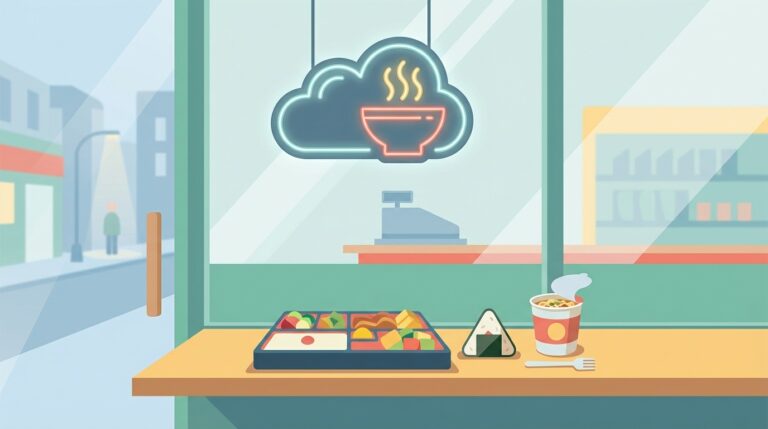
Picture this K-Drama trope: The hardworking protagonist, after a grueling day at a part-time job, sits at the neon-lit window seat of a GS25 or CU. They meticulously peel the plastic off a triangle gimbap (samgak gimbap) and take a bite while staring out at the Seoul nightscape. Or maybe you’re watching your favorite K-Pop idol on a live stream, passionately reviewing their custom ‘convenience store recipe’ (편의점 꿀조합).
Korean convenience stores (편의점 – pyeon-ui-jeom) aren’t just places to buy water; they are culinary laboratories, late-night diners, and a huge part of modern Korean culture. If you want to review that spicy pork dosirak (bento box) or tuna mayo gimbap like a true local on your TikTok, Instagram, or just chatting with Korean friends, saying “It is delicious” (맛있어요) won’t cut it.
Let’s dive into the B2-level real-life expressions that will make you sound like an absolute insider!
Phase 2: Deep Dive into Key Expressions
Here are the top three expressions you need to review convenience store food like a Korean YouTuber.
1. 가성비가 진짜 좋아요 (The cost-performance is amazing)
- Pronunciation: ga-seong-bi-ga jin-jja jo-a-yo [Sound analogy: ‘ga’ like Lady Gaga, ‘seong’ like sung, ‘bi’ like bee]
- Meaning: Literal: The cost-effectiveness is really good. / Real nuance: It’s a great bang for your buck; totally worth the price.
- K-Culture Moment: You’ll hear this in almost every Korean vlog. Whether it’s a 5,000 KRW premium dosirak that tastes like a restaurant meal, or a cheap but massive triangle gimbap, ga-seong-bi is the ultimate compliment in Korea.
- Editor’s Insight: This isn’t just about being cheap; it’s about the value. Koreans highly prize things that deliver high satisfaction relative to the price.
- Situation Spectrum:
[🚫 Formal] ———— [⚠️ Semi-formal] ———— [✅ Casual]- Close friends (Casual): ✅ (Say “가성비 대박!” – ga-seong-bi dae-bak!)
- Coworkers (Semi-formal): ✅
- Boss (Formal): ⚠️ (Use ‘가격 대비 훌륭합니다’ instead)
- 🤔 Think About It: Why is “Ga-seong-bi” such a ubiquitous word in modern Korea? How does the fast-paced, highly competitive urban lifestyle drive the need for “efficient spending”?
2. 내용물이 실해요 / 속이 알차요 (The filling is substantial)
- Pronunciation: nae-yong-mul-i sil-hae-yo / sog-i al-cha-yo [‘al’ sounds like the name Al, ‘cha’ like cha-cha]
- Meaning: Literal: The contents are sturdy / The inside is fruitful. / Real nuance: It’s packed with ingredients; they didn’t skimp on the filling.
- K-Culture Moment: Ever bought a sandwich that looked huge but only had filling at the very front? That is not ‘sil-hae-yo’. When an idol rips open a triangle gimbap and the spicy pork is bursting out, they will exclaim, “와, 속 진짜 알차다!” (Wow, the inside is really packed!).
- Editor’s Insight: ‘실하다’ and ‘알차다’ are B2-level descriptive verbs that immediately make your Korean sound incredibly natural and mature. It shows you appreciate the quality of the food, not just the taste.
- Situation Spectrum:
[🚫] ———— [⚠️] ———— [✅](Safe in almost all situations!)
3. 간단하게 한 끼 때우기 딱이에요 (It’s perfect for a quick, simple meal)
- Pronunciation: gan-dan-ha-ge han kki ttae-u-gi ttag-i-e-yo [‘ttae’ sounds like the ‘te’ in teddy, but with a sharp, tense T]
- Meaning: Literal: It is exact for patching up one meal simply. / Real nuance: It’s perfect for grabbing a quick bite to hold you over.
- K-Culture Moment: College students rushing between classes, or office workers working overtime. You don’t have time for a grand feast, you just need to fuel up.
- Editor’s Insight: The verb ‘때우다’ (to patch/make do) is very colloquial. It implies you are eating for survival/convenience rather than a luxurious dining experience. It carries a slight hint of “it’s not a fancy meal, but it does the job.”
- Situation Spectrum:
[🚫 Formal] ———— [⚠️ Semi-formal] ———— [✅ Casual]- Note: Don’t tell someone “Let’s just ttae-u-da” if you are inviting them on a date! It sounds too cheap.
Phase 3: Textbook vs Real Life
| Situation | 📖 Textbook Korean | 🗣️ Real Korean | 💡 Why the difference? |
|---|---|---|---|
| Expressing great value | 이 도시락은 싸고 맛있습니다. (This dosirak is cheap and tasty.) | 이거 완전 혜자예요! (This is totally Hye-ja!) | Named after actress Kim Hye-ja, whose endorsed convenience store bento boxes were famously generous and high-quality. |
| Poor quality/value | 양이 너무 적습니다. (The portion is too small.) | 와, 이거 좀 창렬이네… (Wow, this is a bit Chang-ryeol…) | The opposite of Hye-ja. A slang derived from another celebrity whose endorsed food was notoriously sparse. (Note: Highly casual slang!) |
| Recommending a combo | 이것과 저것을 같이 드세요. (Eat this and that together.) | 이 꿀조합 무조건 먹어보세요. (You must try this honey-combination.) | “꿀” (honey) is used as a prefix for anything awesome. Social media runs on “꿀조합” recipes! |
Phase 4: Cultural Deep Dive
4-1. Non-verbal Communication: The 1-2-3 Triangle Gimbap Dance
Don’t just rip the plastic! Korean triangle gimbaps have a numbered 3-step unwrapping process (pull 1 down the middle, slide 2 and 3 off the corners). Doing this smoothly without breaking the seaweed is a subtle flex of your localized nunchi (눈치 – situational awareness).
4-2. K-Culture Connection: The “Hon-Bap” (Solo Dining) Era
In K-Dramas from 10 years ago, eating alone at a convenience store was usually a sign of loneliness or extreme poverty. Today? It’s a celebrated lifestyle! It’s called 혼밥 (Hon-bap: eating alone).
With the rise of 1-person households in Seoul, convenience stores have evolved into premium “micro-restaurants.” You’ll see businessmen in suits enjoying a 6,000 KRW gourmet braised pork dosirak while watching Netflix on their phones at the store counter. It’s no longer sad; it’s efficient “me time.”
Phase 5: Immersive Roleplay
Setting: 11:30 PM at a GS25 in Gangnam. The fluorescent lights hum. You just finished a late-night project with your friendly coworker, Min-su (32, a self-proclaimed convenience store foodie).
Min-su: 아, 배고파 죽겠다. 우리 여기서 뭐 좀 먹고 갈래요? 🍙
(A, bae-gopa juk-get-da. u-ri yeo-gi-seo mwo jom meok-go gal-lae-yo?)
[Ah, I’m starving to death. Wanna grab something to eat here before we go?]
(🎭 Stage Direction: Min-su heads straight to the fresh food aisle, his eyes scanning the colorful lunch boxes.)
YOU: 좋아요! 저는 삼각김밥 하나 먹을게요.
(Jo-a-yo! jeo-neun sam-gak-gim-bap ha-na meo-geul-ge-yo.)
[Sounds good! I’ll just have a triangle gimbap.]
Min-su: 에이~ 오늘 고생했는데 그걸로 한 끼 때우기엔 너무 아쉽죠. 이거 봐요, 새로 나온 제육볶음 도시락!
(E-i~ o-neul go-saeng-haet-neun-de geu-geol-lo han kki ttae-u-gi-en neo-mu a-swip-jyo. I-geo bwa-yo, sae-ro na-on je-yuk-bok-keum do-si-rak!)
[Hey~ We worked so hard today, it’s a shame to just ‘patch up’ a meal with that. Look at this, the newly released spicy pork dosirak!]
YOU: 오, 그거 맛있어요?
(O, geu-geo ma-si-sseo-yo?)
[Oh, is that good?]
Min-su: 이거 완전 혜자예요. 고기도 듬뿍 들어있고 가성비 대박이거든요.
(I-geo wan-jeon hye-ja-ye-yo. Go-gi-do deum-ppuk deu-reo-it-go ga-seong-bi dae-bak-i-geo-deun-yo.)
[This is totally generous (Hye-ja). It’s loaded with meat and the cost-performance is amazing.]
🔀 Your Turn! How do you respond to Min-su?
– A) “그럼 저도 그거 먹을게요!” (Then I’ll eat that too! – Safe, natural)
– B) “진짜요? 속이 알차 보이네요. 그걸로 할게요!” (Really? The filling looks substantial. I’ll go with that! – Advanced B2 flex)
– C) “아니요, 저는 돈이 없어요.” (No, I have no money. – A bit too blunt/awkward)✅ Best Choice: B — Using “속이 알차 보이네요” proves you have completely absorbed local Korean review culture!
Min-su: 탁월한 선택입니다! 제가 전자레인지에 데워올게요.
(Tak-wol-han seon-taek-im-ni-da! Je-ga jeon-ja-re-in-ji-e de-wo-ol-ge-yo.)
[Excellent choice! I’ll go warm it up in the microwave.]
Phase 6: 10-Second Shadowing Drill
Let’s practice your convenience store reviewer persona! Read aloud, following the slashes for pauses and the emojis for emotion.
😲 와, / 이 도시락 / 가성비 / 진짜 대박이에요!
(Wa, / i do-si-rak / ga-seong-bi / jin-jja dae-bak-i-e-yo!)
[Wow, / this lunch box’s / value for money / is absolutely amazing!]
🤤 속재료가 / 너무 실해서, / 한 끼 든든하게 먹기 / 딱 좋아요.
(Sok-jae-ryo-ga / neo-mu sil-hae-seo, / han kki deun-deun-ha-ge meok-gi / ttak jo-a-yo.)
[Because the filling is / so substantial, / it’s exactly perfect / for a hearty meal.]
Phase 7: K-Culture Mini Glossary
| Korean | Romanization | English | Context |
|---|---|---|---|
| 삼각김밥 | sam-gak-gim-bap | Triangle Gimbap | The iconic cheap, quick snack of Korea. |
| 꿀조합 | kkul-jo-hap | Honey combination | A genius mix of products (e.g., spicy noodles + string cheese + sausage). |
| 혜자스럽다 | hye-ja-seu-reop-da | To be generous/Great value | Named after actress Kim Hye-ja. Used when a product exceeds expectations in portion. |
| 혼밥 | hon-bap | Solo dining | Eating alone. Very common in convenience stores. |
| 1+1 (원플러스원) | won-peul-leo-seu-won | Buy one get one free | The magical sign you look for in Korean convenience stores. |
Phase 8: Traveler’s Survival Kit (Convenience Store Edition)
If you’re traveling in Korea, convenience stores will be your best friend. Here are the absolute must-know phrases:
🆘 Survival Phrases TOP 3
1. 🇰🇷 “이거 전자레인지에 데워주세요.” (I-geo jeon-ja-re-in-ji-e de-wo-ju-se-yo.)
– English: Please warm this up in the microwave.
– 💡 Pro Tip: Many stores let you do it yourself. Look for the microwave (전자레인지) near the instant noodles!
2. 🇰🇷 “나무젓가락 하나 주세요.” (Na-mu-jeot-ga-rak ha-na ju-se-yo.)
– English: Please give me one pair of wooden chopsticks.
3. 🇰🇷 “투플러스원(2+1) 상품은 교차 가능해요?” (Tu-peul-leo-seu-won sang-pum-eun gyo-cha ga-neung-hae-yo?)
– English: For the 2+1 deal, can I mix and match flavors?📌 Editor’s Travel Note:
After eating at the indoor/outdoor tables, you must clean up after yourself. Koreans strictly separate trash (분리수거 – bun-ri-su-geo). Pour leftover soup in the designated liquid bin, throw plastics in the recycle bin, and general waste in the normal bin. Leaving a mess is a major cultural faux pas!
Phase 9: Think Deeper — Food & Identity
🧠 Food & Identity: The Convenience Store as the Modern Kitchen
In traditional Korean culture, sharing a meal (식구 – sik-gu, literally “mouths that eat together”) was the core of family and social identity. Eating alone was pitied. However, the rise of convenience store dosirak culture vividly illustrates how Korean society is rapidly shifting toward individualism and hyper-efficiency. Yet, even in this solo culture, Koreans create “Kkul-jo-hap” (recipes) and share them online, essentially creating a new, digital dining table where they still eat “together” via social media.
💬 Your Turn: Does your country have a vibrant convenience store food culture? How is eating alone viewed where you are from? Let’s discuss in the comments!
Phase 10: FAQ & Troubleshooting
Q: Can I tell my boss that the restaurant he took me to is ‘가성비 대박 (ga-seong-bi dae-bak)’?
– Maybe, but be careful! While it means it’s a good deal, saying it to a superior about a meal they bought might sound like you are calling the food cheap. Instead say, “정말 맛있고 푸짐하네요!” (It’s really delicious and generous!).
Q: I bought a 1+1 item, but I only want one right now. What do I do?
– K-Culture Hack: Use the convenience store’s mobile app (like “나만의 냉장고” for GS25). You can “store” your free +1 item in the app and pick it up from any branch later!
❌ Common Mistake: Pronouncing ‘김밥’ (Gimbap) as “Kim-bop” with a hard K and P.
✅ Do this instead: Soften the K to a sound between G and K. And the ‘bap’ stops abruptly, closing your lips tightly.
Phase 11: Wrap-up & Action Items
One-Liner Summary: To review Korean convenience store food like a local, focus on the value (ga-seong-bi) and the hearty filling (sog-i al-cha-yo) rather than just the basic taste!
Action Mission 3 Steps:
– 🥉 Bronze: Say “가성비 대박!” out loud 3 times next time you buy something on sale.
– 🥈 Silver: Write a 2-sentence review of your recent lunch in Korean in our community forum using ‘내용물이 실해요’.
– 🥇 Gold: Go to a Korean supermarket or convenience store, buy a snack, and casually drop a “와, 이거 가성비 좋네요” to your Korean friend.
🎯 K-Culture Special Mission: Watch a “Korean convenience store Mukbang” on YouTube today. Keep your ears open and comment below if you catch them saying “알차다”, “가성비”, or “꿀조합”!
Phase 12: Interactive Quiz 🧠
1. Fill in the blank:
“I don’t have time for a real lunch. Let’s just _______ with a triangle gimbap.”
(A) 때우자 (ttae-u-ja)
(B) 먹자 (meok-ja)
(C) 만들자 (man-deul-ja)
2. True or False – K-Culture Edition:
“It is culturally acceptable to leave your empty ramen cups on the convenience store table for the staff to clean up.” (T/F)
3. Situational Judgment:
You open a premium dosirak and the meat portion is massive. What is the most natural, B2-level way to exclaim your pleasant surprise?
(A) 고기가 많네요. (There is a lot of meat.)
(B) 와, 고기 진짜 싸다! (Wow, the meat is really cheap!)
(C) 와, 속재료 진짜 실하다! 완전 혜자인데요? (Wow, the filling is really substantial! This is totally generous!)
(Answers: 1: A, 2: False – you must clean and recycle your own trash, 3: C)
Loved today’s lesson? Which convenience store food do you want to try the most? Drop a comment below!
Frequently Asked Questions (FAQ)
Q: What does "가성비가 진짜 좋아요 (The cost-performance is amazing)" mean in Korean and how do you pronounce it?
A: In Korean, "가성비가 진짜 좋아요 (The cost-performance is amazing)" is pronounced [ga-seong-bi-ga jin-jja jo-a-yo [Sound analogy: 'ga' like Lady Gaga, 'seong' like sung, 'bi' like bee] and means: Literal: The cost-effectiveness is really good. / Real nuance: It’s a great bang for your buck; totally worth the price.
Q: What does "내용물이 실해요 / 속이 알차요 (The filling is substantial)" mean in Korean and how do you pronounce it?
A: In Korean, "내용물이 실해요 / 속이 알차요 (The filling is substantial)" is pronounced [nae-yong-mul-i sil-hae-yo / sog-i al-cha-yo ['al' sounds like the name Al, 'cha' like cha-cha] and means: Literal: The contents are sturdy / The inside is fruitful. / Real nuance: It’s packed with ingredients; they didn't skimp on the filling.
Q: What does "간단하게 한 끼 때우기 딱이에요 (It's perfect for a quick, simple meal)" mean in Korean and how do you pronounce it?
A: In Korean, "간단하게 한 끼 때우기 딱이에요 (It's perfect for a quick, simple meal)" is pronounced [gan-dan-ha-ge han kki ttae-u-gi ttag-i-e-yo ['ttae' sounds like the 'te' in teddy, but with a sharp, tense T] and means: Literal: It is exact for patching up one meal simply. / Real nuance: It's perfect for grabbing a quick bite to hold you over.







