

Phase 1: 공감 — 몰입형 오프닝 (Immersive Hook)
Hello! I’m the Lead Editor of Daily Hangul, your resident veteran tutor and local culture navigator.
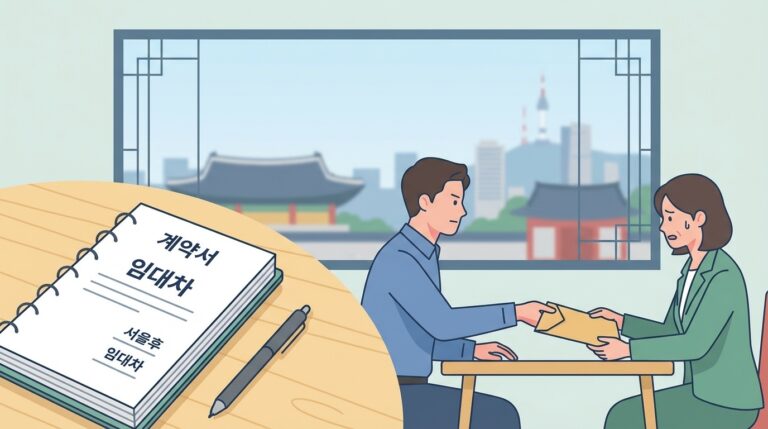
Picture this: You’re watching an intense K-Drama. The protagonist, pushed to the brink by an evil conglomerate or a scamming landlord, calmly slides a pristine white envelope across a mahogany table. The antagonist opens it, reads the first line, and their face turns pale. The subtitle simply says, “I sent a formal notice.”
But what exactly is inside that envelope? It’s a 내용증명 (Naeyong Jeungmyeong)—a Contents Certification.
As an expat or a long-term resident in Korea, you might think you’ll never need this. But what happens when your one-year lease is up, and your landlord suddenly stops answering calls about your 보증금 (housing deposit)? Or when a freelance client refuses to pay your invoice? Knowing how to wield a Naeyong Jeungmyeong isn’t just about learning legal vocabulary at a C2 level; it’s about understanding Korean psychological warfare. It’s the ultimate “polite but lethal” weapon in Korean adulting.
Everything in this lesson is based on real struggles my advanced students have faced. Let’s dive into the sophisticated, high-stakes world of Korean legal basics.
Phase 2: 핵심 표현 심층 분석 (Deep Dive)
Let’s break down the three pillars of a professional Korean legal dispute.
1. 내용증명을 발송하다
- Pronunciation: naeyong jeungmyeong-eul balsonghada [nay-yong jeung-myung-eul bal-song-ha-da]
- Meaning: (Literal) To dispatch a contents proof. / (Real nuance) To officially send a certified legal notice (the final warning before a lawsuit).
- K-Culture Moment: This is the turning point in every legal K-Drama. When someone says, “내용증명 보냈습니다” (I’ve sent the contents certification), all pleasantries are instantly dead. It means, “I have documented proof of my demands, the post office is my witness, and my lawyer is on speed dial.”
- Editor’s Insight: Think of this as the “read receipt” of the legal world, but with government backing. The document itself doesn’t legally force them to pay, but the psychological pressure is immense. It signals you are not a clueless foreigner; you know the system.
- Situation Spectrum:
[🚫 절대 금지] ———— [⚠️ 주의] ———— [✅ 자유롭게]
- Close Friends (Casual): 🚫 (Unless you’re ending the friendship forever)
- Landlord/Business Partner in dispute (Formal): ✅
- 🤔 Think About It: Why does a society that values 기분 (kibun – mood/harmony) rely on such formal, third-party certified letters to resolve disputes? Could it be that avoiding direct, aggressive face-to-face confrontation is actually a way of maintaining a facade of civility?
2. 법적 조치를 취할 예정입니다
- Pronunciation: beopjeok jochireul chwihal yejeong-imnida [bup-jeok jo-chi-reul chwee-hal ye-jung-im-ni-da]
- Meaning: (Literal) I plan to take legal measures. / (Real nuance) I will sue you if you don’t comply.
- K-Culture Moment: You’ll hear entertainment agencies release statements to protect K-Pop idols: “악플러에 대해 강력한 법적 조치를 취할 예정입니다” (We plan to take strong legal action against malicious commenters).
- Editor’s Insight: The beauty of this phrase lies in its clinical detachment. You are not yelling or cursing. The use of Sino-Korean words (Hanja) like 조치 (measure) and 예정 (plan) removes personal emotion, making the threat sound cold, calculated, and terrifyingly professional.
- Situation Spectrum:
[🚫 절대 금지] ———— [⚠️ 주의] ———— [✅ 자유롭게]
- Everyday minor annoyances: 🚫
- Official written warnings: ✅
- 🤔 Think About It: Does your native language have a specific tone or vocabulary set exclusively reserved for legal threats that differs drastically from everyday spoken anger?
3. 원상복구 의무
- Pronunciation: wonsangbokgu uimu [won-sang-bok-goo wee-moo]
- Meaning: (Literal) Duty of restoration to original state. / (Real nuance) Your obligation to leave the apartment exactly as you found it.
- K-Culture Moment: You’re moving out, and the landlord points at a tiny scuff mark on the wallpaper, demanding you pay for a whole new wall. They will cite your 원상복구 의무.
- Editor’s Insight: This is the most common defense landlords use to withhold a deposit. Knowing this term allows you to argue back: “생활 기스(normal wear and tear)는 원상복구 의무에 포함되지 않습니다” (Normal wear and tear is not included in the restoration obligation).
- Situation Spectrum:
[🚫 절대 금지] ———— [⚠️ 주의] ———— [✅ 자유롭게]
- Casual conversation: 🚫
- Real estate/Contract discussions: ✅
Phase 3: 교과서 vs 진짜 한국어 (Textbook vs Real Life)
Here is how you upgrade from intermediate textbook pleas to C2-level legal assertiveness.
| 상황 | 📖 교과서 한국어 | 🗣️ 진짜 한국어 (C2) | 💡 왜 다를까? |
|---|---|---|---|
| 보증금을 안 줄 때 | 제 돈을 제발 돌려주세요. (Please return my money.) | 기한 내 미반환 시 내용증명을 발송하겠습니다. (If not returned by the deadline, I will send a contents certification.) | Begging doesn’t work in legal disputes. Formal Hanja terms show you mean business. |
| 약속을 깼을 때 | 약속을 안 지키셨네요. (You didn’t keep your promise.) | 이는 명백한 계약 위반입니다. (This is a clear breach of contract.) | Shifting from personal “promises” to legal “contracts” changes the power dynamic. |
| 경고할 때 | 경찰에 신고할 거예요. (I will report to the police.) | 민형사상 책임을 묻겠습니다. (I will hold you civilly and criminally liable.) | Police don’t usually handle civil disputes (like unpaid rent). The latter is legally accurate. |
Bottom Note: Don’t use the C2 phrases unless you are truly prepared to burn a bridge. They are incredibly strong.
Phase 4: 문화적 맥락 — K-Culture 딥다이브 (Cultural Deep Dive)
4-1. 비언어적 요소 (Non-verbal Communication): The Art of Documented Nunchi
Sending a Naeyong Jeungmyeong is the ultimate game of Nunchi (눈치). When writing it, the tone must be devoid of emotion. No exclamation marks, no emotional appeals. Just cold, hard facts: Date, Time, Contract details, and Deadline. You send three identical copies to the post office (one for you, one for the recipient, one for the post office to keep for 3 years). The visual of receiving a registered mail (등기우편) with the red stamp of the Korean Post Office delivers a visceral shock to the recipient.
4-2. K-Culture Connection: The K-Drama “Revenge Arc”
In dramas like Vincenzo or Extraordinary Attorney Woo, legal documents are treated like weapons. A character dramatically throws a thick envelope on a desk.
Critical Viewpoint: While dramas make it look like a Naeyong Jeungmyeong instantly forces the villain to their knees, in reality, it has no direct legal binding power. It doesn’t force payment. Instead, it serves as undeniable evidence in court that you demanded your rights, and it cuts off the statute of limitations. Real life is less about dramatic desk-slapping and more about quietly filling out forms at your local 우체국 (post office) or online.
Phase 5: 실전 롤플레이 시나리오 (Immersive Roleplay)
시나리오 A: 메인 롤플레이 (The Deposit Standoff)
- Setting: Friday afternoon, inside a brightly lit but quiet real estate agency (부동산) in Gangnam.
- Characters:
- YOU: An expat professional whose lease ended a week ago. You need your 10 million KRW deposit back to pay for your new place.
- Landlord Choi (60s): Stubborn, slightly dismissive, assuming you don’t know Korean law.
Landlord Choi: 아유, 학생. 다음 세입자가 들어와야 돈을 빼주지. 요즘 방이 안 나가요. 조금만 기다려 봐.
(Ayu, haksaeng. Daeum seipjaga deureowaya doneul ppajuji. Yojeum bang-i an nagayo. Jogeumman gidaryeo bwa.)
[Oh, student. I can only give you the money when the next tenant moves in. Rooms aren’t renting these days. Just wait a bit.]
(🎭 Stage Direction: The landlord waves his hand dismissively and takes a sip of his instant coffee.)
🔀 당신의 차례! 어떻게 대답할까요?
– A) “아, 네… 그럼 언제쯤 가능할까요?” (Oh, yes… then around when would it be possible?)
– B) “경찰 부를 거예요! 당장 돈 주세요!” (I’ll call the police! Give me the money right now!)
– C) “사장님 사정은 이해하지만, 이번 주까지 반환 안 되시면 내용증명 발송하고 임차권등기명령 신청하겠습니다.”✅ Best Choice: C — “I understand your situation, but if it’s not returned by this week, I will send a contents certification and apply for a Leasehold Registration Order.”
Why? Option A lets them walk all over you. Option B makes you look foolish because civil disputes aren’t handled by the police. Option C drops the bomb: “임차권등기명령” (Leasehold Registration Order). This puts a red mark on their property registry, making it impossible for them to get a new tenant. Game, set, match.
시나리오 B: K-Culture 보너스 롤플레이 (The Entertainment Agency)
Imagine you are a K-Pop idol whose agency hasn’t paid you in 2 years.
CEO: “We are a family! You know the company is struggling right now.”
YOU: “가족 같은 소리 하지 마시고요. 정산 내역서 누락에 대해 내일부로 내용증명 보낼 테니 법무팀이랑 얘기하세요.”
[Stop with the ‘family’ nonsense. I’ll be sending a contents certification regarding the missing settlement statements tomorrow, so talk to your legal team.]
Phase 6: 10초 섀도잉 드릴 (Shadowing Drill)
Channel your inner elite lawyer. Speak clearly, coldly, and firmly.
😤 본 서한을 / 수령하신 날로부터 / 7일 이내에 / 보증금 전액을 / 반환해 주시기 바랍니다.
(bon seohaneul / suryeonghasin nallobuteo / chiril inaee / bojeunggeum jeonaegeul / banhwanhae jusigi baramnida.)
[I request that you return the full deposit within 7 days from the date of receiving this letter.]
Phase 7: K-Culture 미니 사전 (K-Culture Glossary)
| 한국어 | Romanization | 영어 | 맥락 설명 |
|---|---|---|---|
| 내용증명 | naeyong jeungmyeong | Contents Certification | A certified mail service proving the contents and date of a sent document. |
| 전세/월세 보증금 | jeonse/wolse bojeunggeum | Housing Deposit | The massive lump sum of money you give a landlord, often the subject of intense legal disputes. |
| 우체국 | ucheguk | Post Office | Where you go to send the Naeyong Jeungmyeong. You can also do it via the internet post office. |
| 임차권등기명령 | imchakwon deunggi myeongryeong | Leasehold Registration Order | The legal move you make after the Naeyong Jeungmyeong if the landlord still won’t pay. |
| 진상 | jinsang | An unreasonable/entitled person | What you don’t want to be, but sometimes you must act tough to avoid being taken advantage of (호구). |
Phase 8: 여행자 서바이벌 키트 (Traveler’s Survival Kit)
Even as a traveler or short-term visitor, disputes happen—rental car companies charging for pre-existing damage, or Airbnb hosts refusing valid refunds.
🆘 서바이벌 표현 TOP 3 (Conflict Resolution)
1. 🇰🇷 “소비자원에 고발하겠습니다.” (sobijawone gobalhagetseumnida)
– Meaning: I will report this to the Consumer Agency.
– Pro Tip: The magic word for businesses acting terribly. The Korea Consumer Agency (한국소비자원) takes complaints seriously.
2. 🇰🇷 “영수증에 환불 규정 명시되어 있잖아요.” (yeongsujeung-e hwanbul gyujeong myeongsideoyeo itjanayo)
– Meaning: The refund policy is clearly stated on the receipt.
3. 🇰🇷 “변호사랑 먼저 상의해 보겠습니다.” (byeonhosarang meonjeo sang-uihae bogetseumnida)
– Meaning: I will consult with my lawyer first.📌 Editor’s Travel Note
– Recording Laws: In Korea, it is legal to secretly record a conversation as long as you are an active participant in that conversation. If things get sketchy at a rental car desk, hit record on your phone.
Phase 9: 비판적 사고 코너 — “한 발 더 깊이” (Think Deeper)
🧠 Think Deeper: 언어와 권력 (Language & Power)
In Korean society, legal terminology is heavily rooted in complex Hanja (Sino-Korean characters) that are rarely used in daily conversation. This creates a distinct linguistic gatekeeping effect. When you transition from native Korean verbs (돌려주다 – to return) to Hanja verbs (반환하다 – to return), you instantly elevate your social and authoritative standing. The language itself becomes a suit of armor. By mastering these C2-level terms, you aren’t just communicating; you are projecting power and signaling that you belong to the educated class that cannot be easily swindled.💬 Your Turn: In your native culture, how does legal jargon affect the balance of power between everyday people and authorities? Share your thoughts in the comments!
Phase 10: FAQ & 오해 방지 (Troubleshooting)
Q: Does sending a Naeyong Jeungmyeong mean I am suing them?
No. It has no mandatory legal force itself. It is essentially an officially documented warning letter. However, it is an essential prerequisite if you do decide to sue later.
Q: Can I write the Naeyong Jeungmyeong in English?
Technically, you can send any document, but since this might be used in a Korean court, it must be written in Korean to be practically effective. Keep the sentences short, factual, and devoid of emotion.
❌ 흔한 실수 (Common Mistake): Emotional venting in the document.
Writing things like, “I am so stressed because of you, how could you do this to me?” undermines your professional stance.
✅ 이렇게 하세요 (Do this instead): Stick to facts: “Contract signed on [Date]. Contract ended on [Date]. Deposit not returned as of [Date]. Please return to [Bank Account] by [Date].”
Phase 11: 요약 및 액션 아이템 (Wrap-up)
One-Liner Summary: A Naeyong Jeungmyeong is the ultimate, emotionless, legally-backed warning letter that asserts your rights in Korea using high-level Sino-Korean vocabulary.
Action Mission:
– 🥉 Bronze: Stand in front of a mirror, channel your inner K-Drama CEO, and say: “내용증명 발송하겠습니다” with a cold, unwavering stare.
– 🥈 Silver: Draft a mock 3-sentence “Naeyong Jeungmyeong” in Korean regarding a fake dispute (e.g., a friend who stole your chicken wing) and post it in a language community.
– 🥇 Gold: Bookmark the Korean Internet Post Office (epost.go.kr) so you know exactly where the ‘내용증명’ section is, just in case you ever need it.
K-Culture Mission: Watch an episode of a Korean legal drama (like Vincenzo or Law School). Every time someone hands over a manila envelope, shout “내용증명!”
Phase 12: 퀴즈 — 인터랙티브 챌린지 (Interactive Quiz)
1. Fill in the Blank (Situational Judgment):
Your landlord refuses to return the deposit, claiming you broke a verbal promise, even though the contract says otherwise. You say: “이는 명백한 [ ] 위반입니다.”
A) 기분 (Kibun – Mood)
B) 계약 (Gyeyak – Contract)
C) 내용증명 (Naeyong Jeungmyeong – Contents Certification)
2. True or False — K-Culture Edition:
Sending a Naeyong Jeungmyeong legally forces the recipient’s bank to automatically transfer the money back to you. (T / F)
3. Scenario Question:
You are at a consumer electronics store, and they refuse to honor a valid warranty. What is the most effective “survival” phrase?
A) 경찰 부를게요! (I’ll call the police!)
B) 사장님 나오라고 해! (Tell the boss to come out!)
C) 소비자원에 고발하겠습니다. (I’ll report to the Consumer Agency.)
(Answers: 1. B, 2. False – It proves you demanded it, but doesn’t force a transfer without a court order, 3. C)
Ready to protect your rights like a true Seoulite? Share this guide with an expat friend who might need it!
Frequently Asked Questions (FAQ)
Q: What does "내용증명을 발송하다" mean in Korean and how do you pronounce it?
A: In Korean, "내용증명을 발송하다" is pronounced [naeyong jeungmyeong-eul balsonghada [nay-yong jeung-myung-eul bal-song-ha-da] and means: (Literal) To dispatch a contents proof. / (Real nuance) To officially send a certified legal notice (the final warning before a lawsuit).
Q: What does "법적 조치를 취할 예정입니다" mean in Korean and how do you pronounce it?
A: In Korean, "법적 조치를 취할 예정입니다" is pronounced [beopjeok jochireul chwihal yejeong-imnida [bup-jeok jo-chi-reul chwee-hal ye-jung-im-ni-da] and means: (Literal) I plan to take legal measures. / (Real nuance) I will sue you if you don't comply.
Q: What does "원상복구 의무" mean in Korean and how do you pronounce it?
A: In Korean, "원상복구 의무" is pronounced [wonsangbokgu uimu [won-sang-bok-goo wee-moo] and means: (Literal) Duty of restoration to original state. / (Real nuance) Your obligation to leave the apartment exactly as you found it.







