

Hello there! I’m the Lead Editor of Daily Hangul, your veteran tutor and local cultural navigator.
Phase 1: Empathy — Immersive Hook
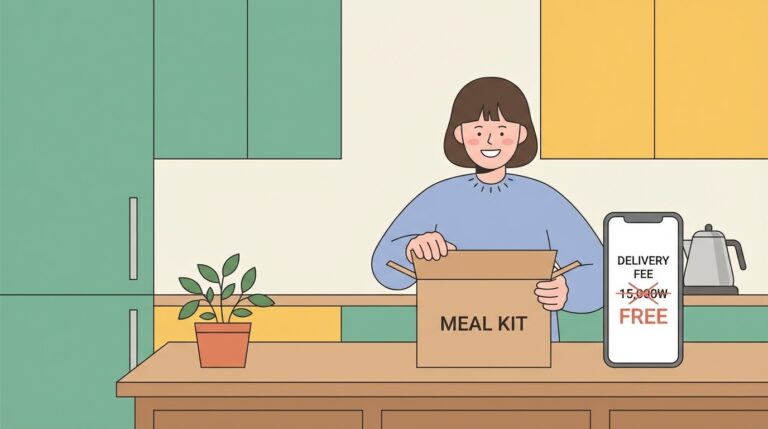
Picture this: It’s 8:00 PM on a Friday in Seoul. You’ve just dragged yourself back to your one-room apartment after a brutal week of overtime (야근). You turn on a delivery app to order some Bossam (보쌈), but then you see it—the dreaded ‘배달 팁’ (Delivery Fee) has surged to 6,000 won because of the rain.
Just like the weary office workers in K-Dramas like My Liberation Notes, you let out a deep sigh. Cooking from scratch? Too much chopping, too much food waste. Delivery? Too expensive.
Enter the lifesaver of modern Korean society: The Meal Kit (밀키트).
If you are at a C2 level in Korean, you already know the basics of food. But can you eloquently debate the cost-to-benefit ratio of a famous restaurant’s meal kit versus grocery shopping? Can you casually drop local slang about your terrible cooking skills? Today, we’re diving deep into the sophisticated, highly relevant vocabulary of cooking and meal kits in Korea. Trust me, mastering these expressions will make you sound like a true Seoulite who knows how to survive the high cost of living!
Phase 2: Deep Dive into Core Expressions
Let’s look at three advanced expressions actual Koreans use when reviewing or recommending meal kits.
1. 재료 손질의 번거로움을 덜어주다
- Pronunciation: [jaeryo sonjirui beongeoroumeul deoreojuda]
(Sound analogy: ‘deol’ sounds like ‘dull’, cutting down the hassle)- Meaning: (Literal) To lessen the cumbersomeness of prepping ingredients. (Real nuance) It saves you the massive headache of washing, peeling, and chopping veggies.
- K-Culture Moment: You’ll see this exact phrase in thousands of 5-star reviews on Kurly (a premium Korean grocery delivery app) for a Mille-feuille Nabe meal kit.
- Editor’s Insight: The word 번거롭다 is a fantastic C2-level adjective. It’s different from 귀찮다 (lazy/bothered). 번거롭다 implies that the process itself has too many annoying, complex steps. By saying “수고를 덜다” (to lessen the effort), you sound highly educated and fluent.
- Situation Spectrum:
[🚫 Never] ———— [⚠️ Be Careful] ———— [✅ Freely]
- Close Friends (Casual): ✅ (Though slightly formal, perfectly fine when reviewing something)
- Co-workers (Semi-formal): ✅
- Boss/Elders (Formal): ✅ (Excellent professional phrasing)
- 🤔 Think About It: Why does Korean have so many specific words for ‘effort’ and ‘hassle’ (수고, 고생, 번거로움)? How does this reflect the fast-paced, efficiency-driven Pali-pali culture of Korea?
2. 배달비 따지면 오히려 가성비가 훌륭해요
- Pronunciation: [baedalbi ttajimyeon ohiryeo gaseongbiga hullyunghaeyo]
- Meaning: (Literal) If you calculate the delivery fee, the cost-effectiveness is rather excellent. (Real nuance) It’s way cheaper and more worth it than ordering delivery!
- K-Culture Moment: A YouTube Vlogger reviewing a famous Tteokbokki meal kit says this while showing the steaming pot on their portable stove.
- Editor’s Insight: 가성비 (Cost-performance ratio) is the holy grail of modern Korean consumption. Adding 따지면 (if you weigh/calculate the pros and cons) and 오히려 (rather/on the contrary) creates a highly sophisticated, persuasive C2 sentence structure.
- Situation Spectrum:
[🚫 Never] ———— [⚠️ Be Careful] ———— [✅ Freely]
- Close Friends (Casual): ✅ (Change to: 가성비 쩐다! or 가성비 갑이야!)
- Co-workers (Semi-formal): ✅
- Boss/Elders (Formal): ⚠️ (Use ‘비용 대비 효율이 좋습니다’ in very strict business contexts)
- 🤔 Think About It: The word Gaseongbi is now evolving into Gasimbi (가심비 – cost-to-psychological satisfaction ratio). Which one matters more to you when you buy a premium meal kit?
3. 요리 똥손도 금손으로 만들어주는 마법
- Pronunciation: [yori ttongseondo geumseoneuro mandeureojuneun mabeop]
- Meaning: (Literal) The magic that turns a poop-hand into a gold-hand in cooking. (Real nuance) It makes even a terrible cook look like a Master Chef.
- K-Culture Moment: You invite friends over for a housewarming party (집들이). You serve a gorgeous Gambas al Ajillo. They are amazed. You humbly admit it was a meal kit by using this self-deprecating slang.
- Editor’s Insight: 똥손 (Poop hand = clumsy/terrible at something) and 금손 (Gold hand = highly skilled/talented) are universally understood internet slang. Using this shows you deeply understand modern Korean internet culture.
- Situation Spectrum:
[🚫 Never] ———— [⚠️ Be Careful] ———— [✅ Freely]
- Close Friends (Casual): ✅
- Co-workers (Semi-formal): ✅ (Great for a laugh at lunch)
- Boss/Elders (Formal): 🚫 (Too informal. Use “요리 솜씨가 부족해도 쉽게 할 수 있습니다” instead)
- 🤔 Think About It: Koreans love categorizing people’s traits using body parts (e.g., 발연기 – foot acting/bad acting). Do you have similar analogies in your native language?
Phase 3: Textbook vs. Real Life Korean
At the C2 level, you must distinguish between what the textbook teaches and what’s actually spoken on the streets of Seoul.
| Situation | 📖 Textbook Korean | 🗣️ Real Life Korean | 💡 Why the difference? |
|---|---|---|---|
| Explaining it’s easy | 조리 과정이 매우 간단합니다. (The cooking process is very simple.) | 그냥 다 때려 넣고 끓이면 끝이에요! (Just smash it all in and boil, and you’re done!) | “때려 넣다” (to throw/smash in) adds a vibrant, dynamic, and humorous feeling to cooking simply. |
| Talking about value | 가격 대비 맛이 좋습니다. (The taste is good for the price.) | 이 정도면 완전 혜자죠. (For this much, it’s totally Hyeja.) | “혜자” comes from actress Kim Hye-ja, whose endorsed convenience store bento boxes were famously generous in portion. |
| About the instructions | 설명서대로 요리했습니다. (I cooked according to the manual.) | 밀키트는 하라는 대로만 하면 평타는 쳐요. (With meal kits, just do what it says and you’ll at least hit average.) | “평타를 치다” is gamer slang meaning “to do average/decently well,” heavily used in daily life. |
Phase 4: Cultural Deep Dive
4-1. Non-verbal Communication & Nunchi
When inviting people over and serving a meal kit, there is a subtle Nunchi game at play. In the past, serving a pre-packaged meal to guests was considered rude or lacking “정성” (sincerity). Today, the culture has shifted. However, the polite non-verbal cue is to plate it beautifully in your own dishware (플레이팅), rather than serving it in the aluminum tray it came in. This shows that while you saved time on prep, you still put effort into the presentation for your guests.
4-2. K-Food Connection: The RMR Trend
Why did meal kits explode in Korea? It’s tied directly to K-Food culture. Koreans love famous local restaurants (맛집). But waiting in line for 2 hours in Euljiro or Jeju Island is exhausting. Enter the RMR (Restaurant Meal Replacement). Now, famous restaurants partner with companies to turn their signature spicy stews or marinades into meal kits. When you say, “이거 연남동 맛집 밀키트야” (This is a meal kit from a famous Yeonnam-dong restaurant), you instantly elevate the status of the meal from “lazy convenience food” to “exclusive culinary experience.”
Phase 5: Immersive Roleplay Scenario
Scenario A: The Glamping Dilemma
Setting: Saturday afternoon. You are standing in the middle of a massive E-Mart with your Korean friend, Min-su. You two are shopping for groceries for a weekend glamping (glamorous camping) trip.
Characters:
– YOU: An expat who loves Korean camping culture but hates the messy cleanup.
– Min-su: (29, energetic but stubborn) Believes camping is all about grilling raw pork belly and making a mess.
Dialogue:
Min-su: 야, 캠핑의 꽃은 바베큐지! 삼겹살 세 근 사고, 찌개용 채소 다 따로 담자! 🛒
(Ya, kaempingui kkocheun babekyuji! Samgyeopsal se geun sago, jjigaeyong chaeso da ttaro damja!)
[Hey, the highlight of camping is BBQ! Let’s buy 3 geun of pork belly and pack all the stew veggies separately!]
(🎭 Stage Direction: Min-su grabs a massive basket and heads toward the raw vegetable section)
YOU: 민수야, 우리 이번엔 그냥 밀키트 사 가면 안 돼? 저기 부대찌개 밀키트 엄청 잘 나오던데.
(Minsuya, uri ibeonen geunyang milkiteu sa gamyeon an dwae? Jeogi budaejjigae milkiteu eomcheong jal naodeonde.)
[Min-su, can’t we just buy meal kits this time? That Budae-jjigae meal kit over there looks really good.]
Min-su: 에이~ 무슨 캠핑까지 가서 밀키트를 먹어. 감성이 안 살잖아, 감성이!
(Ei~ museun kaempingkkaji gaseo milkiteureul meogeo. Gamseongi an saljana, gamseongi!)
[Come on~ Who eats meal kits when going camping? It kills the ‘vibe’, the vibe!]
🔀 Your Turn! How will you persuade Min-su?
– A) “그냥 내 말 들어. 네가 요리할 거 아니잖아.” (Just listen to me. You’re not the one cooking.)
– B) “야, 재료 다 따로 사면 돈 더 들어. 배달비 없는 셈 치고 저기 유명 맛집 밀키트로 타협하자. 내 똥손 알지?”
– C) “아, 그럼 네가 다 씻고 썰고 해!”✅ Best Choice: B — Reason: You logically point out the cost-effectiveness (가성비) of buying everything separately versus the kit, compromise with an RMR (famous restaurant kit) to save his precious ‘vibe’ (감성), and use self-deprecating humor (똥손) to seal the deal. This is peak C2 negotiation skills in Korean!
⚠️ Choice A & C Analysis: While grammatically flawless, they are too aggressive and might start a real fight in the supermarket aisle.
Scenario B: The Housewarming Confession
Setting: Your apartment. Your colleagues are praising the amazing Mala Xiang Guo you just “cooked.”
Colleague: 와, 이거 진짜 직접 하신 거예요? 요리 완전 금손이시네요!
(Wa, igeo jinjja jikjeop hasin geoyeyo? Yori wanjeon geumsonisineyo!)
YOU: 하하, 사실 장 보는 수고 좀 덜었어요. 요즘 밀키트가 워낙 잘 나와서요. 그냥 다 때려 넣고 볶았습니다!
(Haha, sasil jang boneun sugo jom deoreosseoyo. Yojeum milkiteuga wonak jal nawaseoyo. Geunyang da ttaeryeo neoko bokkatseumnida!)
(Your colleagues burst into laughter at your perfect use of advanced native phrasing).
Phase 6: 10-Second Shadowing Drill
Time to master the rhythm! Pay attention to the pauses (/) and the emotion.
😤 (Slightly exasperated but rational)
요즘 배달비 / 너무 비싸잖아요. / (yojeum baedalbi / neomu bissajanayo. /)
😊 (Brightening up)
솔직히 / 재료 다 따로 사는 것보다 / (soljiki / jaeryo da ttaro saneun geopboda /)
밀키트 하나 사는 게 / 가성비 훨씬 좋아요! (milkiteu hana saneun ge / gaseongbi hwolssin joayo!)
Phase 7: K-Culture Glossary (Meal Kit Edition)
| Korean | Romanization | English | Contextual Meaning |
|---|---|---|---|
| 밀키트 | milkiteu | Meal Kit | A massive food trend in Korea, widely available in all convenience stores and supermarts. |
| 가성비 | gaseongbi | Cost-effectiveness | The ultimate standard by which Koreans judge goods, food, and services. |
| 똥손/금손 | ttongson/geumson | Clumsy / Masterful | Slang to describe one’s physical skill level in cooking, gaming, or crafting. |
| 배달 팁 | baedal tip | Delivery Fee | Not an optional “tip” as in the West, but a mandatory delivery surcharge that has become notoriously high. |
| 혼족 | honjok | Solo tribe | People who live, eat, and enjoy activities alone. The main target audience for meal kits. |
| 혜자스럽다 | hyejaseureopda | Generous / Great value | Slang used when food portions are incredibly generous for the price. |
Phase 8: Traveler’s Survival Kit
Even if you’re just visiting Korea and staying in an Airbnb, you’ll likely visit an E-Mart or a CU convenience store to grab a quick meal. Here’s your survival kit.
🆘 Survival Expression #1: Asking about promotions
– 🇰🇷 “이거 2 플러스 1 (투 플러스 원) 교차 증정 되나요?”
– 🗣️ [Igeo tu peulleoseu won gyocha jeungjeong doenayo?]
– 📍 Where to use: Convenience stores.
– 💡 Pro Tip: Meal kits often have 2+1 sales. “교차 증정” asks if you can mix and match different flavors for the promo. A true C2-level question!📌 Editor’s Travel Note
– Cooking in Airbnbs: Remember that Korean trash sorting (분리수거) is incredibly strict. Meal kits produce a lot of plastic waste. You must wash the plastic trays before throwing them in the recycling bin!
– Apps: Download B-Mart (on Baedal Minjok) or Kurly. They deliver meal kits directly to your door within 30 minutes to a few hours.
Phase 9: Think Deeper — K-Culture Corner
Food & Identity: Does a Meal Kit count as “Jip-bap” (집밥)?
🧠 Think Deeper:
In traditional Korean culture, Jip-bap (home-cooked meals) was synonymous with a mother’s Jeongseong (정성 – sincere care and effort). Cooking was a labor-intensive expression of love. However, as single-person households (Honjok) dominate Seoul and dual-income couples work grueling hours, the definition of Jip-bap is evolving. Today, many young Koreans argue that coming home, unboxing a meal kit, and sharing a warm meal together at the dining table is the modern Jip-bap. The “sincerity” has shifted from the physical labor of chopping vegetables to the act of carving out time to sit and eat together in a hyper-competitive society.💬 Your Turn: How is the concept of a “home-cooked meal” changing in your culture? Is using a meal kit considered “cheating” or “smart” where you are from? Let us know in the comments!
Phase 10: FAQ & Troubleshooting
Q: Can I use the word 가성비 (Gaseongbi) in a formal business presentation?
A: Maybe, but it’s better to avoid it in highly formal settings. It’s a bit too casual. Instead, use “비용 효율성” (cost efficiency). However, in a casual team meeting, Gaseongbi is totally fine.
Q: Is it rude to give a meal kit as a gift?
A: Not at all! In fact, premium “Restaurant Meal Replacement” (RMR) kits from famous steakhouses or traditional Korean restaurants are extremely popular housewarming gifts nowadays.
❌ Common Mistake #1: Confusing 가성비 with 가심비.
✅ How to fix it: If a meal kit is cheap and filling, it has good 가성비 (Cost-to-benefit). If a meal kit is expensive but comes in beautiful packaging that makes you incredibly happy and looks great on Instagram, it has good 가심비 (Cost-to-psychological satisfaction). Use them wisely!
Phase 11: Wrap-up & Action Items
One-Liner Summary: Meal kits in Korea aren’t just food; they are a cultural response to high delivery fees (배달 팁) and the desire for efficiency (가성비) without sacrificing quality.
Your Action Missions:
– 🥉 Bronze (Solo): Stand in your kitchen and practice saying “요즘 배달비 너무 비싸서 밀키트가 가성비 최고예요!” out loud 3 times.
– 🥈 Silver (Online): Go to a Korean YouTube video reviewing a meal kit and leave a comment using the word “똥손” or “금손”.
– 🥇 Gold (Real Life): Next time you are in a Korean convenience store or supermart, buy a meal kit and ask the cashier, “이거 행사 상품인가요?” (Is this a promotional item?)
📺 K-Culture Mission:
Watch an episode of Hospital Playlist or My Liberation Notes. Notice how often the characters struggle with the choice between eating out, ordering delivery, or cooking at home. Look out for the delivery boxes on their tables!
Phase 12: Interactive Quiz
1. Fill in the Blank (Situational):
Your Korean friend is trying to chop an onion but is doing a terrible, dangerous job. You want to playfully tease them.
“너 요리 완전 ( ______ )이구나! 그냥 내가 할게.”
Hint: The opposite of gold hands.
2. Situational Judgment:
You want to explain to your Korean boss that the new software you bought for the team is highly cost-effective. What should you say?
A) 부장님, 이 소프트웨어 가성비 쩝니다!
B) 부장님, 이 소프트웨어는 비용 대비 효율이 아주 좋습니다.
C) 부장님, 이 소프트웨어 사면 수고를 덜어줍니다.
3. True or False – K-Culture Edition:
“In Korea, paying a ‘Delivery Tip’ (배달 팁) on an app goes directly to the driver as an expression of gratitude for good service, just like in North America.” (T/F)
(Answers below)
Click to reveal answers
1. 똥손 (You’re totally a ‘poop-hand’ at cooking!)
2. B (Choice A is too slangy for a boss. B is perfect professional C2 Korean.)
3. FALSE. The ‘Delivery Tip’ in Korea is essentially a mandatory delivery fee charged by the platform/restaurant due to outsourcing delivery riders. It is not an optional gratuity for good service.
Frequently Asked Questions (FAQ)
Q: What does "재료 손질의 번거로움을 덜어주다" mean in Korean and how do you pronounce it?
A: In Korean, "재료 손질의 번거로움을 덜어주다" is pronounced [jaeryo sonjirui beongeoroumeul deoreojuda] and means: (Literal) To lessen the cumbersomeness of prepping ingredients. (Real nuance) It saves you the massive headache of washing, peeling, and chopping veggies.
Q: What does "배달비 따지면 오히려 가성비가 훌륭해요" mean in Korean and how do you pronounce it?
A: In Korean, "배달비 따지면 오히려 가성비가 훌륭해요" is pronounced [baedalbi ttajimyeon ohiryeo gaseongbiga hullyunghaeyo] and means: (Literal) If you calculate the delivery fee, the cost-effectiveness is rather excellent. (Real nuance) It's way cheaper and more worth it than ordering delivery!
Q: What does "요리 똥손도 금손으로 만들어주는 마법" mean in Korean and how do you pronounce it?
A: In Korean, "요리 똥손도 금손으로 만들어주는 마법" is pronounced [yori ttongseondo geumseoneuro mandeureojuneun mabeop] and means: (Literal) The magic that turns a poop-hand into a gold-hand in cooking. (Real nuance) It makes even a terrible cook look like a Master Chef.







