

Phase 1: 공감 — 몰입형 오프닝 (Immersive Hook)
Hello! I’m your lead editor at Daily Hangul.
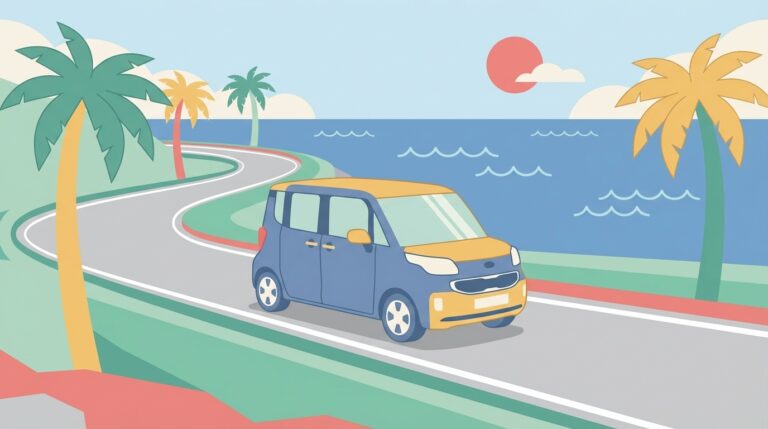
Picture this: You’ve just landed at Jeju International Airport. The palm trees are swaying, the ocean breeze is fresh, and you’re ready to recreate that iconic K-Drama scene—driving along the sparkling coastal road with your favorite K-Pop playlist blasting. But before you can hit the road, you have to face the final boss: The Rental Car Counter.
The friendly staff member smiles and asks a barrage of questions about what kind of car you want. In textbooks, you might have learned “저는 자동차를 빌리고 싶습니다” (I want to borrow an automobile). But in reality? The staff is throwing terms like Gyeong-cha, O-to, and Ja-cha at you.
Don’t panic! As someone who has helped hundreds of expats and travelers navigate their Korean road trips, I know exactly where you might get stuck. Today, we’re going to learn how to choose your rental car like a true local. By the end of this guide, you’ll be zooming down those Jeju roads with confidence!
Phase 2: 핵심 표현 심층 분석 (Deep Dive)
Let’s break down the 3 most essential expressions you need when choosing a car type in Korea.
1. 경차 (Gyeong-cha)
- Pronunciation: [gyeong-cha] -> The ‘gyeong’ sounds like the word ‘young’ but with a ‘G’ at the front. ‘Cha’ means car.
- Meaning: Compact car / Light car (Literal: light car)
- K-Culture Moment: You know those adorable, boxy little cars you see all over Korean streets and dramas (like the Hyundai Casper or Kia Ray)? Those are gyeong-cha. They are incredibly popular for road trips because they get massive discounts on highway tolls and public parking!
- Editor’s Insight: If it’s just you and a friend with minimal luggage, always ask for this. It’s the ultimate money-saver.
- Situation Spectrum:
[🚫 절대 금지] ———— [⚠️ 주의] ———— [✅ 자유롭게]
- At a rental desk: ✅ (Standard vocabulary)
- 🤔 Think About It: Why do you think the Korean government gives huge toll and parking discounts to “light cars”? How does population density affect car sizes in different countries?
2. 오토매틱이죠? (O-to-mae-tig-i-jyo?)
- Pronunciation: [o-to-mae-tig-i-jyo] -> Say “Automatic-ee-jyo?”
- Meaning: It’s an automatic transmission, right?
- K-Culture Moment: In Korea, almost 99% of regular passenger cars are automatic. Manual cars (called 수동 – su-dong) are so rare that they are mostly used for large commercial trucks.
- Editor’s Insight: Even though you can safely assume the car is automatic, asking this with a slight upward inflection (“~죠?”) shows you’re double-checking like a savvy traveler. Koreans often shorten it to just “오토죠?” (O-to-jyo?).
- Situation Spectrum:
[🚫 절대 금지] ———— [⚠️ 주의] ———— [✅ 자유롭게]
- Formal/Rental Desk: ✅
- 🤔 Think About It: The ending “~죠” (jyo) is used when you assume the listener agrees with you. Why is confirming information softly so common in Korean communication?
3. ~(으)로 할게요 (-(eu)ro halgeyo)
- Pronunciation: [ro hal-ge-yo] -> sounds like “ro hal-gay-yo”
- Meaning: I will go with [Option] / I’ll choose [Option].
- K-Culture Moment: This is the ultimate “choosing” phrase. You don’t just use this for cars! At a K-BBQ restaurant? “삼겹살로 할게요” (I’ll go with pork belly). At a cafe? “아메리카노로 할게요” (I’ll go with an Americano).
- Editor’s Insight: It sounds much more natural and polite than saying “I want X” (X 원해요). It implies, “Among the choices presented, I have decided on this one.”
- Situation Spectrum:
[🚫 절대 금지] ———— [⚠️ 주의] ———— [✅ 자유롭게]
- Casual / Friends: ⚠️ (Drop the ‘yo’ -> ~로 할게)
- Service workers (Cafes, Rentals, Shops): ✅ (Perfect and polite)
Phase 3: 교과서 vs 진짜 한국어 (Textbook vs Real Life)
| 상황 | 📖 교과서 한국어 | 🗣️ 진짜 한국어 | 💡 왜 다를까? |
|---|---|---|---|
| Booking a car | 자동차를 대여하고 싶습니다. (I want to rent an automobile.) | 렌터카 예약했는데요. (I booked a rental car.) | Koreans rarely say ‘자동차’ (automobile) in daily life; ‘렌터카’ (rental car) or ‘차’ (car) is the norm. |
| Choosing type | 소형차를 주십시오. (Please give me a small car.) | 경차로 할게요. (I’ll go with a compact car.) | “~로 할게요” is the standard, natural way to make a selection in any service situation. |
| Checking transmission | 자동변속기입니까? (Is it an automatic transmission?) | 오토 맞죠? (It’s auto, right?) | “오토” (Auto) is the widely accepted English loanword used for efficiency. |
Phase 4: 문화적 맥락 — K-Culture 딥다이브 (Cultural Deep Dive)
4-1. 비언어적 요소 (Non-verbal Communication)
When you hand over your passport and International Driving Permit (IDP) to the rental agent, use two hands, or support your right elbow with your left hand. This subtle gesture of respect instantly upgrades their impression of you. A little bow of the head while saying “안녕하세요” (Hello) works wonders!
4-2. K-Travel Connection: The Jeju Island Road Trip
Renting a car in Seoul can be a nightmare due to heavy traffic, but renting a car in Jeju Island is practically a rite of passage!
In K-Dramas, characters always seem to drive sleek convertibles along the Jeju coast. But in reality? The true hero of Jeju is the 경차 (Compact Car). The roads to hidden cafes and secret beaches are often narrow, lined with stone walls. A cute Kia Ray or Hyundai Casper will save you from scratching the doors and sweating over tight parking spots. Plus, navigation is crucial. Google Maps doesn’t work well in Korea! You absolutely must download Naver Map or Kakao Navi before you start your engine.
Phase 5: 실전 롤플레이 시나리오 (Immersive Roleplay)
시나리오 A: 메인 롤플레이 (The Rental Desk in Jeju)
- Setting: Friday morning, 10:00 AM. The bustling rental car pavilion at Jeju International Airport. You have a ticket with your waiting number.
- Characters:
- YOU: An excited traveler ready for a coastal drive.
- Agent (직원): A polite and fast-paced Korean rental agent.
Agent: 15번 고객님! 예약하셨나요? 🎫
(15-beon gogaengnim! Yeyakhasyeonnayo?)
(English) Customer number 15! Did you make a reservation?
YOU: 네, 여기 제 여권이랑 국제면허증이요.
(Ne, yeogi je yeogwon-irang gukje-myeonheojeung-iyo.)
(English) Yes, here is my passport and international driving permit.
Agent: 확인했습니다. 차종은 어떤 걸로 하시겠어요? 🚗
(Hwagin-haetseumnida. Chajong-eun eotteon geollo hasigesseoyo?)
(English) Checked. What type of car would you like?
YOU: 음… 길이 좁을 수 있으니까 경차로 할게요.
(Eum… gil-i job-eul su isseunikka gyeong-cha-ro halgeyo.)
(English) Hmm… the roads might be narrow, so I’ll go with a compact car.
Agent: 네, 캐스퍼 차량 가능합니다. 오토매틱 맞으시죠?
(Ne, Kaeseupeo charyang ganeunghamnida. O-to-mae-tig mat-eu-si-jyo?)
(English) Yes, a Casper is available. Automatic, right?
YOU: 네, 오토로 주세요.
(Ne, o-to-ro juseyo.)
(English) Yes, automatic please.
Agent: 보험은 일반자차와 완전자차가 있습니다. 어떻게 하시겠어요? 📝
(Boheom-eun ilban-ja-cha-wa wanjeon-ja-cha-ga itseumnida. Eotteoke hasigesseoyo?)
(English) For insurance, we have standard coverage and full coverage. What would you like to do?
🔀 당신의 차례! 어떻게 대답할까요? (Your Turn!)
– A) “가장 싼 걸로 할게요.” (I’ll go with the cheapest one.)
– B) “완전자차로 할게요.” (I’ll go with full coverage.)
– C) “몰라요. 알아서 해주세요.” (I don’t know. You figure it out.)✅ Best Choice: B — 완전자차 (Wanjeon-ja-cha) means “Full Coverage.” In Korea, especially in Jeju, getting full coverage is highly recommended. It saves you from headaches if someone scratches your car in a crowded parking lot!
⚠️ Choice C 분석: Never say “몰라요” (I don’t know) rudely at a service desk. It can come off as dismissive or aggressive.
YOU: 마음 편하게 완전자차로 할게요.
(Maeum pyeonhage wanjeon-ja-cha-ro halgeyo.)
(English) For peace of mind, I’ll go with full coverage.
Agent: 네, 서명해 주세요. 차는 주차장 3구역에 있습니다! 즐거운 여행 되세요! 🌴
(Ne, seomyeong-hae juseyo. Cha-neun juchajang 3-guyeok-e itseumnida! Jeulgeoun yeohaeng doeseyo!)
(English) Yes, please sign here. The car is in parking zone 3! Have a great trip!
Phase 6: 10초 섀도잉 드릴 (Shadowing Drill)
Practice this essential phrase out loud. Pay attention to the pauses (/) and the emotion!
😊 밝고 확실하게 (Bright and confident)!
“저는 / 제주도니까 / 경차로 / 할게요!”
(jeo-neun / je-ju-do-ni-kka / gyeong-cha-ro / hal-ge-yo!)
(Since it’s Jeju Island, I will go with a compact car!)
Phase 7: K-Culture 미니 사전 (K-Culture Glossary)
| 한국어 | Romanization | English | 맥락 설명 (Context) |
|---|---|---|---|
| 차종 | cha-jong | Car model/type | The category of the vehicle (compact, SUV, sedan). |
| 경차 | gyeong-cha | Compact car | Very small cars that get toll and parking benefits. |
| 승용차 | seung-yong-cha | Sedan / Passenger car | Standard 4-door cars. |
| 내비게이션 | nae-bi-ge-i-syeon | GPS Navigation | Often shortened to ‘내비’ (Nae-bi). A must-have in Korea! |
| 완전자차 | wan-jeon-ja-cha | Full coverage insurance | “Wanjeon” means complete/full. Highly recommended for tourists. |
Phase 8: 여행자 서바이벌 키트 (Traveler’s Survival Kit)
Here are the absolute lifesavers when hitting the road in Korea:
🆘 서바이벌 표현 TOP 3
1. 🇰🇷 “기름은 꽉 채워야 하나요?” (gireum-eun kkwak chaewoya hanayo?)
– 🗣️ Meaning: Do I need to return it with a full tank of gas?
2. 🇰🇷 “블랙박스 있나요?” (beul-laek-bak-seu innayo?)
– 🗣️ Meaning: Is there a dashcam? (Almost all Korean cars have dashcams, called ‘Black Box’!).
3. 🇰🇷 “트렁크에 짐이 많이 들어가나요?” (teu-reong-keu-e jim-i mani deureoganayo?)
– 🗣️ Meaning: Does the trunk fit a lot of luggage?📌 Editor’s Travel Note
– Essential Apps: Google Maps will NOT give you driving directions in Korea. You MUST download Naver Map or Kakao Navi. They offer English interfaces!
– IDP is Mandatory: You absolutely need an International Driving Permit (along with your home country’s license and passport) to rent a car. No exceptions!
– Hi-Pass (하이패스): This is the electronic toll collection system. Ask the rental agency if the car has a Hi-Pass card installed. If yes, you can breeze through the blue toll gates and pay the rental company later.
Phase 9: 비판적 사고 코너 — “한 발 더 깊이” (Think Deeper)
🧠 Think Deeper: Language, Power, and Car Sizes (언어와 권력)
In Korean society, the size of your car historically reflected your social status and power. There was a time when a junior employee would avoid buying a larger or more luxurious car than their boss! This phenomenon—often tied to the concept of Chemyon (체면, saving face)—makes large sedans and huge SUVs incredibly popular in places like Gangnam, Seoul. However, practicality is winning over tradition. In travel destinations like Jeju, or among the younger K-MZ generation, the humble, brightly-colored gyeong-cha (compact car) is celebrated for its efficiency and cute aesthetic.
💬 Your Turn: Does the type or size of a car symbolize social status in your culture, or is it purely viewed as a tool for transportation? Let me know in the comments!
Phase 10: FAQ & 오해 방지 (Troubleshooting)
Q: “Can I use ‘-(으)로 할게요’ to my boss?”
A: Yes, but with caution! If your boss asks what you want for lunch, saying “저는 김치찌개로 할게요” (I’ll go with Kimchi Stew) is perfectly fine and polite.
Q: “Is it okay to ask for a manual car?”
A: You can ask, but be prepared for a “No.” Manual cars for passenger rentals are practically non-existent in Korea.
❌ 흔한 실수 (Common Mistake):
Believing that your digital driver’s license from home will work.
✅ 이렇게 하세요 (Do this instead):
Always bring your physical International Driving Permit (IDP). Digital formats are rarely accepted at Korean rental desks!
Phase 11: 요약 및 액션 아이템 (Wrap-up)
🔥 One-Liner Summary:
When choosing a car type, politely declare your choice by attaching “~로 할게요” to the car you want (like 경차).
Action Mission:
– 🥉 Bronze: Say “경차로 할게요” (I’ll go with a compact car) out loud 3 times right now.
– 🥈 Silver: Download Naver Map on your phone and search for “제주 국제공항” (Jeju International Airport) to see how the app looks.
– 🥇 Gold: The next time you order coffee at your local cafe, think to yourself in Korean: “아메리카노로 할게요!”
K-Culture Mission:
Go to YouTube and search “Jeju road trip vlog” (제주도 드라이브). Notice the types of cars people are driving. Can you spot a Gyeong-cha?
Phase 12: 퀴즈 — 인터랙티브 챌린지 (Interactive Quiz)
1. You are at the rental desk and want to choose an SUV. What is the most natural thing to say?
A) 저는 SUV를 원합니다.
B) SUV로 할게요.
C) SUV가 좋아요.
👉 정답 확인하기 (Click for answer)
정답은 B! “~로 할게요” is the most natural way to make a selection in a service setting.
2. True or False: Google Maps is the best app for driving directions in Korea.
👉 정답 확인하기 (Click for answer)
False! Due to national security laws, Google Maps cannot provide accurate driving directions in Korea. You must use Naver Map or Kakao Navi.
3. Fill in the blank: If you want “Full Coverage” insurance to avoid paying for scratches, you should ask for [ _____ ].
A) 일반자차 (Ilban-ja-cha)
B) 완전자차 (Wanjeon-ja-cha)
C) 오토매틱 (O-to-mae-tik)
👉 정답 확인하기 (Click for answer)
정답은 B! 완전자차 (Wanjeon-ja-cha) is full coverage. General/standard coverage is 일반자차.
Frequently Asked Questions (FAQ)
Q: What does "경차 (Gyeong-cha)" mean in Korean and how do you pronounce it?
A: In Korean, "경차 (Gyeong-cha)" is pronounced [gyeong-cha] and means: Compact car / Light car (Literal: light car)
Q: What does "오토매틱이죠? (O-to-mae-tig-i-jyo?)" mean in Korean and how do you pronounce it?
A: In Korean, "오토매틱이죠? (O-to-mae-tig-i-jyo?)" is pronounced [o-to-mae-tig-i-jyo] and means: It's an automatic transmission, right?
Q: What does "~(으)로 할게요 (-(eu)ro halgeyo)" mean in Korean and how do you pronounce it?
A: In Korean, "~(으)로 할게요 (-(eu)ro halgeyo)" is pronounced [ro hal-ge-yo] and means: I will go with [Option] / I'll choose [Option].







