

Discussing AI Ethics in Korean: How to Sound Like a K-Drama Pro in Pangyo
Hello! I’m your Lead Editor at Daily Hangul.
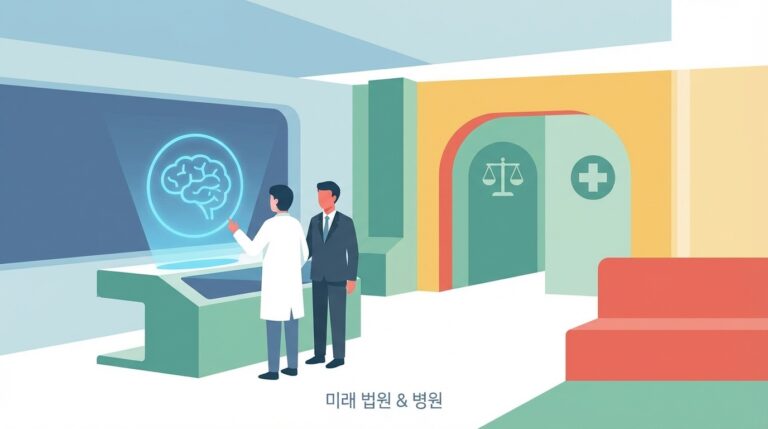
Imagine this: You’re watching a tense K-Drama courtroom scene. The judge isn’t a human in a traditional robe, but a sleek AI interface rendering a flawless, emotionless verdict. Or perhaps you’re watching a medical drama like Hospital Playlist, where doctors are intensely debating an AI’s surgical recommendation. In the subtitles, it just says “The AI lacks empathy.” But in Korean, the weight of the words spoken carries a deep cultural meaning connected to human warmth and community.
Korea is moving at pali-pali (hurry-hurry) speed into the AI era. If you’re working in tech, doing business in Pangyo (Korea’s Silicon Valley), or simply discussing high-level topics with your Korean friends, you need to know how to navigate the complex waters of AI Ethics (인공지능 윤리)—specifically regarding AI judges and medical diagnoses.
If you don’t know these C1-level expressions, you might sound like you’re just reading from a translated manual. But if you master them? You’ll command the room like a lead prosecutor in a hit tvN drama. Let’s dive into the words that will make you an insider!
Phase 2: Core Expressions Deep Dive
Let’s look at the sophisticated vocabulary you need to debate AI ethics in Korean.
1. 책임을 묻다
- Pronunciation: chaegimeul mut-tta [chaeg-eem-eul moot-tta]
- Meaning: Literal = To ask for responsibility. Real nuance = To hold (someone/something) accountable.
- K-Culture Moment: Picture the classic chaebol (conglomerate) villain being grilled in a National Assembly hearing on live TV. The hero points at them and shouts, “I will hold you accountable!”
- Editor’s Insight: We don’t “give” or “place” accountability in Korean; we ask (묻다) for it. It implies accountability is an active dialogue and a societal demand. When an AI makes a medical error, the biggest debate is: 누구에게 책임을 물어야 할까요? (Who should we hold accountable?)
- Situation Spectrum:
[🚫 절대 금지] ———— [⚠️ 주의] ———— [✅ 자유롭게]- Casual/Friends: ⚠️ (A bit too heavy for casual chat)
- Semi-formal/Colleagues: ✅
- Formal/Debates: ✅
- 🤔 Think About It: Why does Korean use the verb “to ask” (묻다) for responsibility? How does this reflect the collective nature of Korean society, where an individual’s actions are always answerable to the community?
2. 정상을 참작하다
- Pronunciation: jeongsangeul cham-ja-ka-da [jeong-sang-eul cham-jahk-ha-da]
- Meaning: Literal = To consider the conditions. Real nuance = To take extenuating circumstances into account / To show leniency based on context.
- K-Culture Moment: The tearful climax of a legal K-Drama where the defense attorney pleads with the judge to consider the defendant’s tragic backstory.
- Editor’s Insight: This is the ultimate argument against AI judges. AI relies purely on code and law. But Korean law often involves Jeong (정) and deep contextual understanding. Can an AI 정상을 참작하다? Most Koreans would say no.
- Situation Spectrum:
[🚫 절대 금지] ———— [⚠️ 주의] ———— [✅ 자유롭게]- Casual/Friends: 🚫 (Too academic/legal)
- Formal/Business/Debate: ✅
- 🤔 Think About It: Is justice truly blind, or should it see the human struggle? Does your home country prioritize strict adherence to the law, or context-based leniency?
3. 편향성을 띠다
- Pronunciation: pyeon-hyang-seong-eul tti-da [pyun-hyang-sung-eul ttee-da]
- Meaning: Literal = To wear/carry a bias. Real nuance = To be biased / To exhibit bias.
- K-Culture Moment: Whenever a major Korean portal site updates its news recommendation algorithm, netizens fiercely debate whether the AI 편향성을 띠고 있다 (exhibits bias).
- Editor’s Insight: The verb 띠다 is beautiful. It means to be tinged with a color or to carry a certain nature. Bias isn’t just something the AI “has”; it’s a color that taints its entire process.
- Situation Spectrum:
[🚫 절대 금지] ———— [⚠️ 주의] ———— [✅ 자유롭게]- Casual: ⚠️ (Use ‘편견이 있다’ instead for daily chat)
- Formal/Academic: ✅
Phase 3: Textbook vs Real Life
Let’s see how a textbook translates AI concepts versus how a Korean tech worker in Pangyo actually speaks after a few shots of Soju.
| Situation | 📖 Textbook Korean | 🗣️ Real Korean | 💡 Why the difference? |
|---|---|---|---|
| Worrying about AI replacing doctors | 인공지능이 의사를 대체할 것입니다. (AI will replace doctors.) | AI가 의사들 밥그릇 다 뺏게 생겼어요. (AI is about to steal the doctors’ rice bowls.) | “밥그릇” (Rice bowl) is a profound cultural metaphor for one’s livelihood and survival in Korea. |
| Criticizing an AI judge’s harsh ruling | 이 판결은 너무 기계적입니다. (This ruling is too mechanical.) | 와, 판결 진짜 피도 눈물도 없네. (Wow, this ruling literally has no blood or tears.) | Koreans value emotional warmth; lacking it makes you a cold monster (or a machine). |
| Doubting an AI’s medical diagnosis | 진단 결과를 100% 신뢰할 수 없습니다. (We cannot trust the diagnosis 100%.) | 그래도 사람 손맛이 있어야죠. (Still, you need that human touch.) | “손맛” (Hand-taste) usually refers to cooking, but is used metaphorically for human intuition/skill. |
Editor’s Bottom Note: For a C1 learner, dropping “밥그릇 다 뺏게 생겼어요” during a casual networking event will instantly make you the most popular person at the table!
Phase 4: Cultural Deep Dive
4-1. Non-verbal Communication: The Gaze of Judgment
When discussing heavy topics like AI ethics or medical diagnoses in Korea, pay attention to eye contact. While Western cultures value unbroken eye contact as a sign of confidence, in Korea, staring intensely during a disagreement can be seen as aggressive (기싸움 – battle of wills). If you are arguing that AI judges are flawed, soften your gaze slightly, nod to acknowledge the opponent’s point, and then counter-argue. It shows high Nunchi (눈치).
4-2. K-Drama Connection: The “Cold Machine” vs “Warm Human” Trope
If you watch hit dramas like Stranger (비밀의 숲) or Good Doctor, the core conflict is almost always Efficiency/Logic vs. Empathy/Jeong (정).
When Koreans debate AI in medicine or law, they aren’t just discussing technology. They are debating whether society will lose its Jeong. A doctor who gives a 100% accurate diagnosis but is cold is often the villain initially, while the warm, slightly flawed doctor is the hero. Understanding this trope is the key to understanding the Korean anxiety around AI.
Phase 5: Immersive Roleplay Scenario
Scenario A: The Tech After-Party in Pangyo
Setting: Friday night, 8 PM. A trendy craft beer pub in Pangyo. The air is buzzing with tech developers and startup founders. You are grabbing drinks with your Korean colleagues after a seminar on “The Future of Lunit & AI Medical Imaging.”
Characters:
– YOU: A foreign tech consultant who understands both the brilliance and dangers of AI.
– Min-su (34): A lead developer. Very pro-AI, believes machines are flawless.
– Ji-yoon (29): A UX researcher. Worried about the human element.
Dialogue:
Min-su: 솔직히 10년 안에 AI 판사나 AI 의사가 다 대체할 걸요? 기계가 훨씬 정확하잖아요. 🍺
(Soljiki 10nyeon ane AI pansana AI uisaga da daechehal geollyo? Gigega hwolssin jeonghwakajannayo.)
[Honestly, won’t AI judges and doctors replace everyone in 10 years? Machines are much more accurate.]
(🎭 Stage Direction: Min-su confidently takes a sip of his IPA)
Ji-yoon: 에이, 그래도 사람이 죽고 사는 문제인데… 기계가 정상을 참작할 수는 없잖아요.
(Ei, geuraedo sarami jukgo saneun munje-inde… gigega jeongsangeul chamjakal suneun eopjannayo.)
[Come on, it’s a matter of life and death… A machine can’t take extenuating circumstances into account.]
Min-su: 오히려 사람이 편향성을 띠니까 문제죠. 전 AI가 맞다고 봅니다. OO씨는 어떻게 생각해요?
(Ohiryeo sarami pyeonhyangseongeul ttinikka munjejo. Jeon AI-ga matdago bomnida. OO-ssineun eotteoke saenggakaeyo?)
[Actually, it’s a problem because humans exhibit bias. I think AI is right. What do you think?]
🔀 Your Turn! How will you respond?
– A) “저도 민수 씨 말에 동의합니다. 기계가 최고죠.” (Too textbook, a bit boring)
– B) “정확도는 높겠지만, 의료 사고가 나면 누구에게 책임을 물어야 할지 복잡해질 것 같아요.”
– C) “AI가 우리 밥그릇 다 뺏게 생겼네요! 짠이나 합시다!”✅ Best Choice: B — It acknowledges Min-su’s point about accuracy but introduces a highly sophisticated C1-level ethical dilemma (책임을 묻다).
⚠️ Choice C Analysis: Hilarious and great for changing the subject if the debate gets too heated, but it dodges the intellectual question.
Scenario B: Bonus – The Futuristic K-Clinic
Setting: You visit a local internal medicine clinic in Gangnam. There is no receptionist, just a sleek AI Kiosk that scans your face and asks for your symptoms.
AI Kiosk: 환자분, 증상을 화면에 입력해 주세요.
(Hwanjabun, jeungsangeul hwamyene imnyeokae juseyo.)
[Patient, please input your symptoms on the screen.]
YOU: (Struggling to find the right medical term) 저기요, 간호사님! 이거 AI 접수 어떻게 하는 거예요?
(Jeogiyo, ganhosanim! Igeo AI jeopsu eotteoke haneun geoyeyo?)
[Excuse me, nurse! How do I do this AI registration?]
Nurse: 아, 처음이시구나! 제가 도와드릴게요. 기계가 좀 차갑죠? 😊
(Ah, cheoeumisiguna! Jega dowadeurilgeyo. Gigega jom chagapjjo?)
[Ah, it’s your first time! I’ll help you. The machine is a bit cold, isn’t it?]
Phase 6: 10-Second Shadowing Drill
Time to get the intonation right! Repeat this like a lead actor delivering a crucial monologue in a courtroom drama.
😤 아무리 / AI 기술이 / 발전한다고 해도, / 의료 사고의 / 책임을 / 기계에게 / 물을 수는 / 없습니다!
(Amuri / AI gisuri / baljeonhandago haedo, / uiryo sagoui / chaegimeul / gigeege / mureul suneun / eopseumnida!)
“No matter how much AI technology advances, we cannot hold a machine accountable for medical malpractice!”
Phase 7: K-Culture Glossary
| Korean | Romanization | English | Cultural Context |
|---|---|---|---|
| 눈치 | nunchi | Social intelligence / tact | The ability to read the room. Crucial when humans debate sensitive AI ethics. |
| 밥그릇 | bapgeureut | Rice bowl | Slang for one’s livelihood or job security. AI is seen as a threat to the ‘bapgeureut’. |
| 피도 눈물도 없다 | pido nunmuldo eopda | No blood or tears | Used to describe AI or ruthless humans who lack basic human empathy (Jeong). |
| 손맛 | sonmat | Hand-taste | Metaphor for the irreplaceable human touch in professional skills, including surgery. |
| 정 | jeong | Deep human affection | The core Korean emotional bond. The biggest fear regarding AI is a society without Jeong. |
Phase 8: Traveler’s Survival Kit
Korea’s medical infrastructure is highly advanced. Even as a traveler, you will likely encounter AI kiosks in pharmacies or clinics instead of human receptionists.
🆘 Survival Expression #1
– 🇰🇷 “키오스크 접수 어떻게 해요?” (kioseukeu jeopsu eotteoke haeyo?)
– 🗣️ Pronunciation: key-oh-seu-keu jup-soo uh-ttuh-keh hae-yo?
– 📍 Where to use: Clinics, fast food chains, cafes.
– 💡 Pro Tip: Don’t panic if you only see a screen. Koreans are incredibly helpful. Just look confused and ask this, and someone will rush over to help!📌 Editor’s Travel Note
– Pharmacies (약국): Many pharmacies in Seoul now use automated robotic arms to sort pills behind the counter!
– Digital Prescriptions: You might receive your prescription via KakaoTalk instead of paper.
– Translation Apps: If a medical AI kiosk doesn’t have an English option, use Papago’s live image translation feature to scan the screen.
Phase 9: Think Deeper — Language & Power
🧠 Think Deeper: Can AI truly master Korean Honorifics?
The Korean language is built on a complex hierarchy of respect (존댓말 and 반말). The way a doctor speaks to an elderly patient versus a young child carries immense social power and cultural respect. If an AI doctor diagnoses a patient, how should it speak? Should it use the highest level of honorifics, or a sterile, neutral tone? In Korean society, language isn’t just a tool for transferring data; it’s the very fabric of social relationships. If an AI judge hands down a harsh sentence using highly polite honorifics, will it feel respectful, or terrifyingly sarcastic?
💬 Your Turn: In your home country, do professionals like doctors and judges use a specific “language of power”? How would people react if an AI tried to mimic that authority? Let us know in the comments!
Phase 10: FAQ & Troubleshooting
Q: Can I use “밥그릇 다 뺏게 생겼어요” in a formal business presentation?
❌ No! While it makes you sound incredibly fluent, it is slang. In a formal presentation, stick to: “일자리 대체에 대한 우려가 있습니다” (There are concerns about job replacement). Save the rice bowl talk for the after-party!
Q: What’s the difference between 진단 (Diagnosis) and 진찰 (Examination)?
💡 진찰 is the process of the doctor looking at you and asking questions (The check-up). 진단 is the final conclusion or result (The diagnosis). AI currently helps with 진단, but patients still want human 진찰.
❌ Common Mistake #1: Translating “AI has a bias” directly to “AI는 편견을 가지고 있습니다.”
✅ Do this instead: While understandable, “편견” (prejudice) is usually for human emotions. For algorithms and data, use “AI가 편향성을 띠고 있습니다.” It sounds much more professional and accurate.
Phase 11: Wrap-up & Action Items
One-Liner Summary: To discuss AI ethics in Korean like a pro, you must look beyond the technology and address the human elements of accountability (책임을 묻다) and context (정상을 참작하다).
Your Action Missions:
– 🥉 Bronze (Solo): Stand in front of a mirror and practice the 10-second shadowing drill with your best K-Drama actor face.
– 🥈 Silver (Online): Leave a comment on a Korean tech YouTube video using the phrase: “사고가 나면 누구에게 책임을 물어야 할까요?”
– 🥇 Gold (Real World): Next time you use ChatGPT or an AI tool, jokingly say out loud: “내 밥그릇 뺏지 마라!” (Don’t steal my rice bowl!)
🎬 K-Culture Mission: Watch a clip of the K-Drama The Devil Judge (악마판사). Although it features a human judge, imagine how the public’s reaction in the drama would change if he were replaced by an AI!
Phase 12: Interactive Quiz
Let’s test your high-level Pangyo Korean!
1. Fill in the Blank:
AI가 추천한 치료법이 실패했을 때, 우리는 의료진과 AI 중 누구에게 (_______)을/를 물어야 할까요?
(When an AI’s recommended treatment fails, between the medical staff and the AI, who should we hold ________?)
– A) 정상을 참작
– B) 책임을
– C) 편향성을
2. True or False – K-Culture Edition:
In modern Korean hospitals, it is completely unacceptable for patients to use automated AI Kiosks instead of speaking to human nurses. (T/F)
3. Situational Judgment:
You are reading an article about an AI recruitment tool that unfairly rejects female applicants. Which C1-level expression best describes this AI?
– A) 이 AI는 밥그릇을 뺏습니다. (This AI steals rice bowls.)
– B) 이 AI는 정상을 참작합니다. (This AI considers extenuating circumstances.)
– C) 이 AI는 알고리즘에 편향성을 띠고 있습니다. (This AI’s algorithm exhibits bias.)
(Answers: 1. B, 2. False – Kiosks are everywhere!, 3. C)
Did you enjoy this deep dive? Subscribe to Daily Hangul for more insights into the Korean language and culture!
Frequently Asked Questions (FAQ)
Q: What does "책임을 묻다" mean in Korean and how do you pronounce it?
A: In Korean, "책임을 묻다" is pronounced [chaegimeul mut-tta [chaeg-eem-eul moot-tta] and means: Literal = To ask for responsibility. Real nuance = To hold (someone/something) accountable.
Q: What does "정상을 참작하다" mean in Korean and how do you pronounce it?
A: In Korean, "정상을 참작하다" is pronounced [jeongsangeul cham-ja-ka-da [jeong-sang-eul cham-jahk-ha-da] and means: Literal = To consider the conditions. Real nuance = To take extenuating circumstances into account / To show leniency based on context.
Q: What does "편향성을 띠다" mean in Korean and how do you pronounce it?
A: In Korean, "편향성을 띠다" is pronounced [pyeon-hyang-seong-eul tti-da [pyun-hyang-sung-eul ttee-da] and means: Literal = To wear/carry a bias. Real nuance = To be biased / To exhibit bias.






