

안녕하세요! 매일한글(Daily Hangul) 에디터입니다. 👋
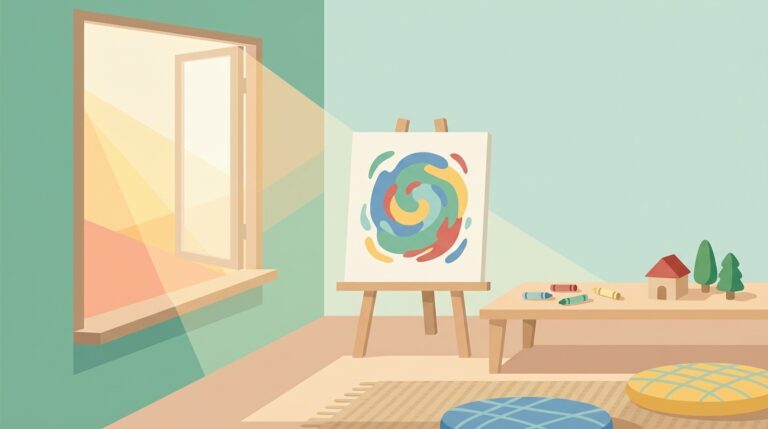
Have you ever watched a K-drama like ‘It’s Okay to Not Be Okay’ (사이코지만 괜찮아) or ‘It’s Okay, That’s Love’ (괜찮아, 사랑이야) and noticed those intensely quiet scenes? The protagonist is sitting in a brightly lit room, perhaps staring at a sandbox filled with miniature toys, or aggressively splashing colors onto a canvas. The subtitles might simply say, “They are expressing their feelings.” But if you listen closely to the Korean therapists in these scenes, the language they use is profoundly deep, poetic, and clinical all at once.
At the C2 (Advanced) level, you already know how to say “I’m sad” (슬퍼요) or “I’m stressed” (스트레스 받아요). But to truly engage in or discuss Counseling (심리 상담)—specifically Art Therapy (미술 치료) and Play Therapy (놀이 치료)—you need to understand how Koreans articulate the complex mechanics of the human psyche.
In Korean culture, mental health was traditionally somewhat of a taboo, often masked by the concept of enduring silently (참는 것). However, modern Korea has seen an explosive rise in the popularity of ‘Healing’ (힐링) culture. Art and play therapies serve as the perfect cultural bridge—they lower the intimidating barrier of clinical psychiatry by turning healing into an act of creation.
Today, we aren’t just learning vocabulary; we are learning how to look into the Korean soul. Let’s dive in! 🧠🎨
Phase 2: Deep Dive into Clinical Expressions
Here are the top three expressions you absolutely must know when discussing the clinical effects of art and play therapy in Korean.
1. 억압된 무의식을 투사하다
- Pronunciation: [eog-ap-doen mu-ui-si-geul tu-sa-ha-da]
(Think of ‘mu’ like the cow’s ‘moo’, and ‘ui’ is that tricky sound like you’re slightly disgusted, combined with a quick ‘ee’.)- Meaning: (Literal) To project repressed unconsciousness / (Real nuance) To safely transfer hidden, suppressed emotions onto an external object (like a drawing or a toy) so they can be examined.
- K-Culture Moment: You’ll often hear this in clinical case study seminars, or even in high-brow TV documentaries analyzing why certain celebrities draw specific abstract patterns during their hiatus.
- Editor’s Insight: The word ‘투사’ (projection) is a direct clinical term. In art therapy, you don’t just ‘draw’ your feelings; you project your inner world onto the canvas, giving it physical form so it’s no longer dangerous to you.
- Situation Spectrum:
[🚫 절대 금지] ———— [⚠️ 주의] ———— [✅ 자유롭게]
- Casual with friends: ⚠️ (A bit too academic, you’ll sound like a textbook)
- Professional / Clinical Setting: ✅
- Formal / Academic Papers: ✅
- 🤔 Think About It: Notice how formal clinical terms in Korean usually stem from Sino-Korean roots (한자어), while words expressing raw emotion are often native Korean (순우리말)? How does your native language distinguish between ‘clinical’ and ‘emotional’ vocabulary?
2. 내면의 아이를 마주하다
- Pronunciation: [nae-myeon-ui a-i-reul ma-ju-ha-da]
- Meaning: (Literal) To face the child of the inner side / (Real nuance) To confront and acknowledge your ‘inner child’—the unhealed, vulnerable part of your psyche.
- K-Culture Moment: This is huge in Korean pop-psychology. K-Pop idols often talk about ‘healing their inner child’ during emotional speeches at the end of concerts, thanking fans for helping them embrace the frightened kid they used to be.
- Editor’s Insight: Play therapy (놀이 치료) isn’t just for children. For adults, holding a childhood toy or playing in a sandbox forces the sophisticated adult ego to step aside, allowing them to ‘마주하다’ (face directly, eye-to-eye) their inner child. It feels very poetic and empathetic.
- Situation Spectrum:
[🚫 절대 금지] ———— [⚠️ 주의] ———— [✅ 자유롭게]
- Casual/Deep talks with friends: ✅ (Very common in deep, late-night cafe talks)
- Professional / Clinical Setting: ✅
- Workplace (to your boss): 🚫 (Too intimate!)
- 🤔 Think About It: The verb ‘마주하다’ implies looking at someone face-to-face as equals. Why do you think Koreans use this verb rather than ‘치료하다’ (to cure) when talking about the inner child?
3. 마음속 응어리를 풀어내다
- Pronunciation: [ma-eum-sok eung-eo-ri-reul pu-reo-nae-da]
- Meaning: (Literal) To untangle the knot inside the heart / (Real nuance) To experience catharsis by finally releasing long-held, hardened resentment, sorrow, or trauma.
- K-Culture Moment: In a K-Drama, a mother and daughter who have fought for 20 years finally cry and forgive each other over a bowl of Kimchi Jjigae. The relief they feel? That’s the untangling of an ‘응어리’.
- Editor’s Insight: This is deeply tied to the Korean concept of Han (한 – collective sorrow/unresolved resentment). ‘응어리’ is a physical metaphor—a hard knot in your chest. Art and play therapy act as the gentle hands that ‘풀어내다’ (untangle and release) that knot.
- Situation Spectrum:
[🚫 절대 금지] ———— [⚠️ 주의] ———— [✅ 자유롭게]
- Deep talks with friends: ✅
- Clinical Setting: ✅ (Therapists use this to describe the clinical outcome of catharsis)
- Everyday minor stress: 🚫 (Don’t use this if you just missed the bus. It’s for deep pain!)
Phase 3: Textbook vs Real Life
At the C2 level, you need to seamlessly transition between academic literature and professional reality.
| 상황 | 📖 교과서 (Academic Korean) | 🗣️ 진짜 한국어 (Clinical/Professional Reality) | 💡 왜 다를까? (Why the difference?) |
|---|---|---|---|
| Explaining the goal of Art Therapy | 미술을 통해 스트레스를 해소합니다. | 도화지에 억압된 감정을 투사해 카타르시스를 유도합니다. | The reality describes the psychological mechanism (projection) rather than just the generic result (stress relief). |
| Describing Play Therapy for Adults | 어른도 장난감을 가지고 놉니다. | 매체를 통해 내면의 아이와 안전하게 마주하는 과정을 거칩니다. | ‘Playing with toys’ sounds dismissive. ‘Facing the inner child safely’ validates the adult’s vulnerability. |
| Reporting a client’s breakthrough | 환자의 기분이 많이 좋아졌습니다. | 마침내 오랫동안 억눌렸던 응어리를 풀어내셨습니다. | Korean therapy culture deeply values the emotional release of collective/historical trauma (Han). |
Phase 4: Cultural Deep Dive — K-Culture Connection
4-1. The Non-Verbal Power of ‘침묵’ (Silence)
In Western therapy, there is often a heavy emphasis on dialogue—talking it out. In Korea, however, there is profound communication in 침묵 (Silence). During an art therapy session, a Korean therapist might sit in complete silence with the client for 20 minutes while they paint. This isn’t a lack of communication; it’s providing an ‘안전한 공간’ (safe space) where the client doesn’t feel the pressure of Nunchi (눈치 – reading the room to please the other person).
4-2. The ‘Healing Cafe’ Culture (K-Trend Connection)
Directly visiting a psychiatric clinic (정신건강의학과) still carries a slight stigma for some generations in Korea due to fears of it going on their medical record (기록에 남을까 봐). Enter the 드로잉 카페 (Drawing Cafes) and 심리 상담 카페 (Psychological Counseling Cafes).
Particularly popular around Hongdae and Gangnam, these spaces allow people, especially couples and friends, to take a personality test (like MBTI or Enneagram) or paint on canvases while sipping an Americano. It’s a brilliant cultural adaptation: combining Korea’s love for cafe culture with a low-barrier, accessible form of art therapy and self-reflection. It turns mental health from a ‘clinical problem’ into a ‘trendy lifestyle activity.’
Phase 5: Immersive Roleplay Scenario
Setting: Friday afternoon. A quiet, sunlit counseling center in Seoul. You are a foreign psychology researcher observing a clinical seminar with Korean therapists. You’re sitting around a table with coffee, discussing the recent progress of an adult patient who underwent play therapy using miniature sandplay (모래놀이 치료).
Characters:
– YOU: A C2-level foreign researcher, passionate and culturally observant.
– Dr. Lee (45, Lead Therapist): Professional, insightful, speaks in a calm, soothing tone.
– Ji-yoon (30, Junior Therapist): Enthusiastic, uses slightly more modern terminology.
Dr. Lee: 이번 케이스에서는 모래놀이 매체가 아주 효과적이었습니다. 내담자가 처음엔 많이 방어적이셨죠.
(Ibeon keiseu-eseoneun moraenori maeche-ga aju hyogwajeog-ieot-seumnida. Naedamja-ga cheoeum-en mani bangeojeog-isyeot-jyo.)
[Translation: In this case, the sandplay medium was very effective. The client was quite defensive at first.]
(🎭 Stage Direction: Dr. Lee points to a photo of the client’s sandplay arrangement.)
Ji-yoon: 네, 맞아요. 그런데 피규어를 배치하면서 서서히 억압된 무의식을 투사하시더라고요.
(Ne, maj-ayo. Geureonde pigyuo-reul baechi-hamyeonseo seoseo-hi eog-ap-doen mu-ui-si-geul tu-sa-ha-si-deo-ra-go-yo.)
[Translation: Yes, exactly. But as they arranged the figures, they slowly projected their repressed unconsciousness.]
YOU: 특히 저 구석에 혼자 있는 어린아이 피규어가 인상 깊었습니다.
(Teukhi jeo guseok-e honja inneun eorin-ai pigyuo-ga insang gipeot-seumnida.)
[Translation: I was particularly struck by the child figure standing alone in that corner.]
Dr. Lee: 정확히 보셨네요. 그게 바로 내담자가 평생 외면해왔던 내면의 아이였습니다.
(Jeonghwakhi bosyeot-neyo. Geuge baro naedamja-ga pyeongsaeng oemyeon-hae-watdeon nae-myeon-ui a-i-yeot-seumnida.)
[Translation: You saw that exactly right. That was the inner child the client had turned away from their entire life.]
Ji-yoon: 선생님, 그럼 다음 세션의 목표는 무엇으로 잡는 게 좋을까요?
(Seonsaengnim, geureom daeum sesyeon-ui mokpyo-neun mu-eo-seu-ro jamneun ge jo-eul-kka-yo?)
[Translation: Doctor, then what should we set as the goal for the next session?]
🔀 당신의 차례! (Your Turn!) As a fellow researcher, how should you respond?
- A) “그냥 재밌게 놀게 해줍시다!” (Let’s just let them play and have fun!)
- B) “환자가 빨리 완치되도록 강하게 압박해야 합니다.” (We must pressure the patient strongly so they are fully cured quickly.)
- C) “내담자가 스스로 마음속 응어리를 풀어낼 수 있도록, 안전한 환경을 유지해주는 게 중요할 것 같습니다.”
✅ Best Choice: C — “I think it’s important to maintain a safe environment so the client can untangle the knot in their heart on their own.”
Why?: Option A is entirely unprofessional for C2 clinical discourse. Option B violates the core principle of Korean therapy (respecting the client’s pace) and sounds aggressive. Option C beautifully uses the high-level cultural metaphor (응어리를 풀어내다) while demonstrating clinical empathy.
Dr. Lee: (Smiling warmly) 맞습니다. 우리가 서두를 필요는 없죠. 천천히 응어리를 풀어내시도록 기다려주는 게 우리의 역할이니까요.
(🎭 Stage Direction: Everyone nods in agreement, the atmosphere is deeply respectful.)
Phase 6: 10-Second Shadowing Drill
Let’s practice the cadence of a professional Korean therapist. Pay attention to the pauses (/) and the emotional tags!
🧑🏫 진지하게 (Professionally & Seriously):
그림을 통해 / 억압된 감정을 투사하는 것은 / 치유의 첫걸음입니다.
(geu-rim-eul tong-hae / eog-ap-doen gam-jeong-eul tu-sa-ha-neun geo-seun / chi-yu-ui cheot-geo-reum-im-ni-da.)
Projecting repressed emotions through art is the first step to healing.😌 따뜻하게 (Warmly & Empathetically):
이제 / 그 내면의 아이와 / 마주할 시간이에요.
(i-je / geu nae-myeon-ui a-i-wa / ma-ju-hal si-gan-i-e-yo.)
Now, it is time to face that inner child.
Phase 7: K-Culture Glossary (Therapy & Mindset Edition)
| 한국어 (Korean) | Romanization | English | 맥락 설명 (Cultural Context) |
|---|---|---|---|
| 눈치 | nunchi | Social intuition | The core Korean survival skill of reading the room. Therapy is often the only place Koreans can turn off their ‘눈치’. |
| 한(恨) | han | Unresolved resentment/sorrow | A deeply ingrained cultural emotion. ‘응어리’ is the physical manifestation of this feeling in the body. |
| 힐링 | hilling | Healing | Konglish term used broadly for anything that relieves stress (e.g., eating good food, taking a trip, or art therapy). |
| 내담자 | naedamja | Client (Counseling) | In clinical settings, Koreans use ‘내담자’ (one who comes to talk) rather than ‘환자’ (patient), to remove the stigma of illness. |
| 소확행 | sohwakhaeng | Small but certain happiness | A popular mindset in modern Korea focusing on finding mental peace in tiny, daily moments to combat societal pressure. |
Phase 8: Traveler’s Survival Kit (The Healing Trip Edition)
If you’re visiting Korea and want to experience this intersection of art and mental well-being, you must visit a 드로잉 카페 (Drawing Cafe) or a 원데이 클래스 (One-day class) in areas like Seongsu or Hongdae.
🆘 서바이벌 표현 (Survival Expressions for Healing Cafes)
🇰🇷 1. “혹시 심리 상담도 같이 진행되는 프로그램인가요?”
– (hok-si sim-ri sang-dam-do ga-chi jin-haeng-doe-neun peu-ro-geu-raem-in-ga-yo?)
– Is this a program that includes psychological counseling as well?🇰🇷 2. “정해진 도안 없이 자유롭게 그려도 되나요?”
– (jeong-hae-jin do-an eop-si ja-yu-rop-ge geu-ryeo-do doe-na-yo?)
– Can I draw freely without a pre-set template?🇰🇷 3. “생각보다 속이 후련하네요!”
– (saeng-gak-bo-da so-gi hu-ryeon-ha-ne-yo!)
– I feel much more relieved/cathartic than I expected!📌 Editor’s Travel Note
When booking these unique healing experiences, use the Naver Map (네이버 지도) app and search for “드로잉 카페” or “심리 카페”. Most places require reservations via Naver Booking, so it’s a great chance to practice your advanced Korean reading skills!
Phase 9: Think Deeper — “Media vs Reality”
🧠 Think Deeper: 미디어 속 정신건강과 현실의 한국 (Mental Health in Media vs Reality)
K-Dramas often portray psychological healing as a dramatic, explosive moment—a character screams in the rain, or shatters a canvas, and suddenly they are “cured.” However, the reality of clinical therapy in Korea is a slow, quiet revolution. For decades, enduring pain (참는 것) was seen as a virtue, and seeking help was a weakness.
Today, thanks to the gradual normalization of Art and Play therapy, the narrative is shifting. These therapies provide a ‘soft entry’ (낮은 문턱) for Koreans to seek help without the heavy label of psychiatric treatment. It is a beautiful synthesis of traditional Korean stoicism and modern psychological vulnerability.
💬 Your Turn: How is mental health portrayed in the media of your home country? Is there a stigma around therapy, or is it completely normalized? Share your thoughts in the comments in C2-level Korean!
Phase 10: FAQ & Troubleshooting
Q: Can I use “응어리를 풀어내다” when I resolve a minor misunderstanding with a friend?
A: No! 🚫 ‘응어리’ implies a deep, hardened knot of long-term resentment or trauma. If you just had a minor fight over where to eat dinner, use “오해를 풀다” (to clear a misunderstanding). Using ‘응어리’ here will make you sound incredibly dramatic!
Q: In a professional paper, should I use ‘마주하다’ or a more clinical term?
A: Yes, ‘마주하다’ is perfectly fine! ✅ Interestingly, in Korean psychology, blending academic terminology (투사하다) with highly empathetic native verbs (마주하다, 보듬어주다) is considered the mark of an excellent, humane therapist.
❌ Common Mistake: Using ‘미치겠다’ (I’m going crazy) in a clinical or counseling context. While it’s a favorite slang in K-Dramas and daily life to mean “I’m so stressed/happy/tired,” using it in a serious counseling setting can trivialize the therapeutic process. Stick to describing your exact emotional state (e.g., “무기력함을 느낍니다” – I feel helpless).
Phase 11: Wrap-up & Action Missions
One-Liner Summary: True C2 fluency in Korean psychology requires balancing clinical precision (투사하다) with deep cultural empathy (응어리를 풀어내다).
Take Action:
– 🥉 Bronze: Look in the mirror and passionately say, “내면의 아이를 마주할 시간이야” (It’s time to face the inner child) with a serious therapist face.
– 🥈 Silver: Write a short journal entry in Korean about an activity you do that helps you ‘untangle’ your stress (스트레스나 응어리를 풀어내는 방법).
– 🥇 Gold: Visit a drawing cafe in Korea (or your local equivalent), paint something abstract, and explain to your friend in Korean what emotions you “projected” (투사한 감정) onto the canvas!
🌟 K-Culture Mission: Search YouTube for “아이돌 만다라 그리기” (Idol drawing Mandala) or “아이돌 심리 상담” (Idol psychological counseling). Listen carefully—can you hear the therapists using any of the words we learned today?
Phase 12: Interactive Challenge (Quiz Time!)
1. Situational Judgment: Your friend has been carrying the guilt of a past failure for 10 years. After a deep conversation with you, they finally cry and let it go. What is the most culturally appropriate thing to say to them?
– A) “드디어 무의식을 투사했구나!”
– B) “이제 마음속 응어리가 좀 풀어졌어?”
– C) “너 진짜 미치겠다!”
2. Fill in the Blank:
미술 치료에서 도화지에 그림을 그리는 행위는, 자신의 감정을 외부로 ___________ 과정입니다.
(In art therapy, the act of drawing on a canvas is the process of ___________ one’s emotions outward.)
3. True or False:
In Korean counseling clinics, professionals prefer to call the person receiving therapy ‘환자’ (patient) rather than ‘내담자’ (client) to sound more medical. (T / F)
(Answers: 1. B – ‘응어리’ is perfect for deep, long-term release. / 2. 투사하는 (projecting) / 3. False. They prefer ‘내담자’ to remove the stigma of illness.)
Loved this deep dive into the Korean mind? Share this post with your fellow Korean learners and let’s keep unraveling the beautiful complexities of the Korean language together!
Frequently Asked Questions (FAQ)
Q: What does "억압된 무의식을 투사하다" mean in Korean and how do you pronounce it?
A: In Korean, "억압된 무의식을 투사하다" is pronounced [eog-ap-doen mu-ui-si-geul tu-sa-ha-da] and means: (Literal) To project repressed unconsciousness / (Real nuance) To safely transfer hidden, suppressed emotions onto an external object (like a drawing or a toy) so they can be examined.
Q: What does "내면의 아이를 마주하다" mean in Korean and how do you pronounce it?
A: In Korean, "내면의 아이를 마주하다" is pronounced [nae-myeon-ui a-i-reul ma-ju-ha-da] and means: (Literal) To face the child of the inner side / (Real nuance) To confront and acknowledge your 'inner child'—the unhealed, vulnerable part of your psyche.
Q: What does "마음속 응어리를 풀어내다" mean in Korean and how do you pronounce it?
A: In Korean, "마음속 응어리를 풀어내다" is pronounced [ma-eum-sok eung-eo-ri-reul pu-reo-nae-da] and means: (Literal) To untangle the knot inside the heart / (Real nuance) To experience catharsis by finally releasing long-held, hardened resentment, sorrow, or trauma.







