

Phase 1: 공감 — 몰입형 오프닝 (Immersive Hook)
Hello! I’m the Lead Editor at Daily Hangul.
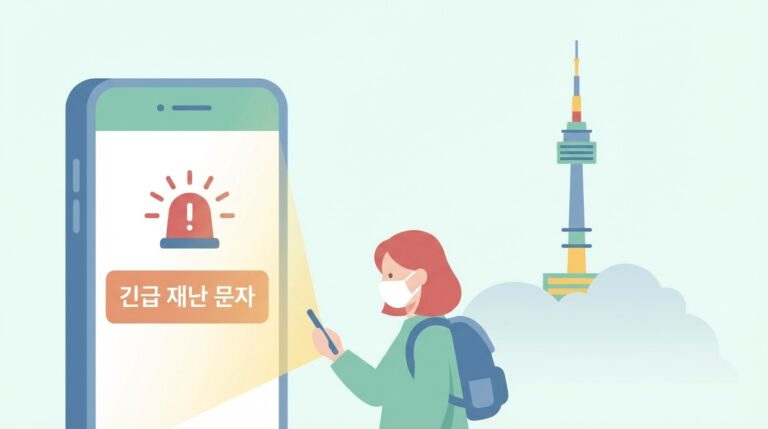
Picture this: You’re riding the packed Line 2 of the Seoul Subway during rush hour. Suddenly, a deafening cacophony of sirens erupts from everyone’s phones simultaneously. BEEP! BEEP! BEEP! You look around in panic, expecting an earthquake or a zombie outbreak straight out of the K-Drama Happiness. But the locals? They barely glance up from their webtoons, swipe away the 안전 안내 문자 (Emergency Alert Text), and go back to watching YouTube.
If you’ve lived in or visited Korea over the past few years, you know exactly what I’m talking about. Navigating a pandemic or public safety crisis in a foreign country is terrifying enough, but trying to decipher advanced bureaucratic Korean vocabulary while doing it? That’s a whole new level of stress.
At the C1 level, you already know basic words like 병원 (hospital) or 아파요 (it hurts). But in the real world—especially in Korea, where public health is deeply tied to collective responsibility—you need to understand the nuanced, high-level terms that dominate the news, office chats, and those ubiquitous emergency alerts.
Let’s decode the language of K-방역 (K-Quarantine) together. This guide is built on real questions from advanced learners who wanted to sound like educated locals, not just textbook readers.
Phase 2: 핵심 표현 심층 분석 (Deep Dive)
1. 확진자 (Confirmed Case)
- Pronunciation: hwak-jin-ja [Think of ‘hwak’ like the sharp sound you make when spitting out a watermelon seed, followed by ‘jin-ja’ as in ‘ninja’]
- Meaning: (Literal) Confirmed person / (Real Nuance) Someone who has officially tested positive for an infectious disease.
- K-Culture Moment: You’ll hear this constantly on the news: “오늘 신규 확진자는…” (Today’s new confirmed cases are…). In the office, a hushed whisper: “2층 영업팀에 확진자 나왔대요” (They say there’s a confirmed case in the 2nd-floor sales team).
- Editor’s Insight: Notice how Korean uses the suffix ‘-자’ (ja), meaning ‘person’ (from Hanja 者), to formalize the status. It sounds much more clinical than saying “someone who got sick.”
- Situation Spectrum:
[🚫 절대 금지] ———— [⚠️ 주의] ———— [✅ 자유롭게]
- Casual with friends: ✅
- Semi-formal (Co-workers): ✅
- Formal (Boss/News): ✅
- 🤔 Think About It: Why does Korean rely so heavily on Sino-Korean (Hanja) words like 확진자 for public safety, rather than pure Korean words? Does your native language also use “medical-sounding” vocabulary to create a sense of authority?
2. 동선 (Movement Path / Contact Tracing Route)
- Pronunciation: dong-seon [Rhymes with ‘song’ + ‘sun’]
- Meaning: (Literal) Moving line / (Real Nuance) The detailed timeline and locations a person visited.
- K-Culture Moment: During the height of the pandemic, discovering a confirmed case’s ‘동선’ felt like reading a detective novel. “Oh no, their 동선 overlaps with the cafe I went to yesterday!”
- Editor’s Insight: This word perfectly encapsulates the Korean approach to disaster management—meticulous, transparent, and highly organized. It’s also used in non-medical contexts, like planning a travel itinerary (여행 동선).
- Situation Spectrum:
[🚫 절대 금지] ———— [⚠️ 주의] ———— [✅ 자유롭게]
- Casual with friends: ✅
- Semi-formal (Co-workers): ✅
- Formal (Boss/News): ✅
- 🤔 Think About It: Releasing a person’s ‘동선’ was crucial for safety in Korea, but it sparked intense privacy debates. How would your home country react to this level of contact tracing?
3. 비대면 (Untact / Non-face-to-face)
- Pronunciation: bi-dae-myeon [Bee-deh-myun. ‘Myun’ sounds like ‘my’ + ‘un’]
- Meaning: (Literal) Non-facing-surface / (Real Nuance) Remote, contactless, virtual.
- K-Culture Moment: The pandemic popularized “비대면 수업” (Zoom classes) and “비대면 배달” (contactless delivery). If you order fried chicken on the Baemin app, you’ll see the option: “문 앞에 두고 가주세요” (Please leave it at the door) which is the essence of 비대면.
- Editor’s Insight: The Korean media coined the Konglish word “Untact” (언택트), but in formal and governmental Korean, 비대면 is the standard C1 vocabulary you must know.
- Situation Spectrum:
[🚫 절대 금지] ———— [⚠️ 주의] ———— [✅ 자유롭게]
- Casual with friends: ⚠️ (Friends usually just say ‘온라인으로 하자’ – let’s do it online)
- Semi-formal (Co-workers): ✅
- Formal (Boss/News): ✅
- 🤔 Think About It: How has the concept of 비대면 affected traditional Korean businesses that rely heavily on ‘Jeong’ (정 – human connection and warmth)?
Phase 3: 교과서 vs 진짜 한국어 (Textbook vs Real Life)
| 상황 | 📖 교과서 한국어 | 🗣️ 진짜 한국어 | 💡 왜 다를까? |
|---|---|---|---|
| Canceling a plan due to safety | 모임을 취소합시다. (Let’s cancel the gathering.) | 이번 회식은 패스하시죠 / 시국이 시국인지라 미루시죠. | Using English “pass” softens the blow. “시국이 시국인지라” (Given the current situation) shifts the blame to the pandemic, protecting social harmony. |
| Asking if someone has symptoms | 혹시 코로나 증상이 있습니까? (Do you have COVID symptoms?) | 목이 좀 따끔거려요? / 몸이 으슬으슬해요? | Koreans often describe specific sensory symptoms using mimetic words (따끔거리다: scratchy, 으슬으슬하다: chilly/achy) rather than clinical terms in daily life. |
| Asking to wear a mask | 마스크를 착용하십시오. (Please wear a mask.) | 마스크 꼭 끼고 다녀. (Casual) / 마스크 올려 써주세요. (To strangers) | “끼다” (to insert/wear tightly) is more colloquial than “착용하다”. “올려 쓰다” specifically means pulling the mask up over the nose (fighting the dreaded ‘턱스크’ or chin-mask). |
Phase 4: 문화적 맥락 — K-Culture 딥다이브 (Cultural Deep Dive)
4-1. 비언어적 요소: The ‘Nunchi’ of Mask Wearing
Even when government mandates were lifted, many Koreans continued wearing masks. Why? 눈치 (Nunchi). In a collective society, wearing a mask isn’t just about personal protection; it’s a visual cue that says, “I respect your health and the community’s safety.” If you cough on the subway without a mask, or even cough into your hand instead of your elbow (옷소매로 가리고 기침하기), you will feel the intense, burning gaze of ajummas and salarymen alike. The unwritten rule: When in doubt, mirror what the locals are doing.
4-2. K-Pop Connection: The Silent Concerts
Imagine a K-Pop concert without the deafening fanchants. During the pandemic, Korea pioneered the ultimate safe entertainment experience. Idols would say, “소리 지르지 말고 박수 쳐!” (Don’t scream, just clap!). Fans traded their vocal cords for aggressively shaking their lightsticks and using clappers (클래퍼). Understanding pandemic vocabulary like 방역 수칙 (Prevention guidelines) was crucial for fans reading the strict entry requirements on Weverse to see their favorite artists safely.
Phase 5: 실전 롤플레이 시나리오 (Immersive Roleplay)
시나리오 A: 메인 롤플레이 (Main Scenario)
- Setting: Friday afternoon at a sleek tech startup in Gangnam. A new COVID/Flu wave is hitting Seoul, and the “Emergency Alert” alarms have been buzzing all day.
- Characters:
- YOU: An expat manager, navigating team dynamics while prioritizing health.
- Minsu (32): Your friendly, slightly overly-social Korean coworker who loves Hoesik (team dinners).
Minsu: 매니저님, 오늘 프로젝트 끝난 기념으로 다 같이 삼겹살 어때요? 제가 쏩니다! 🥩
(Maenijeonim, oneul peurojekteu kkeutnan ginyeomeuro da gachi samgyeopsal eottaeyo? Jaega ssomnida!)
(Manager, how about pork belly with everyone to celebrate finishing the project? My treat!)
(🎭 Minsu makes a cheering motion with his imaginary soju glass.)
YOU: 아, 민수 씨. 마음은 정말 감사한데… 요즘 확진자가 다시 늘고 있어서요.
(A, Minsu ssi. Maeumeun jeongmal gamsahande… yojeum hwakjinjaga dasi neulgo isseoseoyo.)
(Ah, Minsu. I really appreciate the thought, but… the number of confirmed cases is rising again lately.)
Minsu: 에이, 저희 팀은 다 건강하잖아요! 그리고 식당에 칸막이도 다 있어요.
(Ei, jeohoi timeun da geonganghajannayo! Geurigo sikdange kanmagido da isseoyo.)
(Come on, our team is all healthy! Plus, the restaurants all have partitions.)
🔀 당신의 차례! 어떻게 대답할까요? (Your Turn! How do you respond?)
– A) “안 돼요. 방역 수칙을 어기면 안 됩니다.” (Strict, textbook response)
– B) “시국이 시국인지라 이번 회식은 패스하시죠. 대신 제가 배달 앱으로 커피 쏠게요!” (Smooth, local ‘Nunchi’ response)
– C) “진짜요? 대박! 그럼 갈게요!” (Ignoring the safety concern entirely)✅ Best Choice: B — Reason: You elegantly use the phrase “시국이 시국인지라” (Given the times), softening the rejection. By offering to order coffee via a delivery app (배달 앱), you maintain the “Jeong” (team bonding) while sticking to 비대면 (contactless) safety!
⚠️ Choice A 분석: This sounds like a government public service announcement. Minsu will think you are a robot.
Minsu: (Sighs but nods) 아… 매니저님 말이 맞네요. 시국이 시국이니까요. 그럼 커피 잘 마시겠습니다!
(A… Maenijeonim mari manneyo. Sigugi siguginikkayo. Geureom keopi jal masigetseumnida!)
(Ah… You’re right, Manager. Given the times. Well, I’ll gladly drink the coffee!)
YOU: 네, 다음 주에 상황 봐서 점심이나 같이 먹어요. 주말에 푹 쉬시고요!
(Ne, daeum jue sanghwang bwaseo jeomsimina gachi meogeoyo. Jumare puk swisigoyo!)
(Yes, let’s see how things are next week and grab lunch. Have a good rest this weekend!)
시나리오 B: K-Culture 보너스 롤플레이 (Pharmacy Survival)
You walk into a brightly lit Korean pharmacy (약국) with a scratchy throat.
Pharmacist: 어떻게 오셨어요? (What brings you here?)
YOU: 목이 좀 따끔거려서요. 혹시 자가진단키트 (Self-test kit) 있나요?
Pharmacist: 네, 여기 있습니다. 증상 있으시면 타이레놀도 같이 드릴까요?
YOU: 네, 같이 주세요. 감사합니다.
Phase 6: 10초 섀도잉 드릴 (Shadowing Drill)
Channel your inner Seoul subway announcer. Speak clearly, authoritatively, but politely.
😤 실내에서는 / 반드시 / 마스크를 / 착용해 주시기 바랍니다.
(Sillaeeso-neun / bandeusi / maseukeu-reul / chak-yong-hae jusigi baramnida.)
“Please ensure you wear a mask indoors at all times.”
Editor’s Tip: Put a heavy emphasis on 반드시 (ban-deu-si: absolutely/without fail). It shows you mean business!
Phase 7: K-Culture 미니 사전 (K-Culture Glossary)
| 한국어 | Romanization | 영어 | 맥락 설명 |
|---|---|---|---|
| 안전 안내 문자 | anjeon an-nae munja | Emergency Alert Text | The loud push notifications sent by the government for COVID cases, heavy rain, or missing persons. |
| 자가격리 | jaga gyeongni | Self-quarantine | A massive cultural shift for Koreans, requiring total isolation from the community for public safety. |
| 턱스크 | teok-seukeu | Chin-mask | Slang combining 턱 (chin) + 마스크 (mask). Used to shame people not wearing masks properly. |
| 재택근무 | jaetaek geunmu | Work from home (WFH) | Working remotely. Often paired with 비대면 회의 (Virtual meetings). |
| 배달의민족 (배민) | Baedal-ui Minjok (Baemin) | Delivery App | Korea’s top food delivery app. A lifesaver during lockdowns, evolving the dining culture. |
Phase 8: 여행자 서바이벌 키트 (Traveler’s Survival Kit)
Even if you’re just visiting Korea, health and safety are paramount.
🆘 서바이벌 표현 TOP 3
– 🇰🇷 “근처에 선별진료소가 어디에 있나요?” (geuncheo-e seonbyeol-jillyoso-ga eodi-e innayo?)
– 🗣️ Meaning: Where is the nearest screening clinic / testing center?
– 🇰🇷 “자가진단키트 두 개 주세요.” (jaga-jindan-kiteu du gae juseyo.)
– 🗣️ Meaning: Please give me two self-test kits.
– 📍 Location: 약국 (Pharmacy) or 편의점 (Convenience store).
– 🇰🇷 “타이레놀이나 해열제 있나요?” (Tairenol-ina haeyeolje innayo?)
– 🗣️ Meaning: Do you have Tylenol or fever reducers?📌 Editor’s Travel Note
– Emergency Alerts: If your phone screams in Korean, don’t panic. Use the Papago app’s image translation to read the text. Usually, it’s just telling you to avoid a certain intersection due to traffic or reminding you of flu season precautions.
– Pharmacies: Korean pharmacies (marked with a red ‘약’) are everywhere. Pharmacists are highly respected and will often consult with you before selling medicine. Don’t be afraid to use gestures!
Phase 9: 비판적 사고 코너 — “한 발 더 깊이” (Think Deeper)
🧠 Think Deeper: Food & Identity (음식과 정체성)
Historically, Korean dining was all about sharing. A boiling pot of Kimchi Jjigae in the center of the table, everyone dipping their spoons in, was seen as the ultimate expression of 정 (Jeong – affection/bonding).
However, the pandemic forced a massive identity crisis on Korean food culture. Suddenly, sharing a pot was unhygienic. Restaurants quickly adapted by providing individual ladles (국자) and personal plates (앞접시) for everything. Even team dinners (회식) transformed from massive BBQ gatherings to sending each other Baemin delivery coupons to eat at home. The language shifted too: “같이 먹자” (Let’s eat together) became “각자 먹자” (Let’s eat individually). Yet, the Jeong didn’t disappear; it just digitized.
💬 Your Turn: How did the pandemic alter the traditional dining culture or “food identity” in your home country? Did any permanent changes stick? Tell us in the comments!
Phase 10: FAQ & 오해 방지 (Troubleshooting)
- Q: If my boss is coughing, can I tell them “마스크 쓰세요” (Wear a mask)?
- A: NO! That is far too direct for a superior. Instead, use an indirect, caring approach: “부장님, 감기 기운 있으신 것 같은데, 마스크 챙겨드릴까요?” (Manager, you seem to have a cold, shall I get a mask for you?). This shows excellent Nunchi.
- Q: Can I refuse a handshake from a business partner due to hygiene reasons?
- A: Yes, but with tact. Bow respectfully and say, “제가 약간 감기 기운이 있어서, 목례로 대신하겠습니다” (I have a slight cold, so I will substitute with a bow instead). This protects their ego while keeping everyone safe.
❌ 흔한 실수 (Common Mistake):
Confusing 격리 (gyeongni – quarantine/isolation) with 거리 (geori – distance).
Do NOT say: “우리는 자가거리를 해야 해요” (We must self-distance).
✅ 이렇게 하세요:
“우리는 자가격리를 해야 해요” (We must self-quarantine) OR “사회적 거리두기를 해야 해요” (We must practice social distancing).
Phase 11: 요약 및 액션 아이템 (Wrap-up)
- One-Liner Summary: Surviving K-Quarantine is all about mastering advanced vocabulary like 확진자 and 비대면, while balancing public safety with social harmony (Nunchi)!
-
Action Mission 3단계:
- 🥉 Bronze (Solo): Look at your phone’s notification center and practice saying “안전 안내 문자” out loud three times.
- 🥈 Silver (Online): Write a comment below using the phrase “시국이 시국인지라” to describe a plan you had to cancel recently.
- 🥇 Gold (Real World): Next time you enter a Korean cafe or pharmacy, politely ask the staff, “혹시 손 소독제 있나요?” (Do you happen to have hand sanitizer?).
- K-Culture Mission: Watch an episode of a recent Korean drama (like Happiness or Hospital Playlist) and listen carefully for words like 방역 (prevention), 동선 (movement path), or 마스크 (mask).
Phase 12: 퀴즈 — 인터랙티브 챌린지 (Interactive Quiz)
1. [상황 판단] Your Korean friend invites you to a crowded indoor concert, but a new flu virus is spreading. What is the most culturally smooth (C1 level) way to decline?
A) “싫어. 병에 걸리기 싫어.” (I hate it. I don’t want to catch a disease.)
B) “시국이 시국인지라, 사람 많은 곳은 좀 피하고 싶어.”
C) “너는 왜 방역 수칙을 안 지켜?” (Why aren’t you following prevention guidelines?)
2. [True or False – K-Culture Edition]
In Korea, receiving an “안전 안내 문자” (Emergency Alert Text) means you must immediately evacuate your building. (T / F)
3. [빈칸 채우기]
During the pandemic, companies shifted to remote work. This is called ( ______ ) 근무.
👀 정답 보기 (Click for Answers)
1. B – Using “시국이 시국인지라” (Given the current situation) is the most polite, native-sounding way to decline without offending your friend. A is too blunt, and C sounds accusatory.
2. False – While they can be used for evacuations, 90% of the time they are informative alerts about local COVID cases, heavy rain, or missing persons. Always translate them before panicking!
3. 재택 (jaetaek) – 재택근무 means Work from Home (WFH).
Frequently Asked Questions (FAQ)
Q: What does "확진자 (Confirmed Case)" mean in Korean and how do you pronounce it?
A: In Korean, "확진자 (Confirmed Case)" is pronounced [hwak-jin-ja [Think of 'hwak' like the sharp sound you make when spitting out a watermelon seed, followed by 'jin-ja' as in 'ninja'] and means: (Literal) Confirmed person / (Real Nuance) Someone who has officially tested positive for an infectious disease.
Q: What does "동선 (Movement Path / Contact Tracing Route)" mean in Korean and how do you pronounce it?
A: In Korean, "동선 (Movement Path / Contact Tracing Route)" is pronounced [dong-seon [Rhymes with 'song' + 'sun'] and means: (Literal) Moving line / (Real Nuance) The detailed timeline and locations a person visited.
Q: What does "비대면 (Untact / Non-face-to-face)" mean in Korean and how do you pronounce it?
A: In Korean, "비대면 (Untact / Non-face-to-face)" is pronounced [bi-dae-myeon [Bee-deh-myun. 'Myun' sounds like 'my' + 'un'] and means: (Literal) Non-facing-surface / (Real Nuance) Remote, contactless, virtual.







