

Phase 1: The Immersive Hook
Greeting: 안녕하세요! Daily Hangul’s Senior Editor here.
The Scene: Picture this. You’re watching the critically acclaimed movie Parasite (기생충). You see the Kim family in their semi-basement (banjiha), folding pizza boxes while the damp, heavy air hangs around them. Or perhaps you recall a K-Drama scene where the struggling protagonist in a rooftop room (oktapbang) stares at a corner of the wallpaper turning dark. That isn’t just set design; it’s a visceral reality of Korean housing.
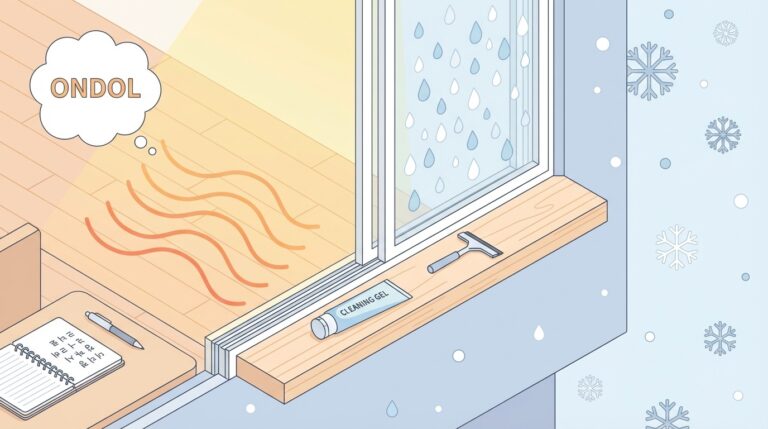
The ‘Why’: If you live in Korea, especially during winter or the monsoon season (jangma), you aren’t just fighting the cold or the rain; you are fighting Physics. The clash between the toasty Ondol (floor heating) and the freezing concrete walls creates the perfect storm for condensation (gyeollo) and its evil twin, mold (gompangi).
At the C2 level, we aren’t just learning to say “It’s dirty.” We are learning to protect your health and, more importantly, your security deposit (bojeunggeum). Knowing how to articulate the difference between structural issues and tenant negligence can save you millions of won.
Transparency: This guide combines architectural terminology with practical survival tactics gathered from years of living in Seoul’s villas and one-rooms.
Phase 2: Deep Dive into Core Expressions
Here are the advanced terms you need to diagnose and solve the problem.
1. 결로 (Gyeollo)
- Pronunciation: [Gyeol-lo] (Sounds like ‘Gyal-low’)
- Meaning: Condensation (Literal: Dew formation)
- Context: This is the scientific term for water droplets forming on cold surfaces (windows/walls) due to temperature differences.
- K-Culture Moment: In real estate K-Dramas like Monthly Magazine Home, you’ll see characters checking corners for water stains. They are looking for signs of chronic gyeollo.
- Editor’s Insight: If you complain to a landlord saying “물이 있어요” (There is water), you sound like a novice. If you say “단열 문제로 인한 결로 현상이 심해요” ( Severe condensation due to insulation issues), you sound like an expert.
- Situation Spectrum:
[🚫 Casual Friends] ———— [✅ Landlord/Repairman] ———— [✅ Formal Complaint]- 🤔 Think About It: Why does Korean architecture, heavily reliant on concrete, suffer so much from this compared to wooden structures in other countries?
2. 환기시키다 (Hwangisikida)
- Pronunciation: [Hwan-gi-si-ki-da]
- Meaning: To ventilate / To air out
- Nuance: It’s not just opening a window; it’s a cultural ritual. Korean grandmothers will open windows even in -10°C weather to “change the air.”
- K-Culture Moment: Even in K-Pop reality shows, the first thing idols do when entering a dorm or hotel room is often opening the windows. It’s an ingrained habit.
- Editor’s Insight: Landlords often use the lack of this action to blame tenants for mold. “환기를 안 시켜서 그래요” (It’s because you didn’t ventilate) is the ultimate defense card.
- Situation Spectrum:
[✅ All Situations]3. 곰팡이 제거 젤 (Gompangi Jegeo Jel)
- Pronunciation: [Gompangi Jegeo Jel]
- Meaning: Mold removal gel
- Context: The holy grail item at Daiso. Unlike sprays that run down the wall, the gel sticks to the silicon sealant in bathrooms or window frames.
- Editor’s Insight: Using the word ‘박멸’ (extermination/eradication) adds a dramatic, high-level flair when talking about cleaning mold. e.g., “곰팡이를 박멸했어요.”
- Situation Spectrum:
[✅ Buying supplies] ———— [✅ Cleaning tips]- 🤔 Think About It: Why is the gel type preferred over liquid in Korea? (Hint: It relates to the vertical nature of bathroom tiles and window frames).
Phase 3: Textbook vs. Real Life
| Situation | 📖 Textbook Korean | 🗣️ Real Korean (C2/Native) | 💡 Why the difference? |
|---|---|---|---|
| Reporting Mold | 방에 곰팡이가 있어요. (There is mold in the room.) | 벽지에 곰팡이가 슬어서 도배를 다시 해야 할 것 같아요. (Mold has set into the wallpaper, so I think we need to redo the papering.) | C2 level requires specificity: ‘슬다’ (to set in/grow) vs ‘있다’ (to exist). |
| Buying Remover | 청소 도구 어디 있어요? (Where are cleaning tools?) | 곰팡이 제거제랑 실리콘 젤 어디 쪽에 있나요? (Where are the mold removers and silicon gels?) | Specificity saves time. Most clerks know exactly what you need. |
| Blaming Humidity | 습기가 많아요. (There is a lot of humidity.) | 집 자체가 습해서 제습기 없이는 못 살아요. (The house itself is damp, so I can’t live without a dehumidifier.) | Blaming the structure (‘집 자체가’) shifts liability away from your lifestyle. |
Phase 4: Cultural Deep Dive — K-Housing & The Ondol Paradox
4-1. The Science of Korean Mold
Unlike Western homes often heated by forced air, Korea uses Ondol (floor heating). This makes the floor hot, but if the building insulation (danyeol) is poor, the walls remain freezing cold. When you cook ramyeon or take a hot shower, the humidity hits those cold walls, creating instant gyeollo.
4-2. The “Nunchi” of Ventilation
In a shared office or home, opening the window in winter is a test of Nunchi.
* Too early? You’re freezing everyone.
* Never? You’re “stuffy” (답답하다) and risking illness.
* The Rule: usually, short bursts of 5-10 minutes, creating a cross-breeze (matbaram), is the socially accepted method.
Phase 5: Immersive Roleplay — The Landlord Dispute
Setting: You are moving out of your one-room in Mapo-gu. The landlord is inspecting the wallpaper near the window, which has turned black.
Characters:
* YOU: An expat who knows their rights.
* Landlord (Kim Sajang): 50s, stern, protective of his building.
Dialogue:
Kim Sajang: 아이고, 창가 쪽에 곰팡이가 이렇게 피어서 어떡해? 환기를 통 안 시켰나 보네.
(Aigo, changga jjoge gompangiga ireoke pieoseo eotteokhae? Hwangireul tong an sikyeonna bone.)
(Oh my, mold has bloomed like this by the window. You must not have ventilated at all.)
YOU (Select your response):
🔀 Decision Point:
* A) “죄송합니다. 제가 청소할게요.” (Admitting fault immediately.)
* B) “아니요, 저는 매일 환기했어요. 이건 건물 단열 문제 같은데요?” (Denying fault, blaming structure.)
* C) “겨울에 결로가 너무 심해서 닦아도 소용없었어요.” (Explaining the futility.)
✅ Best Choice: B or C (Combined)
“사장님, 제가 아침저녁으로 환기는 꾸준히 했는데요. 워낙 외풍이 심해서 결로가 생기는 걸 막을 수 없더라고요. 이건 구조적인 문제 아닌가요?”
(Sajangnim, I ventilated regularly morning and evening. The draft was so severe that condensation was inevitable. Isn’t this a structural issue?)
Analysis: Using terms like 외풍 (draft) and 구조적인 문제 (structural issue) signals you are C2 level and cannot be easily bullied into paying for wallpaper replacement.
Phase 6: 10-Second Shadowing Drill
Practice this sentence to use at Daiso or a hardware store.
Context: Asking for the strongest product available.
😤 (Serious/Determined):
욕실 실리콘에 / 곰팡이가 깊게 박혀서 안 지워지는데 / 제일 강력한 젤 타입 제품 / 추천해 주시겠어요?
(Yoksil sillikone / gompangiga gipge bakhyeoseo an jiwojineunde / jeil gangnyeokhan jel taip jepum / chucheonhae jusigesseoyo?)
Translation: The mold is deeply embedded in the bathroom silicone and won’t come off; could you recommend the strongest gel-type product?
Phase 7: K-Culture Mini Glossary
| Korean | Romanization | English | Context |
|---|---|---|---|
| 단열 | Danyeol | Insulation | The #1 thing to check when house hunting in Korea. |
| 뽁뽁이 | Ppokppogi | Bubble Wrap | Koreans stick this to windows in winter for insulation. Essential survival gear. |
| 물먹는 하마 | Mulmeongneun Hama | “Thirsty Hippo” | A famous brand of dehumidifier tub. A generic trademark like “Kleenex.” |
| 도배 | Dobae | Wallpapering | Replacing wallpaper. Often a point of contention for deposits. |
| 락스 | Rakseu | Bleach | Generic term for bleach (from Clorox). The ultimate mold killer. |
Phase 8: Traveler’s Survival Kit (Long-term Stay Edition)
Even if you are in an Airbnb for a month, mold can happen.
🆘 Survival Shopping List (Daiso Edition)
1. 곰팡이 제거 젤 (Mold Remover Gel): For bathroom tile lines (grout) and window frames.
2. 결로 방지 테이프 (Condensation Tape): Thick sponge tape to absorb water at the bottom of windows.
3. 제습제 (Dehumidifier agents): Buy the “Thirsty Hippo” style tubs for your closet to save your clothes.💡 Pro Tip: If you see mold in your Airbnb, take a photo immediately and send it to the host via the app. Say: “입실할 때부터 곰팡이가 있었습니다” (The mold was here when I checked in). This protects you from liability.
Phase 9: Think Deeper — Cleanliness & Moral Character
Topic: Architecture vs. Behavior
In Korea, landlords often equate the presence of mold with the tenant’s laziness (lack of ventilation), rather than the building’s failure (lack of insulation). This reflects a high-context culture where individual effort (sincerity/diligence) is expected to overcome environmental shortcomings.
🧠 Think Deeper: In your country, if a rented house develops mold, is it automatically assumed to be the tenant’s fault? How does the legal framework regarding “wear and tear” differ from the Korean concept of “won-sang bok-gu” (restoration to original state)?
Phase 10: FAQ & Troubleshooting
Q: Can I just paint over the mold?
A: NO. Most Korean walls use wallpaper (byeokji). Painting over it looks terrible and you will be charged for full replacement. You must clean it or replace the paper.
Q: Is bleach (Rakseu) okay for everything?
A: Be careful. Rakseu will discolor colored wallpaper. Use it only on bathroom tiles or white surfaces. For wallpaper, look for specific “wall mold removers” (벽지 곰팡이 제거제).
❌ Common Mistake: rubbing the mold with a dry cloth.
✅ Fix: This spreads spores. Spray remover first, let it sit, then wipe.
Phase 11: Wrap-up & Action Mission
Summary: Fighting mold in Korea requires understanding Scientific Terms (결로, 환기), Proper Tools (젤 타입, 락스), and Negotiation Skills to protect your deposit.
Action Missions:
* 🥉 Bronze: Go to a convenience store or Daiso and locate the “Cleaning” section. Find the word “곰팡이” on a bottle.
* 🥈 Silver: Check your own windows. Is there condensation? Practice saying “결로가 심해요” out loud.
* 🥇 Gold: (If you live in Korea) Buy a tube of mold gel and apply it to a stained silicon line. Watch the magic happen after 3 hours.
K-Culture Mission: Watch a scene from the movie Parasite where they leave the windows open during fumigation. Why did the father do that? (Hint: Free extermination). Discuss this “economy” mindset in the comments!
Phase 12: Interactive Quiz
1. Situational Judgment:
Your landlord says, “환기를 안 해서 곰팡이가 생겼잖아요!” (Mold grew because you didn’t ventilate!)
What is the most logical C2-level counter-argument if you did ventilate?
* A) “죄송합니다.” (Incorrect: Admits guilt)
* B) “단열 공사가 제대로 안 된 것 같습니다.” (Correct: Points to insulation/structural failure)
* C) “몰라요.” (Incorrect: Rude)
2. True or False:
Using a spray-type remover is the best method for vertical window frames.
* (False): The liquid runs down too fast. Gel type is superior for vertical surfaces as it sticks.
💬 Your Turn: Have you ever fought with a landlord over damage? How do you handle mold in your country? Let us know below!
Frequently Asked Questions (FAQ)
Q: What does "결로 (Gyeollo)" mean in Korean and how do you pronounce it?
A: In Korean, "결로 (Gyeollo)" is pronounced [Gyeol-lo] and means: Condensation (Literal: Dew formation)
Q: What does "환기시키다 (Hwangisikida)" mean in Korean and how do you pronounce it?
A: In Korean, "환기시키다 (Hwangisikida)" is pronounced [Hwan-gi-si-ki-da] and means: To ventilate / To air out
Q: What does "곰팡이 제거 젤 (Gompangi Jegeo Jel)" mean in Korean and how do you pronounce it?
A: In Korean, "곰팡이 제거 젤 (Gompangi Jegeo Jel)" is pronounced [Gompangi Jegeo Jel] and means: Mold removal gel







