

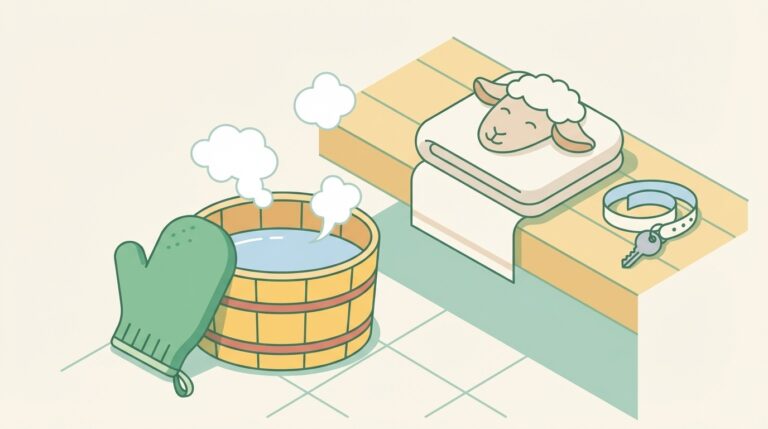
Phase 1: The Naked Truth — Welcome to the Real Korea 🧖♀️
Greeting: 안녕하세요! This is your Daily Hangul Editor, reporting not from a fancy desk, but (figuratively) from the steamy, misty world of a Korean Jjimjilbang (Sauna).
K-Culture Cold Open: Picture this: You’ve seen it in K-Dramas like Crash Landing on You or variety shows like Running Man. Characters with towels folded like sheep heads (Yangmeori 🐑) cracking boiled eggs on each other’s foreheads. But there’s a secret level to the Jjimjilbang experience that goes beyond just sweating in a kiln. It’s the “Seshin” (세신) service — the professional full-body scrub.
The ‘Why’: Many foreigners are terrified of this. Being stark naked in front of a stranger who is scrubbing you with a rough green mitt? It sounds scary! But if you skip this, you miss out on having skin as soft as a baby’s and feeling lighter than air. It is the ultimate Korean “reset” button.
Transparency: Today, we are going to learn how to ask for a scrub, how to adjust the pain level (crucial!), and how to handle the awkwardness like a pro. These are real tips from my 10+ years of sauna visits!
Phase 2: Deep Dive — Core Expressions 🗣️
Here are the 3 golden phrases you need to survive on the scrubbing table.
1. 때 밀고 싶어요 / 세신 받고 싶어요
- Pronunciation: [Ddae mil-go si-po-yo] / [Se-sin bat-go si-po-yo]
- Meaning: “I want to get a scrub.” (Casual/Standard) / “I would like to receive the exfoliation service.” (Polite/Formal)
- K-Culture Moment: You walk into the wet sauna area. In the corner, there are plastic beds and an Ajumma (auntie) or Ahjussi (uncle) in black underwear holding a mitt. This is your opening line.
- Editor’s Insight: ‘때’ (Ddae) literally means “dirt” or “grime,” but in this context, it refers to dead skin cells. ‘세신’ (Seshin) is the professional term based on Hanja (Chinese characters) meaning “washing the body.” Using “Seshin” makes you sound more respectful and educated about the culture.
- Situation Spectrum:
[🚫 Formal Biz Meeting] ———— [✅ Sauna Staff] ———— [✅ Friend]- 🤔 Think About It: Why do Koreans have a specific word for “dead skin dirt” (Ddae)? In Western culture, dead skin is often invisible. In Korea, seeing the gray rolls of dead skin come off is visually satisfying and considered proof of cleanliness.
2. 조금만 살살해 주세요
- Pronunciation: [Jo-geum-man sal-sal-hae ju-se-yo]
- Meaning: “Please do it a little gently.”
- K-Culture Moment: The “Italy Towel” (the green viscose mitt) is rough. If you have sensitive skin, you might feel like you’re being sandpapered. Don’t suffer in silence!
- Editor’s Insight: ‘살살’ (Sal-sal) is a beautiful mimetic word describing a gentle, soft action. It’s much more natural than saying “Don’t hit me” or “It hurts.” It suggests, “Keep doing it, but just lower the intensity.”
- Situation Spectrum:
[🚫 Military] ———— [⚠️ Boss] ———— [✅ Service Workers/Friends]- 🤔 Think About It: Korean implies meaning through sound. ‘Sal-sal’ sounds soft (S sound). Can you feel how the sound mimics the action?
3. 지금 바로 할 수 있어요?
- Pronunciation: [Ji-geum ba-ro hal su i-sseo-yo?]
- Meaning: “Can I do it right now?”
- K-Culture Moment: Famous saunas are busy. Sometimes you have to wait 1 hour. You need to ask this to check the waiting time.
- Editor’s Insight: If they say “No,” they usually tell you to put your locker key on a hook or write your name on a whiteboard. That is your “reservation.”
- Situation Spectrum:
[✅ Universal]
Phase 3: Textbook vs. Real Life 🥊
| Situation | 📖 Textbook Korean | 🗣️ Real Street Korean | 💡 Why the difference? |
|---|---|---|---|
| Calling the staff | 저기요 / 아주머니 (Excuse me / Ma’am) | 이모님 / 사장님 (Auntie / Boss) | Koreans use family titles (‘Auntie’) to build instant rapport and friendliness. |
| During the scrub | 아픕니다. (It is painful.) | 아! 아파요! or 으~ 시원하다! | ‘Painful’ is a fact. ‘Ah!’ is a reaction. Also, Koreans often say ‘It’s refreshing’ (Siwonhada) even when it hurts a bit! |
| Paying | 얼마입니까? (How much is it?) | (Showing locker key) 이걸로 찍어주세요. | In modern saunas, you don’t carry cash. You ‘beep’ your electronic key. |
💡 Editor’s Note: Calling the scrubber “이모님” (Imonim) works magic. It instantly makes them treat you like a nephew or niece (meaning: they might scrub deeper but be nicer about it!).
Phase 4: Cultural Context — The “Nunchi” of Nakedness 🛁
4-1. Non-verbal Communication: The “Puppet” Mode
When getting a scrub, do not try to help. If the scrubber lifts your arm, let it be heavy. If they turn you over, flop over like a fish. The best customer is a “limp noodle.” If you tense your muscles to help lift your leg, you actually make their job harder.
* Pro Tip: Close your eyes. Eye contact while naked is awkward for everyone. Just relax and trust the process.
4-2. K-Culture Connection: The “Italy Towel” Legend
Why is the scrubbing mitt called an “Italy Towel” (이태리 타월)?
* Origin: In the 1960s, a textile factory in Busan imported viscose fabric from Italy. The texture was too rough for clothes but perfect for scrubbing off dirt. It became a national icon.
* Color Code:
* 🟩 Green: Standard roughness (Most common).
* 🟨 Yellow: Slightly gentler.
* 🟥 Pink/Red: Softest (Good for face or sensitive skin).
* Critical View: Why do Koreans love this pain? It’s related to the concept of “Han” (deep sorrow/resentment) and “Jeong” (bonding). Scrubbing each other’s backs is a sign of extreme intimacy. It’s shedding the old self to reveal the new.
Phase 5: Immersive Roleplay 🎭
Setting: A steamy Saturday afternoon at a neighborhood Jjimjilbang. The air smells of herbal soap and humidity. You are wearing your locker key on your ankle.
Characters:
* YOU: A brave foreigner ready for your first scrub.
* Imonim (NPC): A veteran scrubber (50s), wearing black bra/undies, strong arms, holding a green mitt.
(Scene Start)
YOU: (Approaching the corner tentatively) 안녕하세요! 저기… 때 밀고 싶어요.
(Annyeonghaseyo! Jeogi… ddae mil-go si-po-yo.)
Imonim: (Looks at a whiteboard) 지금은 안 돼. 20분 기다려야 해. 예약할겨?
(Jigeumeun an dwae. 20-bun gidaryeoya hae. Yeyakal-gyeo? – dialect)
Translation: Not right now. Gotta wait 20 mins. Wanna book?
🔀 Decision Point: What do you say?
* A) “Ne, algesseumnida.” (Yes, I understand.) and walk away.
* B) “Ne, yeyakhae juseyo.” (Yes, please book it for me.)
* C) “Ah, jinjja?” (Ah, really?) and stare at her.
✅ Best Choice: B. You must confirm the booking, otherwise, she won’t write your name down.
(20 Minutes Later – On the pink plastic table)
Imonim: (Starts scrubbing your arm vigorously) 안 아파?
(An apa?)
Translation: Does it hurt?
YOU: (It actually hurts a little bit!)
🔀 Decision Point: How do you react?
* A) “No! I am strong!” (Suffer in silence)
* B) “Ah… jogeumman sal-sal-hae juseyo.” (Please do it a little gently.)
* C) “Stop!” (Get up and run)
✅ Best Choice: B. Use the magic word ‘Sal-sal’.
Imonim: (Laughs) 알았어, 살살~ 피부가 하얘서 그래.
(Arasseo, sal-sal~ Pibuga hayaeseo geurae.)
Translation: Okay, gently~ It’s because your skin is white/fair.
(Scene End)
Phase 6: 10-Second Shadowing Drill 🎧
Repeat this after me to express that post-sauna bliss.
😊 피부가 / 완전 / 보들보들해요!
(Pi-bu-ga / wan-jeon / bo-deul-bo-deul-hae-yo!)
Translation: My skin / is totally / soft and smooth!
- Intonation: Stress on “wan-jeon” (totally) and elongate “bo-deul” to sound like you are feeling the softness.
Phase 7: K-Culture Mini Glossary 📖
| Korean | Romanization | Meaning | Context |
|---|---|---|---|
| 양머리 | Yangmeori | Sheep Head | The cute towel folding technique seen in dramas. |
| 식혜 | Sikhye | Rice Punch | The sweet, cold drink you MUST drink after a sauna. |
| 맥반석 계란 | Maekbanseok Gyeran | Sauna Eggs | Brown, roasted eggs. Essential snack. |
| 탕 | Tang | Tub/Bath | The hot water pools. “On-tang” (Hot), “Naeng-tang” (Cold). |
Phase 8: Traveler’s Survival Kit 🧳
Going to a Jjimjilbang? Here is your cheat sheet.
🆘 Survival Phrases
1. “샴푸 있어요?” (Shampoo isseo-yo?) – Do you have shampoo? (Most places charge for amenities).
2. “락커 키 잃어버렸어요.” (Locker key ireobeoryeosseo-yo.) – I lost my locker key. (Panic mode!)
3. “수건 좀 더 주세요.” (Sugeon jom deo juseyo.) – Please give me more towels.📌 Editor’s Travel Note
* Nudity Rule: You are naked in the sauna/bath area (gender-separated). You wear the provided T-shirt and shorts in the common area (mixed gender). Don’t mix this up!
* Tattoos: If you have large tattoos, some old-school saunas might deny entry, but most tourist-friendly places (like Spa Lei, Cimer, Siloam) are okay. Cover up if possible to avoid stares.
Phase 9: Think Deeper — Nakedness & Community 🧠
Topic: Privacy vs. Intimacy
In Western cultures, privacy is paramount. Being naked with strangers is often associated with shame or sexual contexts. In Korea, public baths (Mokyuoktang) have been community hubs for centuries. Stripping down represents “removing social rank.” Whether you are a CEO or a student, everyone looks the same when naked.
🧠 Think About It: Does shedding your clothes help you shed your social mask? Does the vulnerability of being naked make it easier to bond with others? How does this compare to spa culture in your country?
Phase 10: FAQ & Troubleshooting 🛠️
Q: Is it rude to stare?
A: Yes! Glance, don’t stare. While everyone is naked, it’s polite to look at people’s faces or vaguely into the distance. Do not look up and down.
Q: Should I tip the scrubber?
A: Generally, NO. The price is fixed (usually 20,000 ~ 30,000 KRW). However, if you are a regular at a neighborhood spot, buying them a cold coffee or Sikhye is a nice gesture of “Jeong” (affection).
❌ Common Mistake: Wearing a swimsuit into the tub.
✅ Fix: You MUST be naked in the water. Swimsuits are considered “dirty” clothes from the outside. If you wear one, an Ajumma will yell at you immediately!
Phase 11: Wrap-up & Mission 🚀
One-Liner: To scrub is to be reborn; don’t fear the Italy Towel, embrace the ‘Sal-sal’!
Action Missions:
* 🥉 Bronze: Google “How to make Yangmeori (Korean Sheep Towel)” and try it at home.
* 🥈 Silver: Go to a Korean cosmetics store (or Amazon) and buy an “Italy Towel.” Try exfoliating your arm.
* 🥇 Gold: Visit a Jjimjilbang in Korea (or K-town in your country) and get a Seshin! Say “Jogeumman sal-sal-hae juseyo”!
💬 Your Turn: Would you dare to get a full-body scrub from a stranger? Or is the nudity a deal-breaker? Tell me in the comments!
Phase 12: Quiz — The Sauna Master Challenge 📝
1. Situation Judgment: The scrubber asks “Apayo?” (Does it hurt?). You are in extreme pain. What do you say?
* A) “Ne, gwaenchannayo.” (Yes, I’m fine.)
* B) “Ne, aju siwonhaeyo!” (Yes, very refreshing!)
* C) “Ne, jogeumman sal-sal-hae juseyo.” (Yes, please do it gently.)
2. True or False:
* “You should wear a swimsuit in the hot tub to be polite.”
3. Vocabulary:
* What is the Korean word for “dead skin/dirt” that you scrub off? (Hint: starts with D)
Answers:
1. C (Protect your skin!)
2. False (Big no-no! Naked only.)
3. Ddae (때)
Frequently Asked Questions (FAQ)
Q: What does "때 밀고 싶어요 / 세신 받고 싶어요" mean in Korean and how do you pronounce it?
A: In Korean, "때 밀고 싶어요 / 세신 받고 싶어요" is pronounced [Ddae mil-go si-po-yo] and means: "I want to get a scrub." (Casual/Standard) / "I would like to receive the exfoliation service." (Polite/Formal)
Q: What does "조금만 살살해 주세요" mean in Korean and how do you pronounce it?
A: In Korean, "조금만 살살해 주세요" is pronounced [Jo-geum-man sal-sal-hae ju-se-yo] and means: "Please do it a little gently."
Q: What does "지금 바로 할 수 있어요?" mean in Korean and how do you pronounce it?
A: In Korean, "지금 바로 할 수 있어요?" is pronounced [Ji-geum ba-ro hal su i-sseo-yo?] and means: "Can I do it right now?"







