

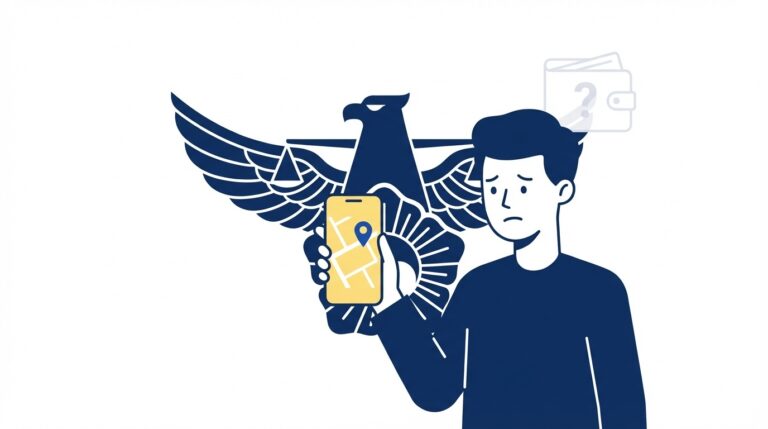
Phase 1: The Panic Moment — “Where is my phone?!”
Hello! This is your Daily Hangul Editor.
Imagine this: You are in the middle of Hongdae, enjoying the vibrant busking and delicious street food. You reach into your pocket to take a selfie, but… it’s empty. Your heart drops. Your smartphone—your map, your translator, your wallet—is gone.
In K-Dramas, this is usually when a handsome stranger hands you your phone and destiny begins. But in reality? You need to find a police station, and fast.
Don’t panic! Korea is one of the safest countries in the world, and the “Lost and Found” system is incredibly efficient. Today, we will learn how to survive this scary moment and report a lost item like a local.
Transparency Note: This guide is based on real SOS calls I’ve received from students who lost passports, phones, and even bags on the subway! We will get through this together.
Phase 2: Deep Dive — Core Expressions
Here are the 3 sentences you must know to survive this crisis.
1. 지갑을 잃어버렸어요. (I lost my wallet.)
- Pronunciation: [Jigap-eul ireobeoryeosseoyo]
- Sound Analogy: Jigap (sounds like ‘Gee’ + ‘Gap’), ireobeoryeosseoyo (think of ‘ear’ + ‘oh’ + ‘bury’ + ‘us’ + ‘yo’).
- Meaning: “I have lost my wallet completely.”
- Editor’s Insight: The verb 잃어버리다 (ireobeoryeida) is strong. It implies you didn’t just misplace it; it is gone. If you lost a phone, replace “Jigap” with “Haendeupon” (Cellphone).
- Situation Spectrum:
[🚫 Formal Speech] ———— [✅ Police/Strangers] ———— [✅ Friends]- 🤔 Think About It: In English, we just say “lost.” In Korean, the helper verb “-beoryeosseoyo” adds a nuance of “it happened and I’m sad about it/it’s irreversible.” Why do you think Korean grammar encodes emotion into the verb?
2. 분실물 신고를 하고 싶어요. (I want to report a lost item.)
- Pronunciation: [Bunsilmul singo-reul hago sipeoyo]
- Meaning: “I want to file a lost item report.”
- K-Culture Moment: You’ll see signs saying 분실물 센터 (Lost and Found Center) in every subway station. Knowing the word “Bunsilmul” is your key to help.
- Editor’s Insight: This sounds a bit formal, but it is the most accurate way to get the police officer to open the official form on their computer.
- Situation Spectrum:
[✅ Police Station] ———— [✅ Information Desk] ———— [🚫 Friends]3. CCTV 확인해 주실 수 있나요? (Can you check the CCTV?)
- Pronunciation: [CCTV hwagin-hae jusil su innayo?]
- Meaning: “Could you please check the security camera?”
- K-Culture Context: Korea is the land of CCTVs. They are everywhere—streets, cafes, buses. In crime thrillers like Signal, CCTV is always the key. In real life, it’s your best hope.
- Editor’s Insight: Due to privacy laws, you can’t always see it yourself, but you can ask the police to check it.
- 🤔 Think About It: Korea has a very high density of surveillance cameras, which contributes to its safety. How does this compare to privacy concerns in your home country?
Phase 3: Textbook vs. Real Life
How does a learner sound vs. a local in a panic?
| Situation | 📖 Textbook Korean | 🗣️ Real Korean | 💡 Why is it different? |
|---|---|---|---|
| Starting the conversation | 경찰관님, 안녕하세요. (Hello, officer.) | 저기요… 큰일 났어요! (Excuse me… I’m in big trouble!) | In emergencies, emotional urgency comes first. |
| Describing the time | 오후 3시에 잃어버렸습니다. (I lost it at 3 PM.) | 방금요! 아까 3시쯤? (Just now! Maybe around 3?) | Memory is fuzzy in panic; usage of “jjueum” (around/about) is more natural. |
| Describing the item | 검은색 가죽 지갑입니다. (It is a black leather wallet.) | 까만색이고, 안에 여권 있어요! (It’s black, and my passport is inside!) | Focus shifts to the most critical content (passport) rather than material. |
Phase 4: Cultural Deep Dive — The “Jigu-dae” Culture
4-1. Non-verbal: The “Urgent” Body Language
When you enter a police station in Korea, don’t stand still. Walk quickly to the counter. Use your hands to gesture the size of the object. Showing that you are distressed (but polite) helps the officer understand the urgency immediately, even if your Korean isn’t perfect.
4-2. K-Drama Connection: The “Jigu-dae” (지구대)
In dramas like Live or The Good Detective, you see small neighborhood police stations with a blue eagle logo. These are called Jigu-dae (Patrol Divisions/Substations). They are everywhere in the city, closer than the main police station. If you lose something, look for the blue eagle symbol, not necessarily a huge building.
Phase 5: Immersive Roleplay Scenario
Setting: It’s 11 PM near Gangnam Station. The streets are bright, but you left your bag on a bench while tying your shoe. It’s gone. You run into the nearest Police Substation (Jigu-dae).
Characters:
* YOU: A tourist who lost a backpack containing a passport.
* Officer Kim: A young, helpful police officer.
Start Roleplay:
YOU: (Bursting through the door) 저기요! 도와주세요! 😨
(Jeogiyo! Dowajuseyo!)
(Excuse me! Please help!)
Officer Kim: 네, 무슨 일 있으세요? 진정하세요. 👮♂️
(Ne, museun il isseuseyo? Jinjeong-haseyo.)
(Yes, what’s wrong? Please calm down.)
YOU: 가방을 잃어버렸어요. 여권이 들어있어요.
(Gabang-eul ireobeoryeosseoyo. Yeogwon-i deureoisseoyo.)
(I lost my bag. My passport is inside.)
Officer Kim: 어디서 잃어버리셨나요?
(Eodiseo ireobeoryeosinnayo?)
(Where did you lose it?)
👉 Decision Point: How do you answer?
- A) “Gangnam Station Exit 10… bench.”
- B) “I don’t know… maybe somewhere?” (Too vague)
- C) (Use a map app to show the location) “Here!” (Yeogi!)
✅ Best Choice: C (Show the Map).
Even if you try to say “Gangnam Station Exit 10,” pronunciation might be tricky. Showing the map on your phone (or a friend’s phone) is the fastest way for the officer to check the jurisdiction and CCTV.
Officer Kim: (Looking at the map) 아, 10번 출구요. 언제요?
(Ah, sip-beon chulgu-yo. Eonje-yo?)
(Ah, Exit 10. When?)
YOU: 10분 전이에요.
(Sip-bun jeon-ieyo.)
(10 minutes ago.)
Officer Kim: 알겠습니다. 분실물 신고서 작성합시다.
(Algetseumnida. Bunsilmul singoseo jakseong-hapsida.)
(Understood. Let’s fill out a lost property report.)
Phase 6: 10-Second Shadowing Drill
Practice this sentence so you can speak it even when you are crying!
😢 Emotion: Anxious but clear.
“Please find it for me. It is really important.”
꼭 / 찾아 주세요. / 정말 / 중요한 / 물건이에요.
(Kkok / chaja juseyo. / Jeongmal / jungyohan / mulgeon-ieyo.)
Phase 7: K-Culture Mini Glossary
| Korean | Romanization | Meaning | Context |
|---|---|---|---|
| 지구대 | Jigu-dae | Police Substation | Small local police unit. Go here first, not the main HQ. |
| 파출소 | Pachulso | Police Box | Smaller than Jigu-dae, but same function. |
| 유실물 센터 | Yusilmul Center | Lost & Found Center | Located inside major subway stations. |
| CCTV | CCTV | Security Camera | Pronounced just like English letters “C-C-T-V”. |
| 사례금 | Sarye-geum | Reward Money | Money given to thank someone who found your item. |
Phase 8: Traveler’s Survival Kit
🆘 Survival Phrases for the Police Station
🔑 “Can you speak English?”
– 🇰🇷 영어 하실 수 있나요? (Yeong-eo hasil su innayo?)
– 💡 Pro Tip: If they say no, they will likely use a translation service (BBB Korea) on the phone. Don’t hang up if they hand you a phone!🔑 “I left it in the taxi.”
– 🇰🇷 택시에 두고 내렸어요. (Taeksi-e dugo naeryeosseoyo.)
– 💡 Pro Tip: If you paid by credit card or T-Money, the taxi can be tracked easily!
📌 Editor’s Travel Note
– LOST 112: This is the official police lost and found portal (www.lost112.go.kr). Police upload photos of found items here. You can check it even from your home country.
– Subway: If you lose something on the train, note the train car number (written on the floor or doors, e.g., 5-3). It makes finding it 10x faster.
Phase 9: Think Deeper — High Trust Society?
🧠 Why do people leave laptops on cafe tables?
In Korea, you will often see laptops and phones left unattended on cafe tables while owners go to the restroom. This “Cafe Trust” is famous. However, lost items in transit (subway/taxi) are different. While theft is low, misplacing items is common.
Language & Culture: Notice how Koreans use the phrase “찾아 주세요” (Please find it for me) rather than “Someone stole it.” There is a cultural tendency to assume it was lost/misplaced first, rather than immediately accusing theft. This reflects a general societal trust.
💬 Your Turn: In your country, if you leave a phone on a bench for 10 minutes, what happens? Tell us in the comments!
Phase 10: FAQ & Troubleshooting
- Q: Can I just call 911?
- A: In Korea, 112 is for Police, 119 is for Fire/Ambulance. Calling 112 connects you to the police center. They have interpretation services available 24/7.
- Q: If I find a wallet on the street, what should I do?
- A: Put it in a nearby postbox (bright red) or take it to a Jigu-dae. Do not take it home to “find the owner later,” as this can be misunderstood as theft.
- ❌ Common Mistake: Expecting the police to check CCTV immediately in front of you.
- Reality: Due to strict privacy laws, usually, only the police officer can view the footage first. You might need to file a report and wait.
Phase 11: Wrap-up & Action Mission
One-Liner: “When lost, look for the Blue Eagle (Jigu-dae) and say ‘Jigap-eul ireobeoryeosseoyo’!”
🎯 Action Mission:
– 🥉 Bronze: Say “Dowajuseyo” (Help me) 3 times with an urgent face in the mirror.
– 🥈 Silver: Locate the nearest Police Substation (Jigu-dae) on Naver Map/Kakao Map near your accommodation.
– 🥇 Gold: Memorize your passport number or have a photo of it on your phone/cloud. You will need it for the report!
🎬 K-Culture Mission: Watch a clip of the drama “Live (라이브)”. It’s all about life inside a Korean police patrol division (Jigu-dae). You will see exactly how they handle drunk people and lost items!
Phase 12: Interactive Quiz
1. Situation Judgment: You lost your phone in a taxi. You paid with cash and didn’t get a receipt. What is the reality?
* A) The police can track it easily.
* B) It is very difficult to find.
* C) The taxi driver will definitely call you.
2. Fill in the Blank:
“Officer, please check the security camera.”
= “_______ 확인해 주실 수 있나요?”
3. True or False:
“If you lose something in the subway, you should just go home and wait.”
🔑 Answers:
1. B (Without a card record or receipt/car number, cash payments are hard to track. Always get a receipt!)
2. CCTV
3. False (Go to the Station Office or the Lost & Found Center immediately!)
Frequently Asked Questions (FAQ)
Q: What does "지갑을 잃어버렸어요. (I lost my wallet.)" mean in Korean and how do you pronounce it?
A: In Korean, "지갑을 잃어버렸어요. (I lost my wallet.)" is pronounced [Jigap-eul ireobeoryeosseoyo] and means: "I have lost my wallet completely."
Q: What does "분실물 신고를 하고 싶어요. (I want to report a lost item.)" mean in Korean and how do you pronounce it?
A: In Korean, "분실물 신고를 하고 싶어요. (I want to report a lost item.)" is pronounced [Bunsilmul singo-reul hago sipeoyo] and means: "I want to file a lost item report."
Q: What does "CCTV 확인해 주실 수 있나요? (Can you check the CCTV?)" mean in Korean and how do you pronounce it?
A: In Korean, "CCTV 확인해 주실 수 있나요? (Can you check the CCTV?)" is pronounced [CCTV hwagin-hae jusil su innayo?] and means: "Could you please check the security camera?"







