

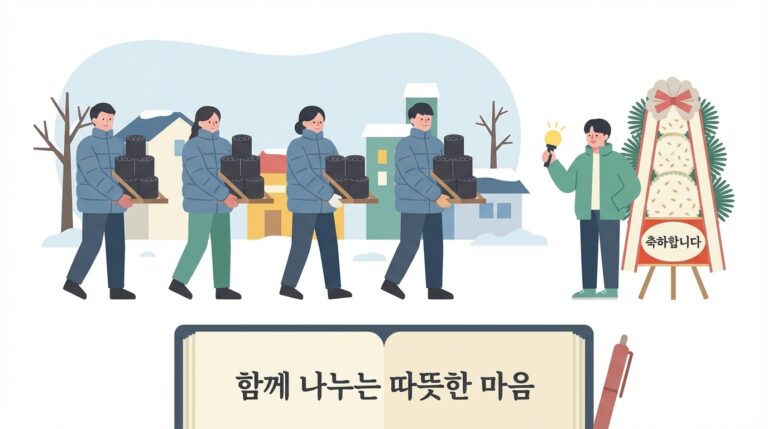
Phase 1: Immersive Hook\n\nHello! I’m your Daily Hangul Editor.\n\nPicture this: You are watching a classic K-Drama. The arrogant Chaebol (conglomerate) heir has just caused a massive PR disaster. In the very next episode, where do we find him? He is wearing a bright, oversized padded jacket with the company logo, sweating in the freezing winter, passing black charcoal briquettes (연탄) down a human chain in a low-income neighborhood. The reporters are flashing their cameras. \n\nAs a K-Culture fan, you have probably seen this exact scene a dozen times. But as an advanced Korean learner living or working in Korea, have you ever wondered why they do this? And more importantly, how do everyday Koreans actually talk about these corporate ‘apology tours’ or genuine charity efforts?\n\nWelcome to the complex, hyper-vigilant world of Corporate Social Responsibility (CSR) in Korea. Knowing the textbook term ‘사회적 책임’ (Social Responsibility) is great, but if you want to sound like a true insider in a Seoul boardroom—or fully grasp why K-Pop fans donate tons of rice under their idol’s name—you need the real vocabulary. Let’s dive in!\n\n—\n\n### Phase 2: Deep Dive into Core Expressions\n\n> ### 1. 상생 (Mutual Growth / Coexistence)\n> \n> – Pronunciation: [sang-saeng] / Sahng-sang (Think of singing a song, but ‘sahng’)\n> – Meaning: Literal: ‘Living together.’ Real nuance: Corporate synergy with local communities or small businesses (Win-Win).\n> – K-Culture Moment: Whenever a large conglomerate opens a mega-mall, the news will emphasize how they are practicing ‘상생’ with local traditional markets to avoid public backlash.\n> – Editor’s Insight: This word feels very ‘corporate PR.’ It implies a delicate balance of power. The big company is saying, ‘We won’t crush the little guys; we will grow together.’\n> – Situation Spectrum: [🚫] ———— [⚠️] ———— [✅]\n> – Casual with friends: 🚫 (Too formal/news-like)\n> – Business Meeting/News: ✅ (Highly recommended)\n> – Pitching to your boss: ✅\n> – 🤔 Think About It: Why does a highly competitive society like Korea place such a strong linguistic emphasis on ‘living together’ (상생)? How does this reflect the traditional collectivist mindset adapting to modern capitalism?\n\n> ### 2. 선한 영향력 (Good Influence)\n> \n> – Pronunciation: [seon-han yeong-hyang-nyeok] / Sun-hahn yuhng-hyahng-nyuck\n> – Meaning: Literal & Real: Positive impact/influence.\n> – K-Culture Moment: You will see this everywhere in K-Pop! When an idol donates to an animal shelter, fans follow suit, and the media praises the idol’s ‘선한 영향력’.\n> – Editor’s Insight: It is the ultimate buzzword for modern celebrities and ethical brands. It’s not just about giving money; it’s about inspiring others to create a ripple effect.\n> – Situation Spectrum: [🚫] ———— [⚠️] ———— [✅]\n> – Casual with friends: ⚠️ (A bit poetic, but usable)\n> – Social Media/Fandoms: ✅ (Perfect)\n> – Corporate PR: ✅\n> – 🤔 Think About It: Is ‘influence’ in your culture usually tied to moral goodness, or is it more about power and wealth?\n\n> ### 3. 보여주기식 (Performative / Just for show)\n> \n> – Pronunciation: [bo-yeo-ju-gi-sik] / Bo-yuh-joo-gee-sheek\n> – Meaning: Literal: ‘Show-giving style.’ Real nuance: Performative activism or doing something purely for the optics.\n> – K-Culture Moment: When a politician visits a flood disaster zone just to take photos, netizens will flood the comment section with: ‘완전 보여주기식이네’ (This is totally just for show).\n> – Editor’s Insight: This is a sharp, critical word. You use it when you detect a lack of sincerity. It is the perfect word to describe ‘greenwashing’ in a broader sense.\n> – Situation Spectrum: [🚫] ———— [⚠️] ———— [✅]\n> – Criticizing news with friends: ✅\n> – Brainstorming with peers: ⚠️ (Use carefully to critique a bad idea)\n> – Telling your boss their idea is bad: 🚫 (Unless you want to be fired!)\n> – 🤔 Think About It: Koreans value ‘Nunchi’ (reading the room) and appearances. Does the fear of being called ‘보여주기식’ actually force companies to do better?\n\n—\n\n### Phase 3: Textbook vs Real Life\n\n| Situation | 📖 Textbook Korean | 🗣️ Real Korean | 💡 Why the difference? |\n|—|—|—|—|\n| Praising a company’s charity | 이 회사는 사회적 책임이 뛰어납니다. | 여기 완전 착한 기업이네. 돈쭐내주자! | ‘돈쭐내다’ (Punish with money = reverse boycott) is a slang where consumers enthusiastically buy from ethical businesses. |\n| Criticizing fake eco-friendliness | 환경친화적이지 않습니다. | 이거 완전 위장 환경주의(그린워싱) / 보여주기식이네. | Korean netizens quickly adopt global concepts (Greenwashing) or use direct, cynical terms for performative acts. |\n| Discussing corporate goals | 자선 활동을 늘려야 합니다. | 요즘 대세는 ESG 경영이죠. | In corporate Korea, C-level executives obsess over the term ‘ESG’ (Environmental, Social, Governance) rather than simple charity. |\n\n—\n\n### Phase 4: Cultural Deep Dive\n\n#### 4-1. Non-verbal Communication in Korean CSR\nIn Korea, CSR isn’t official until the Group Photo (단체 사진) happens. You must have a large printed banner (현수막) in the background. Everyone usually wears identical company vests or padded jackets (돕바), standing in a line, holding a giant prop check (대형 수표), or making a ‘fighting’ (화이팅) fist or finger hearts. If you are participating, remember: smile, look unified, and never block the company logo!\n\n#### 4-2. K-Culture Connection: Fandoms Forcing Corporate Change\nIn the past, K-Pop fans sent expensive gifts to their idols. Today, fandoms practice mature 선한 영향력 (Good Influence). Instead of flowers, they send ‘Rice Wreaths’ (쌀 화환) to press conferences, which are later donated to charities in the idol’s name. Furthermore, K-Pop fans are now holding entertainment companies accountable for ESG. When agencies produce excessive plastic albums to boost sales, fans organize boycotts demanding eco-friendly packaging. In Korea, the consumers (and fans) are actively forcing corporations to step up their CSR game!\n\n—\n\n### Phase 5: Immersive Roleplay Scenario\n\nSetting: Friday, 3 PM. A sleek corporate meeting room in Yeouido. Winter is approaching. You (Foreign Marketing Manager) and Team Leader Choi are brainstorming the annual CSR project.\n\nCharacters:\n- YOU: A sharp, culturally aware foreign manager at a Korean tech firm.\n- Team Leader Choi (45): A traditional but well-meaning boss who loves safe, predictable PR.\n\nDialogue:\n\n최 팀장: 자, 올해 겨울 사회공헌 활동은 뭘로 할까요? 작년처럼 연탄 배달 어때요?\n(Ja, olhae gyeoul sahoegongheon hwaldong-eun mwollo halkkayo? Jaknyeon-cheoreom yeontan baedal eottaeyo?)\n[Alright, what should we do for our winter CSR activity this year? How about briquette delivery like last year?]\n\nYOU: 연탄 배달도 좋지만, 요즘 트렌드에 맞춰서 좀 새로운 걸 해보는 건 어떨까요?\n(Yeontan baedaldo jotjiman, yojeum teurendeue matchwoseo jom saeroun geol haeboneun geon eotteolkkayo?)\n[Briquette delivery is good, but how about trying something new that fits recent trends?]\n\n최 팀장: 새로운 거? 기부금만 내는 건 사진이 안 나와서 윗분들이 안 좋아하셔.\n(Saeroun geo? Gibugeumman naeneun geon sajini an nawaseo witbundeuri an joahasyeo.)\n[Something new? The higher-ups don’t like just donating money because it doesn’t make for good photos.]\n\nYOU: 사진도 중요하지만, 요즘 MZ세대 소비자들은 진정성을 더 중요하게 생각합니다.\n(Sajindo jungyohajiman, yojeum MZ-sedae sobijadeureun jinjeongseong-eul deo jungyohage saenggakhamnida.)\n[Photos are important, but these days MZ generation consumers value authenticity more.]\n\n최 팀장: 음… 하긴, 너무 뻔한 걸 하면 네티즌들이 별로 안 좋아하긴 하죠.\n(Eum… hagin, neomu ppeonhan geol hamyeon netijeundeuri byeollo an joahagin hajyo.)\n[Hmm… True, netizens don’t really like it if we do something too obvious.]\n\n> 🔀 Your Turn! How should you respond?\n> – A) 네, 맞아요. 완전 보여주기식이잖아요. (Yes, it’s totally just for show.)\n> – B) 네. 그래서 우리 회사의 기술을 활용한 ‘상생’ 프로젝트를 제안하고 싶습니다. (Yes. That’s why I’d like to propose a ‘coexistence’ project utilizing our company’s technology.)\n> – C) 연탄은 이제 구려요! (Briquettes are lame now!)\n>\n> ✅ Best Choice: B — You smoothly pivot from a potential critique to a constructive, corporate-friendly buzzword (상생). \n> ⚠️ Choice A Analysis: While technically true, using the critical word ‘보여주기식’ to describe your own company’s past efforts in front of the boss who likely planned them is a huge Nunchi failure!\n\nYOU: (Choosing B) 네. 그래서 우리 회사의 기술을 활용한 ‘상생’ 프로젝트를 제안하고 싶습니다.\n(Ne. Geuraeseo uri hoesaui gisureul hwaryonghan ‘sangsaeng’ peurojekteureul jeanhago sipseumnida.)\n[Yes. That’s why I’d like to propose a ‘coexistence’ project utilizing our company’s technology.]\n\n최 팀장: 오, 상생! 단어 좋은데? 기사 쓰기 딱 좋겠어. 아이디어 한번 정리해서 줘봐요.\n(O, sangsaeng! Daneo joeunde? Gisa sseugi ttak jokesseo. Aidieo hanbeon jeongrihaeseo jwobwayo.)\n[Oh, coexistence! Great word. Perfect for writing press releases. Organize your ideas and send them to me.]\n\n(🎭 Stage Direction: Team Leader Choi nods in approval, already imagining the headlines.)\n\n—\n\n### Phase 6: 10-Second Shadowing Drill\n\nLet’s practice pitching a genuine CSR project. Follow the emotion tags and pauses!\n\n😤 단호하고 프로페셔널하게 (Firm and professional)\n이건 / 단순한 보여주기식 행사가 아니라, / 지역 사회와의 상생을 위한 / 프로젝트입니다.\n(Igeon / dansunhan boyeojugisik haengsaga anira, / jiyeok sahoewaui sangsaeng-eul wihan / peurojekteu-imnida.)\n[This is not a simple performative event, but a project for mutual coexistence with the local community.]\n\n—\n\n### Phase 7: K-Culture Glossary (CSR Edition)\n\n| Korean | Romanization | English | Context |\n|—|—|—|—|\n| 연탄 봉사 | yeontan bongsa | Briquette delivery volunteering | The ultimate, traditional corporate winter charity in Korea. |\n| 돈쭐내다 | donjjulnaeda | Punish with money | Slang for consumers flocking to buy from an ethical business to reward them. |\n| 가치 소비 | gachi sobi | Value-based consumption | Buying products that align with one’s ethical, environmental, or political beliefs. |\n| 선한 영향력 | seonhan yeonghyangnyeok | Good influence | Used to describe celebrities or influencers using their platform for charity. |\n| ESG 경영 | ESG gyeong-yeong | ESG Management | The corporate buzzword for Environmental, Social, and Governance practices. |\n\n—\n\n### Phase 8: Traveler’s Survival Kit (Ethical Travel Edition)\n\nEven if you aren’t in a boardroom, you can practice ‘Value Consumption’ (가치 소비) while traveling in Korea, especially in trendy areas like Seongsu-dong, which is packed with eco-friendly pop-up stores!\n\n> 🆘 Survival Phrases for the Ethical Traveler\n> – 🇰🇷 ‘영수증은 안 주셔도 돼요.’ (Yeongsujeung-eun an jusyeodo dwaeyo.)\n> – 🗣️ Meaning: You don’t need to give me the receipt. (Saves paper!)\n> – 🇰🇷 ‘포장재는 빼주세요.’ (Pojangjaeneun ppaejuseyo.)\n> – 🗣️ Meaning: Please leave out the packaging material.\n> – 🇰🇷 ‘텀블러에 담아주세요.’ (Teombeulleoe damajuseyo.)\n> – 🗣️ Meaning: Please put it in my tumbler.\n\n> 📌 Editor’s Travel Note\n> Many Korean cafes now offer a small discount (300-500 KRW) if you bring your own tumbler to promote ESG practices. Just confidently hand over your cup and say the phrase above!\n\n—\n\n### Phase 9: Think Deeper — Media vs Reality\n\n🧠 Think Deeper: The Chaebol Redemption Arc vs. The Power of the Korean Consumer\nIn K-Dramas, CSR is often portrayed as a cynical tool for arrogant billionaires to fix their image. They hand out a few briquettes, smile for the camera, and all is forgiven. However, reality is quite different. Modern Korean consumers are incredibly organized and unforgiving. With the rise of ‘Value Consumption’ (가치 소비), if a company acts unethically, consumers launch massive, highly effective boycotts (불매운동). Conversely, if a small business owner does a good deed, netizens will organize to ‘돈쭐내다’ (punish them with money) by buying out their entire inventory. The media portrays top-down charity, but the reality is driven by bottom-up, collective consumer power.\n\n💬 Your Turn: Does social media in your country have the power to make or break a company based on its ethics? Share your thoughts in the comments!\n\n—\n\n### Phase 10: FAQ & Troubleshooting\n\n- Q: Can I tell my boss their idea is ‘보여주기식’ (performative)?\n – A: NO! Unless you have a very horizontal, startup culture, using this word directly toward an elder or superior implies they are fake or hypocritical. Use it to describe other companies, or phrase it gently: ‘소비자들이 보여주기식으로 오해할 수 있습니다’ (Consumers might misunderstand it as performative).\n- Q: If a cafe is doing a charity drive, is it polite to ask exactly where the money goes?\n – A: Yes! Koreans are very transparent about donations now. You can ask: ‘수익금은 어디에 기부되나요?’ (Where are the proceeds donated?)\n\n> ❌ Common Mistake #1: Direct translating ‘Corporate Social Responsibility’ as 기업의 사회적 책임 in casual startup meetings.\n> ✅ Do this instead: It’s technically correct, but sounds like a textbook. Use ‘ESG 경영’ or ‘상생 프로젝트’ to sound like a modern industry insider.\n\n—\n\n### Phase 11: Wrap-up & Action Items\n\nOne-Liner Summary: To navigate Korean corporate and consumer culture, move beyond simple charity and understand the delicate balance of ‘상생’ (Coexistence) and ‘선한 영향력’ (Good Influence).\n\nAction Mission:\n- 🥉 Bronze: Stand in front of a mirror and firmly practice the Shadowing Drill sentence.\n- 🥈 Silver: Search ‘돈쭐’ on Twitter or Naver and read a heartwarming news story about a local business being rewarded by consumers.\n- 🥇 Gold: Visit a cafe in Korea with your own tumbler, use the survival phrase to order, and post a photo on Instagram with the hashtag #가치소비!\n\nK-Culture Mission: Watch a modern K-Drama set in an office (like Start-Up or Search: WWW). Keep an eye out for how the characters discuss public relations, apologies, and the company’s image in the face of public scrutiny!\n\n—\n\n### Phase 12: Interactive Quiz\n\n1. Situational Judgment: Your favorite K-Pop idol just donated 50 million won to a children’s hospital. Fans are organizing a blood drive to celebrate. What is the best hashtag to use?\nA) #보여주기식기부\nB) #아이돌의사회적책임\nC) #우리아이돌선한영향력\n\n2. Fill in the Blank: \n’대형 마트가 들어설 때는 반드시 전통시장과의 ( _____ ) 방안을 마련해야 합니다.’\n(When a mega-mart is built, they must prepare a plan for ( _____ ) with the traditional market.)\nA) 눈치\nB) 상생\nC) 돈쭐\n\n3. True or False – K-Culture Edition:\n’돈쭐내다’ means to physically punish a greedy corporate executive. (T/F)\n\n(Answers: 1: C, 2: B, 3: False – It means to ‘punish’ a GOOD business by buying lots of their products!)
Frequently Asked Questions (FAQ)
Q: What does "선한 영향력" mean in Korean and how do you pronounce it?
A: In Korean, "선한 영향력" is pronounced [Good Influence] and means: . Instead of flowers, they send 'Rice Wreaths' (쌀 화환) to press conferences, which are later donated to charities in the idol's name. Furthermore, K-Pop fans are now holding entertainment companies accountable for ESG. When agencies produce excessive plastic albums to boost sales, fans organize boycotts demanding eco-friendly packaging. In Korea, the consumers (and fans) are actively forcing corporations to step up their CSR game!\n\n---\n\n### Phase 5: Immersive Roleplay Scenario\n\n







