

안녕하세요! (Hello!) This is your Daily Hangul Editor.
Have you ever watched a K-Drama like My Liberation Notes (나의 해방일지) or Misaeng (미생) and noticed a recurring scene? The protagonist isn’t dramatically sobbing in the rain. Instead, they are sitting silently on a bus, staring blankly out the window as the Han River passes by, or perhaps they are sitting in a convenience store at 11 PM, eating a single cup ramen with a meticulously chosen canned beer. The subtitles might just say, “I’m tired,” but as a C2 learner, you know there is a profound universe of exhaustion and quiet resilience hiding behind those eyes.
Welcome to the intricate world of Korean mental care. In a hyper-competitive society famously driven by the Pali-pali (hurry-hurry) culture, how do Koreans survive the burnout? They don’t always seek grand vacations. Instead, they turn to 소확행 (Sohwakhaeng)—the pursuit of small, but absolute, happiness.
Today, we are moving beyond textbook phrases like “스트레스를 받아요” (I am stressed). As an advanced learner, you need the real, visceral vocabulary that Koreans use to navigate mental fatigue, seek solace, and reclaim their sanity in the concrete jungle of Seoul. Let’s dive in!
Phase 2: 핵심 표현 심층 분석 (Deep Dive)
Let’s unpack the essential vocabulary of modern Korean mental survival.
1. 소확행 (Sohwakhaeng)
- Pronunciation: [so-hwak-haeng] (The ‘hwak’ sounds like a quick breath out, almost like a sigh of relief).
- Meaning: Literal: Small but certain happiness. / Real nuance: A psychological coping mechanism. It’s the intentional act of finding joy in trivial things because grand goals (like buying an apartment in Seoul) feel out of reach.
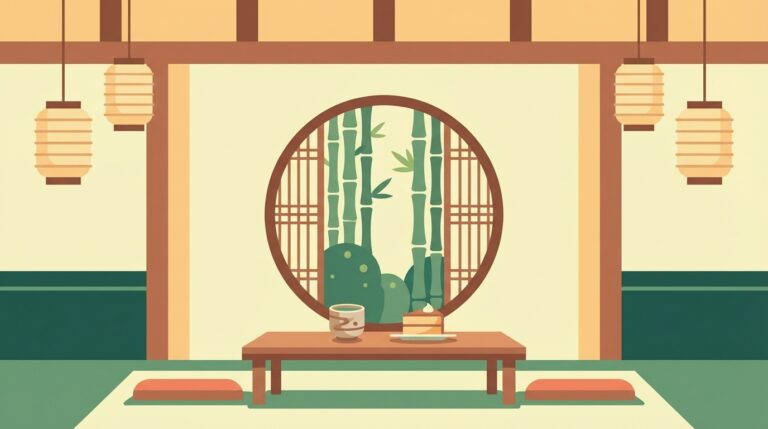
- K-Culture Moment: Buying an obscenely expensive, tiny piece of strawberry shortcake at a boutique cafe after a brutal week, or finally lying in freshly washed sheets.
- Editor’s Insight: This isn’t just “happiness.” It has a bittersweet socio-economic undertone. It’s a rebellion against the pressure to achieve greatness, saying, “I will find my joy right here, right now, in this iced Americano.”
- Situation Spectrum:
[🚫 절대 금지] ———— [⚠️ 주의] ———— [✅ 자유롭게]
- Casual (Friends): ✅
- Semi-formal (Co-workers): ✅
- Formal (Bosses/Elders): ⚠️ (Might sound a bit trendy/casual, but generally acceptable in light conversation)
- 🤔 Think About It: Does your culture have a specific word for scaling down your ambitions to protect your mental health?
2. 멍 때리다 (Meong Ttaerida)
- Pronunciation: [meong ttae-ri-da] (‘Meong’ sounds like a hollow, echoing gong in your mind).
- Meaning: Literal: To hit a blank. / Real nuance: To space out completely, emptying one’s mind.
- K-Culture Moment: You’re at a Han River park. People have set up tents, but they aren’t talking. They are just staring at the flowing water. This is called 물멍 (Mul-meong – water spacing out). If it’s a campfire, it’s 불멍 (Bul-meong).
- Editor’s Insight: In Western cultures, “spacing out” can imply you’re being lazy or not paying attention. In modern Korea, Meong ttaerida is an active, highly respected form of mental detox. There is even an annual “Spacing Out Competition” in Seoul!
- Situation Spectrum:
[🚫 절대 금지] ———— [⚠️ 주의] ———— [✅ 자유롭게]
- Casual: ✅
- Semi-formal: ✅
- Formal: 🚫 (Do not tell your boss you were “spacing out” during a meeting!)
- 🤔 Think About It: Why do Koreans feel the need to invent sub-categories of spacing out (fire, water, forest)? What does this say about sensory overload in Korean cities?
3. 금융치료 (Geumyung Chiryo)
- Pronunciation: [geum-yung-chi-ryo]
- Meaning: Literal: Financial therapy. / Real nuance: Curing your work-induced depression or stress by spending money on yourself, or by receiving your paycheck.
- K-Culture Moment: It’s payday. Your coworker, who has been miserable all month, suddenly smiles, orders the premium sushi lunch set, and says, “금융치료 완치!” (Financial therapy fully cured!).
- Editor’s Insight: This is top-tier office worker slang. It humorously acknowledges that capitalism caused the stress, and capitalism will temporarily cure it. It’s often paired with 탕진잼 (Tangjin-jaem)—the fun of squandering your money on small luxuries.
- Situation Spectrum:
[🚫 절대 금지] ———— [⚠️ 주의] ———— [✅ 자유롭게]
- Casual: ✅
- Semi-formal (Close colleagues): ✅
- Formal: 🚫
- 🤔 Think About It: Is “retail therapy” exactly the same as “금융치료”? Notice how the Korean term specifically uses medical terminology (치료) to emphasize the severity of the mental strain.
Phase 3: 교과서 vs 진짜 한국어 (Textbook vs Real Life)
At the C2 level, you must transition from textbook accuracy to cultural fluency.
| 상황 (Situation) | 📖 교과서 한국어 (Textbook) | 🗣️ 진짜 한국어 (Real Life) | 💡 왜 다를까? (Why the difference?) |
|---|---|---|---|
| Overwhelmed with stress | 스트레스를 많이 받았습니다. | 아, 진짜 멘탈 나갔어요. (My mental is gone.) | ‘멘탈’ (Mental) is used as a standalone noun in modern Korean slang to represent one’s sanity or composure. |
| Suggesting a break | 우리 조금 쉬는 게 어떨까요? | 당 충전 좀 하러 가실래요? (Shall we go recharge our sugar?) | Sugar (당) is the universal currency for quick energy. Acknowledging fatigue through food is highly Korean. |
| Explaining a hobby | 저는 집에서 쉬는 것을 좋아합니다. | 요즘은 아무것도 안 하고 숨만 쉬고 싶어요. (I just want to do nothing and breathe.) | Extreme exhaustion demands extreme hyperbole. Doing “nothing” is framed as a conscious activity. |
| Finding joy in small things | 작은 일에 행복을 느낍니다. | 이게 제 유일한 소확행이에요. (This is my only Sohwakhaeng.) | Encapsulates the fleeting, precious nature of the moment in a single trendy noun. |
Phase 4: 문화적 맥락 — K-Culture 딥다이브 (Cultural Deep Dive)
4-1. Non-verbal Communication: The Deep Sigh (한숨)
In traditional Korean culture, elders will scold you if you sigh heavily: “한숨 쉬면 복 달아난다” (If you sigh, your luck will run away). However, in modern Sohwakhaeng culture, the deep, audible exhale before taking a sip of beer or coffee is a crucial non-verbal cue. It’s a physical release of the day’s Nunchi (reading the room). When drinking with friends, that dramatic sigh followed by “크으~” (Kkeu-eu) is socially required to show that the mental reset has begun.
4-2. K-Culture Connection: The Cafe as a Sanctuary
In K-Dramas, why do characters spend so much time in cafes? Because in a densely populated country where many young adults live with their parents or in tiny studio apartments (원룸), the cafe is a rented sanctuary.
Cafes in Korea aren’t just for caffeine; they are designated spaces for 멍 때리다 (spacing out). This is why you will see sprawling, multi-story aesthetic cafes in the middle of nowhere outside Seoul. People drive for hours just to sit in a beautiful space, look at a mountain, eat a tiny pastry (their 소확행), and heal their minds.
Phase 5: 실전 롤플레이 시나리오 (Immersive Roleplay)
시나리오 A: 메인 롤플레이 (The Friday Night Burnout)
Setting: Friday, 7:30 PM. A quiet, dimly lit Izakaya in Yeonnam-dong. The work week was brutal. You are sitting across from your Korean colleague, Ji-woo.
Characters:
– YOU: An expat working in a Korean corporate office, adapting to the intense culture.
– Ji-woo (30): Your senior colleague (대리님). She has bags under her eyes and looks like her soul left her body around Wednesday.
Ji-woo: 아… 진짜 이번 주 너무 길었어요. 영혼까지 탈탈 털린 기분이에요. 😮💨
(Ah… jin-jja i-beon ju neo-mu gi-reo-sseo-yo. Yeong-hon-kka-ji tal-tal teol-rin gi-bun-i-e-yo.)
[Ah… this week was seriously too long. I feel like my soul has been completely shaken out of me.]
(🎭 Stage Direction: Ji-woo slumps against the table, barely looking at the menu.)
You: 대리님, 고생 많으셨어요. 오늘 진짜 멘탈 나가신 것 같던데요.
(Dae-ri-nim, go-saeng man-eu-syeo-sseo-yo. O-neul jin-jja men-tal na-ga-sin geot gat-deon-de-yo.)
[You worked so hard, Deputy. It looked like your sanity left you today.]
Ji-woo: 맞아요. 저 지금 당 충전이랑 알콜 충전이 시급해요.
(Ma-ja-yo. Jeo ji-geum dang chung-jeon-i-rang al-kol chung-jeon-i si-geu-pae-yo.)
[You’re right. I urgently need a sugar and alcohol recharge right now.]
🔀 당신의 차례! 어떻게 대답할까요? (Your Turn! How do you reply?)
– A) “그럼 빨리 술을 마십시다!” (A bit too literal and textbook robotic.)
– B) “오늘 금융치료는 제가 해드릴게요. 맘껏 시키세요!” (I’ll provide the financial therapy today. Order whatever you want!)
– C) “스트레스 받지 마세요. 다 괜찮아질 거예요.” (Too dismissive of her current pain.)✅ Best Choice: B — Offering to pay (buying her food/drinks) framed as “금융치료” is witty, shows high-level cultural understanding, and provides immediate comfort. It turns a simple “let me treat you” into an inside joke about corporate burnout.
시나리오 B: K-Culture 보너스 롤플레이 (Convenience Store Healing)
Setting: 11 PM, Hangang Park Convenience Store. You just bought a 2+1 snack and a warm drink after a stressful day.
You (To yourself): 아, 드디어 조용하네. 이게 내 소확행이지.
(Ah, deu-di-eo jo-yong-ha-ne. I-ge nae so-hwak-haeng-i-ji.)
[Ah, it’s finally quiet. This is my small happiness.]
(🎭 Stage Direction: You open your drink, staring blankly at the dark river—achieving perfect 물멍.)
Phase 6: 10초 섀도잉 드릴 (Shadowing Drill)
Let’s practice the tone of a burnt-out worker who just found their slice of heaven. Pay attention to the deep sigh at the beginning!
😮💨 (Deep sigh) / 아~~~ / 드디어 / 살 것 같다. /
이게 / 진짜 / 소확행이지! / 나 지금 / 아무것도 안 하고 / 멍 때릴 거야.(Ah~~~ / deu-di-eo / sal geot gat-da. / I-ge / jin-jja / so-hwak-haeng-i-ji! / Na ji-geum / a-mu-geot-do an ha-go / meong ttae-ril geo-ya.)
[Ah… I finally feel like I can live. This is true Sohwakhaeng! I’m going to do absolutely nothing and just space out now.]
Phase 7: K-Culture 미니 사전 (K-Culture Glossary)
At the C2 level, these sociology-tinged slang words are your secret weapons:
| 한국어 | Romanization | English | 맥락 설명 (Context) |
|---|---|---|---|
| 소확행 | so-hwak-haeng | Small but certain happiness | Finding joy in trivial, achievable things amid high societal pressure. |
| 멘탈이 나가다 | men-tal-i na-ga-da | One’s mental state has left | Used when you are completely overwhelmed, panicked, or exhausted. |
| 갓생 | gat-saeng | “God” + Life | A highly productive, disciplined life. The opposite of giving up; striving for perfection daily. Often leads to burnout, triggering the need for 소확행. |
| 번아웃 | beon-a-ut | Burnout | The psychological exhaustion from overworking. Widely discussed in modern Korean media. |
| 탕진잼 | tang-jin-jaem | Fun of squandering | The fleeting joy of spending your hard-earned money on small, perhaps useless, but aesthetically pleasing things to relieve stress. |
| 불멍 / 물멍 | bul-meong / mul-meong | Spacing out at fire/water | Intentional mindfulness by staring blankly at nature. |
Phase 8: 여행자 서바이벌 키트 (Traveler’s Survival Kit)
Even as a traveler, you will need a moment to escape the bustling streets of Myeongdong and find your own Sohwakhaeng. Here is how to navigate a cafe to ensure maximum mental peace.
🆘 서바이벌 표현 TOP 3
– 🇰🇷 1. “구석 조용한 자리로 부탁드려도 될까요?” (Gu-seok jo-yong-han ja-ri-ro bu-tak-deu-ryeo-do doel-kka-yo?)
– Can I please have a quiet seat in the corner? (Perfect for when you need to recharge.)
– 🇰🇷 2. “제일 달달한 디저트 추천해 주세요. 당 충전이 필요해서요.”
– Please recommend your sweetest dessert. I need a sugar recharge. (Guaranteed to make the cafe staff smile in understanding.)
– 🇰🇷 3. “테이크아웃해서 밖에 앉아도 되나요?”
– Can I get this to-go and sit outside? (Crucial for when you want to do ‘물멍’ by the river.)📌 Editor’s Travel Note
– Cafe Etiquette: In Korea, it is completely acceptable to sit in a cafe for 2-3 hours with a laptop or a book. It is considered part of the service. However, leaving your bag to reserve a seat while you order (or even go to the restroom) is perfectly safe and culturally expected.
– Finding Hidden Spots: Use Naver Map or KakaoMap, not Google Maps, and search for “뷰 맛집” (View Restaurant/Cafe) or “조용한 카페” (Quiet cafe) to find places dedicated to healing.
Phase 9: 비판적 사고 코너 — “한 발 더 깊이” (Think Deeper)
🧠 언어와 사회: 갓생(God-saeng) vs 소확행(Sohwakhaeng)
At the C2 level, it’s vital to understand the socio-economic undercurrents of vocabulary. In recent years, Korean youth culture has oscillated between two opposing extremes: 갓생 (God-saeng)—waking up at 5 AM, studying, working out, and being hyper-productive—and 소확행 (Sohwakhaeng)—abandoning grand ambitions to eat a ₩5,000 macaroon in peace.
Why do these two contradictory concepts coexist so intensely? It reflects a generation standing at a crossroads. The fierce competition of the education and job markets demands “God-saeng,” but human limits inevitably result in burnout, making “Sohwakhaeng” a necessary psychological defense mechanism. The Korean language has essentially evolved a highly specific vocabulary just to narrate the daily tightrope walk between extreme ambition and the desperate need for rest.
💬 Your Turn: In your home country, is there a cultural equivalent to this tug-of-war between hyper-productivity and “quiet quitting” or finding small joys? Share in the comments!
Phase 10: FAQ & 오해 방지 (Troubleshooting)
❓ “Can I tell my boss ‘저 멘탈 나갔어요’ (My mental is gone) if I have too much work?”
Editor: 🚫 Absolutely not! While “멘탈 나갔어요” is common, it sounds very unprofessional to a superior. Instead, use a more formal, softened expression: “업무량이 많아 조금 벅찹니다” (I am a bit overwhelmed by the workload) or simply ask for guidance.❓ “If I say I am doing ‘멍 때리다’, will Koreans think I am lazy?”
Editor: ✅ No, context is everything. If you say it during a busy office day, yes. But if you say it on a weekend, or at a cafe, they will completely empathize. Many Koreans will say, “아, 좋겠다. 나도 멍 때리고 싶다” (Ah, I’m jealous. I want to space out too).
❌ 흔한 실수 (Common Mistake): Translating “I need mental help” directly into “저는 정신적 도움이 필요해요.”
✅ 이렇게 하세요: While this literal translation is grammatically correct, in casual conversation about work stress, it sounds like you are requesting clinical psychiatric intervention. If you just mean you are burnt out, say, “요즘 번아웃이 온 것 같아요” (I think I’ve hit burnout lately) or “힐링이 필요해요” (I need some healing).
Phase 11: 요약 및 액션 아이템 (Wrap-up)
🎯 One-Liner Summary: In Korea, mental care isn’t always about big breaks; it’s about surviving the rush by intentionally spacing out (Meong) and cherishing small, certain joys (Sohwakhaeng).
🚀 Action Mission 3단계:
– 🥉 Bronze (Solo): Look at a view out your window and whisper to yourself with a deep sigh, “이게 내 소확행이지.”
– 🥈 Silver (Online): Post a picture of your favorite coffee or dessert on social media with the hashtag #소확행 or #당충전.
– 🥇 Gold (Real Life): Next time a Korean friend or colleague looks exhausted, offer them a small snack and say, “당 충전하세요!” (Recharge your sugar!). Watch their eyes light up.
🌸 K-Culture Mission:
Find a scene in a K-Drama (like Hospital Playlist or My Liberation Notes) where a character takes a moment to eat something small or stare into space. Notice how the camera lingers on them. That is the visual representation of today’s lesson!
Phase 12: 퀴즈 — 인터랙티브 챌린지 (Interactive Quiz)
Let’s test your advanced K-Culture intuition.
1. Situational Judgment: Your close Korean friend texts you on a Wednesday night: “오늘 상사 때문에 진짜 멘탈 나갔어…” (My mental is completely gone today because of my boss…). What is the MOST culturally appropriate C2-level response?
– A) 병원에 가보는 게 어때? (Why don’t you go to the hospital?)
– B) 내일 퇴근하고 만나! 내가 금융치료 해줄게. (Let’s meet after work tomorrow! I’ll give you financial therapy [I’ll treat you].)
– C) 너는 항상 열심히 하니까 괜찮아. (You always work hard, so it’s okay.)
(Toggle for answer: B. Empathy combined with the promise of food/drinks (금융치료) is the ultimate Korean comfort.)
2. Fill in the Blank:
“주말에 캠핑 가서 장작불 보면서 _____ 때리고 왔더니 스트레스가 다 풀렸어.”
(Toggle for answer: 불멍 (Bul-meong) / 멍 (Meong). Staring at the campfire to space out.)
3. True or False – K-Culture Edition:
“Saying ‘소확행’ implies you are currently achieving all your biggest life goals.”
(Toggle for answer: False. It actually implies the opposite—finding joy in the micro because the macro goals are too stressful or distant.)
💬 How did you do? What is your personal #소확행 today? Let me know in the comments below!
Frequently Asked Questions (FAQ)
Q: What does "소확행 (Sohwakhaeng)" mean in Korean and how do you pronounce it?
A: In Korean, "소확행 (Sohwakhaeng)" is pronounced [so-hwak-haeng] and means: Literal: Small but certain happiness. / Real nuance: A psychological coping mechanism. It’s the intentional act of finding joy in trivial things because grand goals (like buying an apartment in Seoul) feel out of reach.
Q: What does "멍 때리다 (Meong Ttaerida)" mean in Korean and how do you pronounce it?
A: In Korean, "멍 때리다 (Meong Ttaerida)" is pronounced [meong ttae-ri-da] and means: Literal: To hit a blank. / Real nuance: To space out completely, emptying one's mind.
Q: What does "금융치료 (Geumyung Chiryo)" mean in Korean and how do you pronounce it?
A: In Korean, "금융치료 (Geumyung Chiryo)" is pronounced [geum-yung-chi-ryo] and means: Literal: Financial therapy. / Real nuance: Curing your work-induced depression or stress by spending money on yourself, or by receiving your paycheck.







