

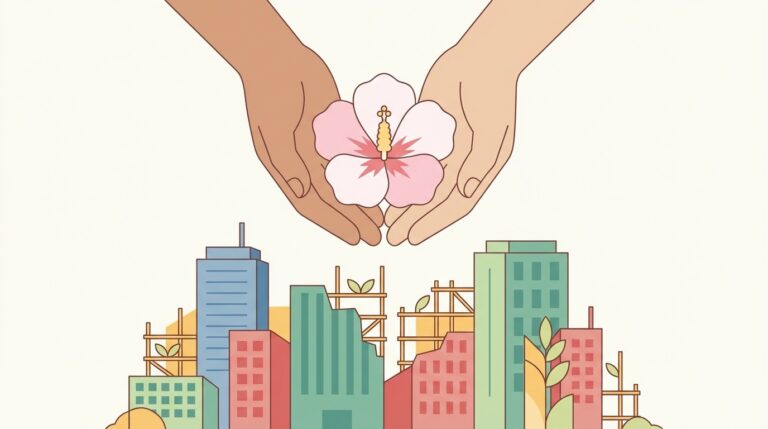
Phase 1: 공감 — 몰입형 오프닝 (Immersive Hook)
Hello there! I’m the Lead Editor at Daily Hangul.
Remember that iconic scene in the K-Drama Descendants of the Sun (태양의 후예)? The one where the medical team and the special forces share a quiet, exhausted moment after an earthquake in a fictional war-torn country? Or perhaps you’ve seen documentaries about Korea’s own history—a nation completely devastated in the 1950s that miraculously transformed from an aid-recipient into a major donor country.
When we talk about International Development Cooperation (ODA) and peace-building processes in Korea, we aren’t just using dry, diplomatic jargon. For Koreans, these concepts are deeply personal. They are etched into the DNA of the modern Korean identity. If you’re a professional in the ODA sector, a diplomat, or simply an advanced (C2) Korean learner wanting to discuss global issues with true cultural fluency, memorizing textbook vocabulary like ‘peace’ (평화) or ‘help’ (도움) isn’t enough.
Using the wrong nuance when offering ‘help’ can make you sound arrogant or condescending, like a savior rather than a partner. But when you master the Korean vocabulary of solidarity and coexistence, you don’t just communicate—you earn immense respect. Let’s dive into the words that truly build bridges.
Phase 2: 핵심 표현 심층 분석 (Deep Dive)
Let’s unpack the high-level expressions used in the field of post-war recovery and peace-building. At the C2 level, it’s all about the subtle weight of Hanja (Sino-Korean words).
1. 상생과 연대 (Coexistence and Solidarity)
- Pronunciation: [sang-saeng-gwa yeon-dae] / ‘sang’ sounds like the past tense of sing + ‘saeng’ sounds like ‘sang’ but with an ‘e’ / ‘yeon’ sounds like ‘yawn’ + ‘dae’ sounds like ‘day’.
- Meaning: Literal: Living together and connecting. Real nuance: Mutual growth and unbreakable global solidarity.
- K-Culture Moment: You’ll see the word ‘상생’ plastered everywhere in Korea—from major corporate ESG campaigns to K-Dramas where rival chaebol factions must ally for survival. In ODA, it’s the ultimate buzzword replacing ‘charity’.
- Editor’s Insight: ‘상생’ implies a horizontal relationship. It means “I am not just saving you; our survival is tied together.” It removes the hierarchical sting of giving aid.
- Situation Spectrum:
[🚫 절대 금지] ———— [⚠️ 주의] ———— [✅ 자유롭게]
- Casual drinking with friends: ⚠️ (A bit too formal/academic for chatting about a breakup, but great for a deep political debate over Soju).
- NGO/Corporate Meeting (Semi-formal): ✅
- Diplomatic Speech (Formal): ✅
- 🤔 Think About It: Why does Korean diplomacy prefer ‘상생’ (coexistence) over ‘원조’ (aid)? How does Korea’s history of receiving aid shape its desire to be seen as a ‘partner’ rather than a ‘savior’?
2. 힘을 보태다 (To add one’s strength / To pitch in)
- Pronunciation: [hi-meul bo-tae-da] / ‘him’ sounds like the English pronoun ‘him’ / ‘bo-tae-da’ sounds like ‘bow-tay-da’.
- Meaning: Literal: To add strength. Real nuance: To humbly offer assistance or support.
- K-Culture Moment: When a K-Pop fandom organizes a massive donation drive for disaster relief under their idol’s name, they don’t say “We saved them.” They say “작은 힘이나마 보탰습니다” (We just added our small strength).
- Editor’s Insight: This is a brilliant C2-level alternative to 도와주다 (to help). 도와주다 can sound top-down. 힘을 보태다 sounds like you are just pushing the cart from behind while they steer.
- Situation Spectrum:
[🚫 절대 금지] ———— [⚠️ 주의] ———— [✅ 자유롭게]
- Casual with friends: ✅
- NGO/Corporate Meeting: ✅
- Formal Speeches: ✅
- 🤔 Think About It: Consider the traditional Korean farming culture of Pumasi (품앗이 – communal labor sharing). How does the concept of ‘pitching in’ rather than ‘rescuing’ reflect traditional Korean community values?
3. 지속 가능한 평화 정착 (Establishment of Sustainable Peace)
- Pronunciation: [ji-sok ga-neung-han pyeong-hwa jeong-chak]
- Meaning: Literal & Real nuance: Establishing sustainable peace.
- K-Culture Moment: You’ll hear this exact phrase on the evening news when the President visits UN assemblies or discusses the DMZ (Demilitarized Zone) on the Korean peninsula.
- Editor’s Insight: ‘정착’ (settlement/taking root) is a beautiful word. It implies that peace isn’t just a signed paper; it’s a seed that has grown roots into the ground.
- Situation Spectrum:
[🚫 절대 금지] ———— [⚠️ 주의] ———— [✅ 자유롭게]
- Casual conversation: 🚫 (You’ll sound like a news anchor).
- Academic/Professional Writing: ✅
- Formal Diplomatic Settings: ✅
- 🤔 Think About It: The Korean peninsula is still technically at war (an armistice, not a peace treaty). How does living in a divided nation amplify the weight of the word ‘평화’ (peace) for Koreans?
Phase 3: 교과서 vs 진짜 한국어 (Textbook vs Real Life)
Let’s look at how formal ODA language shifts when NGO workers grab a coffee after a grueling site inspection.
| 상황 | 📖 교과서 한국어 | 🗣️ 진짜 한국어 | 💡 왜 다를까? |
|---|---|---|---|
| Offering assistance to a partner NGO | 저희가 도와드리겠습니다. (We will help you.) | 저희도 힘을 보태겠습니다. / 함께 가시죠. (We will add our strength / Let’s go together.) | ‘Help’ (도움) can imply a hierarchy. ‘Together’ (함께) emphasizes horizontal partnership. |
| Discussing a ruined infrastructure | 파괴된 인프라를 복구해야 합니다. (We must recover the destroyed infrastructure.) | 처음부터 다시 세운다는 마음으로 가야죠. (We need to approach this with the mindset of building from scratch.) | Real conversation uses emotional, descriptive verbs rather than stiff Sino-Korean nouns. |
| After a successful peace-dialogue session | 평화가 정착되었습니다. (Peace has been established.) | 이제 겨우 숨통이 트이네요. (Now we can finally breathe a little.) | ‘숨통이 트이다’ (windpipe opens) is a high-level idiom showing emotional relief after extreme tension. |
Phase 4: 문화적 맥락 — K-Culture 딥다이브 (Cultural Deep Dive)
4-1. 비언어적 요소 (Non-verbal Communication in Korean Diplomacy)
In peace-building negotiations or NGO fieldwork, Nunchi (눈치) is your greatest asset. When offering aid or proposing reconstruction plans, a direct, aggressive “We have the solution!” approach can backfire. Koreans value humility (겸손).
* The Bowing Handshake: When sealing a partnership with a local leader in a developing nation, you might notice Korean diplomats slightly bowing their heads even while shaking hands. It’s a non-verbal cue that screams: “We respect you as equals.”
4-2. K-Culture Connection: K-Food and The Spirit of Pumasi
What does a bubbling pot of Kimchi Jjigae have to do with International Development Cooperation? Everything.
Korea’s approach to ODA is deeply rooted in 정 (Jeong – deep emotional connection) and 품앗이 (Pumasi – traditional communal labor). In the old days, when a village was destroyed by a typhoon, neighbors didn’t sign contracts to help rebuild; they just brought their tools and a large pot of stew to share.
Even today, if you go on a fieldwork mission with Korean NGO workers, the first thing they will do to build ‘peace’ and ‘solidarity’ is to eat together (회식). Sharing food from the same pot breaks down borders. In K-Dramas like Crash Landing on You, what softens the tension between North and South Koreans? Sharing a simple bowl of noodles or roasted meat. Food is the ultimate peace-building tool in Korea.
Phase 5: 실전 롤플레이 시나리오 (Immersive Roleplay)
시나리오 A: 메인 롤플레이 (The NGO Networking Dinner)
Setting: Friday evening, 8:00 PM. A bustling Korean BBQ restaurant near Gangnam Station. The air is thick with the savory smoke of pork belly. You have just wrapped up a 3-day International Peace-building Forum. You are sitting with Min-su, a veteran Korean ODA coordinator who has worked in conflict zones.
Characters:
– YOU: A foreign delegate/NGO director. You want to build a strong partnership.
– Min-su (45): Passionate, exhausted, but deeply committed to global solidarity.
Min-su: (Pouring you a glass of Soju) 이번 포럼, 정말 고생 많으셨습니다. 현장 상황을 들으니 마음이 참 무겁네요. 😔
(I-beon po-reom, jeong-mal go-saeng man-eu-syeot-seum-ni-da. Hyeon-jang sang-hwang-eul deu-reu-ni ma-eu-mi cham mu-geom-ne-yo.)
[You really worked hard during this forum. Hearing about the situation on the ground makes my heart heavy.]
YOU: 네, 재건(Reconstruction) 작업이 생각보다 훨씬 길어질 것 같습니다.
(Ne, jae-geon ja-geo-bi saeng-gak-bo-da hwyeol-ssin gi-reo-jil geot gat-seum-ni-da.)
[Yes, the reconstruction work seems like it will take much longer than expected.]
Min-su: 맞습니다. 단순한 물자 지원이 아니라, 그분들이 스스로 일어설 수 있게 상생의 길을 찾아야죠. 우리가 어떻게 하면 좋을까요?
(Mat-seum-ni-da. Dan-sun-han mul-ja ji-wo-ni a-ni-ra, geu-bun-deu-ri seu-seu-ro i-reo-seol su it-ge sang-saeng-ui gi-reul cha-ja-ya-jyo. U-ri-ga eo-tteo-ke ha-myeon jo-eul-kka-yo?)
[Exactly. It’s not just about material aid, but finding a path of coexistence so they can stand on their own. What should we do?]
🔀 당신의 차례! 어떻게 대답할까요? (Your Turn! How will you respond?)
– A) “제가 다 도와드리겠습니다! 걱정 마세요!” (I will help you with everything! Don’t worry!)
– B) “저희 단체도 작은 힘이나마 꼭 보태겠습니다. 함께 가시죠.” (Our organization will definitely pitch in our small strength. Let’s go together.)
– C) “돈이 최고죠. 예산을 늘려봅시다.” (Money is the best. Let’s increase the budget.)✅ Best Choice: B — Why? Choice B uses the C2-level humble expression “힘을 보태다” (pitch in/add strength) and “함께 가시죠” (let’s go together). It perfectly captures the Korean ODA spirit of horizontal partnership.
⚠️ Choice A Analysis: Saying “I will help you with everything” sounds like a boastful savior, which can be off-putting to veteran field workers who know how complex peace-building is.
시나리오 B: 보너스 롤플레이 (The Airport Send-off)
Setting: Incheon Airport. You are seeing off a local delegate from a developing nation after a successful capacity-building training program in Seoul.
Delegate: 한국에서 배운 것들, 우리 마을 재건에 꼭 쓰겠습니다. 정말 감사합니다.
(Hanguk-eseo bae-un geot-deul, uri maeul jae-geon-e kkok sseuge-sseumnida. Jeongmal gamsahamnida.)
YOU: 아닙니다. 우리 모두 연대(Solidarity)하고 있으니까요. 포기하지 마세요!
(A-nim-ni-da. U-ri mo-du yeon-dae-ha-go i-sseu-ni-kka-yo. Po-gi-ha-ji ma-se-yo!)
[Not at all. We are all in solidarity. Please don’t give up!]
Phase 6: 10초 섀도잉 드릴 (Shadowing Drill)
Let’s practice the ultimate C2 expression for partnership. Pay attention to the pauses (/) and the emotional tone!
🤝 진지하고 겸손하게 (Serious and humble)
“단순한 / 지원을 넘어, / 지속 가능한 평화가 / 정착될 수 있도록 / 저희도 힘을 / 보태겠습니다.”
(Dan-sun-han / ji-wo-neul neo-meo, / ji-sok ga-neung-han pyeong-hwa-ga / jeong-chak-dwel su it-do-rok / jeo-hui-do hi-meul / bo-tae-get-seum-ni-da.)
[Beyond simple aid, we too will pitch in so that sustainable peace can take root.]
Phase 7: K-Culture 미니 사전 (K-Culture Glossary)
| 한국어 | Romanization | 영어 | 맥락 설명 (Context) |
|---|---|---|---|
| 한강의 기적 | Hangang-ui Gijeok | Miracle on the Han River | The rapid economic growth of South Korea after the Korean War. The historical foundation of Korea’s ODA identity. |
| 상생 | Sang-saeng | Coexistence | Mutually beneficial growth. A key philosophy in modern Korean corporate and diplomatic strategy. |
| 연대 | Yeon-dae | Solidarity | Standing together. Heavily used in labor movements, civil rights, and international peace-building. |
| 품앗이 | Pu-ma-si | Communal Labor | Traditional village culture of taking turns helping with each other’s farm work. The cultural root of Korean humanitarian aid. |
| 인프라 복구 | In-peu-ra bok-gu | Infrastructure Recovery | A highly common term in post-war reconstruction projects. |
Phase 8: 여행자 서바이벌 키트 (Traveler’s Survival Kit: The ODA Fieldworker Edition)
If you are an international development professional traveling in Korea for conferences, site visits, or NGO meetings, here are 3 survival phrases you’ll absolutely need when moving around Seoul.
🆘 서바이벌 표현 (Survival Phrases)
– 🇰🇷 “미팅 장소가 어디인가요?” (Mi-ting jang-so-ga eo-di-in-ga-yo?)
– 🗣️ Meaning: Where is the meeting location?
– 🇰🇷 “현장 답사는 몇 시 출발입니까?” (Hyeon-jang dap-sa-neun myeot si chul-ba-rim-ni-kka?)
– 🗣️ Meaning: What time does the site inspection depart?
– 🇰🇷 “자료를 이메일로 보내주시겠어요?” (Ja-ryo-reul i-me-il-lo bo-nae-ju-si-ge-sseo-yo?)
– 🗣️ Meaning: Could you send the materials via email?📌 Editor’s Travel Note
– Navigating Seoul: Google Maps doesn’t work well for walking or driving in Korea. Always download Naver Map or KakaoMap to find your conference venues.
– Business Cards: In professional NGO/Diplomatic settings in Korea, exchanging physical business cards (명함 – myeong-ham) with two hands is still a sacred ritual. Never shove it into your back pocket!
Phase 9: 비판적 사고 코너 — “한 발 더 깊이” (Think Deeper)
글로벌 시대의 한국어 (Korean in the Global Era): The Empathy of a Former War Zone
When Korean diplomats and ODA workers use terms like Reconstruction (재건) and Peace-building (평화 구축), they carry a different historical weight compared to Western donor nations. Just 70 years ago, Korea was entirely reduced to ashes. Therefore, the Korean language of aid has evolved to heavily minimize the “Savior Complex.” Words like 연대 (Solidarity) and 상생 (Coexistence) dominate the discourse because older generations remember what it felt like to be on the receiving end of foreign charity. By framing ODA as Pumasi (communal helping), the Korean language reflects a desire to protect the dignity of the recipient nation.
💬 Your Turn: Does your country have a history of receiving or giving international aid? How does your native language express the concept of ‘helping a nation in need’ without sounding condescending? Share your thoughts in the comments!
Phase 10: FAQ & 오해 방지 (Troubleshooting)
❌ 흔한 실수 #1: Using “불쌍하다” (pitiful) when discussing war victims.
Do NOT use ‘불쌍하다’ (bul-ssang-ha-da – to be pitiful) in professional ODA settings. It sounds extremely condescending.
✅ 이렇게 하세요: Use “안타깝다” (an-ta-kkap-da – to be regretful/heartbreaking). It shows deep empathy without stripping away their dignity.
Q: “Can I use ‘수고하셨습니다’ (Good job/You worked hard) to a high-ranking minister after a peace forum?”
A: No! ‘수고하셨습니다’ is somewhat top-down or for equals. For high-ranking officials or elders, use “고생 많으셨습니다” (You have endured a lot of hardship) or simply “감사합니다” (Thank you).
Q: “Why do Koreans always ask if I’ve eaten (밥 먹었어요?) even in serious business meetings?”
A: In a country that survived devastating poverty and war, asking if someone has eaten is the ultimate expression of peace and care. It means “Are you safe and well?”
Phase 11: 요약 및 액션 아이템 (Wrap-up)
One-Liner Summary: True peace-building in Korean isn’t about ‘helping’ from above; it’s about ‘pitching in’ (힘을 보태다) and walking the path of ‘coexistence’ (상생) together.
Action Mission:
– 🥉 Bronze: Stand in front of a mirror and say, “저희도 힘을 보태겠습니다” with a humble, sincere nod.
– 🥈 Silver: Write a short comment in your Korean study group: “세계 평화를 위해 연대합시다!” (Let’s stand in solidarity for world peace!)
– 🥇 Gold: The next time a colleague is struggling with a heavy project, approach them and say, “제가 힘을 좀 보탤까요?” (Shall I pitch in a little?)
🎬 K-Culture Mission: Watch an episode of a Korean documentary or a drama like Descendants of the Sun and listen specifically for words like ‘재건’ (Reconstruction) or ‘평화’ (Peace). Notice the serious, empathetic tone the actors use!
Phase 12: 퀴즈 — 인터랙티브 챌린지 (Interactive Quiz)
1. Situational Judgment: You are representing your NGO at a Korean embassy event. You want to say that your organization will support the post-war recovery efforts. Which sentence is the most culturally intelligent and respectful?
A) 저희가 다 고쳐 주겠습니다. (We will fix everything for you.)
B) 피해 복구를 위해 저희도 힘을 보태겠습니다. (We will also pitch in our strength for the damage recovery.)
C) 불쌍한 사람들을 돕겠습니다. (We will help the pitiful people.)
2. Fill in the Blank:
단순한 원조가 아니라, 서로 윈윈(win-win)하는 ________(Coexistence)의 길을 찾아야 합니다.
3. True or False — K-Culture Edition:
In Korean ODA culture, building personal relationships and sharing a meal (회식) is often considered just as important as signing the official MOU documents. (T / F)
👉 정답 확인하기 (Click for Answers)
- B – Choice A is arrogant. Choice C is highly offensive due to ‘불쌍한’ (pitiful). B uses the humble ‘힘을 보태다’.
- 상생 (Sang-saeng) – The ultimate buzzword for mutual growth and coexistence.
- True – Jeong (정) and shared meals are the foundation of trust in Korean partnerships.
Frequently Asked Questions (FAQ)
Q: What does "상생과 연대 (Coexistence and Solidarity)" mean in Korean and how do you pronounce it?
A: In Korean, "상생과 연대 (Coexistence and Solidarity)" is pronounced [sang-saeng-gwa yeon-dae] and means: Literal: Living together and connecting. Real nuance: Mutual growth and unbreakable global solidarity.
Q: What does "힘을 보태다 (To add one's strength / To pitch in)" mean in Korean and how do you pronounce it?
A: In Korean, "힘을 보태다 (To add one's strength / To pitch in)" is pronounced [hi-meul bo-tae-da] and means: Literal: To add strength. Real nuance: To humbly offer assistance or support.
Q: What does "지속 가능한 평화 정착 (Establishment of Sustainable Peace)" mean in Korean and how do you pronounce it?
A: In Korean, "지속 가능한 평화 정착 (Establishment of Sustainable Peace)" is pronounced [ji-sok ga-neung-han pyeong-hwa jeong-chak] and means: Literal & Real nuance: Establishing sustainable peace.







