

Phase 1: Immersive Hook
Greeting: 안녕하세요! This is your Daily Hangul Senior Editor.
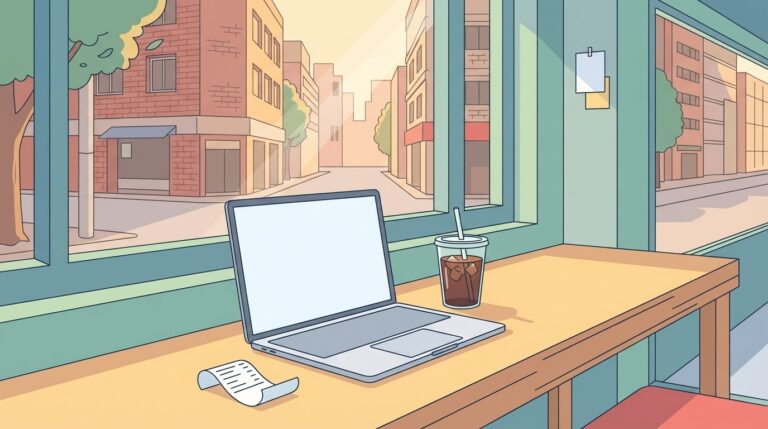
Picture this: You are in a trendy cafe in Seongsu-dong, the Brooklyn of Seoul. You have your laptop open, a sleek Iced Americano (Ah-Ah) sweating beside it. You need to focus on a project, but your battery is at 15%. You spot an outlet, but it’s behind a stranger who looks deeply focused on their own screen.
In a K-Drama like Start-Up, the protagonist might boldly ask to share the table and spark a romance. But in reality? You’re freezing. You don’t want to be rude, but you also don’t want your laptop to die during a Zoom call. And then there’s that nagging feeling… have you been sitting here too long with just one drink? Are the staff judging you?
Today, we are decoding the Digital Nomad Life in Korea. We move beyond “Hello” and “Thank you” to tackle the subtle, high-context language of “Nunchi” (reading the room) and Smart Work etiquette. Ready to work like a local? Let’s dive in.
Phase 2: Deep Dive into Key Expressions
1. 눈치가 보이다 (Nunchi-ga boida)
- Pronunciation: [Nun-chi-ga bo-i-da] (Sounds like ‘Noon-chee-ga boy-da’)
- Meaning:
- Literal: To see the wits/sense.
- Real Nuance: To feel self-conscious; to feel like you are walking on eggshells because you think others might be judging you.
- K-Culture Moment: Think of that K-Pop trainee reality show where the trainee makes a mistake and looks nervously at the trainers. That feeling? That’s nunchi-ga boida.
- Editor’s Insight: As a digital nomad, you use this when you stay at a cafe for 4 hours with only one coffee. You aren’t doing anything illegal, but you feel the social pressure.
- Situation Spectrum:
[🚫 Boss] ———— [⚠️ Colleagues] ———— [✅ Friends/Self-talk]- Note: You usually use this to describe your own feelings to friends or coworkers. saying it directly to a boss might sound like you lack confidence.
- 🤔 Think About It: Why does Korean have a specific verb phrase for “feeling judged by the atmosphere”? How does this reflect the collective nature of Korean society compared to individualistic cultures?
2. 콘센트 좀 써도 될까요? (Konsenteu jom sseudo doelkkayo?)
- Pronunciation: [Kon-sen-teu jom sseu-do doel-kka-yo?]
- Meaning: “May I use the outlet?”
- K-Culture Moment: In Korean variety shows, you often see cast members desperately looking for outlets in rural areas. It’s a survival phrase.
- Editor’s Insight: In Korea, we say “Consent” (Konglish for Concentric plug/outlet), not “Outlet” or “Socket.” Adding “jom” (a little) softens the request significantly. It changes “Can I use this?” to “Would you mind if I just used this a bit?”
- Situation Spectrum:
[✅ Stranger] ———— [✅ Cafe Staff] ———— [✅ Co-working Space]
3. 자리 좀 맡아주실 수 있나요? (Jari jom mata-jusil su innayo?)
- Pronunciation: [Ja-ri jom ma-ta-ju-sil su in-na-yo?]
- Meaning: “Could you save my seat/watch my stuff?”
- Editor’s Insight: This is the ultimate test of the “Korean Trust.” You need to go to the restroom, but you don’t want to pack up your laptop. You ask your neighbor. 99.9% of the time, they will guard it with their life.
- Situation Spectrum:
[⚠️ Stranger (Polite)] ———— [✅ Friend] ———— [🚫 Boss (Too casual request)]
Phase 3: Textbook vs. Real Life
| Situation | 📖 Textbook Korean | 🗣️ Real Korean | 💡 Why the difference? |
|---|---|---|---|
| Asking if a seat is free | 여기 앉아도 됩니까? (May I sit here?) | 여기 자리 있어요? (Is there a ‘seat’ here? meaning: Is someone sitting here?) | Koreans focus on the existence of an owner for the seat, not permission to sit. |
| Asking for Wi-Fi | 와이파이 비밀번호가 무엇입니까? (What is the password?) | 비번 어디 적혀 있어요? (Where is the password written?) | Usually, you don’t ask staff what it is; you ask where to find it (receipt, wall, napkin holder) to save time. |
| Staying too long | 오래 있어서 죄송합니다. (Sorry for staying long.) | 죄송한데, 주문 좀 더 할게요. (Sorry, I’ll order something more.) | Actions speak louder than apologies. Ordering another drink resolves the “Nunchi” situation. |
💡 Editor’s Note: “Jari isseoyo?” is tricky. If they say “Ne (Yes),” it means someone IS sitting there (don’t sit). If they say “Aniyo (No),” it means no one is there (you can sit). Logic flip alert!
Phase 4: Cultural Deep Dive — The “Kagong” Tribe
4-1. Non-verbal: The “Laptop Marking” Ritual
In most countries, leaving a laptop unattended is an invitation for theft. In Korea, it’s a statement: “This seat is taken.” This is the CCTV effect + High Social Trust. However, as a foreigner, if you are nervous, ask a neighbor. When you ask, make slight eye contact and a small bow. Don’t stare too intensely.
4-2. K-Culture Connection: The “Kagong-jok” (Cafe-Study Tribe)
In dramas like Cheese in the Trap, you see students living in cafes. These are “Kagong-jok” (Ka=Cafe, Gong=Study, Jok=Tribe).
* The Unwritten Rule: If you stay more than 2-3 hours, you must order a second drink. It’s the “rent” for your digital nomad office.
* Critical Perspective: Why cafes? Korean homes are often small or multi-generational (parents, siblings). Cafes offer the privacy and AC that home might not. It’s not just about coffee; it’s about purchasing “personal space.”
Phase 5: Immersive Roleplay
Setting: A hip, industrial-style cafe in Hapjeong. It’s 2:00 PM on a Tuesday. The cafe is filled with freelancers. Jazz hip-hop plays in the background.
Characters:
* YOU: A digital nomad looking for a spot with a power outlet.
* Minji: A university student working on her portfolio. She is occupying a 4-person table alone but has a multi-tap (power strip).
Dialogue:
(You approach the table politely)
YOU: 저기요, 실례지만 여기 자리 있어요?
(Jeogiyo, sillyejiman yeogi jari isseoyo?)
(Excuse me, is this seat taken?)
Minji: (Takes out one Airpod) 아, 아니요. 없어요.
(Ah, aniyo. Eop-seoyo.)
(Ah, no. It’s free.)
(You sit down, but notice the outlet is far away)
YOU: 혹시 콘센트 좀 같이 써도 될까요? 배터리가 없어서요.
(Hoksi konsenteu jom gachi sseudo doelkkayo? Baeteori-ga eopseoseoyo.)
(By any chance, could I share the outlet? I’m out of battery.)
Minji: 네, 쓰세요. (Moves her charger) 근데 여기 와이파이가 좀 느려요.
(Ne, sseuseyo. Geunde yeogi waipaiga jom neuryeoyo.)
(Sure, go ahead. But the Wi-Fi is a bit slow here.)
🔀 Decision Point: How do you respond to the Wi-Fi warning?
- Option A: “아, 진짜요? 그럼 다른 데 가야겠네요.” (Oh really? I guess I should go somewhere else.)
- Option B: “괜찮아요. 핫스팟 쓰면 돼요. 감사합니다!” (It’s okay. I can use my hotspot. Thank you!)
- Option C: “비번이 뭐예요?” (What’s the password?)
✅ Best Choice: Option B. It shows you are prepared (professional nomad vibe) and grateful for her warning. It establishes a good “neighbor” relationship.
⚠️ Choice C Analysis: She just told you it’s slow. Asking for the password immediately ignores her helpful tip and might seem dismissive.
Phase 6: 10-Second Shadowing Drill
Context: You need to leave for the restroom but want to ensure your laptop is safe. Use a polite, slightly apologetic tone.
Emotion: 🥺 Polite & Cautious (Asking a favor)
저기요, / 죄송한데 / 제 짐 좀 / 잠깐만 봐주실 수 있나요?
(Jeogiyo, / joesonghande / je jim jom / jamkkanman bwajusil su innayo?)
“Excuse me, / sorry to bother you but / could you watch my things / for just a moment?”
Phase 7: K-Culture Mini Glossary
| Korean | Romanization | Meaning | Context |
|---|---|---|---|
| 카공족 | Kagong-jok | Cafe-Study Tribe | People who study/work in cafes for long hours. |
| 콘센트 | Konsenteu | Outlet/Socket | Derived from “Concentric plug.” Don’t say “Socket.” |
| 멀티탭 | Meolti-taep | Power Strip | Essential gear for nomads. “Multi-tap.” |
| 테더링 | Tedeoring | Tethering/Hotspot | Sharing your phone’s data with your laptop. |
| 노키즈존 | No-Kids Zone | No Kids Zone | Many quiet cafes ban children. Great for work, controversial socially. |
Phase 8: Nomad’s Survival Kit
Digital Nomad Edition
🆘 Survival Phrases
1. “와이파이 잘 터져요?” (Waipai jal teojyeoyo?) – “Does the Wi-Fi work well/explode well?” (Slang: Is the connection strong?)
2. “영수증에 비번 있어요?” (Yeongsujeung-e bibeon isseoyo?) – “Is the password on the receipt?”
3. “화장실 비번 뭐예요?” (Hwajangsil bibeon mwoyeyo?) – “What is the restroom password?” (Crucial in Seoul! Many restrooms are locked.)📌 Editor’s Pro Tip:
* The Receipt Rule: Never throw away your cafe receipt immediately! The Wi-Fi password and Restroom Door Code are often printed at the bottom.
* Naver Map: Use “Naver Map” to search for “Laptop friendly cafes” or reviews that mention “console” (outlets).
Phase 9: Think Deeper — “Trust vs. Surveillance”
Topic: Media vs. Reality
You’ve heard the urban legend: “In Korea, if you leave a laptop on a table, no one touches it. If you leave a bicycle, it’s gone.” This is mostly true. But is it purely because of high morality?
Think About It: Korea has one of the highest densities of CCTV cameras in the world. Also, most payments are digital (leaves a trail). This high-tech surveillance combined with a “relational” culture (where shame/Nunchi is a powerful deterrent) creates this safety. As a digital nomad, you benefit from this safety, but it’s fascinating to consider if it’s born from trust or fear of being caught.
Phase 10: FAQ & Troubleshooting
- Q: Can I do a Zoom meeting in a cafe?
- A: Maybe. If it’s a loud franchise (Starbucks), yes. If it’s a quiet, aesthetic personal cafe, NO. You will feel the Nunchi lasers burning into you. Look for “Study Cafes” or “Shared Offices” for calls.
- Q: How long can I stay?
- A: The unspoken rule is: 1 drink = 2~3 hours. If you stay longer, go to the counter and order a cookie or another drink. It shows respect for the owner’s business.
❌ Common Mistake #1: Asking “Can I sit here?” to a person sitting at a large communal table by pointing at the empty chair.
✅ Do this: Just ask “Is there someone here?” (Yeogi jari isseoyo?). If they say no, just sit. You don’t need their permission to sit at a communal table, just confirmation of vacancy.
Phase 11: Wrap-up & Action Mission
One-Liner: Mastering “Nunchi” is just as important as mastering grammar for a Digital Nomad in Seoul.
Action Missions:
* 🥉 Bronze: Look at your local cafe receipt today. Does it have a password? Practice asking “Yeongsujeung-e bibeon isseoyo?” out loud.
* 🥈 Silver: Go to a cafe, find a seat, and set up your workspace. Post a photo on social media with the hashtag #Kagongjok.
* 🥇 Gold: (In Korea) Ask a stranger to watch your bag while you go to the restroom using the polite phrase we learned.
K-Culture Mission: Watch an episode of a drama set in a start-up or office (like Start-Up or Misaeng). Count how many times they go to a cafe to talk business or work.
💬 Your Turn: In your country, would you dare leave your laptop on a cafe table? Tell me in the comments!
Phase 12: Quiz — Interactive Challenge
1. Situation Judgment:
You are in a quiet cafe. You need to take a 30-minute Zoom call. What is the BEST move?
* A) Just take the call loudly. You bought a coffee, it’s your right.
* B) Whisper through the whole call.
* C) Pack up and move to the terrace or a noisier franchise cafe.
* D) Ask the staff to turn down the music.
2. True or False:
“In Korea, if you ask ‘Is this seat available?’ and the person says ‘Yes (Ne)’, it means you can sit there.”
3. Vocabulary:
What is the Korean slang for people who study or work in cafes for a long time?
Answers (Don’t peek until you try!):
* 1. C) Koreans value the collective atmosphere. Making noise in a quiet cafe is a major Nunchi failure.
* 2. False (F) If they say “Ne” (Yes), it usually confirms “Yes, there is a person/bag here,” so you CANNOT sit.
* 3. Kagong-jok (카공족)
Frequently Asked Questions (FAQ)
Q: What does "눈치가 보이다 (Nunchi-ga boida)" mean in Korean and how do you pronounce it?
A: In Korean, "눈치가 보이다 (Nunchi-ga boida)" is pronounced [Nun-chi-ga bo-i-da] and means: Literal: To see the wits/sense.
Q: What does "콘센트 좀 써도 될까요? (Konsenteu jom sseudo doelkkayo?)" mean in Korean and how do you pronounce it?
A: In Korean, "콘센트 좀 써도 될까요? (Konsenteu jom sseudo doelkkayo?)" is pronounced [Kon-sen-teu jom sseu-do doel-kka-yo?] and means: "May I use the outlet?"
Q: What does "자리 좀 맡아주실 수 있나요? (Jari jom mata-jusil su innayo?)" mean in Korean and how do you pronounce it?
A: In Korean, "자리 좀 맡아주실 수 있나요? (Jari jom mata-jusil su innayo?)" is pronounced [Ja-ri jom ma-ta-ju-sil su in-na-yo?] and means: "Could you save my seat/watch my stuff?"







