

Yeouido Tactics: Mastering Bond Strategies During Rate Hikes 📉📈
Phase 1: The Immersive Hook
안녕하세요! This is your Senior Editor at Daily Hangul.
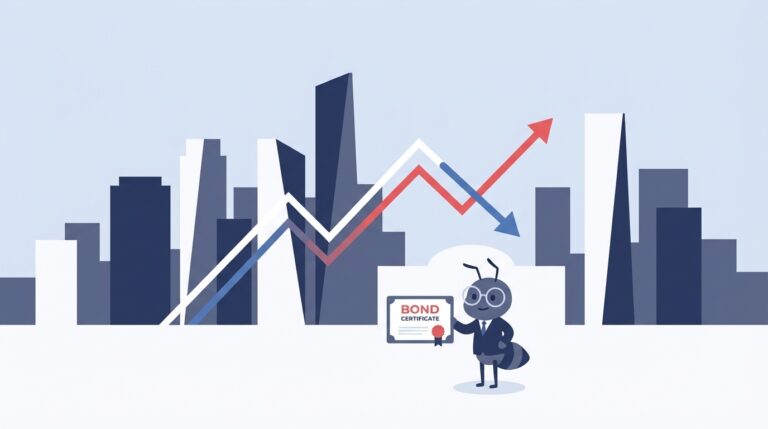
Picture this: You are watching a high-stakes K-Drama like Reborn Rich (재벌집 막내아들) or Succession (Korean style). The camera pans over the Han River to the glittering skyline of Yeouido (여의도)—Korea’s Wall Street. The background music is tense strings. A sharp-dressed fund manager stares at a monitor full of red and blue numbers (remember: in Korea, red means up/profit, blue means down/loss!).
He picks up the phone and whispers intensely:
“지금이 채권 저가 매수의 적기입니다. 금리 인상이 정점에 다다랐거든요.”
(Now is the optimal time for bargain hunting on bonds. The rate hikes have reached their peak.)
If you are working in finance in Korea, or simply want to impress your Korean business partners with C2-level sophistication, understanding the language of Interest Rates (금리) and Bonds (채권) is non-negotiable. Today, we move beyond “How much is this?” to “What is your duration strategy for this portfolio?”
This isn’t just vocabulary; it’s the language of money, power, and strategy in Seoul.
Phase 2: Deep Dive into Core Expressions
1. 금리 인상기 (Geum-ri In-sang-gi)
- Pronunciation: [Geum-ni In-sang-gi] (Note: ‘ㄹ’ is pronounced as ‘ㄴ’ here due to nasalization rules)
- Meaning: Period of rising interest rates (Monetary Tightening Cycle)
- K-Culture Moment: On the 9:00 PM News, the anchor looks grave. The Bank of Korea (한국은행) has just announced a “Big Step” (0.5% hike). The caption reads: “본격적인 금리 인상기 진입” (Entering a full-fledged period of rate hikes).
- Editor’s Insight: This isn’t just a technical term; it’s a mood setter. In Korea, this phrase implies a time to tighten belts (hurri-tti) and look for safer assets. It carries a nuance of economic winter.
- Situation Spectrum:
[🚫 Formal Only] ———— [✅ Semi-formal/Formal]- This is strictly professional or news-related. Using this with a pojangmacha owner might make you sound like a robot, unless you are discussing mortgage rates.
- 🤔 Think About It: Why does Korean use the suffix ‘-기’ (period/era) so often (e.g., 정체기, 사춘기)? It implies that everything is a passing phase. How does this reflect the Korean view on cyclical time?
2. 채권 저가 매수 (Chae-gwon Jeo-ga Mae-su)
- Pronunciation: [Chae-gwon Jeo-ga Mae-su]
- Meaning: Buying bonds at a bargain (Bottom fishing for bonds)
- Editor’s Insight: In a C2 context, don’t just say “buy” (사다). Use 매수 (Acquisition/Buy). 저가 (Low price) implies strategy, not just cheapness. It suggests you are smart enough to buy when others are fearful.
- K-Culture Context: The “Ants” (개미 – individual investors) in Korea are famous for their aggression. When the market crashes, you’ll hear smart Ants saying, “This is a chance for jeo-ga mae-su.”
- Situation Spectrum:
- Casual investment talk: ✅
- Boardroom presentation: ✅
3. 포트폴리오 리밸런싱 (Po-teu-pol-li-o Ri-bael-leon-sing)
- Pronunciation: [Po-teu-pol-li-o Ri-bael-leon-sing]
- Meaning: Portfolio Rebalancing
- Editor’s Insight: Yes, it’s Konglish, but in the finance sector, English loanwords represent modernity and global standards. However, the verb you pair it with matters. You don’t “do” rebalancing; you “단행하다” (carry out decisively) or “진행하다” (proceed with) it.
- 🤔 Think About It: Korea has a massive vocabulary of Sino-Korean words (Hanja), yet finance loves English loanwords. Does using English terms in Korea signify expertise or exclusion?
Phase 3: Textbook vs. Real Life (Yeouido Edition)
| Situation | 📖 Textbook Korean | 🗣️ Real Yeouido Korean | 💡 Why the difference? |
|---|---|---|---|
| Market crashed | 시장이 많이 떨어졌어요. (The market fell a lot.) | 장이 박살 났어. / 패닉 셀링 나왔어. (The market got smashed / Panic selling occurred.) | “박살” provides the visceral impact needed in high-stress trading floors. |
| Buying continuously as price drops | 가격이 내려갈 때마다 사요. (I buy every time price goes down.) | 물타기 하고 있어. (I’m diluting/watering it down.) | Comes from adding water to strong soup. Implies lowering your average cost basis. |
| High Yield | 이자가 높아요. (Interest is high.) | 수익률이 짭짤해. (The yield is salty/savory.) | “Salty” (짭짤하다) is a slang for “lucrative” or “satisfyingly profitable.” |
Bottom Note: As a C2 learner, you should know “물타기” and “짭짤하다,” but in a formal presentation to a client, stick to “분할 매수” (buying in installments) and “수익성이 좋다” (good profitability).
Phase 4: Cultural Context — The “Ant” Revolution 🐜
4-1. Nunchi on the Trading Floor
In a Korean investment firm, Nunchi (eye-measure) is vital. If the Team Leader (팀장님) is sighing because bond prices dropped, do not happily announce you made a profit on inverse ETFs. Read the room. In high-context cultures, silence about losses is a shared virtue.
4-2. The “Donghak Ant Movement” (동학개미운동)
Investment isn’t just money in Korea; it’s a social movement. During the pandemic, millions of individual investors (Ants) flooded the market, famously dubbed the “Donghak Ant Movement” (referencing the 1894 Donghak Peasant Revolution).
* Why this matters for C2: When discussing bonds vs. stocks, acknowledging the psychology of the Ants adds immense depth. Bonds are traditionally seen as “boring” by dynamic Korean investors who prefer the high volatility of crypto and tech stocks. Suggesting bonds during a rate hike is effectively saying, “The party is over, let’s go home and sleep.”
Phase 5: Immersive Roleplay — The Strategy Meeting
Setting: A private room in a sleek Izakaya in Yeouido. 8:00 PM. You are an Investment Strategist advising a VIP Client (Mr. Kim, 50s, conservative investor).
Characters:
* YOU: Daily Hangul Senior Analyst.
* Mr. Kim: A wealthy client worried about market volatility.
Dialogue:
Mr. Kim: (Sips sake) 요즘 주식 시장이 너무 불안해서 잠이 안 와요. 금리는 계속 오르지… 내 자산이 녹아내리는 기분입니다.
(Yo-jeum ju-sik si-jang-i neo-mu bur-an-hae-seo ja-mi an wa-yo. Geum-ri-neun gye-sok o-reu-ji… nae ja-san-i nog-a-nae-ri-neun gi-bun-im-ni-da.)
(The stock market is so unstable lately, I can’t sleep. Rates keep rising… I feel like my assets are melting away.)
YOU: (Nods empathetically, maintaining respectful eye contact)
회장님, 충분히 이해합니다. 지금처럼 변동성이 큰 ‘금리 인상기’에는 방어적인 전략이 필수적이죠.
(Chairman, I fully understand. In a period of high volatility and ‘rate hikes’ like now, a defensive strategy is essential.)
Mr. Kim: 방어적이라… 그럼 현금으로 다 빼라는 말인가요?
(Defensive… do you mean I should withdraw everything to cash?)
🔀 Your Turn! How do you advise him?
- A) “네, 현금이 최고입니다. (Yes, cash is king.)”
- B) “아니요, 지금이 채권 저가 매수의 기회입니다. 만기 보유 전략으로 가시죠.” (No, now is the chance to buy bonds low. Let’s go with a hold-to-maturity strategy.)
- C) “그냥 비트코인 사시죠! 가즈아!” (Just buy Bitcoin! Let’s gooo!)
✅ Best Choice: B
* Analysis: Choice A is too passive for a strategist. Choice C is suicidal in this context. Choice B uses the target vocabulary (채권 저가 매수, 만기 보유) and offers a sophisticated solution that turns a crisis (high rates) into an opportunity (locking in high yields).
YOU (Option B): 아닙니다. 오히려 지금이 우량 채권을 ‘저가 매수’할 수 있는 기회입니다. 높은 이자율을 확정 짓고 ‘만기 보유’하시면 원금 손실 위험도 없습니다.
(Not at all. Rather, now is the opportunity to ‘buy high-quality bonds at a low price.’ If you lock in the high interest rate and ‘hold to maturity,’ there is no risk of principal loss.)
Mr. Kim: (Eyes lighting up) 호오… 위기를 기회로 삼자, 이 말이군요?
(Hoh… Make the crisis an opportunity, is that what you’re saying?)
Phase 6: 10-Second Shadowing Drill
Practice articulating complex financial logic with authority.
- Emotion: Professional, confident, yet cautious. 🧐
- Sentence: Although bond prices have fallen, the yield-to-maturity has become very attractive.
🇰🇷 채권 가격은 / 떨어졌지만, / 만기 수익률은 / 매우 매력적인 / 구간입니다.
[Chae-gwon ga-gyeo-geun / tteo-reo-jyeot-ji-man, / man-gi su-ik-nyu-reun / mae-u mae-ryeok-jjeog-in / gu-gan-im-ni-da.]
- Tip: Emphasize ‘매력적인’ (attractive) to sell the idea.
Phase 7: K-Culture Mini Glossary (Finance Edition)
| Korean | Romanization | Meaning | Contextual Nuance |
|---|---|---|---|
| 매파 / 비둘기파 | Maepa / Bidulgipa | Hawkish / Dovish | Used constantly in news regarding the Bank of Korea’s stance. |
| 성골 / 진골 | Seonggol / Jingol | Sacred Bone / True Bone | Originally from the Silla Caste system, now used to describe “blue blood” or “pure” stocks/bonds vs. hybrids. |
| 영끌 | Yeong-kkeul | Pulling one’s soul | Gathering every penny (even your soul) to invest. Usually associated with risky real estate or stock bets. |
| 떡상 / 떡락 | Tteok-sang / Tteok-rak | Skyrocketing / Plummeting | Slang derived from “Rice Cakes” (sticking/heavy). Essential internet slang for price action. |
Phase 8: Business Trip Survival Kit 🧳
Scenario: You are visiting Yeouido (IFC Mall or The Hyundai Seoul) for a meeting.
🆘 Survival Expression #1: asking for Wi-Fi securely
* 🇰🇷 “혹시 외부인용 보안 와이파이가 있나요?”
* (Hoksi oebui-nyong boan waipaiga innayo?)
* Meaning: Do you happen to have secure Wi-Fi for guests?
* Why: In finance, security is key. Asking for “guest Wi-Fi” (외부인용) shows professionalism.📌 Editor’s Travel Note: Yeouido Lunch Hour
* Battlefield: Between 11:30 AM and 1:00 PM, Yeouido is a war zone of suits getting lunch.
* Tip: If you are treating a client, reserve a room (룸으로 예약) at least 3 days in advance. Saying “We can just walk in” is a disaster in this district.
Phase 9: Think Deeper — Language & Economic Speed
Topic: The “Pali-Pali” (Hurry-Hurry) Culture vs. Bond Investment
Korean culture is famous for “빨리빨리” (Pali-Pali) efficiency. This reflects in the language—shortened words (Jul-im-mal) and rapid speech patterns. However, bond investment (Holding to Maturity) requires “인내” (patience) and “존버” (slang: holding on for dear life).
🧠 Think Deeper: How does a language optimized for speed and immediacy adapt to concepts requiring long-term patience? Perhaps this is why terms like “존버” (Jon-beo) became so popular—they turn the passive act of waiting into an active, gritty struggle for survival. In your culture, is waiting seen as a passive state or an active strategy?
Phase 10: FAQ & Troubleshooting
Q: Can I use the word ‘존버’ (Jon-beo) with my boss?
* Answer: NO. 🛑 “Jon-beo” contains a vulgar root (Jon-na). Use “장기 보유” (Long-term holding) or “관망” (Wait-and-see) instead.
Q: Confusing Yield vs. Interest Rate?
* Concept:
* 이자율 (Coupon Rate): Fixed interest written on the bond.
* 수익률 (Yield): What you actually earn based on the price you bought it at.
* C2 Nuance: Professional investors talk about 수익률 (Yield). Beginners talk about 이자율.
❌ Common Mistake #1: Saying “돈을 잃었어요” (I lost money) in a formal report.
✅ Correction: Use “손실이 발생했습니다” (Losses occurred). It sounds more objective and detached.
Phase 11: Wrap-up & Action Mission
One-Liner Summary: During a 금리 인상기 (Rate Hike Period), impress Koreans by suggesting 채권 저가 매수 (Bargain Bond Buying) as a defensive strategy.
🏁 Action Mission:
* 🥉 Bronze: Look in the mirror and practice the phrase: “지금은 방어적인 투자가 필요합니다.” (We need defensive investment now.)
* 🥈 Silver: Go to a Korean finance news site (like Naver Finance) and find the word ‘채권’ (Bond) or ‘금리’ (Rate) in a headline.
* 🥇 Gold: Ask a Korean friend/colleague: “요즘 금리가 올라서 채권에 관심이 가는데, 어떻게 생각하세요?” (Rates are up, so I’m interested in bonds. What do you think?)
Phase 12: Interactive Quiz
1. Situational Judgment:
Your boss asks for a market update. The market is crashing, but bonds are becoming attractive. What is the most C2-level response?
* A) 시장이 망했어요. (The market is doomed.)
* B) 금리 인상으로 인한 채권 가격 하락이 저가 매수의 기회로 보입니다. (The drop in bond prices due to rate hikes looks like a buying opportunity.)
* C) 존버해야 합니다. (We must Jon-beo.)
2. K-Culture True/False:
“In Korea, individual investors are affectionately called ‘Locusts’ (메뚜기).”
* Answer: False. They are called ‘Ants’ (개미) because they work hard and move in groups. (Locusts is a negative term for predatory short-term traders!)
(Toggle for Answers: 1-B, 2-False)
Frequently Asked Questions (FAQ)
Q: What does "금리 인상기 (Geum-ri In-sang-gi)" mean in Korean and how do you pronounce it?
A: In Korean, "금리 인상기 (Geum-ri In-sang-gi)" is pronounced [Geum-ni In-sang-gi] and means: Period of rising interest rates (Monetary Tightening Cycle)
Q: What does "채권 저가 매수 (Chae-gwon Jeo-ga Mae-su)" mean in Korean and how do you pronounce it?
A: In Korean, "채권 저가 매수 (Chae-gwon Jeo-ga Mae-su)" is pronounced [Chae-gwon Jeo-ga Mae-su] and means: Buying bonds at a bargain (Bottom fishing for bonds)
Q: What does "포트폴리오 리밸런싱 (Po-teu-pol-li-o Ri-bael-leon-sing)" mean in Korean and how do you pronounce it?
A: In Korean, "포트폴리오 리밸런싱 (Po-teu-pol-li-o Ri-bael-leon-sing)" is pronounced [Po-teu-pol-li-o Ri-bael-leon-sing] and means: Portfolio Rebalancing







