

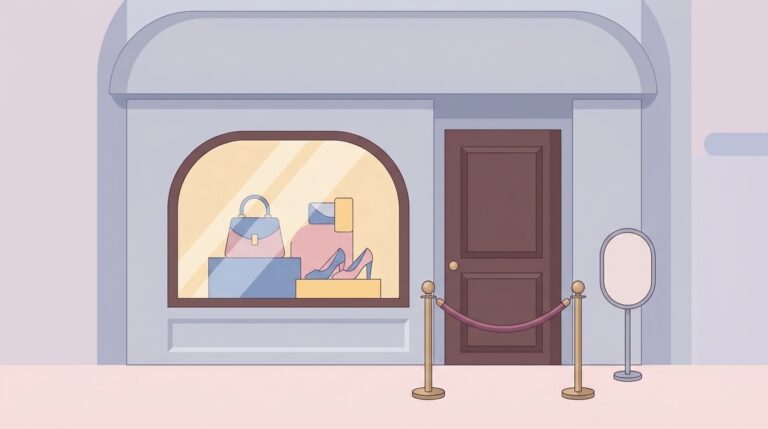
Hello! I am the Lead Editor of Daily Hangul. Have you ever walked down the glamorous streets of Cheongdam-dong at 6 AM, only to find a line of camping tents outside a Chanel boutique? Or perhaps you’ve watched a K-Drama where a chaebol heiress sips champagne in a private VVIP room, effortlessly buying out an entire limited-edition collection. In the fast-paced, hyper-trend-focused world of the Korean fashion and beauty industry, marketing isn’t just about selling a product; it’s about selling an exclusive experience, a status symbol, and a piece of the K-Culture fantasy. If you are working in luxury marketing, studying advanced business Korean, or simply a high-level learner wanting to understand the psychology behind Korea’s explosive luxury market, textbook words like ‘비싸다’ (expensive) simply won’t cut it anymore. Today, we are diving deep into the sophisticated vocabulary and cultural nuances that drive luxury brand marketing strategies in South Korea.
Phase 2: Deep Dive into Core Expressions
1. 명품 (Myeongpum)
- Pronunciation: myeongpum [Myuhng-poom. The ‘myeong’ sounds like ‘my-young’ said quickly, and ‘pum’ sounds like ‘poom’ in puma.]
- Meaning: Literal: Masterpiece / Real nuance: Luxury goods, designer brands.
- K-Culture Moment: In K-Dramas, when a character wants to flex their wealth, they don’t say “I bought an expensive bag.” They say “명품백 하나 샀어” (I bought a Myeongpum bag).
- Editor’s Insight: English speakers often try to translate “luxury” as 사치품 (sachipum), but that has a negative connotation meaning “extravagant/wasteful goods.” To Koreans, luxury brands are Myeongpum—implying high craftsmanship, prestige, and premium value.
- Situation Spectrum:
[🚫] ———— [⚠️] ———— [✅]
- Casual with friends: ✅
- Formal business meetings: ✅
- Academic writing: ✅
- 🤔 Think About It: Why did Korean society choose a word meaning “masterpiece” to represent mass-produced luxury items? Does this reflect a deep cultural respect for global brand heritage?
2. 오픈런 (Opeun-reon)
- Pronunciation: opeun-reon [Oh-peun-run. Konglish pronunciation of ‘Open Run’.]
- Meaning: Literal: Open run / Real nuance: Sprinting or lining up for hours before a store opens to buy highly sought-after, limited-stock items.
- K-Culture Moment: Open run is a defining cultural phenomenon in Korea’s luxury market. News channels regularly broadcast people sprinting into department stores the second the shutters roll up.
- Editor’s Insight: This isn’t just a word; it’s a marketing strategy. Luxury brands intentionally limit stock to create an ‘Open Run’ phenomenon, generating free PR and immense FOMO (Fear Of Missing Out).
- Situation Spectrum:
[🚫] ———— [⚠️] ———— [✅]
- Casual conversations: ✅
- Marketing strategy meetings: ✅
- Talking to conservative elders: ⚠️ (They might not understand the slang)
- 🤔 Think About It: Is the ‘Open Run’ culture a sign of passion, or a strategic manipulation of consumer psychology by luxury brands?
3. 품절 대란 (Pumjeol daeran)
- Pronunciation: pumjeol daeran [Poom-juhl dae-ran. ‘Poom’ + ‘juhl’ (like jewel) + ‘dae’ (like day) + ‘ran’ (like ran).]
- Meaning: Literal: Sold-out crisis / Real nuance: An explosive sold-out craze where an item is completely wiped out everywhere due to massive hype.
- K-Culture Moment: Remember when a K-Pop idol like Blackpink’s Jennie or BTS’s Jimin wore a seemingly ordinary lip balm, and it sold out globally within hours? That’s a classic Pumjeol daeran.
- Editor’s Insight: For marketers, this is the ultimate goal. You don’t just want something to be ‘sold out’ (매진). You want a ‘crisis’ (대란) because it signifies cultural dominance and viral success.
- Situation Spectrum:
[🚫] ———— [⚠️] ———— [✅]
- Casual with friends: ✅
- Marketing/Business reports: ✅
- Formal apology to a customer: ⚠️ (Better to politely say 재고가 없습니다 – We are out of stock)
- 🤔 Think About It: Scarcity marketing is global, but why does the Korean market react so intensely and rapidly to “sold out” trends compared to other countries?
Phase 3: Textbook vs Real Life
| Situation | 📖 Textbook Korean | 🗣️ Real Korean | 💡 Why the difference? |
|---|---|---|---|
| Item is out of stock | 물건이 다 팔렸습니다 (All items are sold) | 완판됐습니다 / 품절 대란이에요 (Completely sold out / Sold-out craze) | Emphasizes the hype and success rather than just the factual inventory status. |
| Famous brand model | 유명한 모델 (Famous model) | 글로벌 앰버서더 / 인간 샤넬 (Global Ambassador / “Human Chanel”) | Reflects how K-Pop stars don’t just wear the brand; they embody its identity. |
| You have to wait | 밖에서 기다리셔야 합니다 (You must wait outside) | 웨이팅 걸어드릴까요? (Shall I put you on the waiting list?) | English loan words are heavily used in Korean premium hospitality for a ‘chic’ vibe. |
Phase 4: Cultural Deep Dive
4-1. Non-verbal Communication: The Nunchi of Luxury
In high-end Korean boutiques or marketing meetings, Nunchi (눈치, the ability to read the room) is crucial. When presenting a luxury marketing strategy to Korean executives, non-verbal cues matter as much as the data. Maintaining professional posture, dressing elegantly but understatedly (what Koreans call ‘꾸안꾸’ – effortlessly chic), and handing over documents or business cards with two hands are non-negotiable signs of respect.
4-2. K-Culture Connection: Idols as the Ultimate Marketing Strategy
In the global luxury market, K-Pop idols are the ultimate “cheat code.” The strategy is clear: appoint a K-Pop star as a Global Ambassador, and watch their massive, highly organized fandom drive immediate sales.
Critical Viewpoint: While K-Dramas depict luxury consumers as old-money chaebols in their 50s, the reality of Korean luxury consumption is heavily driven by people in their 20s and 30s (the MZ generation). Marketers actively target this demographic using idol photocards, exclusive pop-up stores in trendy Seongsu-dong, and limited-edition collaborations, blurring the line between exclusive luxury and accessible fandom culture.
Phase 5: Immersive Roleplay
Main Scenario: The Strategy Pitch
– Setting: A sleek boardroom in Cheongdam-dong. 10 AM. You are pitching a new launch campaign for a French luxury skincare brand to the Korean regional directors.
– Characters:
– YOU: The Marketing Director. Confident, fluent in industry jargon.
– Director Park (50s): A sharp, results-driven executive who values brand prestige.
– Manager Kim (30s): Trendy, knows everything about the current K-Pop scene.
Director Park: 이번 신제품 론칭, 어떻게 차별화할 계획입니까? 💼
(Ibeon sinjepum lonching, eotteoke chabyeolhwahal gyehoegimnikka?)
[How do you plan to differentiate this new product launch?]
YOU: 이번에는 희소성을 강조하는 전략을 갈 겁니다.
(Ibeoneneun huiseoseong-eul gangjohaneun jeollyag-eul gal geomnida.)
[We will go with a strategy that emphasizes scarcity this time.]
Manager Kim: 오, 구체적으로 어떤 방식인가요? 팝업스토어?
(O, guchejeogeuro eotteon bangsisingayo? Pabeopseutoeo?)
[Oh, what specific method? A pop-up store?]
🔀 Your Turn! How will you respond?
– A) 네, 그냥 백화점에서 팔겠습니다. (Yes, we will just sell it in department stores.)
– B) 성수동에 프라이빗 팝업을 열고, VIP 초대장만 발송해서 ‘오픈런’을 유도할 겁니다.
– C) 물건을 많이 만들어서 싸게 팔겠습니다. (We will make a lot of products and sell them cheaply.)✅ Best Choice: B — “We will open a private pop-up in Seongsu-dong, send out only VIP invitations, and induce an ‘open run’.”
⚠️ Choice A & C Analysis: Choice A is boring and lacks a marketing hook. Choice C is a disaster for a luxury brand where ‘brand equity’ and ‘scarcity’ are paramount.
Director Park: 좋은 접근이네요. 모델은 누구로 생각합니까?
(Joeun jeopgeunineyo. Modereun nuguro saenggakamnikka?)
[Good approach. Who are you thinking of for the model?]
YOU: 요즘 글로벌 앰버서더로 핫한 K-Pop 아이돌을 섭외해서 1020 세대의 ‘품절 대란’을 노리겠습니다! ✨
(Yojeum geullobeol aembeoseodeoro hathan K-Pop aidor-eul seoboehaeseo 1020 sedae-ui ‘pumjeol daeran’-eul norigetseumnida!)
[We will cast a K-Pop idol who is currently hot as a global ambassador, aiming for a ‘sold-out craze’ among the teens and 20s!]
Phase 6: 10-Second Shadowing Drill
Speak like a confident luxury brand manager briefing their team. Pay attention to the pauses (/) and intonation!
😤 단호하고 프로페셔널하게 (Firm and professional)
이번 / 한정판 컬렉션은 / 런칭 당일에 / 품절 대란이 / 예상됩니다.
(Ibeon / hanjeongpan keolleksyeoneun / neonching dang-ire / pumjeol daerani / yesangdoemnida.)
[This / limited edition collection / is expected to experience / a sold-out craze / on the day of launch.]
Phase 7: K-Culture Glossary
| Korean | Romanization | English | Context |
|---|---|---|---|
| 플렉스 | peullekseu | Flex | Showing off wealth or expensive purchases; popularized by hip-hop, now a mainstream consumer attitude. |
| 하이엔드 | haiendeu | High-end | Used to describe top-tier luxury brands (e.g., Hermes, Chanel) differentiating them from entry-level luxury. |
| 앰버서더 | aembeoseodeo | Ambassador | The face of a brand. In Korea, “Human [Brand]” (e.g., Human Dior) is the highest compliment for an ambassador. |
| 꾸안꾸 | kku-an-kku | Effortlessly chic | Short for “꾸민 듯 안 꾸민 듯” (dressed up but looking like you didn’t try too hard). The ultimate luxury aesthetic. |
| 팝업 성지 | pabeop seongji | Pop-up Mecca | Areas like Seongsu or Hannam-dong, where brands open temporary, highly visual experiential stores. |
Phase 8: Traveler’s Survival Kit
If you are traveling to Seoul and want to experience these marketing spaces yourself (like luxury pop-ups or flagship stores), here is what you need to know.
🆘 Survival Phrases for Premium Boutiques
– 🇰🇷 “웨이팅 등록 어떻게 해요?” (weiting deungnok eotteoke haeyo?)
– 🗣️ Sound-alike: Way-ting deung-nok uh-dduh-kay hay-yo?
– 📍 Where to use: At the entrance of ANY hyped pop-up or luxury store.
– 💡 Pro Tip: They will likely point you to a tablet. You often need a Korean phone number or the ‘CatchTable’ app to join the digital queue.📌 Editor’s Travel Note
– Digital Queues: The days of just walking into an exhibition or a popular boutique are over. Download the KakaoTalk and CatchTable apps before your trip; they are essential for digital waitlists.
– Tax Refund: Always ask “텍스 리펀 되나요?” (Tax refund doenayo?) at checkout. Many luxury stores in tourist areas offer instant tax refunds if you present your passport.
Phase 9: Think Deeper – K-Culture Critical Corner
🧠 Think Deeper: Media vs Reality & Flex Culture
In K-Dramas, luxury goods are exclusively for the ultra-rich. However, in reality, South Korea has one of the world’s highest per capita spending rates on luxury goods, heavily driven by young people. This “Flex” culture is a fascinating economic phenomenon. Sociologists suggest that because traditional milestones (like buying a house in Seoul) have become economically unreachable for the youth, they channel their disposable income into accessible status symbols—like a $3,000 designer bag or premium omakase dinners. It’s not just vanity; it’s a desire to experience “certain happiness” in an uncertain economy.💬 Your Turn: Does your country’s younger generation exhibit similar spending habits? Is ‘luxury’ seen as an investment, a flex, or something else entirely? Share your thoughts below!
Phase 10: FAQ & Troubleshooting
- Q: Can I use the word “사치” (luxury/extravagance) when talking about a premium brand’s strategy?
- A: No! “사치” implies wasteful indulgence. In a business context, always use “명품” (luxury goods), “프리미엄” (premium), or “하이엔드” (high-end) to convey value and prestige.
- Q: Are ‘VIP’ and ‘VVIP’ commonly used in Korean?
- A: Yes, absolutely. Korean marketing strategies are heavily tiered. You’ll often hear about MVG (Most Valuable Guest) or VVIP private viewings. It’s a key part of the ‘differentiation’ (차별화) strategy.
❌ Common Mistake #1: Trying to physically stand in line at a trendy store without checking for a digital tablet first.
✅ Do This Instead: Look for a small iPad on a stand near the door. Register your phone number. No number? Politely ask the staff: “외국인인데 웨이팅 어떻게 하나요?” (I’m a foreigner, how do I waitlist?)
Phase 11: Wrap-up & Action Items
One-Liner Summary: Korean luxury marketing thrives on exclusivity, scarcity (품절 대란), and creating an immersive VIP experience that triggers the ultimate ‘Open Run’.
Action Mission:
– 🥉 Bronze: Say “품절 대란” and “명품” out loud 3 times right now, focusing on the pronunciation.
– 🥈 Silver: Search “성수동 팝업스토어” (Seongsu-dong pop-up store) on Instagram or YouTube and observe the marketing aesthetics.
– 🥇 Gold: Use one of the survival phrases at a Korean store or café to ask about the waitlist!
K-Culture Mission: Watch a K-Pop idol’s luxury brand campaign on YouTube (like NewJeans for Gucci or Jimin for Dior). Observe how the brand blends classic European luxury heritage with youthful K-Pop energy.
What’s your favorite K-Pop idol luxury campaign? Let us know in the comments!
Phase 12: Interactive Challenge (Quiz)
1. Situational Judgment: You are writing a market analysis report in Korean about a Chanel bag that sold out in two hours. Which phrase is the most professional and culturally accurate to describe this success?
– A) 가격이 너무 비쌉니다. (The price is too expensive.)
– B) 완벽한 사치품입니다. (It is a perfect extravagant good.)
– C) 오픈런을 통한 품절 대란을 기록했습니다. (It recorded a sold-out craze driven by open runs.)
(Answer: C. It uses the exact industry terminology to describe the marketing success.)
2. True or False – K-Culture Edition: “In Korea, you can easily walk into a luxury pop-up store in Seongsu-dong at any time without a reservation.”
(Answer: False. Most high-demand pop-ups require prior online reservation or on-site digital waitlisting via an app.)
3. Fill in the Blank:
“이번 컬렉션은 한정판이라서 엄청난 _____(이/가) 일어날 것 같아요!” (This collection is a limited edition, so I think a massive _____ will happen!)
(Answer: 품절 대란 / pumjeol daeran)
Frequently Asked Questions (FAQ)
Q: What does "명품 (Myeongpum)" mean in Korean and how do you pronounce it?
A: In Korean, "명품 (Myeongpum)" is pronounced [myeongpum [Myuhng-poom. The 'myeong' sounds like 'my-young' said quickly, and 'pum' sounds like 'poom' in puma.] and means: Literal: Masterpiece / Real nuance: Luxury goods, designer brands.
Q: What does "오픈런 (Opeun-reon)" mean in Korean and how do you pronounce it?
A: In Korean, "오픈런 (Opeun-reon)" is pronounced [opeun-reon [Oh-peun-run. Konglish pronunciation of 'Open Run'.] and means: Literal: Open run / Real nuance: Sprinting or lining up for hours before a store opens to buy highly sought-after, limited-stock items.
Q: What does "품절 대란 (Pumjeol daeran)" mean in Korean and how do you pronounce it?
A: In Korean, "품절 대란 (Pumjeol daeran)" is pronounced [pumjeol daeran [Poom-juhl dae-ran. 'Poom' + 'juhl' (like jewel] and means: Literal: Sold-out crisis / Real nuance: An explosive sold-out craze where an item is completely wiped out everywhere due to massive hype.







