

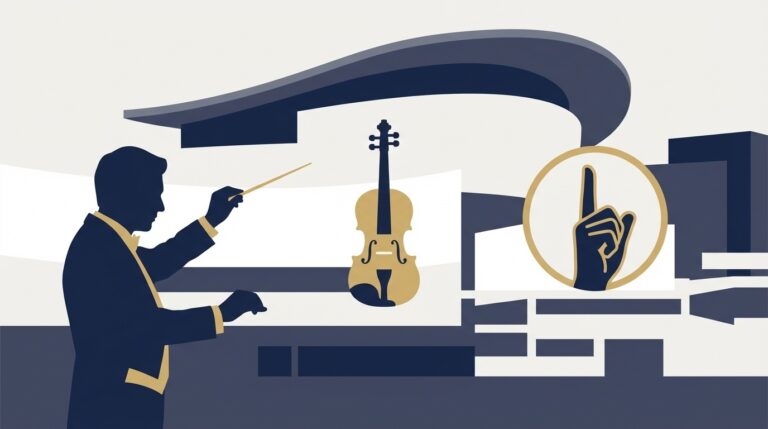
Phase 1: The Silence Before the Storm 🎻
Greeting: 안녕하세요! This is your Daily Hangul Chief Editor. 👋
K-Culture Cold Open: Picture this: You are at the Seoul Arts Center (예술의전당). The lights dim. On stage, a pianist who is treated like a K-Pop idol—perhaps someone like Lim Yun-chan or Seong-jin Cho—raises their hands. The silence in the hall is heavy. It’s not just quiet; it’s a vacuum. Suddenly, you feel a tickle in your throat. You try to unwrap a cough drop, and crinkle… The sound echoes like a gunshot. Hundreds of heads turn toward you.
In K-Dramas like Do You Like Brahms? or Beethoven Virus, the music is romantic, but the audience etiquette? It is strict, precise, and serious.
The ‘Why’: Korea has a unique “K-Classical” culture where audiences are incredibly focused and knowledgeable. One wrong move—clapping at the wrong time or making a small noise—can label you as a “Gwan-keu” (관크), a slang term we will explore today. Knowing these unspoken rules is the difference between being a “nuisance” and a respected “connoisseur.”
Transparency: This guide combines standard etiquette with the real slang used by Korean concert-goers to help you blend in perfectly.
Phase 2: Deep Dive into Key Expressions 🧐
1. 악장 간 박수 금지 (Akjang gan baksu geumji)
- Pronunciation: [Ak-jang gan bak-su geum-ji] -> Sounds like: “Ak-jang” (movement) + “gan” (between) + “bak-su” (clap) + “geum-ji” (prohibited)
- Meaning:
- Literal: Prohibition of applause between movements.
- Real Nuance: “For the love of God, do NOT clap until the conductor puts their arms all the way down!”
- K-Culture Moment: In Korea, even if the first movement of a Tchaikovsky concerto ends with a bang, the audience will freeze. If someone claps, you might hear an audible “Ah…” (sigh) from the rest of the crowd. It’s the ultimate test of Nunchi (sensing the atmosphere).
- Editor’s Insight: This isn’t just a rule; it’s about maintaining the tension (tension) of the performance. If you aren’t sure, sit on your hands. Seriously. Wait until everyone else is roaring.
- Situation Spectrum:
[🚫 Casual Gigs] ———— [⚠️ Musicals] ———— [✅ Classical Concerts]
(Strictly for classical. At musicals, clapping after numbers is encouraged!) - 🤔 Think About It: Why is silence considered the highest form of respect in Korean classical culture, whereas shouting might be respect at a rock festival?
2. 관크 (Gwan-keu)
- Pronunciation: [Gwan-keu] -> Rhymes with ‘Hahn’ + ‘Koo’ (short u)
- Meaning:
- Origin: Short for 관객 크리티컬 (Gwangbaek Critical) -> “Audience Critical Hit” (Gaming term).
- Real Nuance: A person who ruins the show for others (phone ringing, talking, tall hair, kicking seats).
- K-Culture Moment: You’ll see this word all over Korean social media (Twitter/X, TheQoo) after a big show. “Today I suffered from Gwan-keu because the person next to me kept checking their Apple Watch.”
- Editor’s Insight: This is B2/C1 level slang. You wouldn’t say this to the person (that’s rude), but you would use it to complain to your friend afterwards. It shows you understand the local internet culture.
- Situation Spectrum:
[🚫 Formal Writing] ———— [⚠️ Speaking to Elders] ———— [✅ Friends/Online]
3. 앵콜 (Aeng-kol) vs. 커튼콜 (Keoteun-kol)
- Pronunciation: [Aeng-kol] / [Keoteun-kol]
- Meaning: Encore / Curtain Call.
- K-Culture Moment: Korean audiences are famous for their rhythmic applause (synchronised clapping) to demand an encore. It is almost a ritual. Performers often say Korean audiences are the most passionate in the world because of this intense Aeng-kol culture.
- Editor’s Insight: Don’t leave immediately after the program ends! In Korea, the Aeng-kol stage is often where the artist shows their true personality or plays a fan-favorite song.
Phase 3: Textbook vs. Real Korean ⚖️
| Situation | 📖 Textbook Korean | 🗣️ Real Korean (Insiders) | 💡 Why different? |
|---|---|---|---|
| Complaining about noise | 조용히 해 주세요. (Please be quiet.) | 아, 관크 쩔어… (Ah, the ‘Gwan-keu’ is insane…) | “Jeoleo” (dope/insane) adds emotional intensity to the frustration. |
| Asking when to clap | 언제 박수를 쳐야 합니까? (When should I clap?) | 다 치면 칠게요. (I’ll clap when everyone else does.) | Koreans prefer the safety of the collective (following the crowd) over individual risk. |
| Expressing admiration | 공연이 정말 훌륭했습니다. (The performance was excellent.) | 와, 소름 돋았어요. (Wow, I got goosebumps.) | Physical reactions (“goosebumps”) are considered more genuine compliments. |
💡 Bottom Note: Use “Gwan-keu” only with friends. If you need to actually ask someone to be quiet during a show, use gestures or the polite textbook phrase.
Phase 4: Cultural Deep Dive — The “K-Classical” Fandom 🇰🇷
4-1. Non-verbal: The “Laser Eyes” (눈치 주기)
In a Western concert hall, if you cough, people might ignore it. In Seoul, if your phone vibrates, you will feel the Laser Eyes of 2,000 people burning into the back of your head. This is non-verbal discipline. If you see someone staring at you, check yourself immediately—are you leaning forward (blocking the view)? Is your breathing too loud?
4-2. K-Culture Connection: Idolization of Classical Musicians
In Korea, classical pianists and violinists have fandoms similar to BTS or BLACKPINK.
* The Scene: You might see fans holding “slogans” (banners) outside the concert hall or trading photocards.
* The Difference: While K-Pop concerts are about screaming, Classical fandoms express their love through hyper-focus. They study the score beforehand and hold their breath together.
* Critical View: Is this “star worship” distracting from the music? Some critics say yes, but it undoubtedly keeps the classical industry alive and vibrant in Korea.
Phase 5: Immersive Roleplay 🎭
Setting: Seoul Arts Center Concert Hall. Intermission. You are with Ji-u (29, avid classical fan, strict about etiquette).
YOU: (Whispering) That first piece was intense! I almost clapped after the first part.
Ji-u: 헉, 큰일 날 뻔했네! 악장 간 박수는 절대 안 돼.
(Heok, keunil nal ppeonhaenne! Akjang gan baksuneun jeoldae an dwae.)
(English) Gasp, that could have been a disaster! Clapping between movements is an absolute no-no.
(🎭 Ji-u looks around to see if anyone heard you.)
YOU: It was so quiet though. I felt like I couldn’t even breathe.
Ji-u: 그게 매력이지. 다들 숨죽이고 집중하는 거.
(Geuge maeryeogiji. Dadeul sumjugigo jipjunghaneun geo.)
(English) That’s the charm. Everyone holding their breath and focusing.
🔀 Decision Point: The person in front of you keeps checking their phone.
- Option A: Tap them on the shoulder and say “Stop it.”
- Option B: Whisper to Ji-u, “Ah, that person is a total Gwan-keu.”
- Option C: Take a photo of them to post online later.
✅ Best Choice: B — Venting to a friend is the most common Korean way to handle it without causing a scene (public confrontation is avoided).
⚠️ Choice A Analysis: Touching a stranger or confronting them directly can escalate quickly. Usually, ushers (house managers) handle this.
Ji-u: (Nodding at your whisper) 맞아, 진짜 매너 없다. 어셔한테 말할까?
(Maja, jinjja maeneo eopda. Eosyeohante malhalkka?)
(English) Right, no manners at all. Should I tell the usher?
Phase 6: 10-Second Shadowing Drill 🗣️
Practice this sentence to use when you want to express how moved you were by the performance.
- Sentence: 앵콜 무대가 / 본 공연보다 / 더 좋았던 것 같아요!
- Romanization: Aeng-kol mu-dae-ga / bon gong-yeon-bo-da / deo jo-at-deon geot ga-ta-yo!
- Meaning: I think the encore stage was even better than the main performance!
- Emotion: 😊 Excited & Amazed
- Guide:
Aeng-kol(Stress here!)Bon gong-yeon(Main performance)Jo-at-deon geot ga-ta-yo(Softer ending, expressing opinion)
Phase 7: K-Culture Mini Glossary 📖
| Korean | Romanization | Meaning | Context |
|---|---|---|---|
| 관크 | Gwan-keu | Audience Disturbance | Slang for rude audience members. Essential internet slang. |
| 초대권 | Chodae-gwon | Invitation Ticket | Free tickets given to VIPs/friends. Sometimes associated with “casual” fans who don’t know etiquette. |
| 예매 전쟁 | Yemae jeonjaeng | Ticket War | The fierce battle to buy tickets for famous performers (like Lim Yun-chan). |
| 막공 | Mak-gong | Final Performance | The last show of a tour; usually has special events or extra encores. |
Phase 8: Traveler’s Survival Kit (Concert Hall Edition) 🎫
Going to the Seoul Arts Center or Lotte Concert Hall? Here is your survival pack.
🆘 Survival Phrases
1. “물품 보관소 어디예요?” (Mul-pum bo-gwan-so eo-di-ye-yo?)
* Where is the cloakroom? (Korean seats are tight; leave big coats/bags here!)
2. “인터미션 얼마나 남았어요?” (In-teo-mi-syeon eol-ma-na na-ma-sseo-yo?)
* How much time is left in the intermission?
3. “티켓 현장 수령 하려고요.” (Ti-ket hyeon-jang su-ryeong ha-ryeo-go-yo.)
* I’m here to pick up my ticket on-site. (Crucial for foreigners picking up online bookings).📌 Editor’s Pro Tip:
No Food/Drink: Unlike some Western venues, you generally cannot bring even water into the hall. You must drink it in the lobby. Don’t try to sneak it in!
Phase 9: Think Deeper — “The Sound of Silence” 🧠
Topic: Collective Experience vs. Individual Expression
In many Western cultures, spontaneous applause or cheering shows individual appreciation. In Korea, silence is the ultimate sign of respect. This reflects the high-context culture where “reading the room” (Nunchi) is paramount. The audience becomes a single organism, breathing together with the performer.
🧠 Think About It: Does this strict silence stifle your enjoyment, or does it make the music more intense? In your country, is it okay to clap whenever you feel moved?
Phase 10: FAQ & Troubleshooting 🛠️
- Q: Can I wear jeans to a classical concert in Korea?
- A: Yes, but Smart Casual is safer. While there is no strict black-tie dress code, Koreans tend to dress up nicely (Date Night style) for concerts. Ripped jeans might feel out of place.
- Q: Can I take photos?
- A: Strictly NO during the performance. You can usually take photos during the Curtain Call (when they bow), but always check if others are doing it first. Taking a photo during the music is a guaranteed way to get “Laser Eyes.”
- Q: What if I have to cough?
- A: Try to suppress it until a loud section (fortissimo). If you can’t, muffle it completely with a handkerchief. If it’s bad, it’s polite to leave the hall between movements.
❌ Common Mistake: Clapping immediately when the music stops.
✅ Fix: Look at the conductor’s hands. Are they still in the air? Then the music hasn’t ended. Wait for the hands to drop!
Phase 11: Wrap-up & Action Mission 🚀
One-Liner: In Korea, silence is your applause (until the end), and ‘Gwan-keu’ is the enemy!
Your Mission:
* 🥉 Bronze: Say “악장 간 박수 금지” (No clapping between movements) aloud to yourself 3 times.
* 🥈 Silver: Watch a YouTube video of a Korean pianist (e.g., Cho Seong-jin) performing in Seoul. Observe when the audience claps. Can you spot the ‘silence’?
* 🥇 Gold: If you are in Korea, visit the Seoul Arts Center just to see the lobby atmosphere, or buy a ticket! Try picking it up using the phrase: “티켓 현장 수령 하려고요.”
💬 Question: Have you ever clapped at the wrong time? Tell me your horror story in the comments!
Phase 12: Quiz — Are You a ‘Gwan-keu’? 📝
- Situation: The first movement ends. The music stops, but the conductor’s arms are still up. What do you do?
- A) Clap loudly to show support.
- B) Scream “Bravo!”
- C) Stay dead silent and wait.
- D) Check your phone.
- Vocabulary: Your friend keeps kicking the seat in front of them. What slang word describes this behavior?
- A) Aegyo (애교)
- B) Gwan-keu (관크)
- C) Mukbang (먹방)
- True or False: It is acceptable to drink iced americano inside the concert hall during the performance.
- (True / False)
Answers:
1. C (Silence is key!)
2. B (Audience Critical Hit)
3. False (Lobby only!)
Frequently Asked Questions (FAQ)
Q: What does "악장 간 박수 금지 (Akjang gan baksu geumji)" mean in Korean and how do you pronounce it?
A: In Korean, "악장 간 박수 금지 (Akjang gan baksu geumji)" is pronounced [Ak-jang gan bak-su geum-ji] and means: Literal: Prohibition of applause between movements.
Q: What does "관크 (Gwan-keu)" mean in Korean and how do you pronounce it?
A: In Korean, "관크 (Gwan-keu)" is pronounced [Gwan-keu] and means: Origin: Short for 관객 크리티컬 (Gwangbaek Critical) -> "Audience Critical Hit" (Gaming term).
Q: What does "앵콜 (Aeng-kol) vs. 커튼콜 (Keoteun-kol)" mean in Korean and how do you pronounce it?
A: In Korean, "앵콜 (Aeng-kol) vs. 커튼콜 (Keoteun-kol)" is pronounced [Aeng-kol] and means: Encore / Curtain Call.







